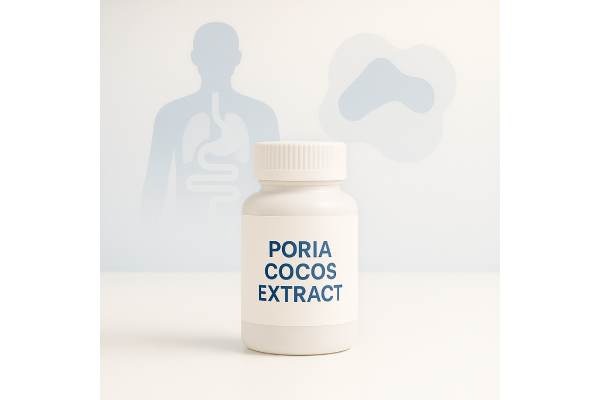
Poria cocos extract comes from the dried sclerotium of a pine-dwelling fungus traditionally known in Chinese medicine as Fu Ling. For more than 2,000 years, practitioners have used it to “drain dampness,” support digestion and urination, calm the mind, and ease restlessness and palpitations. Today, it appears in modern supplements focused on sleep quality, immune balance, and general metabolic health.
Scientifically, Poria cocos is rich in polysaccharides and lanostane-type triterpenoids, along with sterols and minor compounds. These constituents have shown immune-modulating, anti-inflammatory, antioxidant, and neuroactive properties in cell, animal, and early human research. Some standardized polysaccharide preparations are used as approved adjunctive drugs in oncology and liver care in parts of Asia.
This guide walks you through what Poria cocos extract is, how it may work, where the evidence stands, how people typically use it, reasonable dosage ranges, and when caution or medical advice is essential.
Quick Overview of Poria cocos Extract
- Traditional fungus used to support fluid balance, digestion, and calm mood, now studied for sleep and immune modulation.
- Polysaccharides and triterpenoids show anti-inflammatory, antioxidant, and immunoregulatory actions in preclinical and early clinical work.
- Common supplement doses range from about 500–1,000 mg standardized extract once or twice daily, or 3–12 g dried sclerotium in herbal decoctions.
- Safety profile appears favorable at traditional doses, but long-term data and high-dose safety are still limited.
- Avoid unsupervised use in pregnancy, breastfeeding, severe kidney disease, major immune disorders, or when taking sedatives or multiple long-term medications.
Table of Contents
- What is Poria cocos extract and how does it work?
- What are the main benefits of Poria cocos extract?
- How to use Poria cocos extract for sleep, digestion, and wellness
- How much Poria cocos extract should you take?
- Side effects, interactions, and who should avoid Poria cocos extract
- How to choose a quality Poria cocos extract supplement
What is Poria cocos extract and how does it work?
Poria cocos (more precisely Wolfiporia cocos) is an underground fungal mass that grows around pine roots. In traditional Chinese medicine (TCM) it is called Fu Ling and is classified as both a food and a medicinal substance. The dried sclerotium is bland in taste and neutral in nature, used to promote urination, reduce edema, strengthen the spleen and digestion, and calm the spirit in patterns of anxiety or insomnia.
Modern analysis shows that Poria cocos is chemically complex. The main active groups are:
- Polysaccharides (especially β-glucans and related heteropolysaccharides), which may represent a large proportion of the active mass in the dried sclerotium.
- Lanostane-type triterpenoids, such as pachymic acid, dehydrotumulosic acid, and related compounds.
- Sterols and minor metabolites, which contribute additional biological effects.
These components act through multiple mechanisms:
- Immune modulation: Poria polysaccharides can enhance phagocytosis, promote certain immune signaling molecules, and support aspects of adaptive immunity, while also helping to regulate overactive inflammatory responses. Some Poria polysaccharide formulations are used clinically as adjunctive antitumor or antiviral agents in parts of Asia.
- Anti-inflammatory and antioxidant activity: Both polysaccharides and triterpenoids help down-regulate pro-inflammatory signaling pathways and reduce oxidative stress markers in preclinical models.
- Neuroactive effects: Certain extracts, especially ethanolic and standardized polysaccharide preparations, appear to interact with GABAergic and monoaminergic systems, potentially contributing to sedative, anxiolytic, and sleep-promoting effects in animal and early human research.
- Metabolic and organ-protective effects: Experimental work suggests benefits for liver function, glucose and lipid metabolism, and gut barrier integrity, likely mediated by a combination of anti-inflammatory actions, antioxidant effects, and modulation of gut microbiota.
Commercial “Poria cocos extract” can refer to:
- Water extracts (polysaccharide-rich, similar to traditional decoctions).
- Ethanolic or mixed-solvent extracts (richer in triterpenoids).
- Standardized polysaccharide or triterpenoid concentrates, sometimes branded and used as immune or sleep-support ingredients.
Understanding which type you have is essential, because each emphasizes different constituents and may be aimed at different targets such as sleep, immunity, metabolic support, or general tonification.
What are the main benefits of Poria cocos extract?
1. Sleep quality and calm mood
Poria cocos has long been used in combination formulas for palpitations, restlessness, and insomnia. Modern research supports a potential sleep-support role.
In animal models of insomnia, standardized Poria cocos extracts have been observed to improve sleep architecture, shorten sleep latency, and increase non-REM sleep time, apparently by enhancing GABA-A–mediated inhibitory transmission. Water-soluble polysaccharide fractions have also been shown to reduce anxiety-like behavior in sleep-deprived animals, improve neurotransmitter balance, and modulate gut dysbiosis and inflammatory markers, suggesting a gut–brain axis mechanism for mood and sleep benefits.
Early human data, often using Poria in combination with other ingredients such as Ziziphus and GABA, indicate improvements in subjective sleep quality. However, these studies are small and often combine multiple herbs, so Poria’s specific contribution is still being clarified. It is reasonable to view Poria as one supportive component within a broader sleep and stress-management strategy.
2. Immune support and adjunctive oncology use
Polysaccharide-rich Poria preparations have been studied extensively as immune modulators:
- Reviews of clinical and preclinical work show that Poria polysaccharides can enhance both innate and adaptive immune responses and display antitumor and antiviral activities, particularly as adjuncts to conventional therapies.
- Lanostane triterpenoid-rich extracts have been shown in experimental models to enhance nonspecific immunity without causing immunotoxicity, suggesting a balanced immunoregulatory effect.
In China, a Poria polysaccharide oral solution is approved as a drug for certain cancers and liver diseases, usually used alongside standard treatments rather than as a stand-alone cure. For people outside that setting, high-quality supplements may offer gentle immune support but should never be viewed as replacements for evidence-based oncology care.
3. Fluid balance, diuretic effect, and digestive support
TCM classifies Fu Ling as a diuretic and “dampness-resolving” agent, used for edema, urinary difficulty, and digestive sluggishness. Experimental work on the outer portions of the sclerotium confirms diuretic activity in animal models, providing a modern correlate to this traditional use.
By promoting mild diuresis and supporting gut motility, Poria may help people who feel heavy, puffy, or waterlogged, especially when it is used as part of a multi-herb formula that also addresses diet, movement, and overall lifestyle.
4. Liver, metabolic, and gut health
Recent research suggests that Poria polysaccharides can:
- Improve experimental models of alcoholic and non-alcoholic fatty liver disease.
- Modulate gut microbiota composition, increasing beneficial bacteria and reducing inflammatory metabolites.
- Support more balanced glucose and lipid metabolism, potentially offering supportive benefits in metabolic syndrome contexts.
These findings are promising but largely preclinical. They hint that Poria could be one useful piece of a broader metabolic health strategy, not a substitute for diet, exercise, and prescribed therapies.
5. Skin and inflammatory balance
Topical and systemic Poria preparations show anti-inflammatory and antioxidant actions in models of contact dermatitis and other inflammatory conditions. This has led to the inclusion of Poria extracts in some “soothing” cosmetic and dermatologic formulations aimed at sensitive or reactive skin.
Overall, the strongest evidence for Poria cocos extract currently lies in immune modulation (including adjunctive oncology contexts), experimental support for sleep quality and anxiety reduction, and multi-system anti-inflammatory and antioxidant effects. Well-designed, large-scale human trials are still limited, so expectations should remain measured.
How to use Poria cocos extract for sleep, digestion, and wellness
Because Poria cocos is both a traditional remedy and a modern nutraceutical, how you use it depends on your goal, the form you choose, and whether you are working with a practitioner.
1. Traditional forms (decoctions and formulas)
In TCM, Fu Ling is almost always used in multi-herb formulas, not alone. It is commonly combined with herbs such as:
- Alisma (Ze Xie) for stronger diuretic and fluid-draining effects.
- Atractylodes (Bai Zhu) to support digestion and “spleen” function.
- Ziziphus, Polygala, or other calming herbs to settle the mind and help sleep.
The dried sclerotium is simmered as part of a decoction, typically for 20–30 minutes, and the liquid is consumed once or several times per day. This approach is best supervised by an experienced herbalist or TCM practitioner, who can adjust the formula to your constitution, symptoms, and medical history.
2. Modern supplements (capsules, tablets, powders)
Commercial Poria cocos supplements usually provide:
- Standardized polysaccharide-rich extracts (often labeled with a percentage of polysaccharides).
- Triterpenoid-rich or mixed extracts, sometimes branded as sleep or immune support ingredients.
- Simple dried-powder capsules of Fu Ling.
Typical practice is to take capsules once or twice daily with food. For sleep-focused products, the full dose is often taken in the evening, 30–60 minutes before bedtime, either alone or in combination with other calming ingredients.
3. Goals and timing
- For sleep and calm mood: Use in the evening for several weeks, tracking changes in sleep onset, nighttime awakenings, and daytime alertness. Combine with good sleep hygiene, such as consistent bedtimes and limiting late-night screen exposure.
- For fluid balance or digestion: Split doses across morning and midday so that mild diuretic effects do not disturb sleep. Pair with a diet that moderates salt and ultra-processed foods.
- For general immune or metabolic support: Use steady, moderate doses over 4–8 weeks, then re-evaluate with your clinician. Poria should complement, not replace, medical care or foundational lifestyle measures.
4. Topical and cosmetic use
Poria cocos extracts appear in some creams and serums for sensitive or inflamed skin. If you are trying a topical product:
- Patch-test a small area once daily for 2–3 days before applying more widely.
- Introduce it alongside a simple, non-irritating skincare routine.
- Stop if you notice redness, itching, burning, or worsening of existing skin conditions.
Because products vary greatly in concentration and quality, always follow label instructions and seek professional advice if you have chronic skin disease or are already using active dermatologic treatments.
How much Poria cocos extract should you take?
There is no single universally accepted “standard dose” of Poria cocos extract. Dosage recommendations come from traditional practice, modern monographs, and the limited clinical research available.
1. Traditional crude herb dosing
In classic and modern Chinese herbal practice, daily amounts of dried Fu Ling typically fall in the range of:
- About 3–12 g of dried sclerotium per day in decoctions or granules for general support.
- Up to 15–30 g per day for short periods in certain contexts, under professional supervision.
These amounts refer to the crude herb, not concentrated extracts. They are almost always divided across one to three daily servings and combined with other herbs in carefully designed formulas.
2. Modern extract and capsule dosing
Dietary supplements and nutraceuticals based on Poria cocos commonly suggest doses around:
- 500–1,000 mg standardized extract once or twice daily, sometimes in divided doses.
- Lower doses (for example, 250–500 mg once daily) when Poria is part of a multi-ingredient formula for sleep, stress, or immune support.
Exact dosing depends on:
- Extract strength (for example, 4:1 or 10:1 concentrates).
- Standardization target (percentage of polysaccharides or triterpenoids).
- Product design (single-ingredient versus combination formula).
Because products differ so much, it is important to:
- Follow the manufacturer’s instructions as a starting point.
- Stay at the lower end of the range if you are sensitive, underweight, older, or taking multiple medications.
- Discuss use with a practitioner if you plan to take higher doses or use Poria long-term.
3. Timing and duration
- For sleep and mood, evening dosing is common, often about 30–60 minutes before bed.
- For diuretic or digestive goals, morning and early afternoon doses are usually preferred to avoid nighttime urination.
- For immune or metabolic support, courses of 4–8 weeks with periodic reassessment are common, rather than continuous, indefinite use.
4. Special populations
- Pregnancy and breastfeeding: Safety data are insufficient; most authoritative sources recommend avoiding non-essential use beyond small amounts in food-level decoctions prescribed by qualified clinicians.
- Children: Should only use Poria-containing formulas under pediatric medical or herbal supervision, at body-weight–adjusted doses.
- Older adults or people with chronic illnesses: Start low, go slow, and coordinate with healthcare providers to monitor blood pressure, fluid status, and lab results as needed.
If you are unsure, a pragmatic approach is to start at the lowest effective dose recommended on the label, maintain for 1–2 weeks, monitor how you feel, and only consider cautious increases with professional guidance.
Side effects, interactions, and who should avoid Poria cocos extract
Overall, Poria cocos has a favorable safety profile at traditional and moderate supplemental doses. Toxicology data on polysaccharide preparations suggest low acute and chronic toxicity in animals, and decades of clinical experience in Asia have not identified major safety concerns when used appropriately.
That said, “low toxicity” does not mean “risk-free.” Important considerations include:
1. Common and mild side effects
Reported or plausible mild reactions include:
- Digestive discomfort (nausea, loose stools, or mild abdominal fullness).
- Headache or lightheadedness, especially if blood pressure or fluid balance shifts.
- Dry mouth or changes in thirst.
These effects are typically dose-related and may resolve with dose reduction or discontinuation.
2. Allergic reactions
Because Poria cocos is a fungus, there is a theoretical risk of allergy in people who react to mushrooms or mold-related allergens. True IgE-mediated allergy appears uncommon but is possible. Warning signs include:
- Itching, hives, or rash.
- Swelling of lips, tongue, or face.
- Difficulty breathing or sudden wheezing.
Any such symptoms require immediate medical attention and permanent avoidance of the product.
3. Fluid balance, kidneys, and blood pressure
Due to its mild diuretic action, Poria could:
- Increase urination frequency.
- Slightly influence blood pressure or electrolyte balance in sensitive individuals.
People who should be especially cautious include those with:
- Moderate to severe chronic kidney disease.
- Heart failure or conditions where fluid balance is tightly managed.
- Use of prescription diuretics, ACE inhibitors, ARBs, or other blood pressure medications.
In these cases, any use of Poria should be medically supervised.
4. Immune and oncology contexts
Poria polysaccharide has immunostimulatory properties and is used as an adjunct in some oncology regimens in China. While this can be beneficial under structured protocols, it raises questions in people who:
- Are on strong immunosuppressants (for autoimmune disease or organ transplantation).
- Have complex immune-mediated diseases where stimulating immunity might worsen symptoms.
These individuals should not self-prescribe Poria; decisions should be made together with their specialists.
5. Sedation and central nervous system effects
Because some extracts modulate GABAergic signaling and are studied as sleep aids, there is a possibility of additive sedation when combined with:
- Prescription sleep medications (such as benzodiazepines, Z-drugs, or certain antidepressants).
- Other herbal sedatives (valerian, passionflower, kava, and similar herbs).
- Alcohol or recreational depressants.
Caution is warranted with driving, operating machinery, or performing tasks that require full alertness until you know how Poria affects you.
6. Pregnancy, breastfeeding, and children
Authoritative monographs generally recommend avoiding Poria as a self-directed supplement in pregnancy and lactation due to limited safety data, despite its long history of use in TCM. If considered at all, it should only be within a formula prescribed by an experienced practitioner who collaborates with your obstetric or pediatric team.
Children should not receive concentrated Poria extracts unless under specialized guidance.
Summary: who should avoid or seek medical advice first
- Pregnant or breastfeeding individuals.
- People with severe kidney, heart, or liver disease.
- Patients on strong immunosuppressants or post-transplant.
- Those with a history of mushroom allergy or severe atopy.
- Anyone taking multiple medications with narrow safety margins.
If you experience new or concerning symptoms after starting Poria, stop the product and consult a healthcare professional.
How to choose a quality Poria cocos extract supplement
Because “Poria cocos extract” is a broad term, quality and composition vary widely between products. A little label literacy goes a long way.
1. Check the botanical identity
Look for:
- The full Latin name Wolfiporia cocos (F.A. Wolf) Ryvarden and Gilb., or the traditional name Poria cocos, often alongside Fu Ling.
- A clear indication that the part used is the sclerotium (the underground mass), not mycelium grown on grain, unless the product specifically explains why a different form is used.
2. Understand the extract type
Labels may describe:
- Polysaccharide-rich water extract – often used for immune and general wellness support, closer to traditional decoctions.
- Triterpenoid-rich ethanol or mixed extract – often marketed for metabolic, immune, or neuroactive effects.
- Whole powder – ground dried Fu Ling without concentration.
Also look for details such as:
- Extraction ratio (for example, 10:1, meaning 10 parts crude herb to 1 part extract).
- Standardization (for example, a specific percentage of polysaccharides or triterpenoids).
3. Prioritize quality and testing
Higher-quality products typically offer:
- Third-party testing for heavy metals, pesticides, microbial contamination, and residual solvents.
- Batch numbers and expiry dates.
- Transparency about manufacturing (GMP-compliant facilities, and clear information on country of origin).
Because Poria-based drugs used in hospitals undergo much stricter quality control than most supplements, it is wise to hold over-the-counter products to as high a standard as possible, even though they are not regulated in the same way.
4. Avoid extreme or poorly justified claims
Be cautious of products that:
- Promise to “cure cancer,” “reverse diabetes,” or “replace your medications.”
- Use extremely high standardized doses of isolated triterpenoids (such as pachymic acid) without referencing safety data. Some triterpenoids show potential toxicity at high doses in experimental models, and the risk–benefit balance is not fully defined.
Moderate, well-justified dosing rooted in published research and traditional ranges is usually a better sign.
5. Match the product to your goal and support network
- If your focus is sleep and mood, look for products that clearly identify their research basis in sleep studies and combine Poria with other gentle, evidence-linked ingredients.
- For immune or metabolic support, polysaccharide-standardized extracts from reputable brands may be preferable.
- For complex health issues, prioritize working with a clinician or herbal practitioner who understands both Poria uses and your medication regimen.
Solid product quality, realistic expectations, and professional guidance together make Poria cocos extract much more likely to be helpful and safe.
References
- Progress in the study of bioactivity, chemical composition and pharmacological mechanism of action in Wolfiporia cocos (F.A. Wolf) Ryvarden and Gilb 2025 (Systematic Review)
- Molecular basis for Poria cocos mushroom polysaccharide used as an antitumor drug in China 2019 (Review)
- The Positive Effects of Poria cocos Extract on Quality of Sleep in Insomnia Rat Models 2022 (Experimental Study)
- The Lanostane Triterpenoids in Poria cocos Play Beneficial Roles in Immunoregulatory Activity 2021 (Experimental Study)
- Poria cocos water-soluble polysaccharide modulates anxiety-like behavior induced by sleep deprivation by regulating the gut dysbiosis, metabolic disorders and TNF-α/NF-κB signaling pathway 2022 (Animal Study)
Disclaimer
The information in this article is for educational purposes only and is not a substitute for personalized medical advice, diagnosis, or treatment. Poria cocos extract can interact with underlying health conditions and medications, and research is still evolving. Always consult a qualified healthcare professional before starting, stopping, or changing any supplement, particularly if you are pregnant, breastfeeding, have chronic illness, take prescription drugs, or are considering Poria in conjunction with oncology or immunologic therapies.
If you found this guide helpful, you are welcome to share it on Facebook, X (formerly Twitter), or any platform you prefer, and to follow our work on social media. Your thoughtful support by sharing helps us continue creating careful, evidence-informed content for readers who value reliable health information.