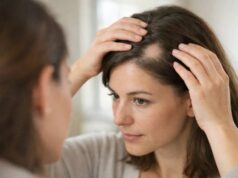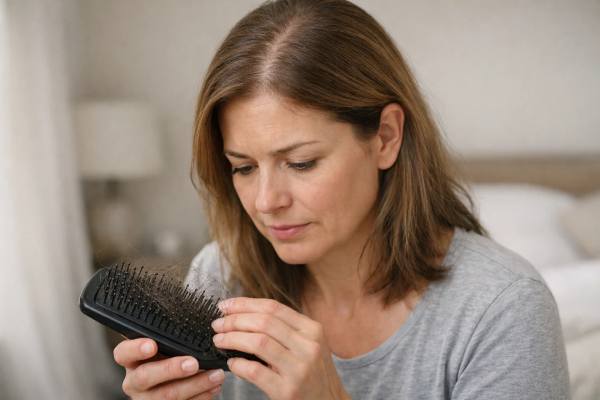
Hair shedding that starts after COVID can feel abrupt, disproportionate, and deeply unsettling. Many people notice fuller brushes, more hair in the shower drain, and a thinner ponytail weeks after they thought recovery was already behind them. In most cases, this pattern fits telogen effluvium, a temporary shift in the hair cycle that pushes more follicles than usual into the shedding phase. The good news is that the follicles are usually not scarred or destroyed, which means regrowth is expected.
What makes post-COVID shedding confusing is its delay. The trigger happens first, but the fallout often appears much later. That gap leads many people to blame shampoo, hard water, supplements, or a brand-new product when the more likely cause was the infection, fever, inflammation, weight loss, stress, or a mix of all of them. Understanding the timeline helps you respond calmly, support recovery, and recognize the small number of cases that need a closer medical workup.
Quick Overview
- Post-COVID telogen effluvium usually starts about 1 to 3 months after infection, not immediately.
- Shedding is often diffuse across the whole scalp and usually improves before density fully returns.
- Most cases recover gradually, but visible fullness often lags behind the point when shedding slows.
- Patchy bald spots, scalp pain with inflammation, or shedding that lasts beyond 6 months deserves medical evaluation.
- Focus on trigger recovery, adequate protein, gentle hair care, and a clinician review when the pattern does not fit the usual course.
Table of Contents
- Why COVID can trigger shedding
- The usual post-COVID timeline
- How it looks on the scalp
- What supports steadier recovery
- Tests, treatments, and common mistakes
- When shedding needs a closer look
Why COVID can trigger shedding
Telogen effluvium is a reactive shedding disorder. It happens when a physical or emotional stressor nudges more hair follicles than usual out of their active growth phase and into a resting phase. A healthy scalp normally has most hairs growing and a smaller share resting. After a trigger, that balance shifts. The hairs do not fall out the same day the trigger happens. Instead, they complete the resting period first and then shed in a delayed wave.
COVID can create several triggers at once.
The most obvious is fever and systemic illness. A high fever is a classic setup for telogen effluvium, and COVID can bring prolonged fever, inflammation, dehydration, reduced appetite, sleep disruption, and rapid metabolic stress. For some people, the infection also comes with weight loss, low protein intake, or a period of poor nutrition during recovery. Each of those can amplify shedding.
There is also the issue of inflammatory signaling. COVID is not just a respiratory illness; it can set off a body-wide inflammatory response. Hair follicles are sensitive to that internal environment. When the body shifts energy toward survival and repair, hair growth becomes a lower priority. The follicle is not permanently damaged in most cases, but it can temporarily pause.
A second layer is stress biology. Even mild COVID can be followed by poor sleep, anxiety, work disruption, caregiving strain, or the emotional aftershock of being ill. Telogen effluvium often reflects the combined burden of physical and psychological stress rather than one single cause. That is why some people with relatively mild infection still shed heavily, while others with more severe illness do not.
This is also why post-COVID shedding can feel more intense than expected. The trigger is often stacked:
- Infection and fever
- Inflammation
- Reduced calorie or protein intake
- Weight loss
- Sleep disruption
- Emotional stress
- Other medical changes or medications during recovery
Importantly, telogen effluvium after COVID is usually non-scarring. That means the follicles remain alive. The shedding is real, and it can be dramatic, but the long-term outlook is often favorable once the internal signal improves and the hair cycle resets.
Not everyone who sheds after COVID has pure telogen effluvium. Sometimes COVID unmasks a background tendency toward pattern thinning that was already there but subtle. In that situation, the infection acts like a spotlight rather than the whole explanation. That distinction matters because a straightforward shedding episode usually recovers on its own, while overlapping pattern loss may need a different treatment plan.
The usual post-COVID timeline
The timeline is the part that reassures people most, because post-COVID telogen effluvium tends to follow a recognizable sequence.
First phase: the trigger.
COVID happens, often with fever, fatigue, reduced appetite, or marked stress. During this stage, most people are not losing unusual amounts of hair yet. The follicles are reacting internally, but the shedding has not begun.
Second phase: the delay.
For many people, hair shedding starts about 1 to 3 months after infection. A common window is around 6 to 10 weeks. That delay is built into the biology of telogen effluvium. It is also why the cause is easy to miss. By the time the hair fall becomes obvious, the fever is gone, the test is negative, and normal life may have resumed.
Third phase: active shedding.
Once shedding begins, it may feel sudden. Hair can come out in the shower, on the pillow, while detangling, or just by running fingers through the hair. The volume often looks alarming because long hairs are so visible. Many people estimate they are losing several times more than usual. The shedding phase commonly lasts a few weeks to a few months, with many cases easing by the 3- to 6-month mark.
Fourth phase: early regrowth.
Regrowth often starts before the scalp feels full again. One of the first signs is a halo of short, fine hairs around the hairline, temples, or part. These are not always breakage. In the right context, they are new hairs returning. Shedding may still be happening at the same time, which makes recovery feel uneven.
Fifth phase: density catch-up.
This is where patience matters. Hair density improves slowly because hair grows slowly. Even after shedding has clearly decreased, it can take several more months for lengths to catch up and the part line or ponytail to look fuller. Many people need 6 to 9 months for obvious cosmetic improvement, and those with long hair may feel the recovery even later because the shorter regrowth has not yet blended in.
A practical way to think about the timeline is this:
- COVID happens
- Hair starts shedding later
- Shedding slows
- Regrowth appears
- Fullness returns last
What is still considered within the usual range?
- Shedding that begins weeks after infection
- Diffuse loss rather than clean bald patches
- A normal-looking scalp without scarring
- Improvement within several months
- Gradual, not instant, cosmetic recovery
What starts to fall outside the classic pattern?
- Shedding that persists beyond 6 months
- A steadily widening part or crown thinning that does not rebound
- Round or oval bald patches
- Redness, burning, thick scale, pustules, or pain
- Clear thinning of eyebrows or body hair without a good explanation
The timeline is reassuring, but it is not a stopwatch. Recovery is influenced by age, baseline hair density, whether pattern loss was already present, nutrition, thyroid status, iron stores, and whether a person had repeat triggers such as another illness, major stress, or crash dieting during recovery.
How it looks on the scalp
Post-COVID telogen effluvium usually causes diffuse shedding, which means hair falls from all over the scalp rather than from a single sharply defined spot. People often describe a thinner ponytail, more scalp showing under bright light, or an overall decrease in volume. The front hairline usually stays present, but it can look softer or less dense because the whole scalp has fewer thick strands at once.
One hallmark is that the scalp often looks normal. There may be no rash, no obvious redness, and no thick scale. That can be confusing because the amount of shedding feels severe, yet the skin itself does not look diseased. The absence of inflammation is one clue that this is a non-scarring shedding disorder rather than a condition that damages follicles permanently.
Common features include:
- More hair on wash days and brush days
- Long club hairs with a small pale bulb at one end
- A part line that looks wider than usual
- Reduced volume at the temples and crown
- Lots of shorter regrowing hairs later in recovery
Some people also notice trichodynia, a term used for scalp discomfort such as tenderness, tingling, or a sore “hair hurts” sensation. It does not happen in every case, but it can appear with diffuse shedding and can make the experience feel more intense than the visible thinning alone.
The main reason this section matters is that several other conditions can mimic post-COVID shedding.
Pattern hair loss often shows more miniaturization than shedding. The part slowly widens, the crown becomes more see-through, and the change can be more persistent than a temporary shed. COVID can reveal this type of thinning earlier because the shedding reduces your reserve.
Alopecia areata usually causes smooth, well-defined patches rather than a uniform drop in density. Eyebrow or eyelash involvement can occur. This pattern is different from classic telogen effluvium and needs different treatment.
Hair breakage can look like shedding at first glance, but the clue is shorter broken strands of uneven length rather than long hairs with a bulb. Heat damage, chemical processing, and friction matter here. If you need help separating the two, the difference often becomes clearer when you compare it with healthy follicle environment patterns and the condition of the hair shaft itself.
Scarring or inflammatory scalp disease is the one not to miss. Warning signs include:
- Burning or painful scalp that is getting worse
- Thick scale or crusting
- Pustules or bumps
- A shiny, scar-like appearance
- Loss of follicle openings in affected areas
Those features do not fit standard post-COVID telogen effluvium.
A useful home rule is this: telogen effluvium sheds, but it does not usually create a smooth bald patch, destroy the scalp surface, or inflame the follicles in an obvious way. If the pattern is diffuse and delayed, the scalp looks normal, and regrowth starts to show as short upright hairs, you are probably following the usual course. If the picture is patchy, scaly, painful, or steadily worsening without regrowth, it deserves a more formal evaluation.
What supports steadier recovery
Recovery from post-COVID telogen effluvium is mostly about removing obstacles while the hair cycle resets. There is rarely one miracle serum, supplement, or shampoo that turns it around overnight. Supportive care works best when it is consistent, basic, and directed at the triggers that matter.
The first priority is adequate nutrition. Hair is not essential tissue, so the body cuts back on it quickly when energy or protein is low. After an illness, people sometimes stay under-fueled longer than they realize. Poor appetite, taste changes, GI upset, and unplanned weight loss can keep the stress signal going. A good starting point is enough calories for recovery and enough daily protein spread across meals rather than packed into one meal at the end of the day.
A practical recovery checklist includes:
- Protein at each meal
- Regular meals instead of long stretches without eating
- Iron-rich foods if intake has been low
- Good hydration
- Sleep that is becoming more regular
- Stress reduction that is realistic, not perfect
The second priority is gentle handling. Telogen hairs are already primed to come out, so aggressive styling makes the situation feel worse even if it is not the root cause. Helpful adjustments include loosening ponytails, cutting back on high heat, detangling patiently, and being gentler on wash day. This is not about “saving” hairs that were going to shed anyway; it is about reducing extra breakage and making the recovery period less traumatic.
Scalp care matters too. Use a shampoo that keeps the scalp comfortable and clean without over-drying it. Heavy buildup, scratching, or inflammation can make recovery feel slower and the scalp more sensitive. Most people do not need complicated routines. They need a stable one.
It also helps to manage expectations around regrowth texture. New hairs often come in finer at first. The front hairline may look fuzzy, and the lengths may not blend well right away. That is normal. Early regrowth is not always cosmetically elegant.
What usually does not help much in straightforward post-COVID shedding:
- Constantly changing products
- Crash dieting to “reset” the body
- Over-supplementing without evidence of deficiency
- Tight protective styles during active shed
- Frequent bleaching or high-heat styling
- Panicked daily hair counts that keep stress high
A calmer approach is often more effective. Take photos of the part line every few weeks in the same lighting instead of judging day to day. Wash often enough for your scalp type instead of washing less out of fear. And remember that the point when shedding eases often comes before the point when your hair looks normal again.
One more point: some people recover more smoothly after they also correct a second issue that COVID brought to the surface, such as low iron intake, low vitamin D, or prolonged poor sleep. That does not mean the shedding was never post-COVID. It means the recovery was being held back by more than one factor.
Tests, treatments, and common mistakes
Not every case of post-COVID telogen effluvium needs lab work or medication. If the story is classic — a clear COVID illness, shedding starts weeks later, the scalp looks normal, and regrowth appears on schedule — the main “treatment” is often reassurance plus trigger recovery. But there are times when a workup is sensible, especially if the shedding is severe, prolonged, or paired with signs that something else is contributing.
A clinician may consider tests such as:
- Complete blood count
- Ferritin or iron studies
- Thyroid testing
- Vitamin D in selected cases
- Vitamin B12 or folate when diet, symptoms, or history suggest it
- Hormonal evaluation when the pattern suggests an endocrine driver
Iron deserves special attention because borderline stores can make diffuse shedding more stubborn. If that issue is suspected, a closer look at ferritin levels and shedding can be more useful than guessing and self-prescribing iron.
Treatment choices depend on what is actually happening.
For pure acute telogen effluvium, supportive care and time are usually enough. The goal is not to force the follicles instantly back into growth. The goal is to stop the cycle from getting retriggered. That means stabilizing nutrition, sleep, scalp comfort, and overall health.
For overlapping pattern thinning, treatment may be broader. This is where topical or oral minoxidil sometimes enters the conversation. Minoxidil is not mandatory for every post-COVID shed, and many people recover without it. It becomes more relevant when there is clear underlying androgen-sensitive thinning, prolonged incomplete recovery, or repeated bouts of shedding that expose reduced density each time.
Common mistakes include:
- Starting multiple treatments at once
When five new products begin together, you cannot tell what is helping, irritating, or doing nothing. - Taking hair supplements blindly
More is not better. Excess vitamin A, selenium, zinc, or other supplements can backfire. - Stopping washing or brushing out of fear
This usually increases anxiety because shed hairs accumulate and then come out all at once. - Assuming ongoing shedding means permanent loss
Recovery often feels slow even when it is on track. - Ignoring a mismatched pattern
Patchy loss, scalp inflammation, or progressive crown thinning is not something to explain away for months.
Another common error is reacting to every short front hair as damage. In recovery, those shorter hairs are often exactly what you want to see. The important question is whether they are new and tapered or broken and frayed.
In practice, the best treatment plan is usually the most accurate one. Name the pattern correctly, look for overlapping causes only when the history suggests them, and avoid turning a temporary shedding event into a year-long cycle of panic, overtreatment, and confusion.
When shedding needs a closer look
Most post-COVID telogen effluvium improves without becoming a long-term hair disorder, but there are clear situations where it is worth seeing a dermatologist or another qualified clinician.
The first is duration. If heavy shedding is still going strong beyond 6 months, the label may shift from acute to chronic shedding, or it may turn out that another condition was present all along. A prolonged course does not automatically mean anything dangerous, but it does justify a more careful history, exam, and sometimes labs.
The second is pattern. Seek evaluation sooner if you notice:
- Round or oval bald patches
- A sharply widening part
- Marked temple recession
- Thinning focused at the crown
- Significant eyebrow or eyelash loss
- A scalp that is red, scaly, painful, or developing bumps
The third is whole-person context. A closer look is important if the shedding is happening alongside fatigue, heavy menstrual bleeding, rapid weight change, restrictive eating, new medications, thyroid symptoms, or signs of hormonal imbalance. In those cases, the hair is often the visible clue to a broader issue.
It is also reasonable to get help if the shedding is causing major distress even if the pattern seems classic. Hair loss can affect identity, sleep, work, social life, and mood. Supportive counseling from a clinician is not overreacting; it is good care.
What a dermatologist may do:
- Review the full timeline of illness and shedding
- Examine the scalp for signs of inflammation or miniaturization
- Perform a pull test or trichoscopic exam
- Decide whether lab testing fits the history
- Separate temporary shedding from pattern loss, alopecia areata, or scalp disease
- Discuss whether watchful waiting or treatment makes more sense
If the exam suggests overlapping pattern thinning, that is when a discussion about starting minoxidil thoughtfully may be worthwhile. If the problem looks more nutritional or hormonal, correcting that foundation matters more than buying another hair serum.
The most urgent red flags are not just “a lot of hair in the shower.” They are scalp inflammation, scarring signs, patchy baldness, and a course that keeps worsening without visible regrowth. Those are the cases where early diagnosis protects both hair and peace of mind.
For everyone else, the message is steady but hopeful: post-COVID telogen effluvium is real, common, and often dramatic, yet in many people it is also temporary. The timeline is delayed, the recovery is uneven, and the visual rebound is slower than the biology. Once you know that, the experience becomes less mysterious and much easier to navigate.
References
- Global epidemiology of telogen effluvium after the COVID-19 pandemic: A systematic review and modeling study 2024 (Systematic Review)
- Telogen effluvium: a 360 degree review 2023 (Review)
- A systematic review of acute telogen effluvium, a harrowing post-COVID-19 manifestation 2022 (Systematic Review)
- Time of onset and duration of post-COVID-19 acute telogen effluvium 2021
- Post-SARS-CoV-2 Acute Telogen Effluvium: An Expected Complication 2022 (Prospective Cohort)
Disclaimer
This article is for educational purposes only and is not a diagnosis or a substitute for personal medical care. Hair shedding after COVID is often temporary, but diffuse shedding can overlap with iron deficiency, thyroid disease, pattern hair loss, alopecia areata, medication effects, or inflammatory scalp disorders. Seek medical evaluation promptly if you have patchy loss, scalp pain or inflammation, scarring signs, or shedding that continues beyond 6 months.
If this article was helpful, please share it on Facebook, X (formerly Twitter), or any platform your community uses most.