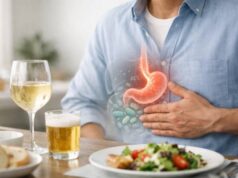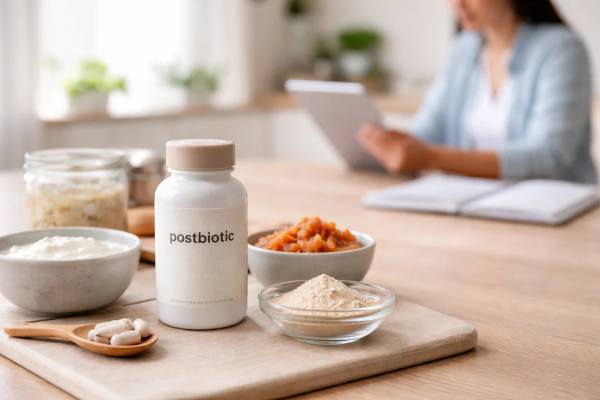
The microbiome conversation has matured. Instead of asking only which “good bacteria” to add, many people now ask a more practical question: What beneficial signals can we deliver reliably and safely? That shift is one reason postbiotics are trending. Postbiotics are not just another wellness buzzword—they describe non-living microbial preparations and their parts that can still influence digestion, immune balance, and the gut barrier. Because they are not alive, they tend to be more stable, easier to formulate into foods and supplements, and less sensitive to heat, travel, and shelf time.
At the same time, the term is used inconsistently on labels, which makes clear definitions and smart selection essential. This guide explains what postbiotics are, how they differ from probiotics and prebiotics, what the science supports today, and how to use them in a grounded, low-risk way.
Quick Overview
- Postbiotics can be more shelf-stable than probiotics because they do not rely on live organisms surviving storage.
- Some preparations show benefits for immune and skin outcomes, and others support gut barrier function, but results are strain- and product-specific.
- Marketing often stretches the term, so label details and clinically tested formulations matter.
- A practical approach is a single-product trial for 3–4 weeks with symptom tracking, then reassess before adding anything else.
Table of Contents
- What postbiotics are and what they are not
- What is inside a postbiotic
- Potential benefits and strongest evidence
- Why postbiotics are trending now
- Safety and who should be cautious
- How to choose and use postbiotics
What postbiotics are and what they are not
A simple way to understand postbiotics is to separate microbes from microbial messages. Probiotics aim to deliver live microorganisms that can act in the gut. Postbiotics aim to deliver the beneficial parts and byproducts of microbes without relying on the organisms being alive.
A widely used scientific definition describes a postbiotic as a preparation of inanimate microorganisms and or their components that confers a health benefit. That last phrase matters. A product does not become a postbiotic just because it comes from fermentation or contains “microbiome-friendly” ingredients. It has to be connected to a demonstrated health benefit in the target group.
Postbiotics vs probiotics vs prebiotics
These terms often get blended in marketing, so it helps to keep them distinct:
- Probiotics are live microorganisms used for a specific benefit when taken in adequate amounts.
- Prebiotics are substrates, usually fibers, selectively used by microbes to support a health benefit.
- Postbiotics are non-living microbial preparations and their parts that still influence the body.
You might also see related terms like paraprobiotics or “heat-killed probiotics.” In practice, many “postbiotic” supplements are exactly that: deliberately inactivated bacterial cells, sometimes combined with the metabolites produced during fermentation.
What postbiotics are not
Confusion is common because the word “postbiotic” is sometimes used as an umbrella for anything produced after fermentation. But several items are better understood as adjacent concepts:
- Purified single molecules such as isolated butyrate or isolated lactic acid are usually not considered postbiotics on their own. They are nutrients or metabolites.
- General fermented foods made with undefined mixed cultures can contain postbiotic-like compounds, but they may not qualify as a defined postbiotic preparation. They can still be useful, but the terminology is different.
- Vitamins, minerals, and enzymes are not automatically postbiotics just because they appear in a fermented product.
If you keep one filter in mind, make it this: a postbiotic is not a vague category. It is a specific preparation defined by what it contains, how it was made, and what benefit it has been shown to provide.
What is inside a postbiotic
Postbiotics are often described as “dead bacteria,” but that phrase undersells what is actually doing the work. The value of a postbiotic is not that the microbe is dead. The value is what remains when a microbe has been grown, prepared, and inactivated: cell structures, signaling molecules, and sometimes fermentation byproducts.
Common components you may see
Depending on the product, a postbiotic preparation may include:
- Whole inactivated cells (intact but non-living microorganisms)
- Cell wall fragments such as peptidoglycan pieces and related structures
- Surface proteins and polysaccharides that can interact with the gut lining
- Short-chain fatty acids and organic acids created during fermentation, such as acetate and lactate
- Bioactive peptides and bacteriocin-like compounds that may influence microbial competition
- Exopolysaccharides that can affect barrier function and immune signaling
Some formulations contain mostly the inactivated biomass. Others combine inactivated cells with a “spent culture” liquid from fermentation, which may add additional metabolites.
How postbiotics can act in the body
Even though postbiotics are not alive, the gut and immune system can still recognize microbial patterns. Your intestinal lining contains receptors that respond to common microbial structures and can shift immune signaling, mucus production, and barrier integrity. In practical terms, postbiotics may support health through several overlapping pathways:
- Barrier support: strengthening tight junction signaling, promoting mucus layers, and helping the gut lining recover from irritation
- Immune calibration: nudging immune responses toward balance rather than overreaction, especially at mucosal surfaces
- Microbial competition: creating conditions that make it harder for certain unwanted microbes to dominate
- Inflammation tone: influencing inflammatory messengers that shape symptoms like cramping, urgency, or skin flares
These mechanisms are plausible and supported in many experimental settings. What varies is how reliably a specific commercial product translates that biology into a meaningful benefit for a specific person.
Why manufacturing details matter
Two postbiotic products can look similar on a label and behave very differently. Variables that can change the final biological effect include:
- The strain or strains used
- The growth medium and fermentation conditions
- The inactivation method (heat, pressure, irradiation, or other approaches)
- Whether the product includes metabolites in addition to inactivated cells
- The dose and delivery format
This is why “postbiotic” is not a guarantee. It is a category that still requires specificity.
Potential benefits and strongest evidence
Interest in postbiotics has grown partly because they offer a cleaner scientific question than many probiotic claims: If a benefit comes from microbial signals, can we deliver those signals without needing the organisms to be alive? The evidence base is expanding, but it is uneven. Some areas have multiple controlled trials, while others rely on early-stage research.
Where evidence is most encouraging
The most consistent clinical signals so far tend to cluster in a few areas:
- Immune resilience and upper respiratory symptoms: Some postbiotic preparations have been studied for reducing the intensity or duration of “cold-like” symptom days in generally healthy adults. Effects, when present, are usually modest and best viewed as supportive rather than protective in the way vaccines are protective.
- Skin and allergic patterns: Certain postbiotics have been studied in pediatric populations for atopic dermatitis severity. Results vary by product and study design, and evidence certainty can be limited, but it is a common focus area because the gut-skin and immune link is biologically plausible.
- Gut barrier and digestive comfort: Many postbiotics appear to influence epithelial barrier markers in experimental work. Clinically, some people report improvements in bloating, stool form, or meal-related discomfort, especially when the product is paired with broader diet and routine changes.
These are not universal outcomes, and they are not guaranteed for any given supplement. They are the areas where postbiotics are most actively studied and most commonly marketed.
Where claims often run ahead of data
You may see postbiotics promoted for weight loss, blood sugar control, mood, or broad anti-inflammatory effects. Some early studies and mechanistic data point in those directions, but practical takeaways should be cautious:
- Metabolic claims are usually not robust enough to replace foundational interventions like diet quality, sleep, and activity.
- Mood and cognitive claims often rely on indirect pathways and are not yet consistent across well-controlled trials.
- Autoimmune and chronic inflammatory disease claims may be promising, but they require medical oversight and far stronger evidence before self-treatment is appropriate.
A useful rule is to treat expansive claims as a signal to ask for better specifics, not as a reason to buy more quickly.
Why results are so variable
Postbiotic effects depend on details that are easy to overlook:
- Dose: Many studied preparations are delivered in very high cell-equivalent doses, sometimes in the range of billions to tens of billions per day.
- Outcome definition: “Improves immunity” is not a measurable endpoint. “Reduces the number of symptom days” is.
- Population: Benefits in a specific group, such as children with eczema or adults prone to frequent colds, may not generalize.
- Product identity: Two heat-killed products are not interchangeable if the strains and preparation methods differ.
The strongest way to engage with postbiotic science is to focus on one product, one claimed outcome, and one target group, then judge the evidence through that lens.
Why postbiotics are trending now
Postbiotics are trending for a mix of scientific, practical, and commercial reasons. The science is interesting, but the logistics are just as important. Many people are not looking for the most complex microbiome solution. They are looking for the most reliable one.
Stability is a major advantage
Live probiotics can be sensitive to heat, moisture, oxygen, and time. That does not make them ineffective, but it does create real-world problems:
- Shelf-life can vary by product and storage conditions
- Potency can drift over time
- Travel, shipping, and temperature swings can matter
Postbiotics remove much of that fragility. Because the organisms are not alive, the preparation is often more stable and easier to incorporate into:
- Shelf-stable supplements
- Functional foods and beverages
- Bars, powders, and meal replacements
- Some topical products for skin applications
This stability is a practical reason brands and consumers are paying attention.
Safety perception and risk management
For most healthy people, probiotics are well tolerated. Still, some individuals and clinicians prefer caution in higher-risk settings. Postbiotics are attractive because they avoid one specific concern: live organism translocation in vulnerable individuals. That does not make postbiotics automatically safe for everyone, but it can shift the risk profile in a favorable direction.
Postbiotics also appeal to people who say, “Probiotics make me gassy,” or “I do not tolerate fermented foods well.” In some cases, a non-living preparation feels gentler, although that is not universally true.
Better compatibility with modern product design
From a formulation standpoint, postbiotics are easier to standardize. A manufacturer can produce a consistent biomass, inactivate it, and deliver a stable dose. That makes it easier to build products with predictable shelf performance and more consistent labeling.
Another trend driver is the shift from broad probiotic blends toward more precise “next generation” thinking: defined strains, defined preparations, and measurable outcomes. Postbiotics fit neatly into that mindset.
Marketing also plays a role
The term has momentum, and momentum invites label creativity. Some brands use “postbiotic” to describe:
- Fermented extracts without clear microbial characterization
- Single isolated metabolites
- Ingredients that are postbiotic-adjacent but not clearly defined
This is why postbiotics are trending and confusing at the same time. The concept is real. The market language is not always disciplined. Readers who understand the definition gain a strong advantage.
Safety and who should be cautious
Postbiotics are often described as a safer alternative to probiotics, but “safer” is not the same as “risk-free.” A sensible safety approach treats postbiotics like any bioactive supplement: most people do fine, some people react, and certain groups should be more careful.
Common side effects
When side effects occur, they are usually mild and self-limited, especially in otherwise healthy adults. The most common complaints include:
- Gas and bloating
- Changes in stool form, including looser stools or mild constipation
- Abdominal discomfort, especially if the dose is high at the start
- Headache or nonspecific “off” feeling in sensitive individuals
Side effects are more likely when a product includes fermentate components and bioactive metabolites, or when someone starts with an aggressive dose.
Who should take extra care
Consider medical guidance before using postbiotics if you are in any of these groups:
- Immunocompromised individuals, including those on significant immunosuppressive therapy
- People with short bowel syndrome, severe gut barrier compromise, or recent major gastrointestinal surgery
- Those with a central venous catheter or complex medical devices where infection risk management is critical
- Pregnant or breastfeeding individuals who are considering high-dose, multi-ingredient products
- Infants and young children, unless a clinician recommends a specific preparation with evidence in that age group
Even though postbiotics are non-living, they still interact with immune signaling pathways. That is part of their purpose, and it is also why certain medical contexts deserve caution.
Allergy and sensitivity considerations
A postbiotic is a biological preparation, not a pure single chemical. Sensitivities can arise from:
- The microbial strain itself
- Residual components from the growth medium
- Added ingredients such as sweeteners, fibers, or flavorings
If you have a history of strong reactions to supplements, choose a formulation with minimal extras and consider a lower starting dose.
When to stop and seek care
Stop the product and seek medical advice if you develop:
- Persistent diarrhea with dehydration signs
- Fever, severe abdominal pain, or worsening symptoms day by day
- Hives, swelling, wheezing, or other allergic symptoms
- Blood in stool or black stools
For most people, a cautious start and symptom tracking are enough to use postbiotics safely. The goal is to keep the risk low while you test whether the benefit is real for you.
How to choose and use postbiotics
If you decide to try a postbiotic, the best results usually come from treating it like a small personal experiment rather than a permanent stack of products. Postbiotics are specific preparations, and “more” is rarely the right first move.
A label checklist that actually helps
Before you buy, look for clear answers to these questions:
- Does the label name the microorganism used, ideally down to the strain level?
- Does it specify that the organisms are inactivated and how the preparation is produced?
- Is the dose stated in a meaningful way, such as cell-equivalents, total biomass, or another standardized metric?
- Is the intended benefit described in specific terms rather than vague promises?
- Are there unnecessary add-ons that could confuse your results, such as multiple fibers, herbal blends, or high sweetener loads?
If the product is a proprietary blend with minimal detail, it may be difficult to know what you are actually taking.
A practical 3 to 4 week trial plan
A simple, structured trial makes your outcome clearer:
- Choose one postbiotic product with a single main claim you care about, such as digestive comfort, stool regularity, or immune symptom days.
- Start with the lowest suggested serving for 3 to 5 days.
- Increase toward the label dose only if you tolerate it well.
- Track one or two measurable outcomes daily, such as stool form, bloating severity, urgency, or symptom days.
- Reassess at 3 to 4 weeks. If there is no meaningful change, it is reasonable to stop rather than continue indefinitely.
This approach prevents the common trap of adding multiple microbiome products at once, then not knowing what helped or harmed.
How to support postbiotics with food and routine
You do not need supplements to generate postbiotic-like signals. Your gut microbes produce many beneficial metabolites when you consistently provide the right inputs. High-yield foundations include:
- A steady intake of diverse plant fibers, especially legumes, oats, and vegetables
- Fermented foods you tolerate well, introduced gradually if you are sensitive
- Adequate sleep and stress regulation, which strongly influence gut motility and sensitivity
- Regular movement, which supports healthy transit time
If you are drawn to postbiotics because your digestion feels reactive, these foundations often determine whether any microbiome strategy works.
How to interpret “trending” without getting swept up
Postbiotics are trending because they solve real problems: stability, formulation, and in some cases tolerability. But the smartest use stays grounded:
- Choose specificity over hype.
- Expect modest benefits, not transformations.
- Track outcomes and stop if the value is not clear.
Done this way, postbiotics can be a useful tool rather than another confusing label term.
References
- The International Scientific Association of Probiotics and Prebiotics (ISAPP) consensus statement on the definition and scope of postbiotics 2021 (Consensus Statement)
- Postbiotics in Human Health: A Narrative Review 2023 (Review)
- Next-Gen biotherapeutics: A systematic review and network meta-analysis on postbiotics as treatment for pediatric atopic dermatitis 2023 (Systematic Review and Network Meta-Analysis)
- Postbiotics Formulation and Therapeutic Effect in Inflammation: A Systematic Review 2025 (Systematic Review)
- Effects of Heat-Killed Lacticaseibacillus paracasei MCC1849 on the Maintenance of Physical Condition in Healthy Adults: A Randomized, Double-Blind, Placebo-Controlled, Parallel-Group Study 2023 (RCT)
Disclaimer
This article is for educational purposes only and does not provide medical advice, diagnosis, or treatment. Postbiotics can affect digestive function and immune signaling, and the right choice depends on your health history, medications, and symptoms. Seek prompt medical care for severe or persistent diarrhea, dehydration, fever, blood in stool, black stools, significant abdominal pain, unexplained weight loss, or allergic reactions. If you are pregnant, immunocompromised, managing a chronic disease, or considering postbiotics for a child, discuss the option with a qualified clinician first.
If you found this helpful, please consider sharing it on Facebook, X (formerly Twitter), or any platform you prefer.