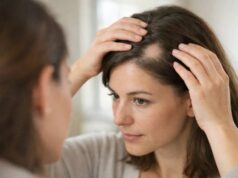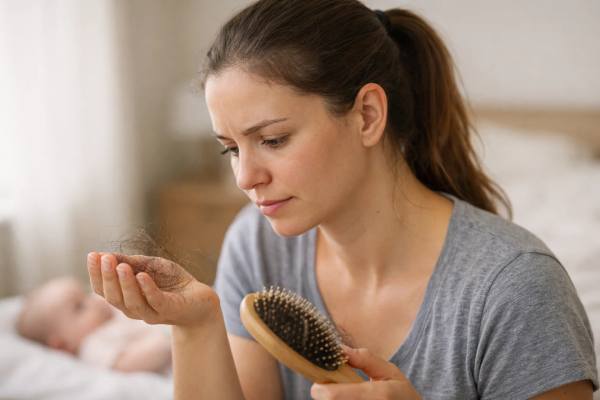
A few months after giving birth, many women notice the same unsettling pattern: more hair in the shower drain, more strands on the pillow, and a thinner-looking ponytail almost overnight. It can feel alarming, especially after pregnancy hair often seemed fuller than usual. The good news is that postpartum hair loss is usually a temporary reset, not a sign that the follicles are permanently damaged.
What happens after delivery is less a sudden “new” hair-loss problem than a delayed shift in the hair cycle. Pregnancy hormones keep more hairs in the growth phase for longer. After birth, that hormonal support drops, and many of those hairs move into the shedding phase around the same time. The result is visible shedding that can seem dramatic even when it is part of a normal recovery pattern.
Still, “usually normal” does not mean “always ignore it.” Timing, pattern, and duration matter. Knowing what to expect makes it much easier to stay calm, care for your hair gently, and recognize when postpartum shedding deserves a closer look.
Key Facts
- Postpartum hair loss usually begins about 2 to 4 months after delivery and often peaks a little later.
- Most postpartum shedding improves gradually, with clear regrowth over the first year after birth.
- The process is usually temporary telogen effluvium rather than permanent follicle damage.
- Persistent shedding, bald patches, scalp symptoms, or worsening thinning can point to a different problem.
- Gentle hair care, enough protein and iron, and patience over several months are more useful than aggressive treatments.
Table of Contents
- What Postpartum Hair Loss Actually Is
- When It Starts and How Long It Lasts
- Why It Happens and What Can Make It Worse
- What Regrowth Usually Looks Like
- Regrowth Tips That Actually Help
- When Postpartum Shedding Is Not Normal
What Postpartum Hair Loss Actually Is
Postpartum hair loss is usually a form of telogen effluvium, a temporary increase in hair shedding that happens after a major physiological shift. In this case, the trigger is childbirth and the fast hormonal transition that follows it. During pregnancy, higher estrogen levels keep more hairs in the growth phase for longer than usual. That is why many women notice thicker, fuller hair while pregnant. After delivery, those hormone levels fall, and a larger-than-usual group of hairs shifts into the resting and shedding phase together.
That synchronized shift is why postpartum shedding can look so dramatic. It is not that every follicle suddenly stopped working. It is that a large number of hairs that were “held” in growth for longer all begin to exit at roughly the same time. The result is diffuse shedding rather than a sharply defined bald patch. Most women notice it across the scalp, though the temples, hairline, and part line often draw the most attention.
It also helps to separate postpartum shedding from permanent hair loss. Telogen effluvium affects the timing of the hair cycle, not the survival of the follicle. In straightforward cases, the follicles are still capable of producing new hair. That is why regrowth usually follows, even if the density dip feels dramatic for a few months. A closer look at the hair growth cycle makes this easier to understand: the problem is a temporary shift in cycle timing, not scarring or irreversible follicle destruction.
Another common misunderstanding is the phrase “hair loss.” In postpartum telogen effluvium, the more accurate term is often excessive shedding. True hair loss can imply follicle miniaturization, autoimmune attack, or scarring. Postpartum shedding is usually different. You may lose more hairs than usual when washing, brushing, or tying your hair back, but the scalp itself is typically healthy and the process is self-limited.
That said, postpartum shedding can be emotionally intense. The timing is cruel: it often appears when sleep is fragmented, recovery is incomplete, and the body still feels unfamiliar. Because of that, even a normal process can feel like a sign that something is going wrong. A better way to think about it is this: postpartum hair loss is often a delayed biological reset after pregnancy, not a verdict on your long-term hair density.
One more nuance matters. Sometimes postpartum shedding does not create a completely new problem but reveals one that was already there. A woman who had subtle pattern thinning or tension-related hairline damage before pregnancy may only notice it once the extra pregnancy hair is shed. That is one reason pattern, duration, and regrowth quality matter so much.
When It Starts and How Long It Lasts
The timeline is one of the most reassuring parts of postpartum shedding because it is fairly recognizable. Most women do not notice a major increase in hair fall immediately after birth. Instead, shedding usually becomes more obvious about 2 to 4 months postpartum. That delay often surprises people. They expect a problem caused by delivery to happen right away, but telogen effluvium works on hair-cycle timing, not on the day of the trigger.
In practical terms, the common pattern looks like this:
- fuller pregnancy hair during late pregnancy or early postpartum
- noticeable shedding beginning around month 2, 3, or 4
- peak shedding a little later, often around months 4 to 5
- gradual easing over the following months
- visible regrowth and fuller appearance over the rest of the first year
That timeline explains why so many women say the hair loss “came out of nowhere.” The baby may already be several months old when the shedding becomes obvious, so the connection is not always intuitive. The amount can also look shocking because the extra shedding often shows up at once: in the shower, on clothing, in a hairbrush, and around the hairline.
Most cases improve without treatment. Many women see substantial recovery by 6 to 12 months postpartum, with fullness often returning close to baseline by the baby’s first birthday. The exact pace varies. Someone with long, dense hair may feel the shedding more intensely. Someone with fine hair may notice a dramatic change in ponytail size even if the process is still within a typical range.
It is also useful to distinguish heavy shedding from active balding. Postpartum telogen effluvium usually causes diffuse thinning rather than bare smooth patches. The shedding may be intense, but the scalp generally still has hair everywhere. If you are unsure whether what you are seeing is expected shedding or something else, it helps to understand the difference between hair shedding and longer-term hair loss. That distinction often lowers anxiety because it explains why postpartum hair can look thinner without implying permanent loss.
Not every case follows the average script perfectly. Some women begin shedding a little earlier. Others feel that shedding stretches beyond six months even though the hair is slowly improving. Recovery can also look uneven. The front hairline may seem slow to fill in, while the crown looks better sooner.
The timeline becomes more important when it is clearly broken. If heavy shedding begins much later, persists well beyond a year, or keeps worsening instead of leveling off, postpartum telogen effluvium becomes a less complete explanation. That does not mean something is seriously wrong, but it does mean the story may be larger than a normal postpartum reset.
In other words, the usual pattern is delayed, temporary, and self-limited. Once you know that, the experience becomes easier to track and much less mysterious.
Why It Happens and What Can Make It Worse
The central cause of postpartum shedding is hormonal change, especially the rapid fall in estrogen after delivery. During pregnancy, estrogen tends to prolong the anagen, or growth, phase of the hair cycle. After birth, many of those hairs move out of that prolonged phase together, and the shedding becomes visible a few months later. That is the core mechanism.
But the main cause is not always the only cause. The postpartum period is also a time when several other stressors can stack on top of normal hair-cycle change and make shedding feel worse or recovery slower.
Common amplifiers include:
- iron depletion from pregnancy or blood loss during delivery
- low protein intake during a period of poor appetite or rushed meals
- sleep deprivation
- physical recovery from surgery or difficult labor
- thyroid changes
- rapid weight loss
- emotional stress
- tight hairstyles used to keep hair out of the way
These do not always create a separate diagnosis, but they can intensify the shedding or make it last longer. That is why postpartum hair loss is not just about hormones in the abstract. It is happening inside a body that may still be recovering nutritionally, hormonally, and emotionally.
Iron deserves special attention. Pregnancy increases iron demands, and some women enter the postpartum months with depleted stores even if anemia was never clearly diagnosed. Thyroid function also matters because postpartum thyroiditis can alter shedding patterns and mimic or worsen telogen effluvium. When shedding is unusually heavy, prolonged, or paired with fatigue, palpitations, feeling cold, dizziness, or major energy change, it can be worth reviewing blood tests commonly used in hair-loss workups rather than assuming the answer is “just postpartum.”
Another subtle issue is hair handling. New mothers often wear hair up more often, rush detangling, skip trims, or use tighter styles for convenience. That does not cause telogen effluvium, but it can add breakage or traction to the picture and make the overall loss feel more severe.
One newer clinical insight is that postpartum shedding can sometimes uncover a condition that pregnancy hair had temporarily hidden. Female-pattern thinning and traction-related hairline loss may only become obvious once the extra pregnancy retention ends. This is not the most common outcome, but it is clinically important because it explains why some women feel that their hair “never quite came back” in the same way.
So the short version is this: childbirth-triggered telogen effluvium is the main driver, but the postpartum environment can shape how intense it feels. If nutrition, thyroid status, stress load, or hair practices are working against recovery, the shedding may look bigger and last longer than expected. That is where good postpartum care becomes practical, not just reassuring.
What Regrowth Usually Looks Like
Regrowth after postpartum shedding is rarely dramatic all at once. It tends to arrive in stages, and that matters because many women mistake early recovery for continued damage. The first sign is often not “full hair again.” It is simply less hair coming out each week. The shower drain looks less alarming. The brush fills more slowly. Wash day stops feeling like a small disaster.
After shedding slows, the next phase is short regrowth. This is the stage that often shows up as fine hairs around the temples, forehead, and part line. These hairs can stick up, frizz, or refuse to blend with the rest of the hairstyle. They are annoying, but they are often a positive sign. Early regrowth rarely looks polished. It looks uneven, springy, and a little awkward.
A common pattern is:
- Shedding eases.
- Baby hairs and shorter front regrowth appear.
- The part line starts to look denser.
- Ponytail thickness improves more gradually.
- Overall fullness returns over months, not weeks.
This is why postpartum hair recovery can feel psychologically slow even when it is progressing normally. Hair grows at its own pace. Once a follicle re-enters active growth, the new strand still has to become long enough to contribute visible volume. That takes time. A realistic view of hair growth timelines helps here, because regrowth may be biologically underway long before it looks cosmetically satisfying.
The front hairline is often the most emotionally loaded area. If temples look sparse, the mirror can make the whole scalp seem worse than it is. Yet those are also the zones where short regrowth is easiest to see. Many women interpret these short front hairs as ongoing damage or breakage when they are actually part of recovery. The challenge is that both things can happen at once: genuine regrowth and some breakage from styling.
Density also tends to return unevenly. The scalp may feel improved before the ends look fuller because the older lengths still reflect the months when more shedding was happening. This is especially true with long hair. A thinner ponytail can persist for quite a while even after the shedding phase has ended simply because the lost strands were long and contributed a lot of visual weight.
Some women recover close to their pre-pregnancy baseline. Others recover well but feel their hair texture or density is slightly different than before. That does not always mean disease. Pregnancy, postpartum hormone shifts, styling changes, and age can all affect how hair behaves.
The most important thing is direction. If shedding is trending down and short new hairs are appearing, the trajectory is encouraging. Recovery is not always neat, but it is usually visible in stages. Once you look for the right signs, regrowth becomes easier to recognize and much easier to trust.
Regrowth Tips That Actually Help
The best regrowth advice for postpartum hair loss is often quieter than people want. There is no instant fix that forces hair back into place. What helps most is supporting the body’s recovery, reducing extra mechanical damage, and avoiding treatments that create more stress than benefit.
Start with the basics. Hair is not an essential tissue, so it reflects broader recovery. If meals have become erratic, protein intake is low, or iron status is poor, the scalp will not get the best conditions for rebound. That does not mean every postpartum woman needs a supplement stack. It means steady nutrition matters. Regular meals with enough protein, iron-rich foods, and hydration support a better recovery environment than trendy hair gummies ever will.
Gentle handling matters too. When hair is shedding heavily, people often brush more aggressively in an attempt to “get it all out,” or they wear it tightly to hide thinning. Both can make things feel worse. Practical steps include:
- detangle gently, especially after washing
- use soft ties instead of tight elastics
- avoid tension-heavy buns and ponytails
- limit high heat when the hair feels fragile
- keep conditioner mostly on the mid-lengths and ends
- choose volumizing or lightweight products instead of very heavy formulas
Nighttime care counts more than many people realize. When hair is already shedding and shorter regrowth is emerging at the hairline, unnecessary friction can increase tangling and breakage. Simple strategies such as looser nighttime styling and gentler fabrics can help. For women with longer hair, protective sleep hairstyles can reduce friction without putting extra tension on the roots.
It is also smart to be cautious with “hair growth” supplements and aggressive postpartum treatments. High-dose biotin, complicated blends, and harsh scalp stimulation routines often create more confusion than clarity, especially if you are breastfeeding or still recovering medically. A product is not helpful just because it is marketed to new moms.
The most evidence-based regrowth tip may actually be patience paired with observation. Track the direction of change over a month, not day to day. Telogen effluvium fluctuates, and single heavy wash days can distort how recovery feels.
A fresh haircut can help the hair look fuller, but it does not change the cycle. Volumizing shampoos and lighter conditioners can improve appearance during the shedding phase, which is why dermatologists often recommend them. These are cosmetic supports, not biological cures, but they can make a difficult season easier.
The real goal is to protect recovering hair while the cycle resets. Nourish the body, minimize extra breakage, keep the routine simple, and resist the urge to attack a temporary process with desperate measures.
When Postpartum Shedding Is Not Normal
Most postpartum hair shedding is self-limited, but there are times when it deserves a proper workup. The key is not whether the shedding feels dramatic. It is whether the pattern, timing, or associated symptoms stop fitting ordinary postpartum telogen effluvium.
You should consider medical evaluation if any of the following apply:
- shedding is still heavy well beyond 12 months postpartum
- you have sharply defined bald patches
- the scalp is painful, burning, very itchy, or visibly inflamed
- you notice scaling, redness, or pustules
- there is clear widening of the part that keeps progressing
- the hairline is receding rather than simply shedding diffusely
- fatigue, dizziness, palpitations, cold intolerance, or other systemic symptoms are present
These patterns can suggest something other than simple postpartum shedding. Iron deficiency, thyroid disease, female-pattern hair loss, traction alopecia, alopecia areata, and inflammatory scalp disorders can all overlap with the postpartum period. Sometimes the postpartum shedding itself is real, but it also exposes one of these conditions by removing the extra density pregnancy had temporarily provided.
Another red flag is when regrowth seems absent. In normal postpartum telogen effluvium, the shedding phase eventually turns, even if slowly. If the density continues to decline without any sign of shorter return hairs, the diagnosis deserves another look.
This is also where scalp symptoms matter. Classic postpartum shedding is usually not painful or inflamed. If the scalp burns, scales heavily, or develops bumps, the problem may be dermatologic rather than purely hormonal. Likewise, if loss is concentrated at the temples and along areas that were frequently pulled tight, traction can be part of the story.
The postpartum period can also delay care because many women normalize every symptom after birth. That instinct is understandable, but it can become counterproductive. Temporary shedding is common. Persistent, worsening, or pattern-specific thinning should not be dismissed forever.
A useful checkpoint is this: by around the baby’s first birthday, most straightforward postpartum shedding should be clearly improving or close to resolved. If not, it is reasonable to review when hair loss warrants a dermatologist, especially if the shedding is affecting quality of life or no longer looks like a temporary reset.
The reassuring truth is that postpartum hair loss is usually normal. The equally important truth is that “usually” leaves room for exceptions. Paying attention to pattern, duration, and symptoms helps you catch those exceptions early, which is exactly what good hair care should do.
References
- Hair loss in new moms: Dermatologist tips 2025 (Guidance)
- Telogen Effluvium – StatPearls – NCBI Bookshelf 2024 (Clinical Review)
- Postpartum Telogen Effluvium Unmasking Additional Latent Hair Loss Disorders – PMC 2024 (Case Series)
- Investigation of exacerbating factors for postpartum hair loss: a questionnaire-based cross-sectional study – PMC 2023 (Cross-Sectional Study)
Disclaimer
This article is for educational purposes only and is not a diagnosis or personal treatment plan. Postpartum hair shedding is often temporary, but persistent or unusual hair loss can reflect iron deficiency, thyroid disease, pattern hair loss, traction, scalp inflammation, or other medical conditions. Seek care from a qualified clinician if shedding is severe, lasts longer than expected, comes with bald patches or scalp symptoms, or is accompanied by other health changes after delivery.
If this article helped you, please share it on Facebook, X (formerly Twitter), or any other platform where it may reassure and inform someone else going through postpartum hair loss.