Scalp care has entered its microbiome era, and prebiotics are now one of the most common claims on shampoos, serums, and leave-on scalp treatments. The language sounds scientific, but it can also feel slippery. Are these ingredients actually helping the scalp, or are they simply borrowing credibility from gut-health science?
The honest answer sits in the middle. Prebiotics for the scalp are not magic, and they are not a replacement for medicated treatment when the scalp is clearly inflamed. But they are not empty marketing either. Ingredients such as inulin and alpha-glucan oligosaccharide are used because they may help support a healthier microbial balance, reduce the collateral damage of cleansing, and make the scalp feel steadier over time. Their value is usually subtle: less reactivity, less oil rebound, fewer comfort swings, and a scalp that tolerates a routine better.
This guide explains what scalp prebiotics are, what inulin and alpha-glucan actually do, who may benefit most, and how to tell whether a product is helping or just sounding advanced.
Quick Overview
- Scalp prebiotics are best understood as supportive ingredients that may help maintain microbial balance and barrier comfort.
- Inulin has somewhat better topical skin data for hydration and microbiome-related effects, while alpha-glucan is common in microbiome-friendly scalp cleansers.
- Results are usually gradual and show up as comfort, reduced reactivity, or less oil imbalance rather than dramatic hair changes.
- Prebiotics are not a substitute for antifungal or prescription treatment when dandruff, seborrheic dermatitis, or scalp inflammation is obvious.
- A simple way to test them is to use one product consistently for 4 to 8 weeks instead of layering multiple new scalp actives at once.
Table of Contents
- What Scalp Prebiotics Are and What They Are Not
- Inulin and Alpha-Glucan: How They Differ
- What They May Help With on the Scalp
- What to Expect and How Long It Takes
- How to Build a Routine Around Them
- Limits, Side Effects, and When to Step Up Care
What Scalp Prebiotics Are and What They Are Not
A scalp prebiotic is usually a carbohydrate-based ingredient added to a product with the goal of supporting beneficial or more skin-friendly microbes. In the simplest terms, it is meant to act as a selective food source or ecological support factor, not as a disinfectant. That is a very different philosophy from older scalp care, which often treated the scalp as a surface that should be stripped, degreased, or sterilized into submission.
That distinction matters because the scalp is not an empty surface. It is an active ecosystem shaped by sebum, sweat, pH, washing habits, styling residue, temperature, and the presence of bacteria and fungi that can be either helpful, neutral, or problematic depending on the context. A healthy scalp microbiome is not about having fewer microbes. It is about having a more stable balance of the right ones, in the right proportions, under the right conditions.
This is where prebiotics become interesting. They are meant to support the environment rather than attack it. That can make sense for people whose scalp is not frankly diseased, but constantly feels “off”: oily by the second day, flaky after harsher shampoos, itchy without clear rash, or sensitive to too many actives. In those cases, a scalp product that preserves balance may be more useful than one that simply cleans harder.
Still, it is easy to overread the concept. A prebiotic scalp product is not a guaranteed microbiome reset. It is not a proven cure for dandruff. It is not the same thing as a probiotic shampoo, and it is certainly not a stand-alone hair-growth treatment. The evidence for scalp prebiotics remains much smaller than the marketing language around them. Much of the strongest human evidence comes from skin studies rather than scalp-specific trials, and some scalp data involve full product systems rather than isolated single ingredients.
That means the most honest framing is this: scalp prebiotics are supportive formulation tools. They may help a product be more microbiome-friendly, gentler during cleansing, or better at preserving hydration and comfort. But their effects are likely to depend on the full formula, the scalp type, and the presence or absence of a real scalp disorder.
They also make more sense when you understand the basics of scalp pH, flakes, and oil balance. A scalp that is repeatedly pushed into extremes often becomes more reactive. Prebiotics are appealing because they fit the opposite strategy: less disruption, more balance, fewer swings.
So what are scalp prebiotics? They are not miracle microbes in a bottle. They are better understood as ingredients that may help preserve the conditions under which a healthier scalp ecosystem can function. That is a quieter promise than many labels make, but it is closer to the science and much more useful in practice.
Inulin and Alpha-Glucan: How They Differ
Inulin and alpha-glucan oligosaccharide often appear together in scalp and skincare conversations, but they are not interchangeable. Both are used as prebiotic-style ingredients, yet they arrive in formulas with slightly different evidence stories and slightly different expectations.
Inulin is a naturally occurring fructan, a chain of fructose units usually derived from plants such as chicory root. In skin science, inulin has drawn attention because topical use appears capable of influencing microbial metabolism and supporting hydration-related outcomes. That does not mean every inulin formula will transform the scalp. It means inulin has a plausible biological role beyond marketing language, especially in products designed to support barrier comfort and moisture balance.
Alpha-glucan oligosaccharide is a sugar-derived ingredient widely used in microbiome-friendly cosmetic formulas. In scalp care, it often shows up in cleansers, tonics, and “gentle balance” products because it is positioned as a way to support healthy microbial growth during washing without pushing the scalp too far toward stripping. In practice, alpha-glucan is often the more familiar scalp prebiotic name, while inulin has somewhat more visible discussion in broader skin research.
The real difference is not that one is “good” and the other is “bad.” It is that inulin has somewhat clearer topical skin data, while alpha-glucan appears frequently in scalp-facing formulas but has less isolated scalp outcome research. That means readers should resist the urge to rank them like active drugs. These are not direct head-to-head prescription ingredients. They are supportive materials whose effects depend heavily on the rest of the product.
There is also a formulation difference worth understanding. Inulin tends to show up in products that lean toward hydration, barrier comfort, or leave-on support. Alpha-glucan often fits neatly into cleansing systems because it is used to make the wash step feel less disruptive to the scalp environment. That does not mean inulin cannot appear in a shampoo or alpha-glucan cannot appear in a serum. It simply reflects the kinds of roles formulators often assign them.
If your scalp goal is more about comfort, hydration, and reducing that tight or stripped feeling after washing, inulin-containing formulas may sound especially appealing. If your goal is a gentler cleansing routine that still addresses oil and flakes without flattening the scalp environment, alpha-glucan may be the more common label find.
This is where readers often benefit from thinking less about the ingredient in isolation and more about the function they need. A prebiotic only helps if the rest of the formula is compatible with the scalp. A microbiome-friendly sugar added to a harsh surfactant system is still living inside a harsh system.
That is why prebiotics overlap naturally with broader barrier support for scalp dryness. The ingredient does not have to “fight” the scalp to be useful. In many cases, its benefit is precisely that it supports a less aggressive, more stable routine.
In short, inulin and alpha-glucan belong to the same family of scalp-supportive ideas, but they do not arrive with identical evidence or identical roles. Inulin is easier to discuss from a topical skin evidence standpoint. Alpha-glucan is easier to spot in practical scalp formulas. Both deserve realistic expectations.
What They May Help With on the Scalp
Prebiotics for the scalp are most likely to help with comfort problems, not dramatic disease reversal. That may sound underwhelming, but it is actually where many people struggle. A scalp can be oily, itchy, mildly flaky, or overly reactive without meeting the threshold for a formal diagnosis. In that grey zone, supportive microbiome-focused products can be genuinely useful.
The clearest potential benefits fall into four areas.
First is oil balance. This does not mean prebiotics “switch off” sebum production. The more realistic goal is helping the scalp feel less greasy and less microbiologically overloaded after cleansing. Some scalp product studies suggest that microbiome-aware formulas can reduce sebum and improve hydration at the same time, which is exactly the kind of balance many people are missing.
Second is barrier support. A scalp with a strained barrier often feels contradictory: oily yet tight, flaky yet uncomfortable, shiny yet sensitive. Prebiotic ingredients may help support a routine that protects hydration and reduces collateral irritation. That can matter just as much as any change in flakes, because a more stable barrier usually means less urge to scrub, scratch, or over-correct.
Third is mild itch or reactivity. A scalp that itches after washing, changes with weather, or reacts to too many actives may benefit from a gentler product architecture that includes prebiotics. This is not the same as treating inflammatory disease. It is about making the scalp less easy to provoke.
Fourth is microbiome-friendly maintenance after a problem is under better control. Some people do well with antifungal or medicated care during a flare, then need something gentler to maintain comfort without continuing the strongest products too often. That is a practical role where prebiotic formulas can fit very well.
The people most likely to notice a difference are often those with:
- Oily but sensitive scalps.
- Mild recurrent flaking without thick plaques.
- Itch linked to product overload or overwashing.
- Scalp tightness after cleansing.
- A history of doing worse with harsher “deep clean” routines.
This is also why scalp prebiotics pair naturally with a better wash routine for oily scalp. If the routine itself is too aggressive, the ingredient has to work uphill.
What they usually do not help much with on their own is equally important:
- Clear seborrheic dermatitis flares.
- Thick adherent scale.
- Painful inflammation.
- Pustules or folliculitis.
- Pattern hair loss.
- Sudden shedding caused by illness, hormones, or nutritional deficiency.
A helpful way to think about prebiotics is that they are most useful when the scalp is unbalanced, not when it is acutely diseased. They can help support comfort, reduce routine-related disruption, and make the scalp feel less volatile. They are much less convincing when the scalp needs targeted medical treatment.
That distinction protects readers from one of the most common mistakes in modern scalp care: taking a smart support ingredient and asking it to do the job of a medicated therapy. Prebiotics can improve the environment. They cannot replace treatment when the problem is more specific than the environment itself.
What to Expect and How Long It Takes
The most important expectation to set with scalp prebiotics is that the improvement, when it happens, is usually incremental. People often start a microbiome product expecting a dramatic change in flakes or oil within three washes. That is rarely the best way to judge it. Prebiotics are better understood as slow-balancing ingredients rather than quick-rescue ingredients.
In real use, the earliest benefits are usually about feel. The scalp may become less tight after shampooing, less shiny between washes, or less reactive to styling and weather changes. Mild itch may settle before visible flakes do. That sequence makes sense. Comfort often improves before the scalp looks obviously different.
A realistic time frame often looks like this:
- First 1 to 2 weeks: the scalp may feel cleaner in a less harsh way, or simply more neutral.
- Around 3 to 4 weeks: subtle changes in oil balance, comfort, and mild flaking may become easier to notice.
- Around 4 to 8 weeks: you can more fairly judge whether the product is actually helping.
- Beyond 8 weeks: the routine is either earning its place or showing that it is too weak for the scalp problem.
This slower pattern is one reason prebiotics are easy to misjudge. If someone adds a prebiotic shampoo, a niacinamide serum, a salicylic scrub, and a new anti-dandruff product all at once, the scalp may improve or worsen, but there is no clear way to know what did what. Prebiotics work best when given a clean, steady trial.
The kind of improvement worth noticing includes:
- Less greasy rebound after washing.
- Fewer “itchy days” between washes.
- A calmer feel around the hairline or crown.
- Less visible dust-like flaking on dark clothes.
- Better tolerance of the overall routine.
What is not a reasonable expectation is instant resolution of thick dandruff, a major drop in shedding, or obvious hair regrowth. A prebiotic scalp product may support a healthier environment for hair, but that is not the same as stimulating follicles directly.
This is why prebiotics often make the most sense beside other low-irritation supportive ingredients such as niacinamide for scalp oil and itch. Both categories are often best at improving the background conditions of the scalp rather than acting like fast therapeutic hits.
It is also helpful to expect variation. Some people respond mostly with less oil. Others notice less itch. Others simply find that their scalp stops overreacting to washing. The improvement may be real without being dramatic. In scalp care, that still counts.
A good test is to ask one question after a month: Does my scalp feel easier to live with? If the answer is yes, the product may be doing exactly what a microbiome-supportive formula is supposed to do. If the answer is no, or the scalp feels angrier, then the issue may be the formula, the diagnosis, or the idea that a gentle support product can fix something that actually needs stronger care.
How to Build a Routine Around Them
The best way to use scalp prebiotics is to put them inside a routine that is already trying to reduce disruption. They are not rescue ingredients. They are support ingredients. That means the surrounding routine matters almost as much as the prebiotic itself.
For most people, the easiest entry point is a prebiotic shampoo or scalp serum, not both at once. A shampoo is simpler if your main issue is wash-related irritation, greasy rebound, or mild flaking. A serum or tonic is more interesting if the scalp feels tight, sensitive, or uncomfortable between washes.
A practical starting routine often looks like this:
- Choose one microbiome-supportive product.
- Keep the rest of the routine steady for at least a month.
- Avoid adding a scrub, acid, and anti-dandruff treatment at the same time.
- Watch for changes in comfort, oil, and flaking rather than only visible shine.
- Reassess after 4 to 8 weeks.
If you are using a prebiotic shampoo, frequency matters. More washing is not always better, but neither is stretching wash days so far that oil, sweat, and buildup pile up around the follicles. A regular schedule is usually more helpful than extremes.
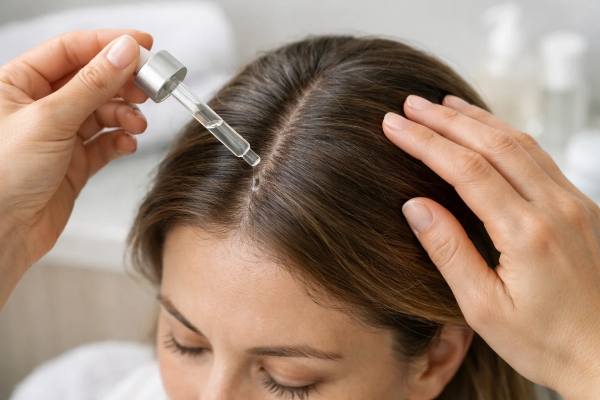
If you are using a leave-on prebiotic product, apply it to the scalp rather than just the hair, and keep the amount modest. Too much liquid at the roots can create the impression that the scalp is worse when the real issue is residue.
A few habits improve the odds that prebiotics will actually help:
- Use a non-stripping cleanser base most of the time.
- Limit harsh exfoliation if the scalp is already reactive.
- Avoid piling heavy oils directly onto an easily clogged scalp.
- Keep fragrances and essential oils lower if sensitivity is part of the story.
- Be careful with “detox” language, which often signals over-cleansing.
Prebiotics also need to be used in the right context. If the scalp is clearly flaky, greasy, and repeatedly inflamed, a supportive routine may need to sit behind or beside proper seborrheic dermatitis care and shampoo strategy. This is where many people get stuck. They want the gentlest solution to solve the whole problem, but sometimes the better plan is to calm the disease first and then use microbiome-friendly maintenance later.
Another practical point is patience with product texture. Some of the better scalp-supportive formulas do not feel as aggressively clarifying as conventional anti-buildup products. That does not automatically mean they are weak. It may mean they are trying not to disturb the scalp too much during cleansing.
A good microbiome routine should make the scalp feel steadier, not busier. If your scalp care shelf is becoming more complicated every week, prebiotics are unlikely to show their best side. Their advantage is usually simplicity: fewer swings, less overcorrection, and a scalp that no longer feels like it needs constant intervention.
Limits, Side Effects, and When to Step Up Care
Prebiotics for the scalp are usually low-risk, but they are not automatically right for every scalp or every moment. Their main limitation is not dramatic toxicity. It is insufficient strength for the wrong problem.
The biggest mistake readers make is assuming that because a microbiome-friendly product sounds advanced, it must also be therapeutic enough for visible scalp disease. That is often not true. If the scalp has moderate to heavy dandruff, clear redness, greasy yellowish scale, painful itch, or pustules, a prebiotic cleanser may be too gentle to carry the whole job. In that case, its best role may be supportive or maintenance-based, not primary treatment.
There is also the issue of formulation tolerance. A prebiotic ingredient can still sit inside a product that stings, leaves residue, or contains other components your scalp dislikes. Preservatives, fragrance, strong botanicals, and surfactant systems still matter. If a “microbiome” product makes the scalp burn, the label does not rescue it.
Possible downsides are usually practical:
- The scalp feels coated or heavy.
- The product is too mild for true dandruff.
- Improvement is so subtle that people quit before giving it a real trial.
- Multiple new actives are added, making the scalp more reactive.
- The user delays needed medical care because the formula sounds sophisticated.
This is where it helps to separate supportive care from targeted treatment. A prebiotic product may help a scalp that is mildly itchy, oily, or sensitive. It is much less likely to be enough for seborrheic dermatitis flares, psoriasis, contact dermatitis, or folliculitis. These conditions often need more than ecological support. They need a condition-specific approach.
A few warning signs suggest it is time to stop experimenting and escalate:
- Itch is intense or persistent.
- Flakes are thick, greasy, or rapidly recurring.
- The scalp is clearly red, sore, or burning.
- There are bumps, crusting, or drainage.
- Hair shedding is increasing alongside scalp inflammation.
- Several weeks of careful use bring no meaningful improvement.
At that point, the more useful question is not “Which prebiotic should I try next?” It is whether the scalp is telling you something more specific. Readers in that situation often benefit more from reviewing itchy scalp causes and when to worry than from buying another microbiome serum.
The fairest closing view is this: prebiotics are promising and often sensible, but they are not a shortcut around diagnosis. Inulin and alpha-glucan can be worthwhile in well-designed scalp care, especially for maintenance, comfort, and mild imbalance. They are much less convincing as solo answers for strongly inflammatory scalp disease.
A good scalp routine should make things quieter. If your scalp remains loud, recurrent, or increasingly uncomfortable, the answer is probably not another gentle support product. It is better treatment precision.
References
- Prebiotic Oligosaccharides in Skin Health: Benefits, Mechanisms, and Cosmetic Applications 2025 (Review)
- Multi-omic approach to decipher the impact of skincare products with pre/postbiotics on skin microbiome and metabolome 2023 (Clinical Mechanistic Study)
- New Topicals to Support a Healthy Scalp While Preserving the Microbiome: A Report of Clinical and in Vitro Studies 2023 (Clinical and In Vitro Report)
- Scalp Microbiome Dynamics Can Contribute to the Clinical Effect of a Novel Antiseborrheic Dermatitis Shampoo Containing Patented Antifungal Actives: A Randomized Controlled Study 2025 (Randomized Controlled Study)
- Comparison of Healthy and Dandruff Scalp Microbiome Reveals the Role of Commensals in Scalp Health 2018 (Observational Microbiome Study)
Disclaimer
This article is for educational purposes only and is not medical advice, diagnosis, or treatment. Prebiotic scalp products can support comfort, oil balance, and routine tolerance, but they are not a substitute for diagnosis or medical treatment when the scalp is persistently itchy, inflamed, painful, heavily flaky, infected, or associated with noticeable hair loss. Product choice and frequency should be guided by your scalp type, symptom pattern, and how your skin tolerates the rest of your routine.
If this article helped, please share it on Facebook, X (formerly Twitter), or your preferred platform so more readers can find clear, evidence-based scalp guidance.