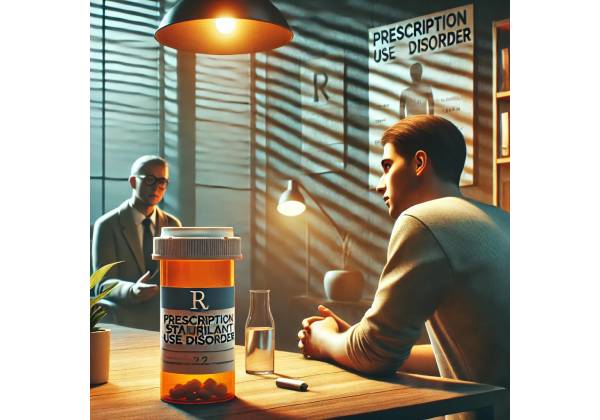
Prescription stimulant use disorder often hides behind a familiar story. The medication may have started with a real medical purpose, such as treatment for ADHD or narcolepsy, or with a practical-seeming goal like staying awake, studying longer, working harder, or suppressing appetite. At first, the drug can seem useful, efficient, even stabilizing. Then the pattern changes. Doses creep up. Sleep thins out. Food becomes less appealing. Mood and confidence begin to depend on the next pill. What looked like control can turn into compulsion more quietly than many people expect.
This article explains what prescription stimulant use disorder is, how it develops, how it tends to look in real life, and why it can become dangerous. It also covers cravings, tolerance, withdrawal, mental and physical effects, and the urgent warning signs that should not be ignored. The aim is clarity without blame, so the condition is easier to recognize early.
Table of Contents
- What Prescription Stimulant Use Disorder Means
- How Prescribed Use Can Turn Into Misuse
- Signs, Symptoms, and Behavior Patterns
- Cravings, Redosing, and Loss of Control
- Withdrawal and the Stimulant Crash
- How It Affects Sleep, Appetite, and Mental Health
- Psychosis, Cardiovascular Danger, and Other Urgent Risks
What Prescription Stimulant Use Disorder Means
Prescription stimulant use disorder is a pattern of problematic use involving medications such as mixed amphetamine salts, dextroamphetamine, lisdexamfetamine, methylphenidate, and dexmethylphenidate. These drugs have legitimate medical uses, most commonly for attention-deficit hyperactivity disorder and narcolepsy. Many people take them exactly as prescribed and do well. The disorder begins when use shifts from appropriate medical treatment into impaired control, compulsive use, or continued use despite clear harm.
That distinction matters. A person can take a stimulant every day under medical supervision and not have an addiction. A person can also misuse a stimulant once or twice and still not meet the pattern of a disorder. Prescription stimulant use disorder is broader than either of those situations. It involves a repeated cycle in which the medication starts to dominate behavior, mood, and decision-making.
Common features include:
- taking more than prescribed
- taking doses more often than intended
- using the drug for reasons beyond the original medical purpose
- spending significant time thinking about access, supply, or timing
- struggling to cut down even after promising to do so
- continuing to use despite worsening sleep, anxiety, health problems, or conflict
One reason this condition is easy to miss is that stimulants can initially make people feel capable. They may feel more alert, more social, more productive, or less hungry. Because the drug often improves performance in the short term, the early phase may not look obviously destructive. In some cases, the person appears more organized or more driven right before the problems become harder to hide.
Prescription stimulant use disorder also sits in an area where people often confuse treatment, misuse, and addiction. Someone with a legitimate diagnosis may begin stretching doses during stressful weeks. Someone without a prescription may use a friend’s pills to study or stay awake. Someone else may start taking more than prescribed because the original dose no longer feels strong enough. Those paths are different, but they can converge into the same core problem: the drug becomes increasingly important, increasingly hard to control, and increasingly tied to self-worth, energy, or emotional survival.
It is also important not to reduce this condition to a stereotype. It does not affect only students, only young adults, or only people who use drugs recreationally. It can affect professionals, parents, adolescents, older adults, and people who first received the medication through careful medical care. For some, the central issue is focus. For others, it is performance pressure, weight control, or the feeling of being able to outrun exhaustion.
A proper ADHD evaluation can help clarify when stimulant medication is being used for a legitimate clinical need and when the pattern has drifted into something more harmful. The prescription itself does not define the disorder. The pattern around it does.
How Prescribed Use Can Turn Into Misuse
The shift from prescribed use to misuse often happens gradually. It may begin with a practical compromise that feels temporary. A person takes an extra dose during exams, doubles up before a long shift, uses the medication on non-prescribed days to meet deadlines, or keeps taking it because the crash without it feels too sharp. That change may not register as dangerous at first, especially when the drug seems to improve concentration or stamina. But the logic can slowly change from “this helps when I need it” to “I cannot function the way I need to without it.”
Prescription stimulants act on dopamine and norepinephrine systems involved in alertness, reward, motivation, and effort. As repeated exposure builds, some people begin to chase not only the therapeutic effect but also the emotional state around it: confidence, urgency, speed, appetite suppression, or the feeling of being intensely locked in. This is especially risky in environments that reward overwork or treat exhaustion as weakness.
Several patterns can increase risk:
- using stimulants without a prescription
- using someone else’s medication
- taking higher doses than prescribed
- using rapid-delivery forms or altering the medication to feel it faster
- mixing stimulants with caffeine, nicotine, alcohol, or other substances
- using them to lose weight, compensate for poor sleep, or push through burnout
Certain pressures make misuse more likely. These include academic competition, shift work, long study hours, untreated ADHD, trauma history, perfectionism, anxiety, depression, and eating disorder symptoms. Social context matters too. In some settings, prescription stimulant misuse is normalized as a productivity tool rather than recognized as drug misuse.
Another problem is that the drug may seem to solve the very difficulties it begins to worsen. A person who sleeps poorly because of stimulant use may take more stimulant the next day to compensate. Someone who eats very little while on the drug may feel depleted and irritable, then use it again to feel sharper. Someone who grows anxious or emotionally flat may still keep taking it because they fear falling behind without it. The cycle feeds on itself.
Misuse is also not always obvious from the outside. People often hide it behind achievement. They may still make deadlines, keep up appearances, or describe their use as necessary rather than risky. In fact, high functioning can delay recognition because the costs accumulate quietly before a major crash occurs.
Prescription stimulant use disorder often emerges when three things start happening together:
- the amount or frequency of use keeps expanding
- life starts being organized around the medication
- the person continues despite clear physical, emotional, or social harm
By that point, the stimulant is no longer just helping with a task. It is shaping how the person feels able to think, work, eat, sleep, and cope. That is the point where misuse becomes much more than a bad habit.
Signs, Symptoms, and Behavior Patterns
The signs of prescription stimulant use disorder often show up in clusters rather than as one dramatic symptom. Some are physical. Some are emotional. Many are behavioral. Often, the pattern looks like a person who is running too fast for too long, becoming less flexible, and increasingly dependent on the medication to feel normal or effective.
Common behavioral signs include:
- taking doses earlier than planned or closer together
- running out of medication before the refill date
- hiding pills, counting them frequently, or becoming unusually protective of them
- taking the medication for studying, weight control, mood, or social confidence rather than only for the intended medical reason
- using the drug on weekends, late at night, or in situations outside the original prescription plan
- becoming secretive, defensive, or irritated when use is discussed
Physical symptoms can vary with dose, formulation, sleep status, and how long the person has been using. Typical signs may include decreased appetite, weight loss, dry mouth, jaw clenching, tremor, sweating, a fast heart rate, elevated blood pressure, insomnia, and restlessness. Some people look tense and bright-eyed. Others look depleted, worn down, and unable to settle.
Mood and cognitive changes are often just as revealing. A person may become unusually talkative, impatient, irritable, or overly confident while the drug is active, then flat, withdrawn, or emotionally raw as it wears off. Their attention may seem sharp in bursts but fragmented overall. They may start many tasks and finish fewer. Some become rigid, repetitive, or intensely preoccupied with details that no longer matter much.
In daily life, these patterns often lead to friction:
- missed meals and erratic routines
- staying up far too late, then relying on the next dose to recover
- strained relationships because of irritability or emotional unpredictability
- repeated promises to cut back that do not hold
- decreased reliability once the person is off the drug or coming down from it
Another difficulty is that stimulant misuse can resemble other conditions. The person may appear anxious, hyped up, overcommitted, or simply exhausted. At times, the presentation can overlap with ordinary anxiety symptoms, which can make the real pattern harder to spot. Timing helps. If the symptoms rise and fall with doses, sleeplessness, or running out of pills, the stimulant is likely playing a major role.
People with prescription stimulant use disorder also often show a narrowing of priorities. Food, sleep, and relationships become more negotiable than access to the medication. The drug may start to feel less like an option and more like a requirement for being competent, attractive, awake, or emotionally stable. That psychological shift is one of the clearest signs that the condition has moved beyond occasional misuse.
Because the drug can temporarily improve output, the disorder may stay hidden until the costs are significant. By then, the signs usually have a rhythm: activation, overextension, depletion, and renewed use. Once that cycle becomes repetitive, it deserves careful attention.
Cravings, Redosing, and Loss of Control
Cravings in prescription stimulant use disorder are often misunderstood. People may imagine them as a simple urge to feel high, but that is only one form. In real life, stimulant craving is frequently tied to function. The person may crave the feeling of being sharp, awake, productive, confident, or emotionally protected from fatigue and self-doubt. That makes the disorder especially tricky, because the craving can feel justified.
A person may start the day already calculating whether they have enough medication to work, study, clean, socialize, or make it through meetings. They may tell themselves they only need it for one important task, then take more to extend the effect, smooth the comedown, or push through the next demand. This is where redosing becomes a central pattern.
Common thoughts around stimulant craving include:
- “I just need one more to finish.”
- “I will not be able to focus without it.”
- “I need it to feel like myself today.”
- “I cannot afford to slow down right now.”
- “I will cut back after this week.”
Redosing often follows a predictable sequence:
- the first dose feels useful or energizing
- the person notices the effect fading
- ordinary tiredness or irritability starts to feel intolerable
- another dose seems like the quickest fix
- the day stretches later, sleep worsens, and the next day starts from a more depleted baseline
Over time, this creates loss of control. The medication stops being taken according to plan and starts being taken according to feeling, fear, or urgency. The person may not intend to misuse it when the day begins, yet still end up doing so by evening. That repeated failure to stay within limits is one of the clearest signs that the pattern is no longer fully voluntary.
Tolerance can intensify this cycle. The same amount may feel less effective, especially for mood lift or mental drive. Some people respond by increasing the dose on their own. Others begin to use the drug in riskier ways or combine it with other substances to shape the effect. Even when the medication no longer feels pleasant, they may still keep using because the alternative feels slower, duller, or emotionally harder to bear.
Craving is also cue-driven. Deadlines, conflict, boredom, low self-esteem, social comparison, or a night of poor sleep can all trigger the urge to use. The brain starts linking the medication to performance and relief, which is why it becomes so hard to step back once the habit is established. This is part of the same reward-learning process that underlies dopamine and habit loops more broadly.
When people ask whether they are addicted, one useful question is this: does the medication still feel like a tool, or does it feel like the only way to become the version of yourself you think you need to be? When the answer leans toward the second, loss of control is often already underway.
Withdrawal and the Stimulant Crash
Withdrawal from prescription stimulants usually does not look like opioid withdrawal. It is less likely to involve dramatic physical sickness, but that does not mean it is mild. For many people, it feels like a hard crash in energy, mood, motivation, and mental clarity. That crash can be intense enough to drive immediate reuse, especially in people who depend on the medication to work, study, or feel emotionally steady.
The first phase often begins as the active effect wears off. A person may feel irritable, empty, slowed down, or suddenly unable to think clearly. After longer or heavier use, withdrawal can include:
- profound fatigue
- long periods of sleep or heavy daytime drowsiness
- increased appetite
- low mood or emotional flatness
- slowed thinking and poor concentration
- agitation, anxiety, or inner restlessness
- strong craving to take more just to feel functional again
Some people describe the experience as hitting a wall. Others describe it as moving through wet cement. The contrast between the stimulant state and the crash can be so sharp that ordinary tiredness feels unbearable. That is one reason people return to the drug quickly. They may not be chasing euphoria at all. They may simply be trying to escape the drop.
Withdrawal can also be psychologically dangerous. People may feel hopeless, ashamed, or unable to picture getting through basic tasks without the medication. In some cases, the crash brings severe depression or suicidal thoughts. That risk is especially important after binge-like use, heavy sleep deprivation, or periods of escalating dose.
The timing and severity vary. Some people feel a short rebound over one to three days. Others experience a longer stretch of fatigue, low motivation, poor sleep quality, and reduced concentration. The body may want sleep, yet the sleep may not feel restorative right away. Appetite can rebound strongly. Mood can stay unsteady for days or longer.
A second challenge is that withdrawal often lands on top of the problems the stimulant was masking. If someone was already burned out, overwhelmed, depressed, or disorganized, those difficulties may feel much worse when the drug is stopped. That can create a false conclusion that the person simply “needs” the stimulant to function, when part of what they are feeling is a withdrawal state.
This is one reason abrupt, unsupported cycles of stopping and restarting can become exhausting and risky. The person bounces between overactivation and collapse, with less trust in their natural energy and concentration each time. A separate recovery guide for stimulant addiction can cover treatment and management in detail, but at the condition level, the key point is simple: withdrawal is not trivial, and the crash is one of the major forces that keeps the disorder going.
How It Affects Sleep, Appetite, and Mental Health
Prescription stimulant use disorder affects far more than attention. Over time, it can distort basic body rhythms and undermine the very functions people often hope to improve. Sleep, appetite, mood, judgment, and emotional regulation all tend to become less stable as stimulant use escalates.
Sleep is often one of the earliest casualties. Even when a person believes they are sleeping enough, the rhythm may become delayed, fragmented, or poor in quality. Late-day doses, repeated redosing, and the habit of using stimulants to recover from prior sleep loss can create a self-reinforcing cycle. The person sleeps less, then needs more stimulant to offset the fatigue, then sleeps worse again. Eventually, symptoms of chronic sleep deprivation can start to blend with the effects of the drug itself: irritability, memory problems, emotional volatility, and slowed judgment.
Appetite usually changes too. Many prescription stimulants blunt hunger, sometimes strongly. At first, that may feel convenient or even desirable. Over time, though, regular undereating can worsen anxiety, shakiness, headaches, mood swings, and poor concentration. It can also strengthen the appeal of the medication if the person has body-image concerns or is using the drug partly to suppress appetite. In that setting, the stimulant becomes linked not only to productivity, but also to control over food and weight.
Common health and functioning effects include:
- skipped meals and unintended weight loss
- dehydration and dry mouth
- jaw tension and headaches
- reduced patience and increased irritability
- emotional flatness when the drug is active and depression when it fades
- difficulty feeling pleasure in ordinary activities
Mental health effects can be subtle at first. Some people become more anxious, suspicious, brittle, or perfectionistic. Others feel emotionally numb, socially detached, or unable to relax without another substance. In a few cases, especially after prolonged high-dose use or heavy sleep loss, the drug can contribute to paranoia, panic, or unusual beliefs. Even when symptoms do not reach that level, the person may start feeling unlike themselves.
Daily functioning usually narrows. The person may appear productive in bursts but become less balanced overall. Household tasks pile up. Relationships become more tense. Spontaneous enjoyment fades. Everything starts revolving around how much energy is available, how much medication is left, and whether the person can stay ahead of the next crash.
There is also a cost to identity. Prescription stimulant use disorder often teaches a person that their unmedicated self is inadequate: too slow, too distracted, too hungry, too tired, too ordinary. That belief can become deeply painful. The disorder is not only about drug effects. It is also about the shrinking space in which a person feels acceptable without them.
Psychosis, Cardiovascular Danger, and Other Urgent Risks
The most serious risks of prescription stimulant use disorder go well beyond poor sleep or loss of appetite. At higher doses, during prolonged use, or when combined with other stressors, stimulants can create urgent psychiatric and medical danger. These risks are especially important because people often underestimate them when the drug came from a prescription bottle.
One major danger is stimulant-induced psychosis. This can involve paranoia, hearing or seeing things that are not there, intense suspiciousness, or fixed false beliefs. Sleep deprivation can make this more likely, and the combination of high stimulant exposure and little rest can push people into a frightening mental state quickly. The person may become convinced others are watching them, talking about them, or trying to harm them. In severe cases, behavior becomes erratic or unsafe.
Cardiovascular strain is another major concern. Prescription stimulants can raise heart rate and blood pressure. In susceptible people, or at higher doses, they can contribute to palpitations, chest pain, shortness of breath, severe anxiety, fainting, or more serious events. Risk increases when stimulants are mixed with other activating substances, taken in larger amounts, or used in the setting of dehydration, exertion, or underlying heart problems.
Urgent warning signs include:
- chest pain or severe shortness of breath
- pounding or irregular heartbeat
- collapse, seizure, or loss of consciousness
- extreme agitation, panic, or confusion
- hallucinations, paranoia, or disorganized behavior
- dangerous overheating or severe dehydration
- suicidal thoughts during a crash or withdrawal period
Another overlooked risk is impaired judgment. People on high doses may feel unusually confident while actually becoming less accurate, less flexible, and more impulsive. They may drive while sleep deprived, work through clear physical warning signs, or mix substances to manage the up-and-down cycle. Alcohol, benzodiazepines, cannabis, nicotine, and excess caffeine can all complicate the picture in different ways.
Prescription status also does not guarantee safety of the pattern. A medically appropriate stimulant can still become dangerous when taken in the wrong dose, at the wrong time, by the wrong person, or for the wrong reason. Escalation matters. So does route of use, duration without sleep, and the presence of other psychiatric symptoms.
Importantly, urgent risk is not limited to people who look obviously out of control. It includes high-achieving people who are barely sleeping, repeatedly redosing, becoming paranoid, or using the medication to force themselves past normal limits. Prescription stimulant use disorder becomes dangerous when the drug is no longer helping a person live better, but is instead demanding more from the body and mind than they can safely give.
References
- The ASAM/AAAP Clinical Practice Guideline on the Management of Stimulant Use Disorder 2024 (Guideline). ([PMC][1])
- Clinical Management of Psychostimulant Withdrawal: Review of the Evidence 2023 (Review). ([PMC][2])
- Risk of Incident Psychosis and Mania With Prescription Amphetamines 2024. ([PubMed][3])
- Methylphenidate 2024. ([NCBI][4])
- Dextroamphetamine-Amphetamine 2025. ([NCBI][5])
Disclaimer
This article is for educational purposes only and is not a diagnosis, treatment plan, or substitute for medical or mental health care. Prescription stimulant use disorder can involve severe withdrawal depression, psychosis, cardiovascular complications, and other urgent safety risks. Seek prompt medical care if stimulant use is escalating, if stopping leads to severe mood symptoms, or if chest pain, hallucinations, paranoia, seizures, or suicidal thoughts occur. In an emergency, contact local emergency services immediately.
If this article helped you understand the condition more clearly, please share it on Facebook, X, or another platform you prefer.