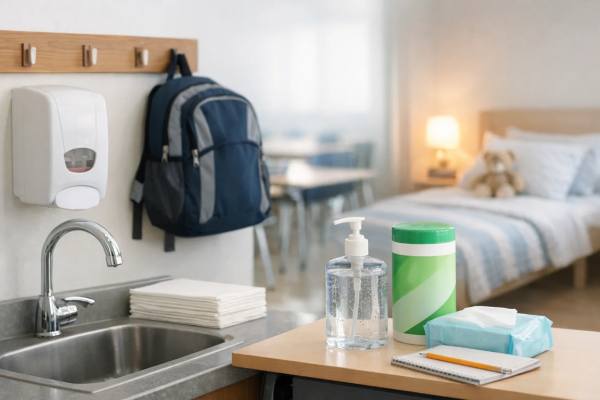
If your child seems to bring home a new cold every other week, you are not imagining it—schools and daycares are efficient sharing networks for respiratory viruses. The reassuring truth is that prevention does not require perfection. The biggest gains come from a handful of repeatable habits that reduce exposure, lower the dose of germs that reaches the nose and eyes, and keep the immune system resilient through sleep, nutrition, and stress support. When those pieces are in place, many families notice fewer sick days, shorter illnesses, and fewer “second-wave” infections that spread through the household. This guide breaks prevention into practical layers you can use at home and reinforce at school: how colds spread, which hygiene steps matter most, how sleep changes susceptibility, and how to decide when a child is well enough to attend school without fueling the next classroom outbreak.
Key Takeaways
- Layering small habits (handwashing, face-touch awareness, and airflow) reduces colds more reliably than any single “immune booster.”
- A consistent bedtime and age-appropriate sleep duration supports immune function and helps kids bounce back faster.
- Alcohol-based hand sanitizer is useful, but young children need supervision to prevent ingestion and eye irritation.
- Use a “home-from-school reset” routine for 2 minutes: hands first, water bottle rinse, and a quick face wash if your child touches their face often.
Table of Contents
- Why school germs spread so fast
- Hand hygiene kids will actually do
- Respiratory etiquette and face-touch habits
- Sleep routines that reduce sick days
- Air, cleaning, and the school-home routine
- Food, vaccines, and immune resilience
- When to keep kids home and when to call
Why school germs spread so fast
Colds are usually caused by a large family of viruses (rhinoviruses are a common example), and kids encounter many different strains each year. That is one reason “building immunity” can feel slow: immunity is often strain-specific, and classrooms constantly introduce new variants.
Why kids catch more colds than adults
Most school-age children get multiple colds per year, and younger children—especially in daycare—can have even more. Several factors stack the odds:
- Close contact and shared objects (toys, markers, tablets, door handles)
- Frequent face touching (eyes, nose, mouth are easy entry points)
- Developing hygiene skills (handwashing that is too short or misses fingertips)
- Immature immune memory compared with adults
This is not a parenting failure. It is exposure density plus learning curves.
How transmission usually happens
Respiratory viruses spread mainly through:
- Direct contact: hands to hands, then hands to face
- Droplets and short-range aerosols: coughing, sneezing, loud talking, singing
- Shared surfaces: less dominant than direct contact for many viruses, but still relevant when hands move from surfaces to faces
The common thread is the same: germs succeed when they reach mucous membranes.
The timing that surprises parents
Two timing facts explain why “we were careful” still leads to illness:
- Kids can be contagious before symptoms are obvious, so transmission often happens early.
- Many colds incubate for roughly 1 to 3 days, which makes it hard to identify the exact exposure source.
Instead of trying to “find the kid who caused it,” focus on layers that reduce spread every day. Consistency beats detective work.
A realistic prevention mindset
The goal is not zero colds. The goal is fewer infections that disrupt school, sleep, and family routines—and fewer chains where one child’s cold becomes a household-wide cycle. Prevention works best when you treat it like brushing teeth: a basic rhythm, not a crisis response.
Hand hygiene kids will actually do
Hand hygiene is powerful, but only when it is simple enough to stick. Kids do not need a lecture on germs; they need a routine they can repeat under real-life conditions: rushed mornings, crowded bathrooms, and snack time chaos.
When handwashing matters most
Instead of aiming for constant handwashing, focus on “high-yield moments”:
- After using the bathroom
- Before eating or handling snacks
- After blowing the nose, coughing, or sneezing
- When coming home from school or the playground
- After touching shared items (sports equipment, classroom tablets)
Five well-timed washes are often more effective than fifteen forgettable ones.
Make the technique kid-proof
The most common problem is speed. Help kids master the basics:
- Wet hands, add soap, and lather fully
- Scrub palms, backs of hands, between fingers, and fingertips
- Rinse well and dry thoroughly
A practical trick: tell kids to “wash the parts that touch the food and the face,” which naturally emphasizes fingertips and thumbs.
Hand sanitizer as a backup plan
Alcohol-based sanitizer is useful when sinks are not available (field trips, car line, sports). For school-age kids, a simple rule works:
- Use sanitizer when hands look clean but washing is not possible.
- Wash with soap and water when hands are visibly dirty or sticky.
Safety matters with young children:
- Supervise use to prevent swallowing.
- Teach “sanitize, then hands down” until dry to avoid rubbing eyes.
Build a habit with cues, not reminders
Reminders fade; cues stick. Choose one cue that happens every day:
- “Shoes off, hands on.”
- “Backpack down, wash hands.”
- “Snack starts after hands.”
If a habit fails, make it easier, not stricter. Place sanitizer where it is used (by the door, in the car, clipped to the backpack) and keep it consistent.
One small upgrade: nails and skin care
Short nails reduce the “hidden dirt zone” under fingertips. Also moisturize if frequent washing causes cracking, because cracked skin can make washing painful and reduce compliance.
Respiratory etiquette and face-touch habits
Colds spread efficiently because kids touch their faces constantly and because coughs and sneezes happen fast. You cannot supervise every moment, but you can teach two skills that dramatically reduce transmission: how to contain droplets and how to interrupt automatic face touching.
Teach the “cover and continue” routine
Kids need a default behavior that works even when they are distracted:
- Cough or sneeze into the elbow or a tissue
- Throw the tissue away
- Clean hands right after
Make it concrete. Practice at home like you practice crossing the street. The goal is not perfect etiquette—it is reducing the number of times cough droplets land on hands and surfaces.
Face-touching is a habit, not a choice
Most face touching is unconscious. A child will not “remember” to stop unless you give them a substitute behavior. Options that work:
- Teach a “safe touch” zone (touch hair or the side of the head instead of eyes and nose).
- Use a simple cue word like “hands down” paired with a neutral gesture.
- For younger kids, use a bracelet or hair tie as a reminder that hands belong on toys, not faces.
Avoid shaming. The objective is awareness, not blame.
Water bottles and shared items: reduce the swap risk
A surprising amount of exposure comes from swapping:
- Water bottles
- Lip balm
- Musical instrument mouthpieces
- Snacks eaten from shared bags
A practical rule for school: “Your mouth items are yours.” Label bottles clearly and choose a bottle that is easy to identify. Teach kids to say, “No thanks, I have mine,” in a confident, non-awkward tone.
Masks: a situational tool
Some families use well-fitting masks during high-transmission periods, especially for older children who can tolerate them safely and consistently. Masks are not necessary in every setting, and their benefit depends heavily on fit and adherence. If you use them, focus on:
- Comfort and correct wear (over nose and mouth)
- Clean storage (not loose in a backpack pocket)
- Breaks when safe to do so
For children who cannot wear masks safely or reliably, hygiene and airflow matter even more.
Make “sick-day manners” normal
When your child is mildly ill but stable enough for school based on local rules, emphasize:
- Extra hand hygiene
- Not sharing food or drinks
- More spacing during snack time if possible
- A tissue supply and a plan for disposal
These small behaviors reduce the chances that one cold becomes ten.
Sleep routines that reduce sick days
Sleep is one of the few prevention tools that improves both susceptibility and recovery. When sleep is short or fragmented, kids tend to catch infections more easily and struggle more with mood, attention, and appetite during illness.
How much sleep kids typically need
Many families underestimate sleep needs, especially during busy school seasons. Typical ranges used in pediatric sleep guidance include:
- Preschool: about 10 to 13 hours per day (including naps)
- School-age: about 9 to 12 hours per day
- Teens: about 8 to 10 hours per day
Not every child hits the top of the range, but chronic under-sleep is common and often correctable.
The immune payoff of a consistent schedule
Consistency matters as much as total hours. A child who sleeps “enough” on weekends but goes to bed late on school nights may still be under-recovered. A stable rhythm supports:
- Better immune signaling
- More resilient mood and stress response
- Faster recovery when a virus hits
- Fewer morning meltdowns that erode hygiene routines
If you change one thing, change wake time first. A consistent wake time anchors the whole system.
A bedtime routine designed for real families
A workable routine is short and repeatable:
- Screens off and bright lights down
- Bathroom and teeth
- A brief wind-down (story, quiet music, or calm talk)
- Lights out at a predictable time
Aim for the same sequence, even if the clock time shifts slightly. Kids relax when the pattern is familiar.
When cough and congestion disrupt sleep
During cold season, sleep often fails because symptoms wake kids up. Consider supportive steps that reduce nighttime disruption:
- Nasal saline before bed
- Warm fluids and a comfortable room temperature
- Honey for cough in children over 1 year
- Slight head elevation for older kids who tolerate it
If snoring is loud and persistent, or if your child has pauses in breathing during sleep, that deserves medical discussion—sleep quality and infection risk can be closely linked.
Protect sleep during busy weeks
A simple protection strategy is the “two-night rule”: if sleep is short for two nights in a row, prioritize an earlier bedtime on night three. This prevents a multi-week sleep debt that makes every virus season feel worse.
Air, cleaning, and the school-home routine
Hygiene is important, but the environment sets the baseline. Crowded rooms with poor airflow make it easier for respiratory viruses to spread. The good news is that families can improve air and reduce carryover exposure with small, practical steps.
Ventilation: the overlooked layer
Viruses spread more easily indoors when air is stagnant. While parents cannot control school ventilation directly, you can:
- Encourage outdoor play and outdoor eating when possible
- Ask teachers whether windows are opened periodically (when weather allows)
- Support classroom policies that reduce crowding during peak illness season
At home, ventilation is often easier:
- Air out common rooms for a few minutes daily when feasible
- Run bathroom fans during showers to reduce humidity spikes that can worsen mold
- Avoid indoor smoking or vaping entirely; it increases respiratory irritation and infection risk
Humidity: not too dry, not too damp
Very dry air dries out nasal passages and can worsen throat irritation, while overly damp air can encourage mold. If your home is dry in winter, modest humidification at night may help. If you see condensation on windows or smell mustiness, focus on dehumidifying and ventilation instead.
Cleaning that targets the right surfaces
You do not need to disinfect everything. Prioritize “high-touch, high-traffic” areas:
- Doorknobs, light switches, faucet handles
- Shared remotes, tablets, and game controllers
- Lunchboxes and water bottles (daily rinse and regular deep wash)
Over-disinfecting can backfire if it replaces more important habits like handwashing and good sleep.
The two-minute home-from-school reset
This routine reduces the chance that school germs spread through the whole house:
- Hands wash or sanitize immediately
- Water bottle rinse and put lunch items in the sink
- Change out of school clothes if your child is a heavy face-toucher or has close-contact sports
- Quick face wash if nasal rubbing is frequent
The goal is lowering the household “germ load” without turning your entryway into a medical station.
Shared spaces and siblings
If one child is sick, add a few temporary boundaries:
- Separate cups and utensils
- Separate towels
- More ventilation in common rooms
- A “tissue and trash” station in the main living area
This is not isolation; it is containment.
Food, vaccines, and immune resilience
No food prevents every cold, but nutrition and vaccination reduce vulnerability and make illnesses less disruptive. Think of this layer as resilience: it does not block every exposure, but it improves the odds that infections are milder and shorter.
Nutrition fundamentals that support immunity
For most children, the immune-support plan is surprisingly ordinary:
- Regular meals with protein (eggs, yogurt, beans, fish, poultry, tofu)
- A variety of fruits and vegetables across the week
- Whole grains and healthy fats for steady energy
- Adequate fluids, especially during sports and heated indoor seasons
When kids skip meals or live on snack foods, sleep and mood often worsen, which indirectly increases infection risk.
Supplements: when they help and when they distract
Supplements are most useful when a child has a documented deficiency or limited diet. Otherwise, they can become an expensive distraction. Practical safety points:
- Avoid giving multiple “immune” products at once; it increases the risk of excessive dosing.
- Be cautious with zinc products in young children, especially if they cause nausea.
- If vitamin D is used, keep dosing within pediatric guidance from your clinician.
If you are considering supplements because colds are frequent, first check the higher-impact basics: sleep, hand hygiene, and household smoke exposure.
Vaccines: not for colds, but for the look-alikes
Many “colds” that keep kids home are not true common colds. Influenza and COVID can start like a cold and then worsen. Staying up to date on recommended vaccines:
- Reduces severe disease risk
- Often reduces missed school days
- Helps protect high-risk family members at home
Vaccines do not eliminate every sniffle, but they reduce the infections that are most likely to cause serious illness or prolonged recovery.
Stress and over-scheduling
Chronic stress can erode sleep and appetite, and it can make kids more reactive when they do get sick. If cold season is relentless, consider whether your child has any true recovery time during the week. Even one calmer evening can improve sleep and reduce the “run-down” feeling that precedes illness.
A useful rule is “one big thing a day” during peak cold season: one sport, one playdate, one late evening—then protect the rest.
When to keep kids home and when to call
Even the best prevention plan will not block every virus. When a child gets sick, the priority shifts to safe care, preventing spread, and recognizing when symptoms suggest something more than a routine cold.
When staying home is the responsible choice
Consider keeping your child home when:
- Fever is present or they feel “feverish” and unwell
- They cannot participate comfortably in normal activities
- They have frequent coughing fits that disrupt class or require constant attention
- Vomiting or significant diarrhea is present
- They need close monitoring for asthma symptoms or dehydration
A simple school-day test is: can they drink, eat something, and manage basic self-care without unusually high support?
Return-to-school basics
Many schools use a practical benchmark: symptoms are improving, energy is adequate for the school day, and fever has been gone long enough that the child is stable without constant medication. Even after returning, teach “low-spread” habits for a few days:
- No sharing food or drinks
- Extra hand hygiene before snacks
- Tissues and elbow coughs
- Reasonable spacing during close-contact games when possible
When a cold might be something else
A clinician call is more urgent if you notice:
- Breathing difficulty, fast breathing, wheeze, or chest retractions
- Dehydration signs: very little urination, dry mouth, dizziness, or lethargy
- Ear pain that is severe or persistent
- Sore throat with high fever and no cough, especially with swollen neck glands
- A rash with fever, or a child who looks unusually ill
If symptoms improve and then clearly worsen again (“better, then worse”), it may suggest a secondary infection such as an ear infection or sinus complication.
How to avoid unnecessary antibiotics
Most colds are viral and do not benefit from antibiotics. To support accurate evaluation:
- Track the timeline: day symptoms started and how they changed
- Note fever pattern and the highest temperature
- Describe breathing and hydration status
- Report any known exposures (strep in class, influenza in the household)
Clear details help clinicians decide when testing or treatment is needed.
Household containment when one child is sick
If a sibling is vulnerable or you cannot afford repeated family-wide illness, use a short-term plan:
- Separate cups and towels
- Ventilate shared spaces
- Prioritize sleep for everyone
- Keep hand sanitizer where it is actually used (kitchen, entry, bedside)
The goal is not fear—it is reducing the number of infections that cascade through the home.
References
- Physical interventions to interrupt or reduce the spread of respiratory viruses – PubMed 2023 (Systematic Review)
- Child Care Center Hand Hygiene Programs’ Cost-Effectiveness in Preventing Respiratory Infections – PubMed 2021 (Randomized Controlled Trial)
- Air cleaners and respiratory infections in schools: A modeling study using epidemiological, environmental, and molecular data – PubMed 2023 (Study)
- About Handwashing | Clean Hands | CDC 2024 (Government)
- Roadmap to improve and ensure good indoor ventilation in the context of COVID-19 2021 (Guideline)
Disclaimer
This article is for general educational purposes and does not provide medical advice. While most childhood colds are mild and self-limited, some symptoms require prompt medical evaluation, including trouble breathing, bluish lips, persistent chest pain, dehydration, confusion, severe lethargy, coughing blood, or fever that returns after initial improvement. If your child is younger than 3 months with fever, has chronic lung or heart disease, is immunocompromised, or you are worried for any reason, contact a licensed clinician for individualized guidance.
If you found this article helpful, please consider sharing it on Facebook, X (formerly Twitter), or any platform you prefer.