Protein is one of the first nutrients people think about when hair starts looking thinner, weaker, or slower to recover. That instinct is not wrong. Hair fibers are built largely from keratin, a structural protein, and the follicle is one of the body’s most active tissues. But the common advice to simply “eat more protein” misses the bigger picture. Hair growth depends on whether you are getting enough protein for your body size and stage of life, whether you are eating enough total calories, and whether other issues such as iron deficiency, thyroid changes, stress, or pattern hair loss are also in play.
For some people, a protein gap is a real driver of shedding. For others, extra shakes and bars will do very little. The useful question is not whether protein matters. It does. The useful question is whether protein is the missing piece for your hair, and what to do next if it is.
Key Insights
- Adequate protein supports normal hair growth, especially during dieting, illness recovery, and other higher-demand periods.
- Most healthy adults need at least about 0.8 grams per kilogram daily, and some people benefit from a more deliberate intake plan.
- More protein does not reliably fix shedding caused by genetics, iron deficiency, thyroid problems, or scalp disease.
- Spreading protein across three to four meals is usually more practical than trying to make up the difference at dinner.
- Diffuse shedding plus fatigue, muscle loss, or swelling makes low protein intake more concerning.
Table of Contents
- Why Protein Matters for Hair
- How Much Protein You Need
- Best Foods to Support Hair Growth
- Signs You May Be Low on Protein
- When More Protein Will Not Fix Shedding
- How to Build a Hair-Friendly Protein Plan
Why Protein Matters for Hair
Hair is not a living tissue once it leaves the scalp, but the follicle that produces it is metabolically busy. During the growth phase, follicle cells divide rapidly and assemble the hair shaft from amino acids, the building blocks of protein. Keratin gives hair much of its strength and structure, so a steady supply of dietary protein helps the follicle keep producing normal strands. This is one reason protein becomes such a frequent topic in conversations about hair thinning.
The body, however, has a clear hierarchy. When protein intake falls short, amino acids are directed toward higher-priority jobs such as maintaining muscle, enzymes, immune function, hormones, and organ repair. Hair is important cosmetically, but biologically it is not essential. That means the follicle may slow down before more critical systems do. In practical terms, low intake can contribute to a shift away from active growth and toward shedding, especially if the protein shortfall happens alongside illness, rapid weight loss, or a major drop in calories.
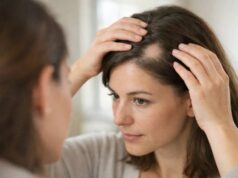
This helps explain why low-protein shedding often looks diffuse rather than sharply patterned. You may notice more hair in the shower drain, on your pillow, or in your brush. The ponytail may feel smaller. The scalp may show through more around the part. At the same time, it is easy to confuse shedding with breakage, which is why it helps to understand shedding versus true hair loss before blaming one nutrient alone.
The bigger nuance is that protein is necessary, but it is not a magic accelerator. If you are already meeting your needs, doubling your intake does not reliably make hair grow faster or fuller. Follicles also respond to iron status, thyroid function, sex hormones, inflammation, medications, stress, sleep, and genetics. Someone with pattern hair loss or postpartum shedding can eat plenty of protein and still lose density. Someone with a restrictive diet can have normal iron levels but still shed because total intake is too low.
A useful way to think about protein is this: it is the foundation, not the whole house. Without enough of it, hair quality and retention can suffer. With enough of it, you give your follicles the raw material they need, but you still have to account for the rest of the growth environment.
How Much Protein You Need
For most healthy adults, the baseline minimum is about 0.8 to 0.83 grams of protein per kilogram of body weight per day. That is a reasonable starting point for preventing deficiency, not a promise of peak cosmetic hair growth. In real life, many people asking about hair are not in a perfectly steady state. They may be dieting, exercising hard, recovering from illness, eating less due to stress, or simply skipping meals. In those settings, the minimum may not feel like enough margin.
A practical target for many adults concerned about shedding is often around 1.0 to 1.2 grams per kilogram per day, especially if appetite is low, calorie intake has dropped, or lean body mass is at risk. That is not a universal rule and it is not a hair-specific prescription. It is simply a useful range that can make it easier to consistently meet needs from whole foods.
Here is what that looks like:
- 55 kg body weight: about 44 to 46 grams as a minimum; a more deliberate daily plan might land around 55 to 66 grams.
- 70 kg body weight: about 56 to 58 grams as a minimum; a practical target may be around 70 to 84 grams.
- 85 kg body weight: about 68 to 71 grams as a minimum; a practical target may be around 85 to 102 grams.
How you distribute protein matters too. Many people eat very little at breakfast, a modest amount at lunch, then most of the day’s protein at dinner. That pattern can still work, but it is often harder to hit totals consistently. A steadier approach is to spread intake across three or four eating occasions, often with roughly 20 to 30 grams at each main meal. This is especially helpful for people with low appetite or those trying to avoid the cycle of “healthy all day” followed by a frantic attempt to make up for it at night.
Protein deserves extra attention if you are dealing with low-calorie dieting, major weight loss, GLP-1 medication–related appetite changes, a vegan diet that is not carefully planned, recovery from surgery, or aging-related appetite decline. These situations do not guarantee deficiency, but they do raise the odds that protein intake is lower than you think.
More is not always better. Very high intakes have not been shown to act like a direct hair-growth treatment. And if you have kidney disease, significant liver disease, or another medical condition that affects protein handling, personalized advice matters more than generic internet targets. For most readers, the smartest move is not chasing extremes. It is making sure your baseline is genuinely covered, every day, for long enough to matter.
Best Foods to Support Hair Growth
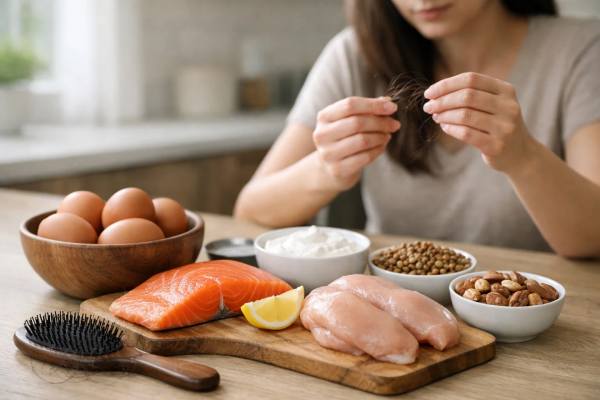
The best protein foods for hair do two jobs at once: they provide enough total protein, and they often bring along other nutrients the follicle uses well, such as iron, zinc, vitamin B12, selenium, and omega-3 fats. That is why whole foods usually beat the “protein cookie plus caffeine” approach. Hair does not care that a package says high protein if the rest of your intake is chaotic.
Animal proteins are efficient options because they provide all essential amino acids in a compact serving. Useful examples include:
- Eggs: about 6 grams each, plus biotin and selenium.
- Greek yogurt or skyr: often 15 to 20 grams per serving.
- Cottage cheese: roughly 12 to 15 grams per half cup.
- Chicken or turkey: often 25 to 30 grams per 100 grams cooked.
- Salmon, sardines, tuna, or trout: commonly 20 to 25 grams per 100 grams, with omega-3s in some varieties.
- Lean beef or lamb: protein plus highly absorbable iron and zinc.
Plant proteins can absolutely support healthy hair too, but they work best when you plan them with a little intention. Soy foods are especially useful because they are relatively protein-dense and provide a strong amino acid profile. Tofu, tempeh, edamame, soy milk, lentils, beans, chickpeas, peas, seitan, and high-protein yogurts made from soy can all help close the gap. If you do not eat animal foods, a more deliberate vegan hair-loss nutrition plan becomes more important, especially for total protein, iron, zinc, and B12.
A smart hair-focused plate often looks simple rather than trendy. Think of protein first, then add produce, fiber-rich carbohydrates, and healthy fats. Examples:
- Breakfast: Greek yogurt with berries and pumpkin seeds, or eggs with toast and fruit.
- Lunch: Salmon bowl with rice and vegetables, or lentil soup with whole-grain bread.
- Snack: Cottage cheese, edamame, kefir, or roasted chickpeas.
- Dinner: Chicken, tofu, or tempeh with potatoes or grains and cooked vegetables.
Convenience matters more than perfection. Canned fish, rotisserie chicken, hard-boiled eggs, high-protein yogurt, tofu cubes, milk, soy milk, and frozen edamame are practical foods because they reduce the odds that you skip protein entirely when life gets busy.
The most useful mindset is not “Which superfood grows hair fastest?” It is “Which protein foods can I realistically eat often enough to meet my target?” Hair responds to consistency, not one heroic meal. A reader who adds 20 grams of protein to breakfast and makes lunch more substantial will usually get farther than someone who buys a supplement powder and changes nothing else.
Signs You May Be Low on Protein
Low protein intake rarely announces itself with a single dramatic hair symptom. More often, it shows up as a pattern. Hair may start shedding diffusely, meaning all over rather than only at the temples or crown. The part can look wider. The ponytail may feel thinner. Regrowth may seem slower, and individual strands may look less substantial. Some people also notice that hair feels limp or does not hold style as well, although that is not specific to protein.
The key word is diffuse. Protein-related hair changes tend to involve overall thinning or increased shedding, not sharply defined bald patches. If you are seeing circular bare spots, eyebrow loss, broken hairs in one area, scalp redness, scale, or tenderness, other causes move much higher on the list. Protein may still matter, but it is unlikely to be the whole story.
Clues outside the scalp are often just as helpful. Low protein intake can travel with:
- Reduced muscle mass or feeling weaker than usual.
- Poor recovery after exercise or illness.
- Feeling unusually hungry because meals do not keep you full.
- Brittle nails or slower tissue repair.
- More fatigue when intake has also become too low overall.
- Swelling in the feet or ankles in more significant deficiency states.
Context matters even more than symptoms. Protein is more likely to be part of the problem if shedding began after a restrictive diet, a period of appetite loss, bariatric surgery, a heavy illness, a major increase in exercise, or unplanned weight loss. It also deserves attention if your typical day includes coffee for breakfast, a light lunch, snack foods in the afternoon, and a carb-heavy dinner with little actual protein.
One practical test is to write down everything you eat for three ordinary days, not your best days. Then estimate how many grams of protein you are actually getting. Many people who assume they eat “a lot of protein” discover that most meals only contain 5 to 10 grams, which is easy to undershoot. Others find their intake is perfectly adequate and the shedding likely has another cause. That is a valuable answer too.
Low protein is also not the only explanation for sudden diffuse shedding. Fever, surgery, emotional stress, thyroid shifts, iron deficiency, medications, and rapid weight change can look very similar, which is why it helps to know the common sudden-shedding triggers before deciding that protein is the culprit. When the history does not fit, forcing more protein rarely solves the problem.
When More Protein Will Not Fix Shedding
This is the part many articles skip: extra protein is not a universal hair treatment. If you are already meeting your needs, adding a protein shake may help you feel organized, but it may do very little for your scalp. That is especially true when the real driver is something else entirely.
Pattern hair loss is the clearest example. Male and female pattern hair loss are linked to genetics, hormones, and follicle miniaturization, not simply under-eating protein. Postpartum shedding is another. It usually reflects a shift in the hair cycle after pregnancy, not a sudden failure to consume enough protein. The same goes for shedding after fever, surgery, emotional stress, or some medications. A person may notice these events around the same time they start “eating healthier,” which makes protein feel like the missing piece, but correlation is not causation.
Iron deficiency is another common spoiler. A diet can contain adequate protein but still be low in absorbable iron. Thyroid disorders can also trigger thinning even when protein intake is solid. Scalp inflammation, seborrheic dermatitis, psoriasis, and some scarring disorders can disrupt growth in ways protein alone will not touch. If the scalp is itchy, painful, red, very flaky, or developing patches, the conversation should quickly move beyond nutrition.
Low calories can confuse the picture too. Some people hit a respectable protein target while still eating too little overall. The body reads that as stress. Hair follicles often respond poorly to rapid weight loss, aggressive fasting, or long periods of under-fueling, even when grams of protein on paper look decent. In that setting, “eat more protein” is only partly right. The better advice is often “eat enough, consistently.”
This is also where supplements get overpromoted. Protein powders, collagen drinks, and hair gummies are tools, not treatments. A powder is useful if it helps you reach a target you would otherwise miss. It is not automatically superior to yogurt, eggs, tofu, fish, or beans. And broad hair supplements are not a substitute for diagnosing the reason you are shedding.
When the cause is unclear, a focused workup is smarter than guesswork. Depending on the situation, common hair-loss blood tests may include a complete blood count, ferritin or iron studies, and thyroid testing, with other labs added based on symptoms and medical history. The goal is not to order everything. It is to avoid treating the wrong problem for six months while the real one goes unchecked.
How to Build a Hair-Friendly Protein Plan
If you suspect your intake is low, the fix does not need to be extreme. A hair-friendly protein plan is usually about structure, not supplements. The goal is to meet a realistic daily target often enough, for long enough, that the follicle has a stable supply of raw material while the rest of your body is also adequately fueled.
A simple approach looks like this:
- Set a daily target. Start with your body weight in kilograms and multiply by at least 0.8. If you are in a higher-demand period, a practical target may be closer to 1.0 to 1.2 grams per kilogram unless your clinician has told you otherwise.
- Distribute it across the day. Three meals with 20 to 30 grams each is often easier than one large dinner. A protein-poor breakfast is one of the most common weak spots.
- Build repeatable defaults. Pick two breakfasts, two lunches, and two snacks that reliably contain protein. Repetition is an advantage here.
- Pair protein with enough total food. Hair dislikes chronic under-eating. Keep calories, carbohydrates, iron-rich foods, and healthy fats in the picture.
- Give it time. Hair changes lag behind diet changes. Reduced shedding may take weeks to notice, and visible fullness takes longer.
Here are examples of easy upgrades that work in real life:
- Swap toast alone for eggs and toast.
- Add Greek yogurt or soy yogurt to a fruit-based breakfast.
- Choose a lunch with chicken, tuna, tofu, beans, or lentils instead of a mostly salad-based meal with little substance.
- Keep portable options around, such as cottage cheese, kefir, edamame, roasted chickpeas, or milk-based and soy-based drinks.
- Add beans, tofu, fish, or shredded chicken to soups, bowls, and pasta instead of treating them as side ingredients.
At the same time, keep expectations grounded. Correcting a protein gap can absolutely help if you were under-eating, but it will not override every other cause of thinning. If shedding continues beyond two to three months, worsens quickly, or comes with scalp symptoms, patchy loss, or major medical changes, it is time to read up on when to see a dermatologist and consider a more targeted evaluation.
The most effective hair plan is rarely dramatic. It is enough protein, enough total nourishment, and enough patience to let the growth cycle respond.
References
- Evaluation of the Safety and Effectiveness of Nutritional Supplements for Treating Hair Loss: A Systematic Review 2023 (Systematic Review). ([PubMed][1])
- Protein – a scoping review for Nordic Nutrition Recommendations 2023 2023 (Review). ([PubMed][2])
- Integrative and Mechanistic Approach to the Hair Growth Cycle and Hair Loss 2023 (Review). ([PMC][3])
- “Let Food be Thy Medicine”: Value of Nutritional Treatment for Hair Loss 2021 (Review). ([PMC][4])
- Dietary reference values for proteins 2021 (Guideline Report). ([healthcouncil.nl][5])
Disclaimer
This article is for educational purposes only and is not a diagnosis or a substitute for medical care. Hair shedding and thinning can reflect nutrition issues, but they can also be caused by iron deficiency, thyroid disease, hormonal shifts, medications, scalp disorders, autoimmune conditions, and genetic hair loss. If you have rapid shedding, patchy loss, scalp pain, redness, scale, or ongoing thinning that is not improving, seek evaluation from a qualified clinician.
If this article helped you, please share it on Facebook, X, or any platform your audience uses.