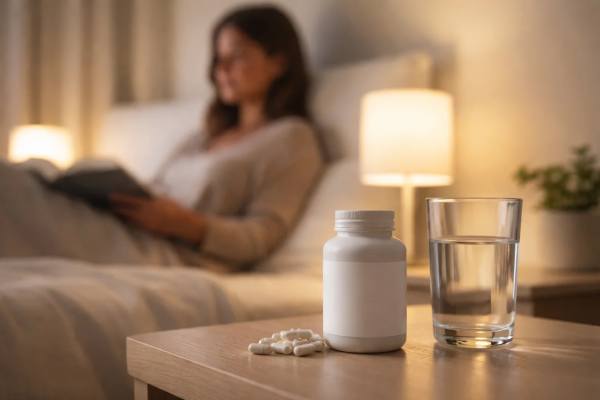
A growing body of research suggests that the gut and brain communicate in both directions—through nerves, immune signals, hormones, and microbe-made compounds that influence how we feel and how we sleep. “Psychobiotics” is the name often used for probiotic strains studied for mental health and stress-related outcomes, including anxiety, low mood, and sleep quality. The promise is not a quick mood lift or a replacement for therapy or medication. Instead, the best-case scenario is modest, steady support: fewer stress spikes, improved emotional resilience, and sleep that feels more restorative.
Because probiotic effects are strain-specific, the details matter more than the marketing. A label that only says “probiotics” is like a bottle that only says “vitamins.” This article explains how psychobiotics may work, which strains show the most consistent signals so far, how long a trial should last, and who should avoid them.
Key Insights for Smarter Strain Selection
- Some probiotic strains show modest improvements in stress, anxious mood, and sleep quality when taken daily for several weeks.
- Benefits tend to be most noticeable for mild to moderate symptoms, especially when stress and digestive symptoms overlap.
- Effects are strain-specific, so the strain code on the label matters more than the brand or “high CFU” claims.
- People who are immunocompromised or severely ill should not start probiotics without medical guidance.
- A practical trial is one product for 6–8 weeks, with simple tracking and no other new supplements added.
Table of Contents
- Psychobiotics and the gut-brain axis
- Strains studied for anxiety and stress
- Probiotics and depression symptoms
- Better sleep and circadian support
- How to choose a psychobiotic
- Safety, side effects, and who should avoid
Psychobiotics and the gut-brain axis
Psychobiotics are most often described as probiotic strains (and sometimes prebiotics) that have been studied for effects on mood, stress response, cognition, or sleep. The key word is “studied.” Many products borrow the language without using the same strains or doses that appear in clinical trials. If you remember only one principle, make it this: probiotics are not interchangeable, even when they share the same genus and species name.
The gut-brain axis works through several overlapping pathways:
- Nerve signaling: The vagus nerve carries information from the gut to the brain, and changes in gut activity can affect how the brain interprets stress and threat.
- Immune and inflammation shifts: Gut microbes influence inflammatory signaling. Because chronic, low-grade inflammation is associated with fatigue, low mood, and sleep disruption, even small changes can matter for some people.
- Barrier function and “leaky gut” narratives: A stressed gut lining can become more permeable. This topic is often oversimplified online, but the practical point is that gut irritation can amplify immune signals that the brain “feels.”
- Neurotransmitter-related chemistry: Microbes and the gut lining can influence how tryptophan is used (serotonin-related pathways vs other metabolic routes), and they can affect signaling molecules tied to calm and arousal.
- Short-chain fatty acids and metabolic byproducts: Microbes produce compounds that influence gut motility, immune tone, and possibly sleep-wake regulation indirectly.
It also helps to separate terms that get mixed together:
- Probiotic: live microorganisms that, in adequate amounts, confer a health benefit
- Prebiotic: a substrate (often a fermentable fiber) used by microbes in ways that can benefit health
- Postbiotic: non-living microbial components or metabolites that may have effects (this area is evolving)
- Fermented food: may contain live microbes, but not always, and strains are rarely identified or standardized
Psychobiotics are not a standalone mental health treatment. Think of them as a “body-based lever” that may slightly lower the volume on stress physiology, which can make other supports—sleep habits, psychotherapy skills, movement, and medication when needed—more effective and easier to maintain.
Strains studied for anxiety and stress
Most psychobiotic research for anxiety focuses on stress-related symptoms: feeling tense, overwhelmed, keyed up, and mentally fatigued. Results tend to be mixed, and when benefits occur they are usually modest—but “modest” can still be meaningful if it helps someone sleep, function at work, or feel less reactive.
A practical way to approach strain choice is to match it to the pattern of your anxiety:
- Stress reactivity: you feel fine until stress hits, then your body spirals
- Rumination: you get stuck in repetitive, negative thought loops
- Body-forward anxiety: butterflies, nausea, urgency, or bloating alongside worry
- Situational stress: exams, travel, work crunch periods, grief, or life transitions
Strains and formulations that appear frequently in the psychobiotic conversation include:
- Lactobacillus helveticus R0052 and Bifidobacterium longum R0175 (often studied as a pair)
- Bifidobacterium longum 1714
- Lactobacillus casei Shirota
- Lactobacillus gasseri CP2305
- Lactiplantibacillus plantarum PS128
- Multi-strain blends that include Lactobacillus and Bifidobacterium species together
What these strains have in common is not a guaranteed outcome; it is that they have been investigated with measurable endpoints like perceived stress, anxiety scales, stress hormone patterns, or sleep-related measures during stressful periods.
If you are trying a psychobiotic for anxiety, set expectations that fit the evidence:
- Improvements often appear after 2–4 weeks, not in the first few days.
- Benefits are more likely to feel like less edge and better coping, not a dramatic mood shift.
- People with milder symptoms often report clearer changes than people with severe, long-standing anxiety.
A simple tracking plan makes the trial more honest. Each day, rate:
- anxiety intensity (0–10)
- physical tension (0–10)
- sleep quality (0–10)
- digestive comfort (0–10)
If your anxiety comes with prominent digestive symptoms, a psychobiotic may be especially worth testing because the gut-brain axis “signal” is already loud. If anxiety is severe, disabling, or tied to panic attacks, a probiotic should be viewed only as a complementary experiment, not a primary strategy.
Probiotics and depression symptoms
Depression is not one condition; it is a cluster of symptoms that can include low mood, loss of interest, fatigue, sleep disruption, appetite changes, cognitive fog, and a sense of emotional numbness. Psychobiotic research suggests that probiotics may be most useful as an adjunct—supporting the body systems that can worsen depression—rather than acting as a standalone antidepressant.
One reason probiotics are being studied in depression is that many people with depressive symptoms also experience:
- digestive discomfort (bloating, constipation, diarrhea, reflux)
- chronic stress physiology (hyperarousal or shutdown)
- inflammation-related fatigue or “sickness behavior” patterns
- sleep disruption that aggravates mood
In these contexts, a probiotic that improves gut comfort or sleep consistency may indirectly improve mood by reducing the daily friction that keeps the nervous system on high alert.
What outcomes tend to look like when a probiotic helps:
- slightly improved mood stability (fewer “crashes”)
- improved energy and motivation, especially in the morning
- reduced irritability and tension
- fewer stress-related digestive episodes
- better sleep quality that makes coping easier
The strains that show up repeatedly in mood-focused discussions overlap with stress-focused strains, including certain Lactobacillus and Bifidobacterium strains, sometimes used in combinations. However, the key limitation remains: studies vary widely in strain selection, dose, duration, and participant profiles. That heterogeneity makes it hard to give a single “best strain for depression” answer.
If you are considering psychobiotics for depression, aim for clarity rather than hope:
- Choose a product that lists a full strain ID, not just a species.
- Use a 6–8 week trial window, because shorter trials can miss gradual improvements.
- Keep the rest of your routine stable during the trial so you can interpret changes.
- Treat improvements as a signal that your gut and stress physiology are part of your depression picture, not as proof that depression is “just the gut.”
Also consider the direction of causality. Depression can change appetite, sleep, and activity, which can then shift the microbiome. In that sense, psychobiotics may function best when paired with basics that also shape the microbiome: consistent meals, movement, daylight exposure, and regular sleep timing. When mood is very low, tiny supportive shifts can matter—but safety and appropriate mental health care come first.
Better sleep and circadian support
Sleep is one of the most practical reasons people explore psychobiotics, because sleep quality is measurable and changes can be felt quickly. The emerging story is not that probiotics “knock you out,” but that some strains may help the body shift toward a calmer night pattern: less stress activation, fewer awakenings, and better perceived sleep quality.
Several mechanisms may explain why a probiotic could influence sleep:
- Stress buffering: Lower evening stress activation may reduce difficulty falling asleep and nighttime rumination.
- Inflammation modulation: Inflammation can fragment sleep and reduce deep sleep quality in some people.
- Gut comfort: Bloating, reflux, and bowel irregularity can disrupt sleep directly.
- Metabolite signaling: Microbial byproducts can influence gut motility and the body’s “rest-and-digest” state.
Strains often discussed in sleep-related research include:
- Bifidobacterium longum 1714
- Lactiplantibacillus plantarum PS128
- Lactobacillus casei Shirota
- Lactobacillus gasseri CP2305
- Certain Bifidobacterium strains studied in insomnia populations
How to time a psychobiotic for sleep is not one-size-fits-all. Some people do well taking it with dinner. Others prefer morning dosing to reduce the chance of any mild digestive activation in the evening. A sensible approach is to pick one schedule and keep it stable for at least two weeks before deciding it is “wrong.”
A practical sleep-focused trial looks like this:
- Take one strain-specific probiotic daily for 6–8 weeks.
- Track sleep quality, sleep latency, and nighttime awakenings (a simple note in your phone is enough).
- Keep caffeine timing consistent and avoid adding other new sleep supplements during the trial.
- Evaluate outcomes in two windows: weeks 1–2 (tolerability) and weeks 3–8 (trend).
If you already have insomnia, expect probiotics to function as a supporting layer, not a replacement for sleep fundamentals. The strongest “stack” is often: consistent wake time, morning light, reduced late-day caffeine, and a calming wind-down routine. If a psychobiotic helps, you may notice that the same sleep routine starts working better, with fewer setbacks after stressful days.
If sleep problems are severe, persistent, or accompanied by loud snoring, gasping, or significant daytime sleepiness, evaluation for sleep disorders is important. A probiotic should not be used as a workaround for untreated sleep apnea or other medical sleep conditions.
How to choose a psychobiotic
Choosing a psychobiotic is less about finding the “strongest” product and more about choosing a product you can test cleanly. Many people get lost in marketing: 100 billion CFU, dozens of strains, “clinically proven,” “mood support,” and added herbs. The problem is that complex formulas make it difficult to identify what actually helps or harms you.
Prioritize strain identification over hype
A mental-health-targeted probiotic should list:
- genus and species (for example, Lactobacillus or Bifidobacterium)
- strain code (letters and numbers such as R0052, R0175, 1714, PS128, or Shirota)
If the strain code is missing, the product is harder to match to research, and “psychobiotic” becomes mostly a branding term.
Use a dose range that matches typical research patterns
Many studies use daily doses in the single-digit to low tens of billions of CFU, often taken once daily for 4–12 weeks. Higher is not automatically better, and for sensitive guts, very high doses can increase gas and bloating. Starting lower and building consistency usually beats starting high and quitting.
A cautious dosing strategy:
- start with the manufacturer’s suggested dose or half-dose for 7 days
- increase to the full dose if tolerability is good
- stay consistent for 6–8 weeks before judging results
Keep the formula simple during your trial
If your goal is mood or sleep, avoid adding ingredients that can confuse the picture:
- large amounts of inulin or other prebiotic fibers (can cause gas)
- multiple sugar alcohol sweeteners (can cause diarrhea and bloating)
- stimulant herbs or large amounts of caffeine-containing extracts
A single-strain product or a well-studied two-strain combo is often the easiest way to run a clean trial.
Plan your trial like a small experiment
Your trial should answer one question: “Does this strain help me?” To get a reliable answer:
- avoid changing multiple supplements at once
- choose 2–3 simple outcomes (sleep quality, anxious tension, mood stability)
- track weekly trends, not just day-to-day noise
If you feel worse—more bloated, more wired at night, more irritable—stop and reassess. A “bad fit” is still useful data. It often points to the need for a different strain, a lower dose, or a gut-first approach before aiming at mood and sleep outcomes.
Safety, side effects, and who should avoid
For most generally healthy adults, probiotics are tolerated well. Still, psychobiotics are not risk-free, and the mental health framing can encourage people to self-treat situations that deserve careful clinical support.
Common side effects
The most frequent issues are digestive and usually mild:
- gas and bloating (often temporary and dose-related)
- changes in stool frequency or consistency
- mild abdominal discomfort during the first 1–2 weeks
If side effects occur, the first adjustment is usually to reduce the dose, take it with food, or switch to a simpler formula without added fibers and sweeteners.
Who should avoid probiotics without medical guidance
Extra caution is appropriate if you are:
- immunocompromised (for example, due to chemotherapy, advanced immune disorders, or high-dose immunosuppressants)
- critically ill or recently hospitalized in complex situations
- living with a central venous catheter or other major invasive devices
- dealing with severe pancreatitis or other high-risk acute GI conditions
In these groups, even low-probability risks matter more, and a clinician should guide supplement decisions.
Gut conditions where “psychobiotic” trials can backfire
If you have severe bloating, marked food intolerance patterns, or suspected small-intestine issues, probiotics can sometimes worsen symptoms—especially multi-strain, high-dose products. In that case, it may be wiser to stabilize digestion first (bowel regularity, tolerated fiber, targeted evaluation if needed) before layering on a psychobiotic trial.
Mental health safety and realistic boundaries
Psychobiotics are not a substitute for evidence-based mental health care. Seek urgent help if you have:
- suicidal thoughts or self-harm urges
- severe depression with inability to function
- mania or psychosis symptoms
- panic attacks that feel medically dangerous
If you are taking psychiatric medications, a probiotic is unlikely to cause direct drug interactions, but changes in sleep, appetite, or GI function can affect how you feel overall. Keep your prescribing clinician informed, especially if you are adjusting doses or experiencing symptom changes.
The safest way to approach psychobiotics is to treat them as a supportive adjunct: start low, track clearly, stop if symptoms worsen, and use them to complement—not replace—proven mental health and sleep strategies.
References
- Probiotics’ Effects in the Treatment of Anxiety and Depression: A Comprehensive Review of 2014–2023 Clinical Trials – PMC 2024 (Review)
- Effect of probiotics and paraprobiotics on patients with sleep disorders and sub-healthy sleep conditions: a meta-analysis of randomized controlled trials – PMC 2024 (Systematic Review and Meta-Analysis)
- Bifidobacterium longum 1714 improves sleep quality and aspects of well-being in healthy adults: a randomized, double-blind, placebo-controlled clinical trial – PMC 2024 (RCT)
- Impact of probiotics on sleep quality and mood states in patients with insomnia: a systematic review and meta-analysis – PMC 2025 (Systematic Review and Meta-Analysis)
Disclaimer
This article is for educational purposes only and does not provide medical advice, diagnosis, or treatment. Anxiety, depression, and sleep disorders can have many causes and may require professional evaluation and evidence-based care. Do not delay or replace mental health treatment with supplements, especially if symptoms are severe, persistent, or worsening. Seek urgent help for suicidal thoughts, self-harm urges, mania, psychosis symptoms, or any situation where safety is a concern. People who are immunocompromised, critically ill, or managing complex medical conditions should consult a qualified clinician before using probiotics.
If you found this article helpful, please consider sharing it on Facebook, X (formerly Twitter), or any platform you prefer.