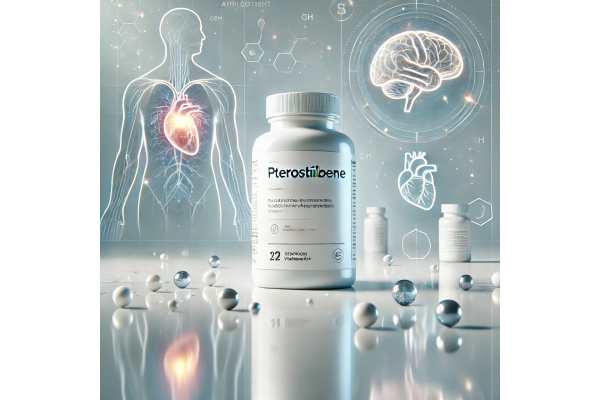
Pterostilbene is a naturally occurring compound best known from blueberries, grapes, and a few medicinal plants. It belongs to the same family as resveratrol but has a slightly different structure that makes it more fat-soluble and better absorbed. Because of this, pterostilbene has become popular in “longevity,” heart health, and brain support supplements.
Early research suggests that pterostilbene acts as a powerful antioxidant and may influence lipid levels, blood pressure, glucose control, and cellular stress responses. There is also interest in its potential to support cognitive health and healthy aging, though human data are still limited and mixed.
This guide walks you through what pterostilbene is, what current evidence actually shows, typical supplement doses, safety concerns, and who should avoid it or use it only under medical supervision. The goal is to help you have an informed, realistic conversation with a healthcare professional before deciding whether pterostilbene fits into your broader health plan.
Key Takeaways
- Pterostilbene is a plant polyphenol related to resveratrol, with higher fat solubility and better oral absorption.
- Human studies suggest possible benefits for blood pressure, oxidative stress, and metabolic health, but results for cholesterol and other markers are mixed.
- Typical supplemental intakes range from about 50–250 mg per day, often split into one or two doses.
- Some people experience increases in LDL (“bad”) cholesterol, mild digestive symptoms, or drug interactions at commonly used doses.
- Individuals who are pregnant, breastfeeding, on multiple medications, or with serious cardiovascular or metabolic disease should avoid self-prescribing pterostilbene.
Table of Contents
- What is pterostilbene?
- Pterostilbene benefits in humans
- How to use pterostilbene daily
- Pterostilbene dosage and forms
- Side effects and safety
- Who should avoid pterostilbene
- What current research says
What is pterostilbene?
Pterostilbene is a stilbene polyphenol, structurally similar to the better-known compound resveratrol. Chemically, it is often described as a “dimethylated” analog of resveratrol: two of resveratrol’s hydroxyl groups are replaced with methoxy groups. That subtle change makes pterostilbene more lipophilic (fat-soluble), which appears to improve its ability to cross cell membranes and may lengthen its half-life in the body.
In nature, pterostilbene is produced by plants as part of their defense system against stress, fungi, or environmental damage. Food sources include:
- Blueberries and some other berries
- Grapes and grape leaves
- Certain tree species and medicinal plants
Dietary intake from food alone is usually quite low, which is one reason concentrated supplements have gained attention.
At the cellular level, pterostilbene has been shown in experimental models to:
- Act as an antioxidant, scavenging reactive oxygen species
- Support the activity of antioxidant enzymes
- Influence pathways related to inflammation
- Interact with nuclear receptors such as PPAR-alpha, which help regulate lipid and glucose metabolism
Supplement manufacturers often market pterostilbene as a “next-generation resveratrol” because of its higher oral bioavailability. However, better absorption does not automatically mean better outcomes in humans. Human trials so far are relatively small, of modest duration, and use a range of doses and combinations (for example, pterostilbene with grape extract or nicotinamide riboside), which makes interpretation more complex.
In practical terms, it is most accurate to think of pterostilbene as an intriguing, biologically active plant compound with promising early data—not as a proven treatment for specific diseases. Using it wisely means understanding both its potential and its current limitations.
Pterostilbene benefits in humans
Most of what we know about pterostilbene’s effects comes from cell and animal studies. These suggest antioxidant, anti-inflammatory, lipid-modulating, and possible neuroprotective properties. Human research is more limited but offers a few key insights.
Cardiometabolic health
In one controlled trial in adults with elevated cholesterol, pterostilbene was tested at low and high doses, with and without grape extract, over several weeks. The main findings were:
- Blood pressure: High-dose pterostilbene was associated with modest reductions in both systolic and diastolic blood pressure compared with placebo in some analyses. This aligns with preclinical evidence that pterostilbene can support nitric oxide production and endothelial function.
- Lipids: Unexpectedly, LDL cholesterol increased in participants taking pterostilbene alone, while this effect was not seen when combined with grape extract or in those already on cholesterol-lowering medication. HDL and triglyceride responses were neutral overall.
These results suggest that pterostilbene’s cardiovascular profile is more complex than simple “heart healthy” marketing claims. It may improve some parameters (like blood pressure) while worsening others (like LDL) in certain contexts.
Oxidative stress and inflammation
In human studies and in combinations such as nicotinamide riboside plus pterostilbene, markers of oxidative stress and cellular NAD+ levels have shifted in directions that may support cellular resilience. This fits with a broader body of lab work showing that pterostilbene can:
- Enhance endogenous antioxidant defenses
- Modulate inflammatory signaling pathways
- Support mitochondrial function under stress in experimental models
However, these biochemical changes do not always translate directly into clear clinical outcomes, and more work is needed to connect the dots.
Cognitive and neurological health
Animal studies have reported that pterostilbene can influence signaling pathways associated with memory, learning, and neuroprotection, particularly under oxidative or metabolic stress. Data in humans, however, are sparse. A few small studies and combination products have explored cognitive endpoints, but they are not strong enough yet to claim that pterostilbene improves memory or prevents neurodegenerative disease.
Metabolic parameters and body weight
In the cholesterol trial described earlier, subgroup analyses suggested small changes in body mass index in certain participants, particularly those not taking cholesterol medication at baseline. Other metabolic markers, such as fasting glucose, generally appeared stable at typical supplement doses in healthy or mildly dysmetabolic adults.
Overall, the most defensible current position is that pterostilbene may have modest, context-dependent effects on cardiovascular and metabolic markers, with a tendency to reduce blood pressure but sometimes raise LDL cholesterol. Strong claims for weight loss, glucose control, or dramatic longevity effects are not supported by existing human data.
How to use pterostilbene daily
If you and your clinician decide that a trial of pterostilbene makes sense, it helps to approach it as you would any other bioactive supplement: with clear goals, time limits, and careful monitoring.
1. Clarify your goal
Common reasons people consider pterostilbene include:
- Supporting overall cardiometabolic health as part of a broader lifestyle program
- Adding an antioxidant polyphenol to a longevity or healthy aging stack
- Exploring an adjunct to blood pressure management (never in place of prescribed treatment)
- Supporting general resilience in midlife or older age
Your goal should be realistic and measurable—for example, “monitor home blood pressure over three months” rather than “take it forever for anti-aging.”
2. Start low and simplify
Because pterostilbene sometimes appears in multi-ingredient formulas, it is easy to lose track of the actual dose. To make it easier to understand how you respond:
- Choose a reputable brand clearly listing pterostilbene content per capsule.
- Avoid starting with multiple new supplements that include pterostilbene at the same time.
- Begin at the lower end of the typical range (for example, 50–100 mg per day) unless your clinician recommends otherwise.
Starting low reduces the risk of side effects and makes it easier to spot changes in lab values or symptoms.
3. Timing and combination strategies
Pterostilbene is fat-soluble, so many people take it with a meal containing some fat to support absorption. It is often taken:
- Once daily in the morning
- Or split into two doses (morning and early evening) for total daily amounts over 100 mg
Some products combine pterostilbene with:
- Nicotinamide riboside or other NAD+ precursors
- Resveratrol or grape extracts
- General antioxidant blends
Combos may have theoretical advantages but also make it harder to attribute benefits or side effects to a single ingredient. For safety-focused self-experiments, single-ingredient pterostilbene or simple combinations are easier to interpret.
4. Monitoring and duration
Before starting, it is sensible to have baseline measurements such as:
- Lipid profile, especially LDL and HDL
- Blood pressure
- Fasting glucose or HbA1c if you have metabolic risk factors
After 8–12 weeks of consistent use, re-checking these markers can show whether pterostilbene is helping, neutral, or potentially harmful (for example, if LDL has risen). If there is no clear benefit or unwanted changes appear, stopping the supplement is reasonable.
Because long-term data are limited, many clinicians are cautious about continuous multi-year use at higher doses, particularly in people with established cardiovascular disease.
Pterostilbene dosage and forms
There is no universally accepted “standard dose” of pterostilbene, and official health authorities have not established a recommended intake. Most dosage suggestions come from:
- Amounts used in human trials
- Typical ranges in commercial supplements
- Safety margins derived from toxicology studies
Common supplemental doses
Across products and studies, you will often see:
- Low range: 20–50 mg per day
- Moderate range: 50–150 mg per day
- Higher range: 150–250 mg per day
In the metabolic and blood pressure trial in adults with raised cholesterol, total daily intakes of 100 mg and 250 mg (split into two doses) were used for several weeks. Some commercial longevity stacks provide around 50–100 mg of pterostilbene alongside other compounds such as nicotinamide riboside.
Given the mixed effects on LDL cholesterol at higher doses, many practitioners favor staying toward the lower or moderate range, especially in people with known cardiovascular risk.
Forms and absorption
Supplements usually provide pterostilbene as:
- Pure synthetic or nature-identical pterostilbene
- Branded forms (for example, ingredients supplied by specific companies)
- Occasionally as part of a standardized blueberry or grape extract
Because of its lipophilicity, pterostilbene tends to be absorbed better than resveratrol when taken orally. Some formulations use oils or lipid carriers in softgels to further support absorption, although head-to-head comparisons between forms are limited.
General dosage guidelines (for otherwise healthy adults, with medical oversight)
- For general antioxidant or longevity support:
- Often 50–100 mg once daily
- For cardiometabolic support in research settings:
- Total daily intakes of 100–250 mg, usually divided twice daily, have been studied over 6–8 weeks
Children, adolescents, pregnant or breastfeeding individuals, and people with significant liver, kidney, or cardiovascular disease should not use pterostilbene without specialist guidance, and in many cases it is best avoided altogether.
How long to take it
Given the lack of long-term safety data:
- Short-term use (for example, 8–12 weeks) with monitoring is more defensible than continuous, indefinite use.
- If benefits are unclear or lab markers worsen, discontinuation should be considered rather than escalating the dose.
Remember that all specific amounts should be personalized by a qualified healthcare professional familiar with your medical history, medications, and risk factors. Self-dosing at the upper end of commercial ranges without supervision is not advisable.
Side effects and safety
In human studies, pterostilbene has generally been well tolerated at doses up to about 250 mg per day for several weeks, but important safety signals have emerged that you should take seriously.
Commonly reported mild side effects
At typical supplemental doses, some people report:
- Digestive discomfort (nausea, loose stools, or mild stomach upset)
- Headache
- Feelings of jitteriness or insomnia in sensitive individuals when taken late in the day
These effects are usually mild and resolve with dose reduction or discontinuation.
Changes in cholesterol
One of the most notable findings from human work is that pterostilbene monotherapy in adults with hypercholesterolemia was associated with increases in LDL cholesterol and total cholesterol over several weeks, while blood pressure tended to fall. This pattern did not appear in participants who were already taking cholesterol-lowering medication or when pterostilbene was combined with grape extract.
For someone already at high cardiovascular risk, even a moderate rise in LDL may be undesirable. If you use pterostilbene and have existing dyslipidemia, it is sensible to repeat fasting lipids after a few months to ensure they have not shifted in the wrong direction.
Blood pressure effects
In the same trial, high-dose pterostilbene led to modest but statistically significant reductions in systolic and diastolic blood pressure compared with placebo. While this may be helpful for some, there are potential risks:
- When combined with blood pressure medications, additive effects could cause blood pressure to drop too low in certain individuals.
- People prone to dizziness or with autonomic issues should be monitored carefully.
Home blood pressure monitoring can help detect any excessive changes.
Glucose and other markers
Short-term trials have not shown dramatic changes in fasting glucose at typical doses in otherwise stable adults, and major liver or kidney toxicity has not emerged within the studied time frames. That said, the total number of participants studied is still relatively small, and long-term data are lacking.
Allergies and sensitivities
Allergic reactions to pterostilbene itself appear to be rare, but supplements may contain excipients or be combined with other plant extracts that can trigger sensitivities. As with any new supplement, discontinue use and seek medical attention if you experience rash, swelling, difficulty breathing, or other concerning symptoms.
Drug interactions (theoretical and observed)
Pterostilbene interacts with enzymes and receptors involved in lipid and glucose metabolism and may influence some drug-metabolizing enzymes. Potential interaction areas include:
- Cholesterol-lowering medications
- Blood pressure medications
- Antidiabetic agents
- Other supplements that also affect blood clotting, blood pressure, or liver enzymes
Because formal interaction studies are limited, caution is warranted. People on multiple chronic medications should only consider pterostilbene under medical supervision.
Who should avoid pterostilbene
Although pterostilbene appears reasonably safe for many adults in the short term at moderate doses, there are groups for whom the risk-benefit balance is unclear or unfavorable.
1. Pregnant and breastfeeding individuals
There are no adequately controlled human studies of pterostilbene in pregnancy or lactation. Because it is a bioactive compound that crosses membranes and influences signaling pathways, the conservative and widely recommended approach is to avoid pterostilbene during pregnancy and breastfeeding unless specifically prescribed in a research or specialist context.
2. Children and adolescents
Developing bodies and brains may respond differently to high doses of plant polyphenols. Because safety data in younger populations are essentially absent, pterostilbene supplements are not recommended for children or teenagers unless part of a clinical trial.
3. People with unstable cardiovascular disease
Individuals with:
- Recent heart attack or stroke
- Unstable angina
- Poorly controlled hypertension or heart failure
should not self-prescribe pterostilbene. Potential increases in LDL or unexpected interactions with medications could shift risk in unpredictable ways. Any consideration of pterostilbene in this group should only occur under direct cardiology supervision.
4. Individuals with very high LDL or familial hypercholesterolemia
Given the LDL increase observed in some adults taking pterostilbene alone, people starting with very high LDL or known genetic lipid disorders should be particularly cautious. In many such cases, proven lipid-lowering therapies and lifestyle interventions deserve priority over experimental supplements.
5. People on complex medication regimens
If you take multiple prescription drugs—especially for blood pressure, lipids, coagulation, mood, or seizures—adding pterostilbene creates extra uncertainty. The more complex the regimen, the more important it is to involve a knowledgeable clinician and pharmacist before introducing new bioactive substances.
6. History of hormone-sensitive cancers or serious liver disease
While animal and cell models often suggest anticancer and liver-protective effects, human data are limited and nuanced. People with a history of hormone-sensitive cancers or significant liver disease should approach any unproven supplement with caution and seek specialist guidance.
For many people who do not fall into these higher-risk groups, a carefully monitored, time-limited trial of pterostilbene at modest doses may be reasonable—provided it complements, not replaces, established treatments and lifestyle measures.
What current research says
Pterostilbene research has expanded over the past decade, but it is still early compared to more established nutrients and medications. Understanding where the evidence stands can help you calibrate expectations.
Strengths of the current evidence
- Multiple animal and cell studies show consistent antioxidant, anti-inflammatory, and metabolic effects at the tissue level.
- Human clinical trials, though modest in size, have demonstrated that pterostilbene can meaningfully shift measurable parameters such as LDL cholesterol and blood pressure over short periods. This confirms that typical oral doses have real biological impact, not just theoretical activity.
- A growing number of narrative and systematic reviews have summarized mechanisms, food sources, pharmacokinetics, and potential health applications, helping to place individual findings in context.
Taken together, this suggests that pterostilbene is a genuine bioactive compound with potential roles in cardiometabolic and cellular health.
Limitations and gaps
At the same time, several important limitations remain:
- Small sample sizes: Most human trials involve tens, not hundreds or thousands, of participants. This limits the ability to detect rarer side effects or confidently generalize findings.
- Short durations: Typical study durations range from a few weeks to a few months. Long-term safety, especially at higher supplemental doses, is not well characterized.
- Heterogeneous populations and designs: Participants differ in baseline risk, medications, and diet. Some studies use pterostilbene alone, while others use combinations, making it harder to isolate its specific contribution.
- Mixed clinical outcomes: The increase in LDL cholesterol in some groups conflicts with animal data and with the common assumption that pterostilbene always improves lipid health. This highlights the danger of extrapolating preclinical findings directly to humans.
What this means for practical use
From an evidence-based standpoint, pterostilbene is best viewed as:
- A promising adjunctive compound for targeted use in carefully selected adults
- Not a replacement for established therapies for hypertension, dyslipidemia, diabetes, or cardiovascular disease
- Not yet supported by large, long-term trials showing reductions in hard outcomes such as heart attack, stroke, or mortality
For most people, foundational strategies—nutrition, physical activity, sleep, stress management, smoking cessation, and appropriately chosen medications—remain the core of cardiometabolic and longevity care. Pterostilbene, if used at all, should sit on top of that foundation and be reevaluated regularly as new data emerge.
References
- New Insights into Dietary Pterostilbene: Sources, Metabolism, and Health Promotion Effects 2022 (Systematic Review)
- Analysis of safety from a human clinical trial with pterostilbene 2013 (Safety Study)
- Pterostilbene on metabolic parameters: a randomized, double-blind, and placebo-controlled trial 2014 (RCT)
- Repeat dose NRPT (nicotinamide riboside and pterostilbene) increases NAD+ levels in humans safely and sustainably: a randomized, double-blind, placebo-controlled study 2017 (RCT)
Disclaimer
The information in this article is for general educational purposes only and is not intended to provide medical advice, diagnosis, or treatment. Pterostilbene is a bioactive compound that can affect blood lipids, blood pressure, and other health markers, and it may interact with prescription or over-the-counter medications. Always speak with a qualified healthcare professional who knows your medical history before starting, stopping, or changing any supplement, including pterostilbene. Never delay or disregard professional medical advice because of something you have read online.
If you found this guide helpful, you are welcome to share it with others on Facebook, X (formerly Twitter), or any platform you prefer, and to follow our work on social media. Your thoughtful support helps our team continue creating clear, evidence-informed health content.