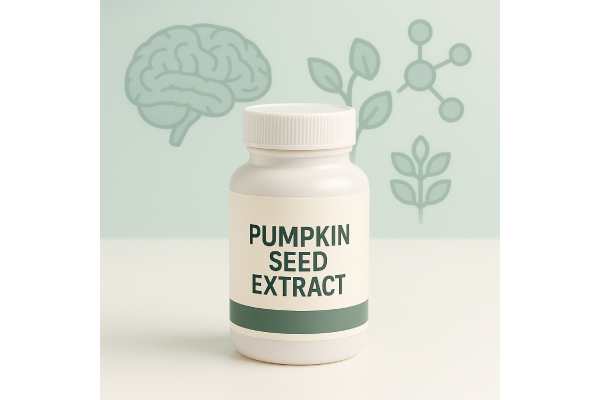
Pumpkin seed extract has become a popular natural option for supporting urinary, prostate, and bladder health, especially in middle-aged and older adults. Concentrated from the seeds of pumpkin species such as Cucurbita pepo, it delivers a mix of fatty acids, plant sterols, antioxidants, and other bioactive compounds in a convenient capsule or liquid form.
Early human studies suggest pumpkin seed extract can help reduce lower urinary tract symptoms such as weak urine stream, frequent urination, and night-time trips to the bathroom. It is also being explored for overactive bladder, hair health, and cardiovascular support, although the evidence in these areas is still developing.
This guide explains exactly what pumpkin seed extract is, how it seems to work, the benefits and limitations seen in clinical studies, and how to use it safely. You will also find practical dosage ranges, important precautions, and a balanced look at what the research really shows.
Key Insights
- Pumpkin seed extract may modestly reduce urinary frequency and night-time urination in some men with mild to moderate prostate-related symptoms.
- It appears to work by combining anti-inflammatory activity, antioxidant support, and gentle hormone-modulating effects on the prostate and bladder.
- Typical supplement doses range from 500–2,000 mg of pumpkin seed extract per day, usually taken with food.
- Mild digestive discomfort is the most common side effect; allergic reactions are possible in people sensitive to pumpkin or other seeds.
- People with significant urinary problems, hormone-sensitive cancers, pregnancy, or complex medication regimens should only use pumpkin seed extract under medical supervision.
Table of Contents
- What is pumpkin seed extract?
- Science backed benefits and mechanisms
- How to take pumpkin seed extract correctly
- Dosage guidelines for different goals
- Side effects, interactions, and who should avoid it
- What the research really says overall
What is pumpkin seed extract?
Pumpkin seed extract is a concentrated preparation made from the seeds of pumpkin plants, most often Cucurbita pepo (common pumpkin) or related species. While whole pumpkin seeds are a nutritious snack, the extract is designed to deliver their key active compounds in a standardized, convenient dose.
There are several main forms:
- Oil-based extracts (pumpkin seed oil): Cold-pressed or refined oil rich in unsaturated fats, especially linoleic and oleic acids, along with vitamin E and carotenoids.
- Soft extracts (lipid-rich but partially purified): Often used in European herbal products and may be standardized to specific plant sterols or fatty acids.
- Oil-free or hydroethanolic extracts: Alcohol-water extracts that concentrate water-soluble and moderately fat-soluble phytochemicals, including certain phenolics and sterols, with little or no oil.
Key compounds found across these preparations include:
- Phytosterols such as beta-sitosterol, which may support prostate health.
- Essential fatty acids that influence inflammation and cell membrane function.
- Tocopherols (vitamin E) and carotenoids, which have antioxidant activity.
- Minor phenolic compounds that may also contribute antioxidant and anti-inflammatory effects.
Compared with eating whole seeds, pumpkin seed extract generally provides:
- More consistent dosing from day to day.
- Higher concentration of specific actives per capsule or milliliter.
- Less fiber and protein, so it is not a replacement for the full nutritional value of whole seeds.
Most supplements aimed at urinary or prostate health use either soft pumpkin seed extract or standardized oil. These are frequently combined with other botanicals, such as saw palmetto, though pumpkin seed extract is also available as a stand-alone product.
Science backed benefits and mechanisms
Pumpkin seed extract has been studied primarily for its effects on male urinary and prostate symptoms, with additional early research in overactive bladder and hair health. Overall, the evidence suggests modest but meaningful benefits for some people, especially when symptoms are mild to moderate.
1. Prostate and lower urinary tract symptoms (LUTS)
Multiple clinical studies in men with benign prostatic hyperplasia (BPH) or LUTS have investigated pumpkin seed preparations. In these trials, men taking pumpkin seed extract or oil over several months often report:
- Fewer night-time trips to the bathroom (reduced nocturia).
- Less daytime urinary urgency and frequency.
- Modest improvements in symptom scores and quality-of-life questionnaires.
The effect size tends to be mild to moderate and usually smaller than that seen with prescription alpha-blockers, but the extract is generally well tolerated and may be an option when people prefer a plant-based approach or cannot tolerate standard medicines.
2. Overactive bladder and bladder support
Small human studies have explored pumpkin seed oil in people with overactive bladder. These trials report reductions in:
- Urinary urgency episodes.
- Total urination frequency, especially at night.
Although these results are promising, the number of participants is still relatively small, and longer-term, larger trials are needed before pumpkin seed extract can be considered a standard treatment.
3. Possible effects on hair and skin
Preliminary research suggests pumpkin seed oil may support hair density in some forms of hair thinning, possibly by gently influencing hormones and inflammation around the hair follicle. This is still an emerging area:
- Studies are small and typically short-term.
- Benefits, when seen, tend to be modest and gradual.
Pumpkin seed extract should not be viewed as a “hair growth cure” but may play a supporting role alongside other strategies recommended by a dermatologist.
4. Anti-inflammatory and metabolic effects
In both laboratory and early human research, pumpkin seed components show:
- Antioxidant activity that can help limit oxidative stress.
- Mild anti-inflammatory action that may support joint and cardiovascular health.
- Modest improvements in some lipid markers in certain studies, often when pumpkin seed oil is part of a broader diet pattern.
However, these findings are less consistent than the urinary data, and most people should see pumpkin seed extract as an adjunct to, not a replacement for, established diet and lifestyle approaches.
How it may work
Several mechanisms likely work together:
- Phytosterols may compete with cholesterol in cell membranes and influence hormone signaling in prostate tissue.
- Fatty acids and antioxidants may reduce local inflammation and oxidative stress in the bladder and prostate.
- Gentle modulation of enzymes involved in hormone conversion may contribute to symptom relief in BPH.
Taken together, the research supports pumpkin seed extract as a supportive option for urinary comfort and prostate health, especially when used consistently over months.
How to take pumpkin seed extract correctly
Getting the most from pumpkin seed extract is less about chasing a perfect dose and more about using a quality product consistently and safely.
1. Choose the right form
Common options include:
- Capsules with pumpkin seed oil: Simple, widely available, often combined with other prostate herbs.
- Soft extract capsules or tablets: Standardized herbal preparations used in many European products for LUTS.
- Liquid oil: Can be taken by spoon or mixed into food, but dosing is less precise.
If you are primarily interested in urinary or prostate benefits, look for products that explicitly state “pumpkin seed extract for prostate or bladder support” and, ideally, specify the amount of extract or oil per dose.
2. Check the label details
A good label should clearly state:
- The species (usually Cucurbita pepo).
- The amount per serving (in mg or mL).
- The standardization, if any (for example, to phytosterols or fatty acids).
- Any other active ingredients, such as saw palmetto or zinc.
Products that are third-party tested for quality and contaminants provide additional reassurance.
3. When and how to take it
To improve tolerance and absorption:
- Take pumpkin seed extract with food, ideally at the same meal(s) each day.
- If your daily amount is on the higher side, split it into two doses (morning and evening).
- Swallow capsules with a full glass of water; if you use liquid oil, measure it carefully.
4. Integrate it into your health plan
Before starting pumpkin seed extract for urinary or prostate concerns:
- Talk with a healthcare professional, especially if you have urinary difficulty, weak stream, blood in the urine, fever, or pain. These can signal conditions that require urgent medical care.
- Clarify whether your goal is to support mild symptoms, complement existing treatment, or maintain urinary health as you age.
- Keep a simple symptom diary (daytime frequency, night-time urination, urgency episodes) for a couple of weeks before and after starting, so you can see whether it helps.
5. Give it enough time
Herbal extracts usually work gradually. In studies, pumpkin seed extract is often taken for 8–12 weeks or longer before benefits are fully evaluated. If you see no change after three months, discuss next steps with your clinician rather than increasing the dose on your own.
Dosage guidelines for different goals
There is no single universal dose for pumpkin seed extract, and products vary widely. The following ranges summarize what is commonly used in studies and commercial supplements. Always follow the directions on your specific product and your clinician’s advice.
1. General urinary and prostate support
For men with mild urinary symptoms or those seeking general prostate support, many supplements provide:
- 500–1,000 mg per day of pumpkin seed extract or oil, usually divided into one or two doses.
Some clinical trials have used similar ranges over several months for lower urinary tract symptoms. Because formulations differ, it is safest to start at the lower end of the suggested range on the label.
2. Mild lower urinary tract symptoms (LUTS) related to BPH
In studies of men with LUTS:
- Daily amounts typically fall between 500–2,000 mg of pumpkin seed extract or oil, sometimes as a stand-alone, sometimes in combination formulas.
- Treatment durations of 6–12 months have been used to assess changes in symptom scores and quality of life.
For this group, close medical supervision is important. Pumpkin seed extract should be viewed as an adjunct, not a replacement, for standard evaluation and treatment when needed.
3. Bladder comfort and overactive bladder
In small trials of overactive bladder:
- Total daily amounts around 1,000 mg of pumpkin seed oil or extract have been used.
- Symptom improvements, when present, tend to appear after several weeks and grow gradually.
Because the data are early and sample sizes small, these amounts should be treated as exploratory guidance, not firmly established dosing.
4. Hair and skin support
Some research on hair density has used:
- Low to moderate daily doses of pumpkin seed oil (often a few hundred mg per day) over several months.
Here, pumpkin seed extract is one part of a broader plan that may include topical treatments and other systemic therapies. A dermatologist can help decide whether it fits your situation.
5. Practical upper limits
There is no widely accepted “maximum safe dose” for pumpkin seed extract, but long-term human data are limited above about 2,000 mg per day in supplement form. To stay on the cautious side:
- Avoid exceeding the upper end of the supplement’s labeled range without professional supervision.
- Do not combine multiple pumpkin seed products (for example, separate oil, extract capsules, and a multi-herb prostate formula) unless a clinician has reviewed the total amount.
If you miss a dose, simply take the next one as scheduled—do not double up.
Side effects, interactions, and who should avoid it
Pumpkin seed extract is generally well tolerated, especially compared with many prescription medicines used for urinary symptoms. Still, it is not completely free of risks.
Common, usually mild side effects
Some people notice:
- Bloating or a feeling of fullness.
- Mild nausea or stomach discomfort.
- Soft stools or occasional diarrhea.
Taking the supplement with food, starting at a lower dose, and increasing gradually often improves tolerance. If digestive symptoms persist or are bothersome, stopping the supplement is reasonable.
Allergic reactions
Although rare, allergic reactions to pumpkin or other cucurbit family plants (such as squash or certain gourds) can occur. Warning signs include:
- Itching, hives, or rash.
- Swelling of the lips, tongue, or face.
- Wheezing, chest tightness, or difficulty breathing.
Anyone with a known seed or pumpkin allergy should avoid pumpkin seed extract entirely. If you ever develop signs of an allergic reaction, stop the supplement and seek urgent medical care.
Possible interactions
Pumpkin seed extract is not known for strong drug interactions, but there are some theoretical and practical concerns:
- Mild blood pressure–lowering or lipid-modulating effects could add to medicines that treat high blood pressure or cholesterol.
- Gentle hormone-modulating effects in prostate tissue may be relevant for people taking hormone-related therapies.
- Any supplement that alters digestion or appetite can affect how other oral medicines are absorbed.
Always tell your healthcare team about all supplements you use, including “natural” oils and extracts.
Who should avoid or use it only under medical supervision
Use special caution, or avoid pumpkin seed extract, if:
- You have moderate to severe urinary symptoms, urinary retention, blood in the urine, or pain with urination. These require medical evaluation, not self-treatment.
- You have been diagnosed with prostate cancer or another hormone-sensitive cancer, unless your oncologist approves supplement use.
- You are pregnant, trying to conceive, or breastfeeding—safety data are very limited.
- You have significant kidney or liver disease.
- You are scheduled for surgery, especially if you take blood-thinning medicines. In that case, your surgeon or anesthesiologist should review all supplements in advance.
If you ever notice worsening urinary symptoms, new pain, fever, or trouble starting urination while taking pumpkin seed extract, stop the supplement and seek prompt medical advice.
What the research really says overall
Pumpkin seed extract occupies an interesting middle ground between food and medicine. It is more concentrated and targeted than simply eating pumpkin seeds but less potent and less rigorously studied than many prescription drugs.
Strengths of the evidence
Across clinical trials and observational studies, a fairly consistent pattern emerges:
- Men with mild to moderate lower urinary tract symptoms often experience small to moderate improvements in urinary frequency, night-time urination, and symptom scores when taking pumpkin seed extract over months.
- Many participants report better quality of life, particularly less disruption of sleep due to nocturia.
- Side effects are generally mild, and serious adverse events are rare in published studies.
These findings make pumpkin seed extract a reasonable adjunctive option for men who have been properly evaluated by a clinician and either cannot tolerate or prefer not to start standard medications right away.
Limitations and gaps
At the same time, the research has important limitations:
- Sample sizes are often modest, and some studies are open-label or pilot trials rather than large, multi-center randomized trials.
- Preparations differ (oil, soft extract, oil-free extract), which makes it harder to compare doses directly across studies.
- Evidence in women, in overactive bladder, and in areas such as hair growth and cardiometabolic health is still early and far from definitive.
Pumpkin seed extract should not be seen as a cure for BPH, overactive bladder, or any other condition. It is best viewed as a supportive measure, especially useful for those with relatively mild symptoms or as part of a broader plan that includes lifestyle changes and, when indicated, medications.
How to use this information in real life
If you are considering pumpkin seed extract:
- Start with a clear diagnosis and discussion with a healthcare professional.
- Choose a reputable product and stick with consistent daily dosing for at least 8–12 weeks before judging its effect.
- Track your symptoms over time, not only on “good” or “bad” days.
- Reassess together with your clinician whether it is helping enough to continue, or whether another approach is better.
Used thoughtfully and safely, pumpkin seed extract can be one helpful tool among many for supporting urinary comfort and healthy aging.
References
- Effects of pumpkin seed in men with lower urinary tract symptoms due to benign prostatic hyperplasia in the one-year randomized, placebo-controlled GRANU study 2014 (RCT).
- Effects of an oil-free hydroethanolic pumpkin seed extract on symptom frequency and severity in men with benign prostatic hyperplasia: A pilot study in humans 2019 (Pilot RCT).
- The role of Cucurbita pepo in the management of patients affected by lower urinary tract symptoms due to benign prostatic hyperplasia: A narrative review 2016 (Narrative Review).
- Correction: Extract from Cucurbita pepo improves benign prostatic hyperplasia (BPH) symptoms without affecting sexual function: A 24-month noninterventional study 2022 (Observational Study/Correction).
Disclaimer
The information in this article is for general educational purposes only and is not a substitute for personalized medical advice, diagnosis, or treatment. Pumpkin seed extract is not intended to diagnose, treat, cure, or prevent any disease. Always consult a qualified healthcare professional before starting, stopping, or changing any medication, supplement, or health regimen, especially if you have ongoing symptoms, chronic medical conditions, are pregnant or breastfeeding, or take prescription medicines. Never delay seeking professional medical care because of information you have read online.
If you found this guide helpful, you are warmly invited to share it with others on Facebook, X (formerly Twitter), or any platform you prefer, and to follow our work on social media. Your thoughtful support by sharing our articles helps our team continue creating clear, evidence-informed health content for readers worldwide.