Your gut lining is more than a passive tube. It is a living barrier that decides what gets absorbed, what gets blocked, and how loudly your immune system reacts to everyday exposures. When that barrier is stressed—by illness, a low-fiber diet, heavy alcohol use, chronic stress, intense training, or certain medications—people may notice bloating, irregular stools, food sensitivities, or a general “inflamed” feeling that is hard to name.
Quercetin is a plant flavonoid best known for calming inflammation and oxidative stress. What makes it especially interesting for digestive health is that much of the quercetin you eat stays in the gut long enough to interact with the microbiome and the intestinal surface before it is metabolized. That positions it as a food-first tool for supporting barrier resilience—while also raising important questions about dose, absorption, and supplement safety when people go beyond dietary amounts.
Essential insights for gut barrier support
- Quercetin may help quiet inflammatory signaling that can disrupt tight junctions and irritate the gut lining.
- Preclinical research suggests barrier-support effects, but human evidence for “leaky gut” outcomes is still limited and indirect.
- Supplemental doses can interact with medications and may not be appropriate in pregnancy, breastfeeding, or kidney disease.
- Food-first intake is practical: include quercetin-rich produce daily and pair it with a fiber-rich pattern to support microbiome metabolism.
Table of Contents
- What quercetin is and where it acts
- Gut barrier basics and why they weaken
- Mechanisms linking quercetin to tighter junctions
- Anti-inflammatory effects relevant to digestive health
- Best food sources and absorption tips
- Supplement dosing, interactions, and who should avoid
What quercetin is and where it acts
Quercetin is a naturally occurring flavonoid found in many plants, especially in pigmented skins and outer layers. In foods, it usually appears bound to sugars (as “glycosides”), while many supplements contain quercetin in a freer form (“aglycone”) or packaged in delivery systems meant to improve absorption.
A practical way to think about quercetin is in two “zones of action”:
- In the gut lumen and at the gut surface: A meaningful share of dietary quercetin remains in the digestive tract during digestion. This creates opportunities for local effects on the intestinal lining and for interactions with microbes that transform quercetin into smaller compounds.
- After absorption and metabolism: The quercetin that enters circulation is rapidly modified in the intestine and liver. In the body, quercetin’s activity often reflects these metabolites rather than the original molecule.
Why bioavailability matters for gut goals
Quercetin has famously low water solubility, and absorption varies widely based on its form, the food matrix, and the person’s microbiome. That variability helps explain why two people can take the same supplement dose and report very different outcomes. It also explains why barrier-focused strategies often emphasize diet patterns over single high-dose compounds: the gut barrier is shaped by repeated exposures (fiber, fats, emulsifiers, alcohol, medications, stress hormones) that add up over weeks.
Local relevance even when absorption is low
Low absorption is not automatically bad for gut-barrier support. If a compound is present in the intestine, it can still influence:
- the oxidative environment at the mucosal surface
- immune cells positioned just under the epithelium
- microbial composition and microbial metabolites
- signaling pathways that regulate tight junction proteins and mucus
The key is staying realistic about scope. Quercetin is not a stand-alone “repair kit” for the gut lining; it is better viewed as a modulator that may support the conditions under which the barrier can stabilize—especially when paired with diet and lifestyle habits that reduce ongoing irritation.
Gut barrier basics and why they weaken
The “gut barrier” is a layered defense system designed to absorb nutrients while blocking microbes and toxins from crossing into the bloodstream. It is not a single wall. It is a coordinated system with multiple components that can be stressed in different ways.
The three layers that matter most
- The microbiome layer
Your gut microbes help break down fibers, generate short-chain fatty acids, and compete with pathogens. When this ecosystem becomes less diverse or skewed toward inflammatory patterns (dysbiosis), the barrier is often less resilient. - The mucus layer
Mucus is a protective gel produced by goblet cells. It lubricates the gut, physically separates microbes from epithelial cells, and carries immune signaling molecules. Low fiber intake and chronic inflammation can thin this layer. - The epithelial cell layer with tight junctions
Epithelial cells line the intestine like tiles. Tight junction proteins act like seals between those tiles. When tight junctions loosen, intestinal permeability can increase—allowing larger molecules to pass through and potentially trigger immune reactions.
Common stressors that push permeability upward
Barrier weakening rarely comes from one cause. More often it reflects repeated “hits,” such as:
- Low-fiber, high ultra-processed eating patterns that reduce microbial fuel and weaken mucus support
- Frequent alcohol intake, especially in higher quantities, which can irritate the lining
- Chronic stress and short sleep, which shift immune activity and gut motility
- Intense endurance training without adequate recovery, which can reduce blood flow to the gut during exertion
- Certain medications, especially frequent NSAID use, which can increase irritation in some people
- Acute infections that inflame the lining and alter microbes
What people notice when the barrier is strained
Symptoms do not “diagnose” permeability, but many people report patterns such as bloating, irregular stool form, post-meal discomfort, food-trigger variability, and flares that track with stress, alcohol, or travel. The more useful takeaway is actionable: if you can identify the stressors that reliably worsen your gut, you can often reduce barrier strain without chasing a single supplement solution.
Quercetin fits into this picture as a potential helper—most plausibly when permeability is driven by inflammatory signaling and oxidative stress rather than purely mechanical triggers like infections or structural disease.
Mechanisms linking quercetin to tighter junctions
Quercetin’s strongest rationale for gut-barrier support comes from mechanistic research showing how it may influence inflammation pathways that destabilize tight junctions and irritate the mucosa. It is important to keep the hierarchy of evidence straight: many mechanistic findings come from cell and animal models, and translating them into predictable human outcomes is not guaranteed.
Reducing inflammatory “junction stress”
When the gut immune system is activated, inflammatory cytokines can trigger signaling cascades that loosen junction proteins and reorganize the cell’s internal scaffolding. Quercetin is studied for its ability to:
- dampen pro-inflammatory transcription signals that amplify cytokine output
- reduce oxidative stress that can damage membrane lipids and proteins
- modulate enzyme activity involved in inflammatory mediator production
In plain terms, quercetin may reduce the biochemical noise that tells the gut lining to behave as if it is under threat.
Kinases, tight junction assembly, and the “seal” concept
Tight junctions are dynamic; they assemble, disassemble, and remodel. Several enzymes (including kinase systems involved in contraction of the cell’s perijunctional ring) can increase leakiness when over-activated during inflammation. Quercetin has been investigated as a compound that may inhibit or downshift some of these pathways in inflammatory settings, potentially supporting tighter junction behavior.
This does not mean quercetin “patches holes.” A better mental model is: it may shift the cellular environment toward stability, making it easier for the gut to maintain tight junction architecture.
Microbiome metabolism may be part of the story
Your microbes can transform quercetin into smaller phenolic compounds. Those metabolites may influence:
- mucus production and goblet cell signaling
- microbial balance (favoring certain beneficial groups over others)
- immune tolerance pathways in the gut wall
This is one reason people sometimes do better with consistent food sources than sporadic high-dose supplements: the microbiome responds to repeated patterns, and many barrier-related metabolites depend on dietary fiber intake.
Where this leaves a careful reader
Quercetin’s barrier-support promise is plausible, but it is best treated as an adjunct. The most defensible approach is to pair quercetin (from food, and sometimes supplements) with foundational barrier supports: adequate fiber, sufficient protein for tissue maintenance, sleep, and a plan for stress and alcohol.
Anti-inflammatory effects relevant to digestive health
Even when someone is focused on the gut, the outcomes they care about are often broader: fewer flare-like days, less post-meal discomfort, more predictable stools, and a calmer baseline. Quercetin’s anti-inflammatory profile may matter here because inflammation is one of the main drivers that links the gut barrier to whole-body symptoms.
What human research supports most consistently
Across different study populations, quercetin supplementation has been examined for changes in inflammatory markers and oxidative stress balance. Results vary by dose, duration, and baseline health, but the overall pattern suggests quercetin can influence inflammation—especially when the person starts with higher inflammatory “load.”
For digestive health, that matters because gut irritation can amplify systemic inflammation through immune activation. A calmer inflammatory environment may reduce the tendency toward exaggerated immune reactions to normal gut contents.
Digestive contexts where quercetin is discussed
Quercetin is often mentioned in connection with:
- Inflammatory bowel disease support concepts (as a complementary dietary compound, not a replacement for medical therapy)
- Mast cell and histamine-related reactivity (quercetin is studied for mast cell stabilizing effects, which may matter for some food-trigger patterns)
- Post-infection gut sensitivity where inflammation lingers after the acute illness resolves
- Exercise-related gut strain in endurance athletes, where gut blood flow shifts during training and inflammatory stress can rise
None of these are guarantees. They are contexts where anti-inflammatory support may be relevant.
How fast might effects show up?
Dietary shifts tend to be gradual, while supplements can feel faster—often because they change symptom perception rather than tissue biology. In studies, quercetin is commonly taken over weeks rather than days. If someone is going to respond, a reasonable expectation is that changes are noticed within a 4–8 week window when the rest of the plan (diet, stress, triggers) is also supportive. Very short trials can show physiological effects, but sustained gut-barrier improvements typically require repeated exposures.
If a person feels worse—more nausea, headaches, new reflux, or a clear symptom flare—that is also valuable information. It may indicate dose intolerance, a formulation issue, an interaction, or that the timing is wrong for their current gut state.
Best food sources and absorption tips
For gut-barrier goals, food sources have two advantages: they deliver quercetin in physiologic amounts and they come bundled with fiber, water, vitamins, and companion polyphenols that support microbial metabolism. Most people do not need perfection; they need repeatable exposure.
High-quercetin foods to prioritize
These are commonly cited as rich sources:
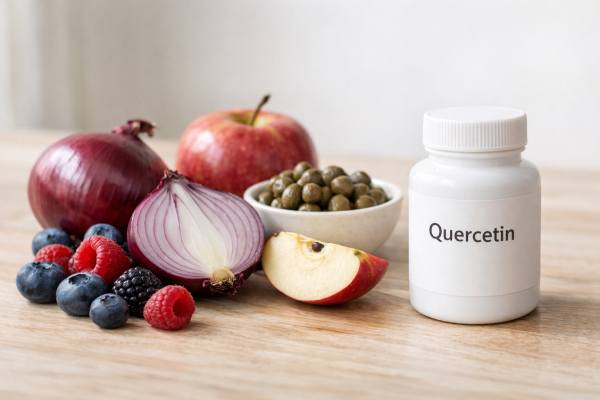
- Capers (often one of the most concentrated options per serving)
- Onions, especially red and yellow varieties
- Apples (much of the quercetin is near the skin)
- Berries (varies by type; use them as part of a rotation)
- Leafy greens such as kale
- Broccoli and other crucifers
- Buckwheat (useful for people who want a grain alternative)
- Tea (a supportive contributor, not usually a primary source)
Cooking and preparation details that actually matter
- Cutting onions and letting them rest briefly before cooking can influence certain plant compounds, and gentle cooking may preserve more than high-heat charring.
- Keeping apple skins increases quercetin intake for most people who tolerate them.
- Using a rotation is smarter than chasing a single “top” food: different plants bring different polyphenol families that diversify microbial inputs.
Absorption and “use it where it lands” strategies
Because quercetin absorption can be limited, focus on what improves overall usefulness:
- Pair quercetin-rich foods with a meal that contains some fat (for example, olive oil on vegetables).
- Emphasize fermentable fibers (beans, oats, chia, cooked-and-cooled potatoes, onions/garlic if tolerated) to support microbial conversion into beneficial metabolites.
- Avoid stacking triggers: a quercetin-rich meal won’t “cancel” a heavy alcohol night or frequent NSAID use.
A simple daily template
- Lunch: large salad or cooked vegetables with sliced red onion and olive oil
- Snack: an apple (with skin) or berries
- Dinner: broccoli or kale plus a buckwheat side dish once or twice weekly
- Optional: capers added to fish, potatoes, or salad dressings
Food-first intake is also the easiest place to start if you are sensitive, pregnant, breastfeeding, or taking multiple medications—because the risk profile is meaningfully different from concentrated supplements.
Supplement dosing, interactions, and who should avoid
Quercetin supplements are popular because they offer amounts far beyond food—often hundreds of milligrams per capsule. That can be useful in research settings, but it also changes the risk–benefit equation. If your primary goal is gut-barrier support, the safest strategy is usually food-first, with supplements considered only when there is a clear rationale and a medication review.
Common supplement forms and what they imply
- Quercetin aglycone: common, but absorption can be limited.
- Quercetin glycosides or “phytosome” style formulations: designed to increase bioavailability.
- Combination products (often with vitamin C, bromelain, or other flavonoids): may affect tolerability and interaction potential.
Higher bioavailability is not automatically better for the gut. If more is absorbed, less remains in the gut lumen—so the “best” form depends on your goal and sensitivity.
Typical dosing patterns in studies
Many human trials use 500–1,000 mg per day, often split into one or two doses, over 4–12 weeks. Shorter protocols exist, but long-term high-dose use is less well characterized. For cautious self-use, many clinicians suggest starting lower (for example, 250–500 mg/day) and only increasing if tolerated and appropriate—while watching for side effects.
Side effects and tolerance signals
Reported side effects are often mild, but pay attention to patterns such as:
- headache or tingling sensations
- nausea, reflux, or new abdominal discomfort
- changes in stool frequency or urgency
- unusual fatigue or irritability
If symptoms appear after a dose increase, reduce the dose or stop and reassess rather than pushing through.
Medication interactions and higher-risk situations
Quercetin can affect drug transporters and metabolic enzymes in ways that may alter medication levels. Risk is higher when you take medications with narrow therapeutic windows or when dosing is high. Extra caution is warranted if you use:
- blood thinners or antiplatelet drugs
- immunosuppressants
- certain antibiotics
- chemotherapy agents
- multiple blood pressure or blood sugar medications
Also avoid self-prescribing high-dose quercetin (or use only under clinical supervision) if you are pregnant, breastfeeding, have significant kidney disease, have a history of hormone-sensitive cancers, or are scheduled for surgery.
Quality and label reality checks
Choose products with clear labeling (form and dose), minimal “proprietary blend” ambiguity, and third-party testing when possible. If a product stacks many actives, it becomes harder to identify what is helping or harming.
For most people aiming at gut-barrier support, a sensible progression is: diet pattern first → targeted food additions → consider a short, cautious supplement trial only if needed, with a plan to stop if there is no meaningful benefit.
References
- Improving quercetin bioavailability: A systematic review and meta-analysis of human intervention studies 2025 (Systematic Review). ([PubMed][1])
- Leaky Gut and the Ingredients That Help Treat It: A Review 2023 (Review). ([PubMed Central][2])
- Biological Activities Underlying the Therapeutic Effect of Quercetin on Inflammatory Bowel Disease 2022 (Review). ([PubMed Central][3])
- Quercetin as a Therapeutic Product: Evaluation of Its Pharmacological Action and Clinical Applications—A Review 2023 (Review). ([PubMed Central][4])
- Safety Aspects of the Use of Quercetin as a Dietary Supplement 2018 (Review). ([PubMed][5])
Disclaimer
This article is for educational purposes and does not provide medical advice, diagnosis, or treatment. Quercetin from foods is generally considered low risk, but concentrated supplements can cause side effects and may interact with medications. If you are pregnant or breastfeeding, have kidney disease, have a chronic medical condition, or take prescription medications (especially blood thinners, immunosuppressants, chemotherapy agents, or multiple cardiometabolic drugs), talk with a qualified clinician before using quercetin supplements. Seek urgent care for signs of an allergic reaction or severe symptoms.
If you found this helpful, consider sharing it on Facebook, X (formerly Twitter), or any platform you prefer.