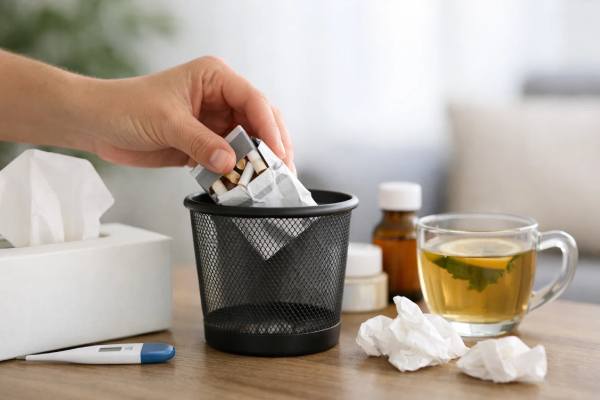
Trying to quit while you have a cold, flu, bronchitis, or another respiratory infection can feel like choosing the hardest week to start. But it is often the most meaningful week to stop. Smoke is a constant irritant: it dries and inflames airway lining, slows the tiny “sweeper” hairs that move mucus out, and keeps cough and congestion stuck on repeat. When you quit, your body starts rebalancing within hours—carbon monoxide levels fall, oxygen delivery improves, and the airways begin to recover their normal clearing rhythm.
The first week can still be uncomfortable because you are dealing with two overlapping experiences: infection symptoms and nicotine withdrawal. The goal is not perfection; it is momentum with smart support. With the right tools—nicotine replacement, simple symptom care, and a plan for cravings—you can make this week easier and come out with a clearer chest and a stronger quit.
Key Insights for Quitting While You Are Sick
- Quitting removes a daily airway irritant, which can make coughing and congestion settle sooner even if symptoms briefly fluctuate.
- The toughest withdrawal window is usually the first 2–3 days; planning that period matters more than willpower.
- A wetter, more productive cough can be a normal “airway clearing” change after stopping smoke exposure.
- Nicotine replacement can reduce withdrawal and is often easier to use than “toughing it out” while ill.
- Seek urgent care for breathing trouble, chest pain, confusion, blue lips, or low oxygen readings that do not improve.
Table of Contents
- Why quitting during infection matters
- First week timeline after your last cigarette
- Withdrawal or worsening illness: how to tell
- Nicotine replacement and meds when sick
- A seven-day quit plan for sick days
- When to get medical help quickly
Why quitting during infection matters
When you have a respiratory infection, your airways are already inflamed and busy producing extra mucus to trap viruses and debris. Smoking adds a second layer of injury: heat, particles, and chemicals that tighten airways, thicken mucus, and reduce the normal “escalator” movement that clears secretions. In plain terms, smoking turns a manageable cold into a stickier, longer recovery for many people.
Quitting helps in three practical ways that matter during illness:
- Less airway irritation every hour. Each cigarette is another trigger for swelling and cough. Removing that trigger can reduce the “constant scratch” feeling in the throat and upper chest over days.
- Better mucus clearance. Your lungs do not suddenly become “clean,” but they can start moving mucus more effectively. That can mean you cough up more mucus for a short period—often a sign that clearance is improving, not that you are getting worse.
- More efficient oxygen delivery. Carbon monoxide from smoke competes with oxygen in the bloodstream. During an infection—when sleep is worse and breathing can feel tight—getting rid of carbon monoxide can be a noticeable relief.
There is also a broader risk question. Smoking is associated with more severe infectious respiratory illness and higher rates of infections like pneumonia and influenza compared with never smoking. Stopping does not erase risk overnight, but it immediately removes an exposure that is actively working against your immune defenses.
A helpful mindset shift is to treat this week as airway first aid. You are not quitting “during” an infection so much as quitting to give your lungs a quieter environment to heal. If you have ever noticed that smoke makes your cough harsher, your chest tighter, or your congestion thicker, you have already seen the mechanism at work.
One more benefit is psychological: being sick creates natural structure—more time at home, fewer social smoking cues, and clearer feedback from your body. Many people say, “I could feel how much smoking was making it worse,” and that becomes an anchor point they return to when cravings hit later.
First week timeline after your last cigarette
The first week is easier to handle when you expect a few predictable phases. Infection symptoms (fever, sore throat, congestion) follow their own timeline, while nicotine withdrawal follows another. They overlap, but they are not the same thing.
Hours 0–24: oxygen improves, cravings begin
Within hours, carbon monoxide levels begin dropping and oxygen delivery improves. You may not feel that as “more oxygen,” but you might notice slightly less chest tightness or fewer dizzy moments when you stand up. Nicotine itself clears quickly, which is why cravings can surge on day one—especially at the times you usually smoke (morning coffee, after meals, before bed).
Common day-one sensations include restlessness, irritability, headache, and strong “automatic” urges. If you are sick, dehydration and poor sleep make these sensations louder, so hydration and rest are not optional extras; they are part of the quit strategy.
Days 2–3: the peak withdrawal window
For many people, day two and day three are the hardest. Cravings can feel urgent, concentration is poor, and sleep can be fragmented with vivid dreams. If you are also coughing or congested, you may feel as if your body is “overloaded.”
This is where support pays off. Nicotine replacement therapy (NRT) can flatten the peaks, and simple routines—tea, shower steam, short walks, chewing gum, brief breathing exercises—can replace the cigarette-shaped gaps in your day.
Days 4–7: cravings shift and cough may change
By midweek, cravings usually become less constant and more “wave-like.” You might still get intense urges, but they tend to be shorter and more tied to triggers (stress, boredom, a phone call, finishing a meal).
A notable lung change can happen here: coughing may become more productive. Some people describe it as the lungs “waking up.” Mucus can loosen and move, which is useful, but it can feel messy and surprising if you expected cough to simply disappear. As long as you are not developing red-flag symptoms (worsening shortness of breath, high fever returning, chest pain, coughing up blood), increased mucus clearance can be part of recovery.
If you are quitting while sick, consider tracking two simple measures once daily:
- how hard it is to breathe when walking across the room, and
- whether fever is improving or returning.
Those are more meaningful than counting coughs.
The headline is this: your body is doing multiple repairs at once. The first week is rarely elegant, but it is often the week where quitting makes the biggest difference to how your chest feels going forward.
Withdrawal or worsening illness: how to tell
When you quit during a respiratory infection, it is common to ask, “Is this withdrawal, or am I getting sicker?” The answer matters because it changes what you do next. A practical way to decide is to look at pattern, timing, and breathing.
Clues that point to nicotine withdrawal
Withdrawal symptoms often:
- Peak in the first 2–3 days after your last cigarette, then gradually ease.
- Come in waves that last minutes to an hour, often linked to triggers (after meals, stress, boredom).
- Include irritability, anxiety, restlessness, low mood, trouble concentrating, increased appetite, and sleep disruption.
- Improve noticeably after nicotine replacement (patch, gum, lozenge) or a structured craving routine.
Withdrawal can also cause headache and a “foggy” feeling. If you are sick, that fog can feel worse—but the key clue is that it fluctuates and is closely connected to craving moments.
Clues that point to infection progression
Infection is more likely driving symptoms if you have:
- Breathing that is getting harder over hours, not just during cravings.
- Fever that returns after improving, or fever that stays high beyond the expected early phase for a typical cold.
- Chest pain with breathing, persistent wheeze, or shortness of breath at rest.
- New confusion, fainting, dehydration, or inability to keep fluids down.
- Cough with blood, or a sudden sharp decline after a few stable days.
A key difference is that infection progression often shows a downward trend in your overall function: walking feels harder, sleep is interrupted by breathlessness, or you cannot speak in full sentences comfortably.
The “wet cough” misunderstanding
A common trap is assuming that more mucus means “worse infection.” After quitting, mucus may loosen and move upward more effectively. That can increase the amount you cough up even while the infection itself is stabilizing. What matters is the whole picture: your breathing effort, your fever pattern, your energy, and whether you are improving overall.
Simple decision rules for home
If you feel worse, try this sequence:
- Hydrate and rest for 30–60 minutes.
- Use symptom support (warm fluids, humidified air, saline, honey if appropriate).
- If cravings are driving distress, use NRT or a craving routine.
- Re-check how you feel with movement (walk to the bathroom and back).
If breathing is clearly worse, or your oxygen readings are low and not improving with rest, treat it as illness progression and seek medical guidance.
Nicotine replacement and meds when sick
Quitting while ill is not the time to rely on brute force if you do not have to. Evidence-based cessation tools can reduce withdrawal enough that you can focus on recovering. Major guidelines—including those from World Health Organization and U.S. Preventive Services Task Force—support combining behavioral support with approved medications for better quit success.
Nicotine replacement therapy basics
NRT provides nicotine without smoke. That matters because smoke—and not nicotine—is what directly irritates infected airways.
Common options:
- Patch (steady support): helpful for background cravings and irritability.
- Gum or lozenge (fast relief): helpful for sudden urges.
- Combination approach: a patch plus a short-acting form is often more effective than either alone.
Practical sick-day tips:
- If nausea is an issue, lozenges may be gentler than gum, and taking them after a small snack can help.
- If coughing is severe, gum can be annoying; consider lozenges.
- If sleep is disrupted, some people do better removing the patch at night (but talk with a clinician if you are unsure).
Prescription options: what to know during infection
Two common prescription choices are varenicline and bupropion. These can be effective, but your infection week is not always the best week to start them without planning.
- Varenicline can cause nausea or vivid dreams. If you are already sleeping poorly from a cough, discuss timing and dose adjustments with a clinician.
- Bupropion can be activating and may increase insomnia in some people. It is not appropriate for everyone (for example, certain seizure risks).
If you are already taking one of these medications and then get sick, you can usually continue—but do not ignore new side effects (severe mood changes, worsening insomnia, significant nausea).
Cold and flu medicines: watch the “wired” combination
Many over-the-counter cold products contain stimulants or decongestants that can raise heart rate or make you feel jittery. Withdrawal can also feel jittery. The combination can mimic panic: racing heart, sweating, restlessness, and poor sleep.
If that happens, consider choosing symptom relief that is less stimulating, and focus on:
- humidified air
- saline spray or rinse
- warm fluids
- honey for cough (not for infants)
- acetaminophen or ibuprofen when appropriate for pain and fever
If you have heart disease, high blood pressure, pregnancy, or complex medication regimens, it is worth checking with a clinician before mixing cessation meds, decongestants, and illness remedies.
A seven-day quit plan for sick days
This plan is designed for the reality of being ill: low energy, disrupted sleep, and frequent cravings. The goal is to reduce decision fatigue by setting defaults.
Day 0: set up your environment
- Remove cigarettes, lighters, and ashtrays from your main living space.
- Decide your nicotine support plan (patch, lozenge, or both).
- Choose three “craving substitutes” that match being sick: warm tea, hot shower steam, and a short guided breathing exercise, for example.
- Tell one person you trust that you are quitting this week and ask for one specific kind of support (a daily check-in, or help getting supplies).
Days 1–2: protect sleep and hydration
These are often the hardest days. Your job is to prevent withdrawal + illness from becoming a spiral.
- Drink fluids regularly. If appetite is low, use soups or electrolyte drinks.
- Aim for small, repeatable routines: rinse nose, warm drink, rest, short walk around the room, repeat.
- Use NRT on schedule, not as a last resort.
- When cravings hit, use the “3D” method: Delay 10 minutes, Drink water or tea, Distract with a simple task (shower, brush teeth, change your bedding).
Day 3: expect the peak and plan around it
If you are going to slip, this is a common day. Pre-decide what you will do instead:
- Put lozenges or gum where you usually keep cigarettes.
- Make your default response to a craving a two-minute action, not a debate: stand up, wash hands, drink water, sit back down.
Days 4–5: manage triggers, not time
By now cravings often “attach” to cues: meals, phone calls, stress. Make tiny swaps:
- After eating, immediately stand up and rinse your mouth or brush teeth.
- If you usually smoke while scrolling, switch to a different spot or a different activity for 10 minutes.
- Replace “one cigarette” thinking with “one craving wave.” Most waves fade if you do not feed them.
Days 6–7: reinforce what is working
Make your progress visible:
- Note one concrete improvement (breathing, smell, less throat burn, fewer coughing fits).
- Keep the same NRT routine for at least a short stabilization period rather than stopping abruptly the moment you feel better.
If you slip, treat it as data: What was the trigger? What support was missing? Then return to the plan at the next craving. A lapse does not have to become a relapse.
When to get medical help quickly
Most respiratory infections improve with time and supportive care, and most people can quit safely during them. The risk is missing a complication—like pneumonia, severe asthma flare, COPD exacerbation, dehydration, or dangerously low oxygen—because you assume everything is “just withdrawal.”
Seek urgent medical care (or emergency help) if you have any of the following:
- Shortness of breath at rest, or you cannot speak in full sentences without stopping for breath.
- Chest pain, especially if it is pressure-like, new, or worsens with breathing.
- Blue or gray lips or face, severe confusion, or unusual sleepiness that is hard to interrupt.
- Oxygen saturation that is persistently low for you. As a general guide at sea level, readings around 92% or below—especially with symptoms—should prompt urgent guidance, and under 90% is an emergency in many situations. (People with chronic lung disease may have different baselines; follow your clinician’s plan.)
- High fever that does not improve, fever that returns after a clear improvement, or fever plus shaking chills and worsening cough.
- Coughing up blood, or thick rust-colored sputum with worsening breathing.
- Signs of dehydration: very dark urine, dizziness when standing, inability to keep fluids down, or minimal urination.
Also consider contacting a clinician promptly if you have:
- asthma, COPD, heart disease, immune suppression, pregnancy, or advanced age
- symptoms that worsen after day 5–7 rather than improving
- repeated nighttime awakenings due to breathlessness
If you are using a pulse oximeter, remember that cold fingers, nail polish, poor circulation, and motion can produce inaccurate readings. Warm your hands, sit still, and repeat the measurement before reacting.
Finally, if quitting feels impossible while you are acutely ill, do not abandon the attempt. Shift the goal to a stabilized quit: use NRT consistently, avoid smoking indoors, reduce cigarettes sharply, and set a firm “no smoke” restart date as soon as you are past the worst fever and sleep disruption. The key is keeping the quitting process moving forward.
References
- WHO clinical treatment guideline for tobacco cessation in adults 2024 (Guideline)
- Interventions for Tobacco Smoking Cessation in Adults, Including Pregnant Persons: US Preventive Services Task Force Recommendation Statement – PubMed 2021 (Guideline)
- Pharmacological and electronic cigarette interventions for smoking cessation in adults: component network meta-analyses – PubMed 2023 (Systematic Review)
- Cigarette smoking and risk of severe infectious respiratory diseases in UK adults: 12-year follow-up of UK biobank – PMC 2023 (Cohort Study)
- Benefits of quitting tobacco: MedlinePlus Medical Encyclopedia 2023 (Patient Education)
Disclaimer
This article provides general educational information and is not a substitute for personalized medical advice, diagnosis, or treatment. Respiratory infections and smoking cessation decisions can be more complex for people with asthma, COPD, heart disease, pregnancy, immune suppression, or severe symptoms. If you are worried about your breathing, oxygen levels, chest pain, dehydration, or rapidly worsening symptoms, contact a qualified clinician or emergency services promptly.
If you found this guide useful, consider sharing it on Facebook, X (formerly Twitter), or any platform you prefer so others can use the same practical steps to quit and breathe easier.