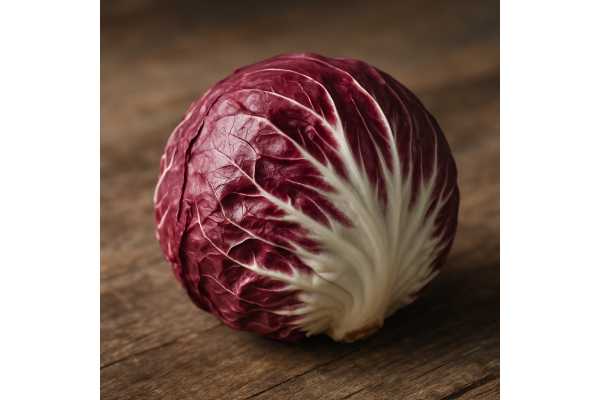
Radicchio is one of those vegetables you may notice in the produce aisle—deep burgundy leaves with crisp white veins—without quite knowing what to do with it. Yet this member of the chicory family is more than a pretty addition to salad bowls. Radicchio brings a pronounced bitter flavor that can wake up otherwise mild dishes, along with useful amounts of vitamin K, vitamin C, folate, and antioxidant plant compounds such as anthocyanins. These pigments give radicchio its striking color and may help protect cells from everyday oxidative stress.
In Italian cooking, radicchio is grilled, braised, or folded into risotto and pasta, where heat softens its bitterness and brings out a gentle sweetness. Raw, it adds crunch and complexity to salads and slaws. This guide walks you through what radicchio offers nutritionally, where it may support health, what to watch for if you take certain medications or have allergies, and how to choose, store, cook, and portion it so you genuinely enjoy eating it.
Key Takeaways for Radicchio
- A 100 g serving of raw radicchio is very low in calories and carbohydrates but rich in vitamin K and provides vitamin C, folate, and potassium.
- Deep red-purple leaves contain anthocyanins and other polyphenols that contribute to the vegetable’s antioxidant capacity.
- Typical portions are about 40–80 g (roughly 1–2 cups shredded), eaten several times per week as part of a varied vegetable intake.
- People taking vitamin K–sensitive blood thinners should keep radicchio and other leafy greens consistent in their diet and discuss patterns with their clinician.
- Those with allergies to chicory, endive, or other Asteraceae plants should be cautious when trying radicchio for the first time.
Table of Contents
- Radicchio origins and culinary uses
- Radicchio nutrition profile in depth
- Radicchio health benefits from research
- Radicchio risks allergies and interactions
- Choosing and storing radicchio sustainably
- Preparing radicchio and preserving nutrients
- Radicchio portions comparisons and FAQs
Radicchio origins and culinary uses
Radicchio is a cultivated form of Cichorium intybus, the same species as common chicory. It is traditionally associated with northern Italy, especially the Veneto region, where local types such as Chioggia, Treviso, and Castelfranco have strong culinary identities and, in some cases, protected regional status.
Botanically, radicchio is a leafy vegetable that forms compact heads. Chioggia radicchio looks like a small red cabbage, with round, tight heads and dense leaves. Treviso types resemble elongated romaine hearts, with maroon leaves and thick white ribs, while “tardivo” Treviso has dramatic curled pale ribs with crimson tips, often grilled or roasted whole. Despite their different shapes, these varieties share a similar bitter flavor profile and nutritional pattern.
Radicchio’s hallmark is its firm bitterness. That bitterness comes from naturally occurring compounds known as sesquiterpene lactones, which are typical of the chicory family. In culinary traditions that prize contrasting tastes, bitterness is not a flaw but a valued counterpoint to richness and sweetness.
Common uses include:
- Raw salads and slaws: finely sliced radicchio mixed with milder lettuces, fruit, nuts, and a slightly sweet or acidic dressing.
- Grilled or roasted halves: heads cut into wedges, brushed with olive oil, grilled until charred at the edges, and finished with balsamic vinegar or citrus.
- Braised radicchio: gently cooked in olive oil with garlic, stock, or wine, then folded into risotto, pasta, or polenta.
- Color accent: small amounts added to grain bowls, antipasti platters, and sandwiches to provide color, crunch, and a bitter contrast.
Radicchio is usually available year-round in supermarkets but tends to be at its best in the cooler months, when outdoor-grown heads develop deeper color and more balanced flavor. Compared with many lettuces, radicchio has sturdier leaves and slightly lower water content, so it holds up well to robust dressings and gentle heat. For home cooks, it is especially useful as a “contrast vegetable”: a little goes a long way in transforming the flavor profile of a dish.
Radicchio nutrition profile in depth
Most nutritional data for radicchio are reported for raw leaves. Values below are approximate and refer to 100 g (about two heaping cups shredded).
Macros and electrolytes (per 100 g, raw)
| Nutrient | Amount per 100 g | Approx. % Daily Value* |
|---|---|---|
| Energy | ~23 kcal | 1% |
| Protein | ~1.4 g | 3% |
| Total fat | ~0.3 g | 0–1% |
| Saturated fat | ~0.1 g | <1% |
| Total carbohydrate | ~4.5 g | 1–2% |
| Dietary fiber | ~0.9 g | 3% |
| Total sugars | ~0.6 g | – |
| Sodium | ~20–25 mg | 1% |
| Potassium | ~300 mg | 9% |
| Water | ~93 g | – |
*Based on a 2,000 kcal diet.
Radicchio is extremely low in calories and carbohydrates, with modest fiber and a meaningful contribution to daily potassium intake relative to its energy content. It is naturally low in sodium and contains virtually no saturated fat.
Vitamins (per 100 g, raw)
| Vitamin | Amount | Approx. % Daily Value |
|---|---|---|
| Vitamin K | ~250 µg | ~200% |
| Vitamin C | ~8 mg | ~9% |
| Folate (vitamin B9) | ~60 µg | ~15% |
| Vitamin E | ~2.3 mg | ~15% |
| Vitamin B6 (pyridoxine) | ~0.06 mg | ~4% |
| Pantothenic acid (vitamin B5) | ~0.27 mg | ~5% |
| Niacin (vitamin B3) | ~0.25–0.30 mg | 2% |
| Riboflavin (vitamin B2) | ~0.03 mg | 2% |
| Thiamin (vitamin B1) | ~0.02 mg | 1% |
| Vitamin A (as retinol activity equivalents) | very low | <1% |
Radicchio stands out for its very high vitamin K content. Even a moderate portion easily provides more than the standard daily value. It also offers useful amounts of vitamin C, vitamin E, and folate, supporting blood clotting and bone health (vitamin K), immune and collagen function (vitamin C), antioxidant defense (vitamin E), and normal cell division (folate).
Minerals (per 100 g, raw)
| Mineral | Amount | Approx. % Daily Value |
|---|---|---|
| Calcium | ~19 mg | 2% |
| Iron | ~0.6 mg | 7% |
| Magnesium | ~13 mg | 3% |
| Phosphorus | ~40 mg | 3–5% |
| Zinc | ~0.6 mg | 6% |
| Copper | ~0.3–0.35 mg | ~35–40% |
| Manganese | ~0.14 mg | 6% |
| Selenium | ~1 µg | 2% |
Copper is particularly noteworthy, with roughly a third of the daily value per 100 g, supporting enzymes involved in energy production and connective tissue. Potassium and iron contribute modestly, and the overall mineral pattern complements that of other leafy greens.
Bioactives and phytonutrients
Radicchio’s deep color reflects a diverse mix of phytochemicals:
- Anthocyanins – red-purple pigments with antioxidant and potential anti-inflammatory activity.
- Other polyphenols – including flavonoids and phenolic acids typical of chicory species.
- Carotenoids such as lutein and zeaxanthin – present in green tissues, even if masked visually by anthocyanins.
- Sesquiterpene lactones – responsible for its bitterness and the characteristic flavor of chicory family plants.
Together, these compounds contribute to the vegetable’s total antioxidant capacity and may influence signaling pathways related to oxidative stress and inflammation. While exact amounts vary by variety, growing conditions, and storage, radicchio can be considered a notable source of plant bioactives among leafy vegetables.
Radicchio is naturally free of cholesterol and gluten, and it fits easily into vegetarian, vegan, and Mediterranean-style dietary patterns.
Radicchio health benefits from research
Research on radicchio is still emerging, so most evidence comes from studies on closely related red chicory cultivars and on the broader Cichorium intybus species. These studies point to several potential health-supportive roles when radicchio is part of a varied, plant-forward diet.
Antioxidant and cell protection
Laboratory work on red chicory and radicchio-type leaves consistently shows:
- High total antioxidant capacity in extracts rich in anthocyanins and other polyphenols.
- Protection of cells and lipids from oxidative damage in test systems, suggesting that these compounds can neutralize reactive oxygen species under experimental conditions.
- Reasonable stability of many pigments and antioxidant compounds when leaves are stored and handled carefully, especially when cutting, bruising, and prolonged exposure to air are minimized.
These findings do not prove disease prevention in humans on their own, but they provide a mechanistic basis for including radicchio among the colorful vegetables that contribute to overall antioxidant intake.
Gut and intestinal support
Beyond general fiber benefits, radicchio may influence the gut environment through:
- Prebiotic-like effects: chicory family plants are known for inulin-type fibers, and although radicchio is not as rich in inulin as chicory root, its fermentable carbohydrates and polyphenols may still feed beneficial gut bacteria.
- Barrier support: cell studies using red chicory extracts suggest that anthocyanins and related compounds can help protect intestinal cells from oxidative stress and may support healthy barrier function.
While human trials using radicchio specifically are limited, these observations align with broader evidence that a diverse intake of fibrous, polyphenol-rich vegetables supports a healthier gut microbiota and intestinal lining.
Cardiometabolic context
Radicchio may contribute to cardiometabolic health through several indirect pathways:
- Very low energy density: only about 23 kcal per 100 g, which allows generous portions without significantly affecting total calorie intake. This is helpful in weight-management strategies that emphasize volume and satisfaction.
- Potassium and minimal sodium: supports normal blood pressure regulation as part of dietary patterns that moderate salt intake.
- Vitamin K and vascular health: vitamin K has roles not only in clotting but also in activating proteins that discourage vascular calcification. Radicchio is one of many leafy vegetables contributing to this intake.
- Polyphenols: some human studies using chicory-derived preparations have reported improvements in markers of oxidative stress and lipid metabolism; while these use more concentrated forms than ordinary food, they illustrate potential cardiometabolic relevance of compounds found in radicchio.
Overall, radicchio should not be viewed as a standalone therapy but as one flavorful component of a dietary pattern linked with lower risk of cardiovascular disease and type 2 diabetes.
Appetite, satisfaction, and food behavior
Radicchio also influences eating behavior in practical ways:
- Its bitterness encourages slower, more mindful eating when included in salads or warm dishes.
- Adding radicchio to meals increases chew time and plate volume with very few calories.
- When paired with healthy fats, proteins, and whole grains, radicchio helps create meals that feel more complex and satisfying, which can indirectly support better appetite control.
These behavioral aspects, although less dramatic than single-nutrient effects, matter in everyday eating and long-term adherence to healthy patterns.
Radicchio risks allergies and interactions
For most people, radicchio is safe and well tolerated, but certain individuals should be aware of specific considerations.
Allergy and cross-reactivity
Radicchio belongs to the Asteraceae family, which also includes chicory, endive, lettuce, artichoke, and various flowering plants such as ragweed and mugwort. True allergy to radicchio is uncommon, but risk may be higher in people who:
- Have known food allergy to other chicory or endive types.
- Experience oral allergy syndrome with related pollens (for example, tingling or itching in the mouth and throat when eating certain raw plant foods).
Mild reactions might include local itching, tingling, or swelling in the mouth. More serious symptoms—hives, throat tightness, wheezing, dizziness, or difficulty breathing—require urgent medical care and warrant formal allergy evaluation.
Digestive tolerance
Most people tolerate radicchio well, especially in modest amounts. However:
- The bitter flavor may stimulate digestive secretions, which some people experience as increased bowel activity.
- Individuals with irritable bowel syndrome or other functional gut disorders may find that large servings of raw, bitter greens exacerbate symptoms like cramping or urgency.
- Introducing radicchio gradually, starting with small portions and combining it with other, milder vegetables can help assess personal tolerance.
If raw radicchio seems problematic, lightly cooked preparations (grilled, sautéed, or baked) are often easier to tolerate.
Vitamin K and anticoagulant medications
Because radicchio is very rich in vitamin K, it can influence blood clotting in people who take vitamin K–antagonist blood thinners such as warfarin. The key points are:
- Large, sudden increases or decreases in vitamin K intake can affect the stability of anticoagulation.
- Most guidelines emphasize keeping vitamin K intake consistent rather than avoiding it completely.
- If you take a vitamin K–sensitive blood thinner and wish to eat radicchio more or less often than you do now, you should discuss this with your prescribing clinician or anticoagulation clinic so that your dosing and monitoring can be adjusted if needed.
For people on newer direct oral anticoagulants that do not directly depend on vitamin K, radicchio usually does not require the same level of restriction, although individual advice is still important.
Nitrates, contaminants, and pesticide residues
Like many leafy vegetables, radicchio can accumulate nitrates from soil and fertilizer. Typical levels are within the range considered safe for leafy greens, and for most adults nitrates from vegetables are not a health concern. Basic food safety practices help minimize risk:
- Rinse leaves thoroughly under running water to remove soil and residues.
- Store radicchio in the refrigerator and respect use-by dates.
- Buy from reputable suppliers and, when feasible, choose growers who follow good agricultural practices.
Organic and conventional radicchio can both be part of a healthy diet; differences in pesticide use and soil management are real but should be weighed alongside cost, availability, and overall dietary pattern.
Who should be especially cautious?
- People with known chicory or Asteraceae family food allergies.
- Individuals taking vitamin K–antagonist anticoagulants.
- Those with severe, diet-sensitive IBS or inflammatory bowel disease, who may need structured reintroduction plans.
For most others, radicchio can be enjoyed regularly with minimal concern.
Choosing and storing radicchio sustainably
Selecting good radicchio and handling it with care improves flavor, reduces waste, and preserves more nutrients.
Selecting fresh radicchio
Look for:
- Firm, compact heads: they should feel heavy for their size, with tight leaves.
- Vibrant color: deep maroon or purple with bright white veins and ribs.
- Crisp leaves: no significant wilting, sliminess, or wet spots.
- Clean cut stem: slightly dry but not deeply browned or moldy.
Avoid heads that are very soft, smell sour, or show extensive browning or decay at the outer leaves.
Different types suit different uses:
- Chioggia (round) works well raw or cooked and is widely available.
- Treviso (elongated) is especially good for grilling, roasting, and braising.
- Castelfranco has mottled cream and red leaves with a milder, slightly nutty flavor, ideal for salads.
Storage for quality and food safety
Once at home:
- Keep radicchio refrigerated in the vegetable drawer.
- Do not wash until just before use; excess moisture accelerates spoilage.
- Wrap the head loosely in a breathable material such as a cloth or paper towel and place it in a perforated bag or container.
- Aim to use whole heads within 5–7 days for the best texture and flavor.
After cutting or shredding, store the extra in an airtight container with a dry paper towel to absorb moisture and use within 2–3 days. A brief soak of limp leaves in ice water can restore some crispness.
Sustainability considerations
Radicchio can fit well into sustainable eating patterns:
- It is often grown in open fields during cooler seasons, limiting the need for energy-intensive heated greenhouses.
- The heads are dense and compact, making them relatively efficient to transport.
- Outer leaves and trimmings can be used in cooked dishes or as part of stocks, reducing waste.
To further support sustainability:
- Buy radicchio when it is in season locally, if possible.
- Choose producers who emphasize soil health and integrated pest management.
- Plan meals so that you use entire heads over a few dishes rather than letting leftovers languish.
Food industry research has also explored using radicchio and chicory by-products as sources of natural colorants and antioxidants in other foods, highlighting its potential role in reducing waste higher up the supply chain.
Preparing radicchio and preserving nutrients
Radicchio’s strong flavor can be a barrier or an asset, depending on how it is handled. Simple techniques can make it easier to enjoy while preserving its nutritional value.
Basic preparation steps
- Trim a thin slice off the base of the head, removing any dried or discolored stem tissue.
- Remove any outer leaves that are badly wilted or damaged.
- Rinse remaining leaves under cool running water, gently separating them to dislodge soil.
- Dry thoroughly using a salad spinner or clean kitchen towel so dressings adhere and leaves stay crisp.
For raw preparations, cut radicchio into thin slices or fine shreds; this distributes bitterness more evenly and helps it blend with other ingredients.
Balancing bitterness in raw dishes
Radicchio shines when paired with elements that offset or complement its bitterness:
- Sweetness: fruit (pear, apple, orange, grapes), roasted pumpkin or beet, or a touch of honey in a dressing.
- Fat: extra-virgin olive oil, nuts, seeds, avocado, or cheeses like goat cheese or Parmesan.
- Acid: lemon juice, orange juice, red wine vinegar, or balsamic vinegar.
- Umami and salt: aged cheeses, olives, toasted nuts, or small amounts of cured meats.
A simple salad template:
- 1 part finely sliced radicchio.
- 2–3 parts milder greens such as romaine, butterhead, or baby spinach.
- A handful of fruit and nuts.
- A vinaigrette made with olive oil and a sharp acid, lightly sweetened if desired.
Cooking methods and nutrient impact
Heat transforms radicchio’s flavor:
- Grilling or roasting: Halve or quarter heads, brush with olive oil, and grill or roast at high heat until edges char and centers soften. This reduces bitterness and brings out some sweetness while preserving much of the texture.
- Quick sauté or braise: Cook sliced radicchio briefly in a pan with oil or butter and aromatics (garlic, shallot), then finish with vinegar or wine. Short cooking times help retain color and some vitamin content.
- Fold into hot dishes: Stir chopped radicchio into risotto, pasta, or grain dishes at the end of cooking so it wilts but does not completely lose its character.
Nutrient-wise:
- Water-soluble vitamins like vitamin C are sensitive to prolonged heat and water contact, so shorter cooking methods generally preserve more.
- Anthocyanins can fade with long cooking, especially in alkaline conditions, but moderate heat for limited time usually maintains some of their activity.
- Pairing radicchio with fats helps absorption of fat-soluble nutrients such as vitamin K and vitamin E.
Practical meal ideas
- Orange and radicchio salad with toasted walnuts and a simple citrus vinaigrette.
- Grilled radicchio wedges topped with shaved Parmesan and a drizzle of balsamic reduction.
- Barley or farro salad with radicchio, roasted squash, chickpeas, and pumpkin seeds.
- Risotto with radicchio, onions, white wine, and a small amount of cheese.
- Warm side dish of sautéed radicchio with garlic, olive oil, and a splash of vinegar served alongside fish or poultry.
These approaches show how radicchio can move from garnish to central flavor component while fitting into broadly healthy meal patterns.
Radicchio portions comparisons and FAQs
Practical portions and frequency
Because radicchio has a strong flavor, typical servings are modest:
- About 1 cup shredded (≈40 g): roughly 9–10 kcal, negligible fat, small amounts of vitamin C and folate, and a meaningful but not excessive vitamin K contribution.
- About 2 cups shredded or half a small head (≈80 g): around 18–20 kcal, more substantial fiber, potassium, and a large share of daily vitamin K.
For most adults, it is reasonable to include radicchio several times per week as part of a varied vegetable intake. People who enjoy bitter greens may eat it more frequently. Those on vitamin K–sensitive anticoagulants should focus on keeping their weekly pattern consistent rather than avoiding radicchio completely.
Comparing radicchio with other leafy vegetables
- Versus iceberg lettuce: radicchio generally offers more vitamin K, vitamin C, vitamin E, folate, copper, and potassium, and much higher polyphenol content, while still being low in calories.
- Versus darker greens (spinach, kale): spinach and kale tend to be higher in total folate, carotenoids, and sometimes iron, but radicchio contributes unique anthocyanins and a different flavor profile. It complements rather than replaces these greens.
- Versus red cabbage: both are rich in anthocyanins, but red cabbage is denser and more fibrous, while radicchio is more tender and significantly more bitter. Choice often comes down to the desired texture and preparation method.
Using a mix of leafy vegetables across the week helps diversify nutrient and phytonutrient intake without overreliance on any single food.
Common questions about radicchio
Is radicchio low enough in carbohydrate for low-carb or ketogenic diets?
Yes. Radicchio is extremely low in digestible carbohydrates, especially at typical salad-sized portions. Even a generous serving fits comfortably within most low-carb or ketogenic frameworks when counted toward net carbohydrate limits.
Is radicchio safe during pregnancy?
For most pregnant individuals, radicchio is safe when washed properly and eaten as part of a varied diet. It contributes folate and vitamin C and provides fiber. The main caution is for those taking anticoagulant medications or with specific clotting disorders, who should follow medical advice regarding vitamin K–rich foods.
Can children eat radicchio?
Children can eat radicchio, though many will find its bitterness challenging. Serving it in small amounts mixed with sweeter vegetables or fruit, and allowing children to explore it without pressure, can gradually build acceptance. There is no standard minimum age, provided choking risk is managed and no allergies are present.
Does organic radicchio have more nutrients?
Some studies suggest that organic cultivation can modestly alter levels of certain phytonutrients in leafy vegetables, but the differences are usually smaller than those caused by variety, soil, and freshness. From a practical health standpoint, regularly eating vegetables of any farming system is more important than choosing one label, as long as they are stored and prepared safely.
Can I juice radicchio or add it to smoothies?
You can, but its bitterness is very intense in juice or smoothie form. If you experiment, start with small amounts combined with milder ingredients. From a nutritional point of view, eating radicchio as part of whole meals preserves its fiber and usually provides a more satisfying way to enjoy it.
References
- Radicchio nutrition: calories, carbs, protein, fats, and more 2019 (Nutrient database summary).
- Radicchio, raw: full nutrition facts 2018 (USDA-derived nutrient data).
- Health Benefits of Key Constituents in Cichorium intybus L. 2023 (Systematic review of chicory bioactive compounds).
- Red chicory (Cichorium intybus) extract rich in anthocyanins: chemical stability, antioxidant activity, and antiproliferative effects 2019 (In vitro study on red chicory extracts).
- Radicchio: nutrition, benefits, and how to use it 2020 (Evidence-based consumer summary).
Disclaimer
This article is for general informational purposes only and is not a substitute for professional medical advice, diagnosis, or treatment. Nutrient values are approximate and can vary with variety, origin, and preparation methods. If you have specific health conditions, take prescription medications (especially blood thinners), are pregnant or breastfeeding, or have known or suspected food allergies, consult a qualified healthcare professional or registered dietitian before making significant changes to your diet or using radicchio or other foods in therapeutic amounts. Never disregard or delay seeking professional medical advice because of information you have read online.
If you found this guide helpful, you are welcome to share it on Facebook, X (formerly Twitter), or any platform you prefer. Sharing supports the spread of balanced, evidence-informed nutrition information and helps encourage the creation of more resources like this one.