Waking up with red eyes can feel alarming, yet the cause is often straightforward: the surface of the eye and the eyelids work differently at night. Blinking stops, tear production slows, and the eye may be exposed to dry air, allergens, or friction from a pillow. For many people, that combination leads to temporary blood-vessel dilation and irritation that improves within an hour. Still, morning redness is worth understanding because it can also be an early sign of dry eye disease, eyelid inflammation, allergy flares, or an infection that needs treatment. The most helpful approach is to look at the pattern—how long redness lasts, whether one or both eyes are involved, and whether you also have pain, discharge, or light sensitivity. This guide explains common causes, practical fixes, and the situations where prompt care protects vision.
Key Takeaways for Morning Redness
- Brief redness that fades within 30–90 minutes often reflects dryness, mild irritation, or sleeping-environment triggers.
- Persistent redness with burning, gritty sensation, or fluctuating vision commonly points to dry eye or eyelid inflammation.
- Thick discharge, eyelids stuck shut, or increasing tenderness suggests infection and should be evaluated promptly.
- Contact lens wearers should treat any painful red eye after sleep as urgent until proven otherwise.
- Use a simple 7-night plan: improve humidity, avoid eye rubbing, clean lids gently, and lubricate before bed to see if symptoms resolve.
Table of Contents
- What morning redness tells you
- Dryness and exposure during sleep
- Eyelid inflammation and allergy triggers
- Infection and other conditions to rule out
- Fixes you can try tonight
- When to see a doctor and what happens next
What morning redness tells you
Redness after sleep usually comes from the conjunctiva—the thin, clear tissue covering the white of the eye—and the tiny surface vessels that expand when the eye is irritated. At night, several normal shifts make that irritation more likely. Tear production tends to slow, blinking stops (so tears are not spread evenly), and the eyelids may not seal perfectly. Even small changes can matter because the eye’s surface is designed to stay smooth and well-lubricated.
A quick way to interpret morning redness is to sort it by duration and accompanying symptoms:
- Redness that fades within an hour often reflects dryness, mild exposure to air, or temporary irritation from rubbing or cosmetics.
- Redness that lasts most of the day is more consistent with dry eye disease, blepharitis (eyelid margin inflammation), allergy flares, or ongoing exposure to an irritant.
- Redness that worsens through the day can still be dry eye or allergy, but it may also reflect a developing infection or inflammation that needs treatment.
It also helps to notice whether redness is diffuse or localized. Diffuse redness across the white of the eye is common with dryness and conjunctivitis. A sharply defined bright-red patch can be a subconjunctival hemorrhage (a small surface bleed). That can look dramatic but is often painless and harmless; the key is whether it is paired with pain, vision changes, trauma, or recurrent episodes.
Pay attention to “partner symptoms” because they narrow the cause quickly:
- Itching strongly suggests allergy or eyelid irritation from mites or debris.
- Burning and gritty sensation often suggests dry eye or blepharitis.
- Sticky discharge or eyelids stuck shut raises concern for infection.
- Light sensitivity and pain are not typical of simple dryness and deserve prompt evaluation.
Finally, check for “one-eye clues.” If one eye is consistently redder than the other after sleep, consider sleeping position (one eye against a pillow), localized exposure from incomplete eyelid closure, a blocked eyelid gland on that side, or a contact lens issue affecting one eye.
The most important message is simple: mild morning redness that improves quickly is common, but redness that is persistent, painful, or paired with discharge should not be ignored.
Dryness and exposure during sleep
Dryness is one of the most common reasons eyes look red after sleeping, even in people who do not think of themselves as having “dry eyes.” The tear film is a layered system: oils from the eyelid glands slow evaporation, watery tears provide moisture and protective proteins, and mucins help tears spread evenly. When any layer is unstable, the surface can dry out in patches overnight, triggering morning redness, burning, or a gritty sensation.
A frequent culprit is nocturnal lagophthalmos, meaning the eyelids do not fully close during sleep. Many people have a small gap without realizing it. Signs include waking with dryness mainly in one eye, irritation that is worse in the morning than later, and discomfort that improves after blinking and lubricating. Sleeping with a fan, strong heating, or air conditioning can magnify the effect.
Sleeping position can also contribute. If you sleep face-down or with one side of your face pressed into a pillow, friction and reduced airflow patterns can irritate one eye more than the other. A rough pillowcase, lash extensions, or makeup residue can add mechanical irritation.
Another common pathway is evaporative dry eye from meibomian gland dysfunction. If the oil glands are clogged or inflamed, the tear film evaporates faster during the day and becomes less protective at night. People often notice morning redness with lid tenderness, fluctuating vision, or a sensation of “heavy” eyelids.
Environmental dryness is often underestimated. Low humidity in winter, a bedroom humidifier that is not used consistently, and direct airflow from vents can each shift the surface balance enough to cause morning redness. Alcohol the evening before, dehydration, and certain medications can also reduce tear stability and make symptoms more obvious upon waking.
Practical clues that point strongly to overnight dryness or exposure:
- Redness is worst immediately on waking and gradually improves.
- The eye feels sandy, burning, or mildly sore rather than itchy.
- Vision may be slightly blurred at first and clears with blinking.
- Symptoms are worse after nights with fans, travel, or very dry indoor heat.
Because dryness-related redness is often mechanical and inflammatory rather than infectious, it tends to respond well to improving the sleep environment and using the right type of lubrication before bed. If it does not improve after a focused trial, that is a signal to look for eyelid inflammation, allergy triggers, or a different diagnosis.
Eyelid inflammation and allergy triggers
If redness after sleep is paired with crusting, itch, or a “dirty lash line” feeling, the eyelids may be driving the problem. The eyelid margin contains oil glands, lash follicles, and a complex microbiome. When the margin becomes inflamed—commonly called blepharitis—the tear film destabilizes, the surface becomes more reactive, and morning redness becomes a pattern.
Blepharitis often comes in overlapping forms:
- Anterior blepharitis affects the lash line and can be associated with debris, flaking, and irritation at the base of the lashes.
- Posterior blepharitis (often related to meibomian gland dysfunction) affects oil glands and can cause thickened secretions, lid tenderness, and evaporative dry eye.
- Demodex-related blepharitis can cause prominent itching, sleeve-like debris around lashes, and symptoms that feel worse on waking.
Morning is a common “peak time” for eyelid-related symptoms because secretions accumulate overnight. People may wake with redness, crusting, and a sticky sensation, then feel somewhat better after washing the face and blinking for a while.
Allergies are another major cause of red eyes after sleep, especially if symptoms flare in certain seasons or in specific bedrooms. The most distinguishing symptom is itching, often accompanied by watery tearing and swelling. A bedroom can be a concentrated exposure zone: dust mites in bedding, pet dander on pillows, mold in humidifiers, and fragrance from detergents can all trigger ocular allergy.
Clues that point toward allergy:
- Itching is the dominant symptom.
- Both eyes are usually involved.
- There may be sneezing, nasal congestion, or seasonal patterns.
- Symptoms worsen after making the bed, vacuuming, or contact with pets.
You can also see a mixed picture: allergy inflames the conjunctiva, blepharitis destabilizes the tear film, and the result is redness that is most noticeable after sleep. In that scenario, improvement often requires addressing both the eyelids (gentle hygiene and warm compresses when appropriate) and the exposure load (bedding and air quality changes).
If morning redness is frequent and you notice lash debris, recurrent styes, or persistent irritation despite basic lubrication, prioritizing eyelid care is often the turning point.
Infection and other conditions to rule out
Most red eyes after sleeping are not dangerous, but it is important to recognize patterns that suggest infection or deeper inflammation. These conditions require different treatment than dryness and can worsen if delayed.
Conjunctivitis is a broad term for inflammation of the conjunctiva. Viral conjunctivitis commonly causes redness, tearing, irritation, and a gritty feeling; it may begin in one eye and spread to the other. Bacterial conjunctivitis is more likely to produce thicker discharge, eyelids stuck shut on waking, and recurrent wiping throughout the day. The “stickiness” of the lashes in the morning can happen with both, but heavy discharge that returns quickly after cleaning is more concerning for bacterial infection.
A key caution involves contact lenses. Sleeping in contacts, even occasionally, increases the risk of corneal infection. Any contact lens wearer who wakes with a painful red eye, light sensitivity, or reduced vision should treat it as urgent. Corneal infections can progress quickly and may not look severe at first.
Consider corneal irritation or abrasion if redness is paired with sharp pain, tearing, and light sensitivity, especially after rubbing the eye or after a night when a foreign body (like mascara flakes) could have entered the eye. Corneal issues are often uncomfortable and tend to cause a “can’t keep the eye open” sensation in bright light.
Some causes are not infectious but still need prompt care:
- Uveitis can cause redness, light sensitivity, pain, and blurred vision. It may be associated with systemic inflammatory conditions and should be evaluated quickly.
- Acute angle-closure glaucoma is uncommon but serious. Symptoms can include severe eye pain, headache, nausea, halos around lights, and rapid vision loss.
- Chemical or irritant exposure from skincare products, hair sprays, or cleaning agents can cause redness and burning that may be worse after sleep if residue remains on pillowcases.
Finally, a subconjunctival hemorrhage can be noticed on waking. It usually appears as a sharply bordered bright-red patch on the white of the eye and is often painless. It can occur after coughing, sneezing, heavy lifting, or minor rubbing. While it is typically benign, it warrants evaluation if it is recurrent, follows trauma, occurs with pain or vision changes, or if you are on blood-thinning medication and bruising easily.
If you are unsure, use symptom severity as a guide: pain, light sensitivity, reduced vision, and contact lens use push the situation into “get checked promptly.”
Fixes you can try tonight
A thoughtful bedtime routine often improves red eyes after sleeping within a week, especially when dryness, eyelid inflammation, or allergy triggers are involved. The goal is to reduce overnight exposure, stabilize the tear film, and keep the eyelid margin clean without irritating the skin.
Try this 7-night plan:
- Change the airflow
Keep fans and vents from blowing toward your face. If indoor air is dry, use a humidifier and aim for a comfortable, moderate humidity level. If you wake with one eye worse than the other, consider whether your sleeping position exposes that eye to airflow or pillow friction. - Clean the eyelids gently
If you have crusting, lash debris, or recurrent irritation, use a gentle eyelid cleansing wipe or a diluted cleanser designed for eyelids. Avoid harsh soaps and avoid scrubbing the eye itself. Consistency matters more than force. - Use compresses strategically
- Warm compresses (5–10 minutes) can help if lids feel oily, tender, or if you frequently get styes.
- Cool compresses can calm itch and puffiness from allergy.
Use clean material each time and keep temperatures comfortable, not hot.
- Lubricate before bed
For nighttime dryness, a thicker lubricant (gel or ointment) often lasts longer than standard drops. Expect temporary blur. If you prefer drops, consider preservative-free options, especially if you use them frequently. - Remove irritants from the bedtime zone
Wash pillowcases more often during flares, avoid applying facial products too close to the lash line, and remove eye makeup thoroughly. If you suspect a specific product, pause it for a week and watch for improvement. - Address allergy load
If itching is prominent, reduce dust exposure (hot washing bedding when appropriate, minimizing bedroom clutter) and keep pets out of the sleeping area if you suspect dander triggers. Morning redness that improves quickly after leaving the bedroom is a clue that the environment matters. - If you use CPAP or a sleep mask
Check for air leaks that blow toward the eyes. A small leak can dry the surface all night. Adjust fit and positioning, and consider discussing mask options with your sleep team if redness persists.
Avoid “redness relief” drops as a daily fix. They can temporarily whiten eyes but do not treat the cause and may lead to rebound redness with repeated use. Also avoid rubbing: it worsens inflammation, disrupts the tear film, and can increase redness the next morning.
If your symptoms improve with this plan, keep the routines that helped and scale back slowly. If symptoms do not improve, or if they worsen, that is a signal to get a targeted exam.
When to see a doctor and what happens next
Red eyes after sleeping deserve professional evaluation when the pattern suggests infection, corneal involvement, significant inflammation, or a persistent condition that will not resolve with home care alone. Acting at the right time helps you avoid prolonged discomfort and protects vision.
Schedule a routine eye visit if:
- Morning redness happens most days for more than 2–3 weeks.
- Redness lasts beyond the morning and becomes a daily baseline.
- You have recurrent crusting, styes, or a persistent gritty sensation.
- Your vision fluctuates, especially if it is worse with screen time or air conditioning.
- One eye is consistently worse and the pattern does not match obvious sleeping position or environment.
Seek prompt care (same day or within 24 hours) if:
- You have moderate to severe pain, especially a sharp or deep ache.
- You develop light sensitivity that makes it hard to keep the eye open.
- You notice reduced vision or new haze that does not clear with blinking.
- You wear contact lenses and wake with a painful, red, watery, or light-sensitive eye.
- There is a rapid increase in discharge, swelling, or tenderness.
What to expect at an appointment:
- A clinician will ask about timing (only mornings or all day), one eye versus both, discharge type, itching, and exposure risks (contacts, recent illness, new products, CPAP air leaks).
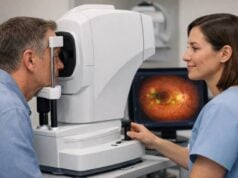
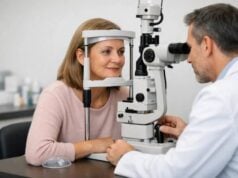
- The exam typically includes eyelid margin evaluation (for blepharitis and gland health), tear film assessment, and a careful look at the cornea.
- If infection is suspected, treatment may include targeted drops and clear guidance on hygiene and contagiousness precautions when relevant.
- If dryness and eyelid inflammation are driving the redness, a plan may include lid therapy, lubrication strategy, and sometimes prescription anti-inflammatory treatment when indicated.
How to prepare:
- Bring a list of drops you have tried and how often you used them.
- Note whether redness fades within an hour or persists.
- Record whether itching, burning, discharge, or light sensitivity is present.
- If you use contacts, be ready to discuss wear schedule and whether you ever sleep in them.
If there is one rule to remember, it is this: a red eye that is painful, light-sensitive, or associated with vision change should not be managed as “just irritation,” especially in contact lens wearers.
References
- Dry Eye Syndrome Preferred Practice Pattern® 2024 (Guideline)
- Conjunctivitis Preferred Practice Pattern 2024 (Guideline)
- Bacterial Keratitis Preferred Practice Pattern® 2024 (Guideline)
- Allergic Conjunctivitis: Review of Current Types, Treatments, and Trends 2024 (Review)
- Demodex Blepharitis: A Comprehensive Review of the Disease, Current Management, and Emerging Therapies 2023 (Review)
Disclaimer
This article is for educational purposes and does not replace medical advice, diagnosis, or treatment from a qualified clinician. Red eyes after sleeping are often caused by dryness, eyelid inflammation, or allergies, but they can also signal infections or other eye conditions that need prescription treatment. Seek urgent care if you have significant pain, light sensitivity, decreased vision, a rapidly worsening red eye, or any painful red eye associated with contact lens wear.
If you found this helpful, consider sharing it on Facebook, X (formerly Twitter), or any platform you prefer.