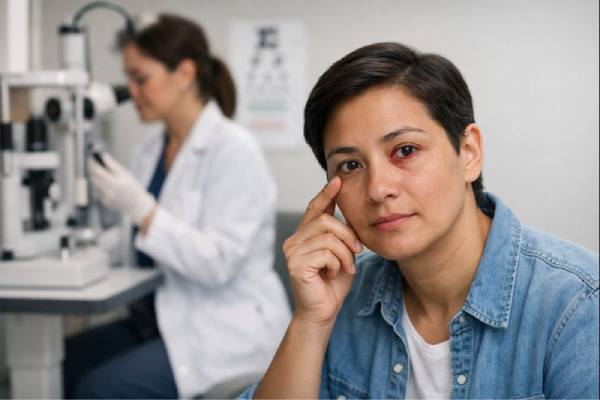
Red eye is one of the most common reasons people worry about their vision—and for good reason. Sometimes it is harmless, like irritation from dryness, allergies, or a night of poor sleep. Other times, redness is the first visible sign of a problem that can threaten sight if it is missed, such as a corneal infection or sudden pressure rise inside the eye. The goal is not to self-diagnose every detail; it is to recognize patterns that point to simple care at home versus same-day evaluation. When you know what to look for—pain level, light sensitivity, discharge, vision changes, and risk factors like contact lenses—you can act quickly and confidently. This guide walks you through the most likely causes, the red flags that matter most, and safe first steps you can take while deciding whether you need urgent care.
Essential Insights for a Red Eye Decision
- Mild irritation without pain or vision change is often manageable with lubrication, rest, and trigger control.
- New pain, light sensitivity, or blurred vision raises concern for corneal or internal eye inflammation and deserves prompt evaluation.
- Contact lens wear with redness—especially with pain or light sensitivity—should be treated as urgent until proven otherwise.
- If redness does not improve within 24–48 hours of basic care, or worsens quickly, escalate to professional assessment.
Table of Contents
- What Red Eye Actually Means
- Common Non-Emergency Causes
- Infections That Need Faster Care
- Red Flags and True Emergencies
- Safe First Steps at Home
- What Clinicians Check and How to Prevent Recurrence
What Red Eye Actually Means
“Red eye” is a description, not a diagnosis. The redness usually comes from widened or more visible blood vessels on the surface of the eye. That can happen for many reasons: irritation, inflammation, infection, trauma, or changes in eye pressure. A helpful way to think about it is to separate what is happening on the surface (eyelids, tear film, conjunctiva, cornea) from what may be happening deeper inside (iris inflammation, high pressure, deeper wall inflammation).
A simple, practical self-check is to look for four features that guide urgency.
- Pain level: Mild scratchiness, dryness, or a gritty feel often points to surface irritation. Moderate to severe pain is more concerning and can signal corneal injury, infection, inflammation, or high eye pressure.
- Light sensitivity (photophobia): True photophobia is more than “bright light is annoying.” It can feel like light causes a deep ache or spasm. This symptom deserves respect, especially if it is new.
- Vision change: Blurry vision that clears with blinking can occur with dryness or tears. Blurry vision that persists, worsens, or affects one eye more than the other needs evaluation.
- Discharge and tearing: Watery tearing often occurs with allergy, viral infection, or irritation. Thick discharge that mats lashes can suggest bacterial infection, but it is not foolproof—history and exam matter.
Two additional clues are often overlooked.
- One eye or both: Allergies commonly affect both eyes. Many infections start in one eye and spread. A sudden, very painful red eye in one eye is a higher-risk pattern than mild bilateral redness.
- The “look” of redness: Diffuse pinkness can be surface irritation. A ring of redness closer to the colored part of the eye (sometimes called a ciliary pattern) can occur with deeper inflammation or high pressure and is a reason to seek care.
If you are unsure, treat your uncertainty as data. A red eye is not an emergency simply because it looks dramatic, but it becomes urgent when symptoms suggest the cornea or the inside of the eye is involved.
Common Non-Emergency Causes
Most red eyes are uncomfortable but not dangerous. The challenge is that “not dangerous” does not always mean “ignore it.” Many non-emergency causes improve quickly with the right habits, while others become chronic if triggers are not addressed.
Dryness and screen strain
Dry eye can make the eye look red, feel gritty, and water paradoxically. Long screen sessions reduce blinking, which destabilizes the tear film. Common patterns include burning, fluctuating blur that improves after blinking, and worse symptoms later in the day. Environmental factors—heating, air conditioning, fans, low humidity—often amplify redness.
Practical clues:
- Symptoms are often bilateral.
- Discomfort is usually mild to moderate rather than severe.
- Artificial tears often help within minutes, even if relief is temporary.
Allergic conjunctivitis
Allergies tend to cause itching as the dominant symptom. Eyes may look puffy, watery, and red, often with accompanying sneezing or nasal symptoms. Both eyes are usually involved, though one may feel worse.
Practical clues:
- Itching is the headline symptom.
- Watery discharge is common; thick pus is not typical.
- Symptoms flare with triggers like pollen, pets, dust, or mold.
Irritant exposure
Chlorinated pools, smoke, strong fragrances, cleaning products, and airborne debris can inflame the surface and cause redness and tearing. Irritant redness usually improves when exposure stops and the surface is rinsed and lubricated.
Practical clues:
- Timing closely follows exposure.
- Burning and tearing are more prominent than discharge.
- Symptoms often improve in a cleaner environment.
Eyelid inflammation and clogged oil glands
Blepharitis and meibomian gland dysfunction can redden the eyes by destabilizing tears and inflaming the lid margin. You might notice crusting at the lash line, recurrent styes, or a “sand in the eye” feeling. Redness can linger because the underlying lid issue persists.
Practical clues:
- Morning crusting or greasy lid margins.
- Symptoms recur in cycles.
- Warm compresses and lid hygiene are often more effective than random drops.
Subconjunctival hemorrhage
A bright red patch on the white of the eye, without pain or vision change, is often a small surface bleed. It can happen after coughing, sneezing, heavy lifting, or rubbing the eyes. It looks alarming but usually resolves over one to two weeks, like a bruise fading.
Practical clues:
- No significant pain, light sensitivity, or vision loss.
- A sharply defined red area rather than generalized redness.
- Often noticed incidentally in a mirror.
Even in non-emergency scenarios, the safest “line in the sand” is this: if redness is paired with meaningful pain, light sensitivity, or vision change, shift your mindset toward faster evaluation.
Infections That Need Faster Care
Infections range from mild and self-limited to truly urgent. The main goal is to avoid missing corneal infection (keratitis), which can worsen quickly and scar the cornea.
Viral conjunctivitis
Viral conjunctivitis is common and often starts in one eye, then spreads to the other. It usually causes watery tearing, redness, and irritation. Many people also have cold-like symptoms or a recent exposure to someone with “pink eye.” It can be very contagious, and symptoms may persist longer than expected.
Typical features:
- Watery discharge rather than thick pus.
- Gritty irritation more than deep pain.
- Eyelid swelling and tenderness near the front of the ear in some cases.
Most cases improve with supportive care, but worsening light sensitivity or vision changes should prompt evaluation because some viral infections can involve the cornea.
Bacterial conjunctivitis
Bacterial conjunctivitis is more common in children, but adults can get it too. It often causes thicker discharge and crusting that can glue the eyelids shut in the morning. Still, discharge type alone does not reliably separate bacterial from viral, so the overall picture matters.
Typical features:
- Mucus or pus-like discharge and sticky lids.
- Redness and irritation rather than severe pain.
- Often begins in one eye.
If discharge is heavy, symptoms are worsening, or there is significant swelling and tenderness, professional evaluation helps guide treatment and reduce spread.
Corneal infection in contact lens wearers
A red eye in a contact lens wearer deserves special caution. Contact lenses can create microtrauma, reduce oxygen to the cornea, and introduce organisms—especially when lenses are worn overnight, cleaned poorly, or exposed to water.
Urgent warning signs:
- Pain that feels sharp or intense.
- Light sensitivity that makes it hard to keep the eye open.
- Blurred vision that does not clear with blinking.
- A visible spot on the cornea or the sense that “something is stuck” that does not improve.
If you wear contacts and develop a painful red eye, remove the lens and seek same-day assessment. Do not “wait it out,” and do not put the contact lens back in, even if the eye starts to feel slightly better.
Herpes-related eye disease
Herpes simplex or shingles-related eye inflammation can present with redness, irritation, and sensitivity to light. It may be mistaken for routine conjunctivitis at first. Because antiviral treatment timing can matter, new red eye with unusual pain, recurrent episodes in the same eye, or facial symptoms should be evaluated.
A useful rule: infections that stay on the conjunctiva are often uncomfortable but manageable; infections that involve the cornea can become vision-threatening. The symptoms that suggest corneal involvement—pain, photophobia, and persistent blur—should move you toward urgent care.
Red Flags and True Emergencies
Some red eye conditions are emergencies because they can damage the cornea, optic nerve, or internal structures in hours to days. You do not need perfect diagnostic certainty to act—you need a clear threshold for urgency.
Emergency symptoms you should not ignore
Seek urgent evaluation (same day, and immediately if severe) if any of the following are present:
- Moderate to severe eye pain, especially if it is worsening.
- Light sensitivity that makes you avoid opening the eye.
- New or meaningful reduction in vision in one eye.
- A contact lens wearer with pain, photophobia, or blurred vision.
- Recent eye injury, including a foreign body or scratch.
- Chemical exposure to the eye.
- A new, severe headache with nausea, halos around lights, or a fixed mid-sized pupil.
- Swelling around the eye with fever, pain on eye movement, or double vision.
Acute angle-closure glaucoma
This is a true emergency. Pressure inside the eye rises quickly and can threaten the optic nerve. People may experience severe eye pain, headache, nausea, vomiting, halos around lights, and blurred vision. The eye can look markedly red, and the cornea may appear hazy.
Why it matters: vision damage can occur rapidly without treatment. If the symptoms fit, do not drive yourself if you feel unwell—seek emergency care.
Anterior uveitis
Uveitis is inflammation inside the eye, often causing a painful red eye with photophobia and blurred vision. It may be associated with autoimmune conditions, infections, or can occur without a clear cause. People sometimes notice that the pain feels deeper than a surface scratch and that bright light triggers an ache.
Why it matters: untreated inflammation can lead to complications, including pressure changes and scarring.
Scleritis
Scleritis is inflammation of the tough outer wall of the eye. It can cause deep, severe pain—sometimes radiating to the face or head—and the eye may look intensely red or violaceous. It is often linked with systemic inflammatory disease and needs prompt care.
Why it matters: it can threaten vision and may signal a broader health issue that requires treatment.
Chemical injury and high-risk trauma
Chemical splashes—especially alkali agents found in many cleaners and industrial products—can severely damage the surface of the eye. Immediate flushing is the priority, followed by urgent evaluation. Penetrating injuries, high-speed debris, and metal-on-metal work raise the risk of hidden foreign bodies.
If you remember only one principle: red eye becomes urgent when it is paired with pain, photophobia, vision change, contact lens risk, or trauma. Those features are your emergency filter.
Safe First Steps at Home
When symptoms are mild and you do not have red flags, supportive care is often appropriate. The goal is to calm inflammation, protect the surface, and avoid steps that can worsen infection or delay proper treatment.
Start with a “do no harm” checklist
- Remove contact lenses immediately and switch to glasses until symptoms fully resolve.
- Wash hands before and after touching the area around your eyes.
- Avoid rubbing the eyes, which can worsen irritation and spread infection.
- Do not share towels, pillows, eye makeup, or drops.
Supportive care that is generally safe
These options are commonly helpful for irritation, dryness, and many mild conjunctivitis cases:
- Lubricating artificial tears: Use preservative-free drops if you need them more than 4 times daily. Frequent use can reduce friction and improve comfort.
- Cool compresses: Helpful for itching and swelling, especially with allergies or viral irritation.
- Warm compresses: Helpful when lid inflammation or clogged oil glands are part of the picture. Warm compresses often work best when followed by gentle lid hygiene.
- Allergy drops: If itching is the main symptom, an antihistamine or antihistamine-mast cell stabilizing drop can reduce symptoms. Avoid using multiple different products at once, which can irritate the surface.
What to avoid
Certain choices increase risk:
- Leftover antibiotic drops: Using them without a diagnosis can mask symptoms, promote resistance, and delay proper care.
- Steroid eye drops without supervision: Steroids can worsen herpes-related disease and some infections and can raise eye pressure.
- Numbing drops: These are for in-office use. Repeated use can damage the cornea and hide worsening symptoms.
- “Get the red out” drops: Some vasoconstrictor drops can cause rebound redness and may worsen dryness over time.
A simple 24–48 hour decision plan
If symptoms are mild:
- Use lubrication and compresses consistently for a day.
- Stop contact lenses and avoid eye makeup.
- Monitor vision in each eye separately by covering one eye at a time.
- Escalate if pain increases, light sensitivity appears, discharge becomes heavy, or vision worsens.
If there is no clear improvement within 24–48 hours, or if symptoms are progressing, it is reasonable to seek evaluation even if you do not feel “emergency-level” unwell. Redness that is getting better is usually reassuring; redness that is accelerating is not.
What Clinicians Check and How to Prevent Recurrence
A professional evaluation is often faster and more targeted than people expect. Clinicians use a structured approach to identify whether the problem is surface-level irritation, infection, inflammation inside the eye, pressure-related, or trauma-related.
What the exam focuses on
Common elements include:
- Visual acuity in each eye: This is one of the most important safety checks. A drop in vision changes the urgency.
- Pupil reaction and light sensitivity: Helps distinguish surface irritation from deeper inflammation.
- Surface inspection: Eyelids, lashes, conjunctiva, and cornea are examined for staining patterns, foreign bodies, or ulcers.
- Eye pressure measurement when appropriate: Especially if symptoms suggest angle closure or if steroid use is involved.
- Assessment of discharge and lymph nodes: Can support an infectious diagnosis and guide hygiene precautions.
In many clinics, fluorescein dye and a blue light are used to highlight corneal scratches or ulcers. This can quickly separate “scratchy but safe” from “needs urgent corneal treatment.”
Why treatment differs by cause
Redness is not treated as “one thing.” The correct treatment depends on what is driving the inflammation.
- Allergic inflammation responds best to trigger control and allergy-directed drops.
- Dry eye improves with tear support, lid care, and sometimes targeted therapies if chronic.
- Bacterial infections may need antibiotic drops in select cases, particularly when discharge is significant or risk is higher.
- Corneal infection, uveitis, scleritis, and high-pressure crises require urgent, specific treatment and close follow-up.
This is also why self-treating with random drops can backfire: the wrong category can delay the right care.
Prevention that meaningfully reduces repeat episodes
For many people, prevention is the difference between occasional redness and recurring flares.
- Contact lens hygiene: Replace lenses and cases on schedule, avoid sleeping in lenses unless specifically prescribed, and keep lenses away from water (including swimming and showering).
- Screen habits: Use regular blink breaks during computer work and position screens slightly below eye level to reduce surface exposure.
- Allergy control: Reduce indoor triggers, avoid rubbing eyes, and treat seasonal allergies early rather than waiting for severe symptoms.
- Lid hygiene for chronic blepharitis: Consistent warm compresses and gentle cleansing can reduce flares and improve tear stability.
- Makeup and product awareness: Replace eye makeup regularly and stop using any product that coincides with symptoms.
Finally, if you get recurrent one-sided red eye, repeated episodes of significant light sensitivity, or redness paired with systemic symptoms like joint pain or autoimmune disease history, ask for a more thorough evaluation. Sometimes the eye is the first place a broader inflammatory pattern becomes visible.
References
- Clinical Overview of Pink Eye (Conjunctivitis) 2024 (Clinical Guidance)
- Infectious keratitis: A review 2022 (Review)
- Conjunctivitis: Diagnosis and Management 2024 (Clinical Review)
- [Red eye in primary care : identify emergencies and optimize management] 2025 (Clinical Review)
Disclaimer
This article is for general education and does not replace a personalized eye examination. Redness can come from minor irritation or from conditions that threaten vision. Seek urgent care for red eye with moderate to severe pain, light sensitivity, reduced vision, contact lens-related pain or blur, chemical exposure, or recent trauma. If you have a medical condition that affects immunity or you take medications that suppress immunity, consult a clinician promptly for any new eye symptoms.
If this guide helped you feel more confident about what to do next, please consider sharing it on Facebook, X (formerly Twitter), or any platform you prefer.