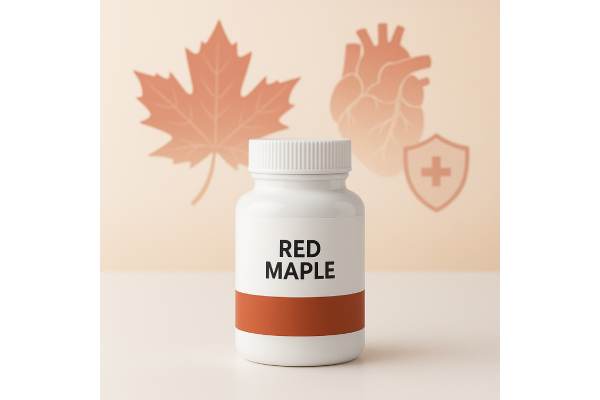
Red maple (Acer rubrum) is best known as a striking ornamental tree, but in recent years its leaves, bark, and polyphenol-rich extracts have attracted attention in skincare, functional foods, and supplement research. Laboratory studies suggest that red maple contains potent antioxidant and astringent compounds, especially tannins and a gallotannin called ginnalin A, which may help protect skin cells from oxidative stress and support healthy inflammatory balance. At the same time, red maple leaves are highly toxic to horses, and there is almost no high-quality human clinical research on oral red maple supplements.
This guide walks you through what is currently known—and just as important, what remains uncertain—about red maple. You will learn about its traditional medicinal use, emerging cosmetic and metabolic applications, how it is typically prepared, what we can reasonably say about dosage, and which safety issues deserve serious attention.
Key Insights for Red Maple
- Red maple leaf extracts are rich in polyphenols with strong antioxidant and anti-glycation effects in cell and animal studies, especially for skin applications.
- Topical products tend to use low concentrations of standardized red maple leaf extract (often around 0.1–2%), while traditional teas use small amounts of bark or leaf, but there is no clinically established human dose.
- Internal use of red maple should be approached cautiously and only under professional guidance because human safety data are limited and plant chemistry varies by species and preparation.
- People who are pregnant, breastfeeding, taking anticoagulants, living with chronic liver or kidney disease, or who have significant allergies to tree pollens should avoid self-experimenting with red maple supplements.
Table of Contents
- What is red maple and how is it used?
- Red maple benefits for skin and health
- Practical ways people use red maple
- How much red maple do people take?
- Red maple side effects and who should avoid it
- What science currently says about red maple
What is red maple and how is it used?
Red maple (Acer rubrum) is a deciduous tree native to eastern and central North America. It is widely planted as a landscape tree and is one of the main species that produce the vivid scarlet autumn foliage often associated with North American forests.
Traditionally, Indigenous peoples and early settlers used various parts of the tree medicinally. Historical records and ethnobotanical surveys describe uses such as:
- Inner bark decoctions as an astringent tea for diarrhea and cramps
- Bark or leaf preparations applied to minor wounds and skin irritations
- Eye washes prepared from bark with reputed soothing properties
- Occasional use in sore throat teas or rinses because of its tightening, drying action
These applications rely mainly on the high tannin content of the bark and leaves, which can constrict tissues, reduce minor bleeding, and create a protective film over mucous membranes.
In modern contexts, you will most often encounter red maple in three forms:
- Topical cosmetic ingredients – standardized leaf extracts (for example, proprietary formulas such as phenolic-enriched leaf extracts) used in serums, masks, and creams targeted at firmness, fine lines, and hyperpigmentation.
- Polyphenol-rich food or supplement extracts – experimental ingredients added to functional beverages or capsules for potential antioxidant and metabolic benefits.
- Maple products more broadly – although classic maple syrup relies mainly on sugar maple (Acer saccharum), reviews of maple products and Acer species include red maple as a source of bioactive compounds and, in some cases, sap for syrup blending.
It is important to separate traditional folk use from current cosmetic or supplement marketing. Traditional uses were mostly short-term and localized, often with freshly harvested bark or leaves. Modern products typically involve standardized extracts focused on a narrow set of compounds (such as gallotannins like ginnalin A), which behave differently from whole plant teas.
Finally, red maple has a serious veterinary side: wilted or dried red maple leaves are highly toxic to horses, causing oxidative damage to red blood cells and potentially fatal hemolytic anemia. This toxicity in animals does not automatically translate to humans, but it is a strong reminder that “natural” does not always mean “safe,” especially when plant parts are concentrated or used improperly.
Red maple benefits for skin and health
Most of what we know about red maple’s potential benefits comes from in vitro cell culture studies, animal experiments, and broader research on the Acer genus and maple-derived polyphenols, not from large human trials. With that in mind, key areas of interest include:
1. Skin protection and anti-aging support
Standardized red maple leaf extracts are unusually rich in gallotannins, especially ginnalin A. Laboratory work in human skin cell lines shows that:
- Red maple leaf extracts can significantly reduce reactive oxygen species (ROS) inside keratinocytes exposed to strong oxidative stressors.
- At non-toxic concentrations, these extracts appear to protect cell viability and reduce programmed cell death (apoptosis) when cells are challenged with hydrogen peroxide or reactive carbonyl compounds.
- Maple polyphenols can inhibit the formation of advanced glycation end products (AGEs), which stiffen collagen and contribute to visible skin aging.
Taken together, these findings support why cosmetic chemists are exploring red maple leaf extract as a supportive anti-aging and barrier-protective ingredient. However, these are cell-level effects under controlled conditions, not evidence that a specific cream or serum will produce a visible change in every user.
2. Antioxidant and anti-inflammatory potential
Research on various maple species, including red maple, shows that:
- Red and autumn-colored maple leaves often have higher total polyphenol and flavonoid levels and stronger antioxidant capacity than green leaves.
- Extracts from Acer leaves and bark can neutralize free radicals, inhibit lipid peroxidation, and modulate enzymes involved in inflammation in laboratory settings.
- A broader review of Acer species reports activities such as anti-inflammatory, antitumor, antidiabetic, hepatoprotective (liver-protective), and anti-obesity effects in preclinical models.
For red maple specifically, gallotannin-rich extracts have been shown to influence cell signaling pathways related to oxidative stress response and cell cycle control in cancer cell models. This is scientifically interesting, but it does not mean red maple is an approved cancer therapy or a proven anti-inflammatory supplement for humans.
3. Supportive role in metabolic health (indirect evidence)
Most metabolic research focuses on maple syrup extracts and other Acer species rather than red maple alone. Still, there are themes that may be relevant:
- Polyphenol-rich maple extracts can influence carbohydrate-digesting enzymes and glucose handling in animal models of diabetes.
- Maple syrup and its extracts, when used instead of refined sugar in rodent diets, sometimes show milder impacts on blood sugar, blood lipids, or inflammatory markers.
Because maple syrup is still a concentrated sugar, any potential benefit must be weighed against its caloric and glycemic load. Red maple’s role here is more indirect, as one of several Acer species contributing polyphenols to the broader maple “phytochemical family.”
4. Traditional astringent and soothing effects
The traditional uses of red maple bark and leaves—such as washes for sore eyes, compresses for minor wounds, and teas for diarrhea—are consistent with the astringent nature of tannins. These compounds can:
- Tighten tissues and reduce minor secretions
- Help form a temporary protective layer over irritated mucous membranes
- Provide mild antimicrobial effects against some bacteria in laboratory tests
These effects are real at the tissue level, but again, they are supportive rather than curative. They do not replace medical treatment for serious infections, inflammatory bowel disease, or eye problems.
Overall, red maple shows multiple promising bioactivities, especially as a topical antioxidant and astringent botanical. However, the absence of robust human clinical trials means we should treat it as an experimental and supportive ingredient, not a stand-alone therapy.
Practical ways people use red maple
In practice, most people will encounter red maple through commercial products rather than raw bark or leaves. Here are the main routes of use and what they realistically offer:
1. Topical skincare products
Many modern formulations include red maple leaf extract as part of a broader botanical blend targeting fine lines, firmness, or uneven tone. Typical roles in a formula may include:
- Supporting antioxidant defenses against urban pollution and UV-related oxidative stress
- Helping reduce the appearance of dullness by addressing glycation-related stiffening in the skin’s surface proteins (in theory, based on cell data)
- Contributing to a “tightening” or toning feel on application due to tannins
For topical use:
- Follow the product’s instructions exactly.
- Patch test on a small area for 24 hours, especially if you have sensitive skin or a history of reactions to plant extracts.
- Do not assume a higher concentration is better; tannin-heavy extracts can become irritating at high levels.
2. Traditional-style teas and rinses (bark or leaves)
Some herbalists and traditional practitioners still prepare short-term teas or rinses from red maple bark or leaves. These might be used:
- As a gargle or mouth rinse for minor sore throat or mouth irritation
- As a short-term tea for mild, transient diarrhea (never for chronic digestive symptoms)
- As cooled compresses for minor, closed-skin irritations
Here, the focus is on local astringent relief, not systemic treatment. Because red maple chemistry is complex and dosage is not standardized, this kind of use should be guided by an experienced practitioner. Self-prepared internal remedies from trees near roadsides or polluted areas also involve contamination risks (heavy metals, pollutants, fungal growth on leaves).
3. Functional foods and polyphenol extracts
Red maple and related Acer species contribute to:
- Polyphenol-enriched extracts added to experimental functional beverages, powders, or capsules
- Research formulations designed to explore metabolic or anti-inflammatory effects in animals
If you encounter a supplement marketed specifically as “red maple leaf extract” or “Maplifa-like” for internal use, keep in mind:
- There are no established, evidence-based human dosing guidelines.
- Most benefits are extrapolated from cell and animal work.
- Long-term safety, especially at high doses or in combination with medications, is not well characterized.
In many cases, you may get similar or better-supported polyphenol benefits from better-studied plants (such as green tea, berries, or standardized grape seed extract) with more human research behind them.
4. Maple syrup and red maple’s indirect role
Commercial maple syrup is primarily produced from sugar maple, but red maple sap can be used in some regions. Research on maple syrup as a sweetener suggests:
- It provides minerals and polyphenols not present in refined sugar.
- Polyphenol-rich maple extracts can modulate some metabolic parameters in animals.
However, syrup remains a concentrated source of sugar. If you use maple syrup for its potential advantages over refined sugar, keep portions modest and consider the whole diet, especially if you live with diabetes or insulin resistance.
How much red maple do people take?
A key point with red maple is that there is no standardized, clinically validated human dosage for internal use. What exists are:
- Cosmetic usage levels for topical products
- Traditional herbal preparation ranges
- Experimental concentrations used in cell and animal research
These cannot be treated as interchangeable. Still, they offer useful context if you are evaluating a product alongside your healthcare provider.
1. Topical cosmetic use
In cosmetic science, plant extracts like red maple leaf are typically used at low percentages within a formula. While exact ranges vary by brand and standardization, you will often see:
- Finished product levels in the neighborhood of 0.1–2% of a standardized red maple leaf extract
- Laboratory experiments on skin cells using extract concentrations around 12.5–50 micrograms per milliliter (μg/mL) that did not show toxicity to keratinocytes
Because cosmetic products are regulated differently from medicines, the key dosage principle is: follow the label. Using a serum more often or in a thicker layer is unlikely to yield more benefit and may increase the risk of irritation.
2. Traditional herbal tea ranges (educational context only)
Traditional herbal practice sometimes uses bark or leaf teas from tannin-rich trees. General astringent tea guidelines—not specific, evidence-based prescriptions for red maple—often fall around:
- About 1–2 grams of dried bark or leaf (roughly 1–2 teaspoons, depending on grind)
- Steeped in 150–250 mL of hot water for 10–15 minutes
- Taken up to three times daily, typically for short periods (a few days)
Because red maple chemistry overlaps with other tannin-rich species but also includes unique constituents, internal use should:
- Be supervised by a qualified herbalist or healthcare professional.
- Be avoided in pregnancy, breastfeeding, children, and people with significant medical conditions (details in the safety section).
- Be stopped if any unusual symptoms appear (nausea, abdominal pain, dizziness, rash, dark urine, or breathing difficulty).
3. Maple syrup and sugar limits
If your interest in red maple is linked to maple syrup and metabolic health:
- General public health guidance recommends keeping added sugars below about 10% of total daily calories. For a 2,000 kcal diet, that means no more than roughly 50 g of added sugars per day, from all sources combined.
- A typical tablespoon (15 mL) of maple syrup provides around 13–15 g of sugar.
That means even if maple syrup has a more favorable profile than refined sugar, it is still easy to overdo. Maple syrup—and any maple-derived sweetener—should be counted within your overall added sugar allowance.
4. Why you should not copy lab doses
Cell culture experiments on red maple leaf extracts often use concentrations like 12.5–50 μg/mL, and animal diets may include defined percentages of polyphenol-rich extracts. These settings are tightly controlled and cannot be translated directly into a safe human capsule dose or cup-of-tea equivalent. Human absorption, metabolism, and long-term effects are very different.
If you are considering any internal red maple product:
- Treat it as experimental, not as a proven therapy.
- Involve your physician or an integrative practitioner who can check for interactions and adjust based on your health status.
- Consider starting with better-studied polyphenol sources before experimenting with niche extracts.
Red maple side effects and who should avoid it
Because human clinical data on red maple supplements are limited, the safest approach is to assume more risk than we can currently quantify, especially at higher doses or with long-term use.
1. Known and theoretical risks
Key concerns include:
- Veterinary toxicity as a warning signal
Wilted or dried red maple leaves are notoriously toxic to horses, causing oxidative damage to red blood cells, methemoglobinemia, and potentially fatal hemolytic anemia. While this pattern has not been documented in humans, it shows that red maple can generate potent oxidative metabolites under the right conditions, particularly when gallic acid and tannins are converted to pyrogallol in the gut. - Astringency and digestive irritation
High-tannin preparations can cause nausea, stomach discomfort, or constipation in sensitive individuals. Long-term heavy intake of tannin-rich herbs has been associated in some contexts with reduced nutrient absorption and mucosal irritation. - Possible liver or kidney stress
Many polyphenol-rich extracts are metabolized in the liver and excreted via the kidneys. While current studies on maple extracts in animals often report acceptable safety at studied doses, the lack of human data means that people with pre-existing liver or kidney disease should be especially cautious. - Allergic reactions
Individuals with strong allergies to tree pollens or prior reactions to maple products may react to leaf or bark extracts with rash, itching, hives, or, in rare cases, more serious symptoms.
2. Medication interactions
No large-scale interaction studies exist for red maple specifically, but based on its tannin and polyphenol content, potential concerns include:
- Binding of oral medications: Tannins can sometimes bind to drugs in the digestive tract and reduce their absorption, particularly iron supplements and some basic (positively charged) drugs.
- Additive effects with anticoagulants or antiplatelet drugs: Many polyphenol-rich botanicals have mild blood-thinning or platelet-modulating activity; while this has not been clearly defined for red maple, precaution is warranted in people taking warfarin, DOACs, aspirin, or combination therapies.
- Overlap with other antioxidant or herbal supplements: High combined doses from multiple products may increase the risk of unpredictable effects or liver stress.
For anyone on prescription medications, especially for cardiovascular, metabolic, or autoimmune conditions, red maple should only be considered under professional supervision.
3. Who should avoid red maple supplements
Until better evidence is available, the following groups should avoid internal red maple use and be cautious even with topical products:
- Pregnant or breastfeeding individuals – there are no safety data; many astringent, tannin-rich herbs are traditionally avoided in pregnancy.
- Children and adolescents – developing systems are more vulnerable to both benefits and harms; safer, better-studied options exist.
- People with chronic liver or kidney disease – metabolism and excretion of polyphenols may be impaired.
- Individuals with coagulation disorders or on blood thinners – potential interaction risk.
- Anyone with a history of severe allergies to tree pollens or to maple products – higher risk of hypersensitivity reactions.
Topical use in these groups may still be permissible in some contexts, but only with the approval of a healthcare provider and careful patch testing.
4. Warning signs to stop and seek medical care
If you use a red maple product (topical or internal), stop immediately and seek medical advice if you notice:
- Rapid-onset swelling of the face, lips, tongue, or throat
- Difficulty breathing or tightness in the chest
- Widespread rash, hives, or intense itching
- Confusion, dizziness, or fainting
- Dark or tea-colored urine, unusual fatigue, or yellowing of the skin or eyes
These symptoms may indicate a serious allergic reaction, liver stress, or, in animals, red blood cell damage. Although such events have not been systematically documented in humans with red maple, it is crucial to take them seriously.
What science currently says about red maple
The scientific story of red maple is still in its early chapters. Here is a realistic snapshot of the evidence:
1. Chemistry: what is in red maple?
Studies of Acer species—including red maple—have identified:
- Large families of polyphenols, especially gallotannins and flavonoids
- Specific compounds such as ginnalin A, ginnalin B/C, methyl gallate, and other galloyl derivatives
- Additional secondary metabolites with antioxidant, antimicrobial, and signaling effects
Red maple leaves, especially when red or autumn-colored, tend to have high levels of polyphenols and tannins. This correlates with strong antioxidant measurements in standard lab assays.
2. Preclinical bioactivity
Key findings from cell and animal studies include:
- Skin cell protection
Phenolic-enriched red maple leaf extract has been shown to protect human keratinocytes from severe oxidative and carbonyl stress in vitro. It reduces ROS levels, supports cell viability, and dampens the activity of apoptosis-related enzymes. These actions provide a mechanistic rationale for its use in anti-aging skin products and possibly “beauty-from-within” supplements. - Maple polyphenols and cancer cell lines
Isolated gallotannins from red maple and other Acer species can induce cell cycle arrest and influence proliferation and apoptosis in certain tumor cell lines. These are early mechanistic observations, not treatment data, but they suggest pathways worth exploring further. - Metabolic and anti-inflammatory actions (mostly maple syrup extracts)
Polyphenol-rich maple syrup extracts have demonstrated antioxidant, anti-inflammatory, and hepatoprotective effects in various rodent models. Some experiments suggest improved lipid profiles, modulation of glucose-handling enzymes, and reduced markers of inflammation compared with refined sugar diets. - Veterinary toxicity
Research in equines has identified gallotannins and their metabolite pyrogallol as key contributors to red maple leaf toxicity. Microbial conversion in the horse’s gut transforms gallic acid into potent oxidants that damage red blood cells. This helps explain why wilted red maple leaves are so dangerous for horses and illustrates how gut microbiota can drastically change plant safety profiles.
3. Human data: what is missing?
At present, there are no large, well-controlled human clinical trials specifically testing red maple leaf or bark extracts as:
- A dermatological treatment
- A metabolic or cardiovascular supplement
- A primary therapy for any disease
Some human-relevant insights come from the broader maple syrup literature, where small studies and animal work suggest that maple products may be somewhat less metabolically harmful than refined sugar when used in moderation. However, these data cannot be directly extrapolated to high-dose red maple leaf supplements or long-term use.
4. What this means for you
Putting everything together:
- Red maple is scientifically promising, especially as a topical antioxidant and as a model for understanding gallotannin biology.
- Evidence is insufficient to support strong health claims for internal red maple supplements in humans.
- Safety data are still limited, and the striking equine toxicity underscores the need for careful, conservative use.
If you are drawn to red maple because of its antioxidant and skin-protective potential, the most balanced approach today is:
- Use well-formulated topical products from reputable brands.
- Treat internal supplementation as exploratory and only under professional guidance.
- Keep expectations realistic, focusing on red maple as a complementary botanical within a broader pattern of healthy lifestyle, not as a stand-alone solution.
References
- Cytoprotective Effects of A Proprietary Red Maple Leaf Extract and Its Major Polyphenol, Ginnalin A, against Hydrogen Peroxide and Methylglyoxal Induced Oxidative Stress in Human Keratinocytes 2020 (In vitro study, skin cells)
- Traditional uses, phytochemistry, and pharmacology of the genus Acer (maple): A review 2016 (Systematic ethnopharmacology review)
- Comparison of Antioxidant Properties and Metabolite Profiling of Acer pseudoplatanus Leaves of Different Colors 2022 (Antioxidant and polyphenol profiling)
- Nutritional, pharmacological, and sensory properties of maple syrup: A comprehensive review 2023 (Systematic review of maple syrup health properties)
- Identification of protoxins and a microbial basis for red maple (Acer rubrum) toxicosis in equines 2013 (Toxicology, veterinary)
Disclaimer
The information in this article is for educational purposes only and is not intended to replace professional medical advice, diagnosis, or treatment. Red maple preparations and extracts have not been established as safe or effective for the prevention or treatment of any disease in humans. Always consult a qualified healthcare professional before starting, changing, or stopping any medication, supplement, or herbal remedy, especially if you are pregnant, breastfeeding, living with chronic illness, taking prescription drugs, or considering use in children. Never ignore or delay seeking professional medical advice because of something you have read here.
If you found this guide helpful, you are warmly invited to share it on Facebook, X (formerly Twitter), or any social platform you prefer, and to follow our work on social media. Your thoughtful sharing helps support our team in continuing to create careful, evidence-informed content for readers around the world.