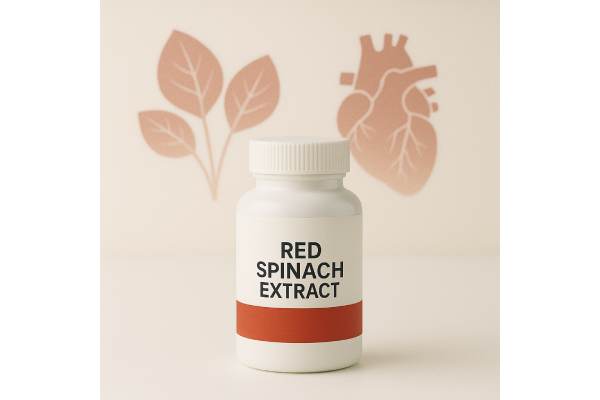
Red spinach extract has emerged as a notable plant-based supplement for cardiovascular health and exercise performance. Made from nitrate-rich red amaranth leaves (often marketed as red spinach), it concentrates naturally occurring nitrates, potassium, and antioxidant pigments into powders or capsules. These compounds support the nitric oxide pathway, which helps blood vessels relax, improves blood flow, and can lower the oxygen cost of exercise.
In recent years, several human trials have explored red spinach extract for endurance performance, blood pressure support, and muscle oxygenation. Results are encouraging, especially for short, intense efforts such as cycling time trials, although findings for strength and power are more mixed. Toxicology studies suggest that standardized red spinach extracts fit within accepted nitrate intake limits for most healthy adults when used as directed.
This guide explains what red spinach extract is, how it works, its main benefits, practical usage patterns, dosage guidelines, potential side effects, and which groups should be cautious or avoid it altogether.
Key Insights for Red Spinach Extract
- Red spinach extract is a concentrated dietary nitrate source that supports nitric oxide production and healthy blood flow.
- Evidence is strongest for endurance and high-intensity aerobic performance, with mixed results for maximal strength.
- Common supplement intakes range from 400 to 2,000 mg per day, typically providing roughly 45–180 mg of nitrate.
- People with very low blood pressure, significant heart or kidney disease, or those taking nitrate medications should only use it under medical supervision.
- Long-term data are limited, so conservative dosing, monitoring, and periodic breaks are prudent for most users.
Table of Contents
- What is red spinach extract?
- Key benefits of red spinach extract
- How to use red spinach extract daily
- How much red spinach extract per day?
- Side effects, interactions, and who should avoid it
- Research summary and practical tips
What is red spinach extract?
Despite the name, “red spinach” is usually not the same plant as common green spinach (Spinacia oleracea). Most commercial red spinach extracts are made from red amaranth species, such as Amaranthus hypochondriacus or other closely related leafy vegetables widely eaten in Asia, Africa, and Latin America. These plants naturally accumulate high levels of nitrate in their leaves, which makes them ideal raw material for nitrate-standardized supplements.
Red spinach extract is typically produced by water-based extraction of the leaves followed by gentle drying to create a powder. Well-characterized ingredients on the market are often standardized to around 9% nitrate by weight, meaning that 1,000 mg of extract provides about 90 mg of nitrate. This nitrate content is higher, gram for gram, than many beetroot powders and significantly more concentrated than most vegetable juices.
Beyond nitrate, red spinach extract also contains:
- Potassium, often in meaningful amounts that support electrolyte balance
- Trace minerals such as calcium and iron
- Polyphenols and carotenoids, including beta-carotene and related pigments
While these secondary components may offer ancillary antioxidant and micronutrient support, nitrate is the key active of interest. Once consumed, nitrate is absorbed and partially converted by oral bacteria and body tissues into nitrite and then nitric oxide. Nitric oxide is a signaling molecule that relaxes smooth muscle in blood vessel walls, improves blood flow, and influences how efficiently muscles use oxygen.
In supplements, red spinach extract appears in several formats:
- Standalone powders for mixing into water, juices, or smoothies
- Capsules or tablets with a fixed dose of extract per serving
- Pre-workout and “pump” formulas combined with caffeine, amino acids, and other ergogenic ingredients
Because nitrate content in fresh vegetables can vary depending on soil, season, and storage, standardized red spinach extracts provide a more predictable and convenient nitrate dose than relying on vegetables alone.
Key benefits of red spinach extract
Red spinach extract is primarily valued for its ability to enhance nitric oxide availability through the dietary nitrate pathway. Nitric oxide helps blood vessels dilate, improving blood flow, regulating blood pressure, and influencing how muscles use oxygen during exercise.
A number of small but carefully designed human trials have explored these effects:
- In recreationally active adults, daily red spinach extract improved performance in short cycling time trials compared with placebo. Participants were able to complete set distances faster, suggesting more efficient work output at a given effort.
- In graded exercise tests, red spinach extract has been associated with an increase in ventilatory threshold—the point during exercise where breathing becomes noticeably harder. This can translate into the ability to sustain higher efforts before feeling overwhelmed by fatigue and breathlessness.
- When it comes to resistance training, the picture is less clear. At least one controlled study on bench press endurance found that red spinach extract did not significantly increase repetitions or power compared with placebo, indicating that its strengths may lie more in endurance than maximal strength performance.
Beyond athletic performance, the extract may offer cardiovascular benefits:
- Vasodilation support: By increasing nitric oxide availability, red spinach extract can support healthier vessel tone and peripheral blood flow, which is especially relevant during exercise or in individuals with stiff or constricted vessels.
- Blood pressure support: Some trials and broader nitrate research suggest modest reductions in resting blood pressure, especially diastolic pressure, after standardized nitrate intake, though responses vary from person to person.
Antioxidant and micronutrient components in red spinach extract add another layer. Polyphenols and carotenoids can help neutralize reactive oxygen species produced during intense exercise or daily metabolic activity, potentially supporting recovery and endothelial health over time. However, these benefits are more difficult to quantify directly at typical supplemental doses compared with the more immediate nitrate effects.
Overall, current evidence suggests that red spinach extract is most useful for:
- Supporting endurance and high-intensity aerobic performance
- Enhancing nitric-oxide–mediated blood flow and vascular responsiveness
- Playing a complementary role in heart-healthy lifestyles that already emphasize regular physical activity and a vegetable-rich diet
Benefits are not universal, and individual responses depend on genetics, baseline diet, oral microbiome health, and training status.
How to use red spinach extract daily
The best way to use red spinach extract depends on your goal—performance, cardiovascular support, or general wellness. Because it is a concentrated nitrate source, planning dosing and timing around your routine makes a noticeable difference.
For sports and performance, a common approach mirrors research protocols:
- Short-loading strategy
- Use a daily dose (for example, 1,000–2,000 mg of standardized extract) for several days before a key competition or testing day.
- Many protocols run for 3–7 days, then include a final dose on the day of the event.
- Pre-exercise timing
- Blood nitrate and nitrite levels typically peak about 1–2 hours after ingestion.
- Taking your dose roughly 60–90 minutes before a high-intensity session or race is a practical window.
- Combining with meals and drinks
- Mix powder into water, juice, or a light carbohydrate drink.
- Taking it with a small snack can reduce the chance of mild stomach upset, but avoid heavy, high-fat meals immediately before intense efforts.
For cardiovascular wellness, many people choose lower, consistent doses:
- A daily serving of 500–1,000 mg of standardized extract, taken with breakfast or lunch, can help maintain steady nitrate intake alongside leafy vegetables, fruits, and whole grains.
- This strategy works best as part of a broader heart-health plan that also includes exercise, stress management, and medical care where needed.
A few practical tips can help optimize results:
- Mind your mouthwash: Strong antibacterial mouthwashes used around the time of dosing can reduce beneficial oral bacteria that convert nitrate to nitrite, blunting the nitric oxide boost.
- Stay hydrated: Adequate fluid intake supports circulation, kidney function, and exercise performance, especially when using nitrate-rich supplements.
- Track your response: Keep notes on perceived exertion, time-to-fatigue, time-trial results, or even home blood pressure readings (if applicable) over several weeks. This helps you and your clinician judge whether red spinach extract is actually useful for you.
Finally, always verify that the product you use clearly states its nitrate standardization, not just total milligrams of extract. Two products with identical extract weights can differ substantially in active nitrate content if they are not standardized or tested.
How much red spinach extract per day?
There is no single “one-size-fits-all” dose, but human trials and safety evaluations allow for sensible ranges. Many standardized red spinach extracts contain about 9% nitrate, meaning 1,000 mg of powder delivers approximately 90 mg of nitrate.
Typical intake ranges in adults are:
- For general cardiovascular support:
- About 400–1,000 mg of standardized extract per day
- Often providing roughly 35–90 mg nitrate
- For performance-focused use:
- About 1,000–2,000 mg per day around key training periods or events
- Providing roughly 90–180 mg nitrate
International expert committees have suggested an acceptable daily intake for nitrate of up to 3.7 mg per kilogram of body weight per day. For a 70 kg adult, this corresponds to about 260 mg of nitrate from all sources—food, water, and supplements combined. At 9% nitrate, a 2,000 mg dose of red spinach extract adds about 180 mg of nitrate, leaving room for normal vegetable intake in many diets.
Practical guidance by user type:
- Beginners and health-focused users
- Start around 250–500 mg per day of standardized extract.
- If well tolerated and appropriate, increase gradually toward 500–1,000 mg per day.
- Endurance athletes
- For key events, use 1,000–2,000 mg per day during the 3–7 days leading up to the event, with a final dose about 60–90 minutes before.
- Outside these periods, a smaller maintenance dose or intermittent use may be sufficient.
- Strength and power athletes
- Because evidence is mixed, consider staying in the 1,000–2,000 mg range around particularly demanding sessions and evaluate whether it meaningfully changes performance or recovery.
Given the limited long-term data, many athletes and health-conscious users adopt a cyclical pattern—using red spinach extract in blocks, then taking breaks or reducing intake when training demands are lower.
As always, individual factors matter. People with smaller body size, lower blood pressure, or multiple medications may require lower doses. Coordination with a healthcare professional is essential if you have any cardiovascular, kidney, or metabolic conditions, or if you already use other nitrate-rich supplements or medications.
Side effects, interactions, and who should avoid it
Red spinach extract has generally shown a favorable safety profile in short-term human studies and in animal toxicology work when used within recommended nitrate intake limits. Nonetheless, it remains a physiologically active supplement and can cause side effects or interact with medications.
Commonly reported or plausible side effects include:
- Mild digestive discomfort, such as bloating, nausea, or loose stools, especially when starting or using higher doses
- Headache or lightheadedness in individuals sensitive to blood pressure changes
- Occasionally, a sensation of flushing or warmth related to vasodilation
Because nitrate is the primary active compound, the main safety considerations relate to vascular effects and oxygen transport:
- Blood pressure lowering:
- Red spinach extract may modestly lower blood pressure in some people. Those already taking antihypertensive medications may experience additive effects, increasing the risk of dizziness, especially on standing.
- Interactions with nitrate medications and vasoactive drugs:
- People prescribed nitrate medications (such as nitroglycerin for angina) or certain other drugs that strongly affect blood vessels should only use nitrate-rich supplements under direct medical supervision. Combining them may provoke unwanted drops in blood pressure.
- Methemoglobinemia risk at extreme doses:
- Very high nitrate or nitrite intakes can, in rare circumstances, impair hemoglobin’s ability to carry oxygen, particularly in infants or those with specific enzyme deficiencies. Normal supplemental uses in healthy adults stay far below these levels, but this is one reason infants should never receive nitrate-rich supplements.
Groups that should avoid red spinach extract or use it only with professional oversight include:
- Infants and young children, especially under three months of age
- Pregnant or breastfeeding women, due to limited safety data
- People with chronically low blood pressure or a history of fainting
- Individuals with significant heart disease, especially those on multiple blood pressure or anti-anginal medications
- Patients with serious kidney disease or impaired renal function
- Anyone with known hereditary methemoglobinemia or related blood disorders
People with a history of kidney stones should be cautious with any concentrated leafy-vegetable extract. Some red spinach extracts are formulated to be low in oxalate, but labels often do not specify oxalate content, and clinical data in stone formers are limited.
If you notice persistent headaches, marked dizziness, shortness of breath, chest discomfort, or any symptom that feels sudden or severe after starting red spinach extract, discontinue the supplement and seek medical assessment promptly.
Research summary and practical tips
The body of research on red spinach extract is still developing, but several consistent themes have emerged across clinical trials, mechanistic studies, and safety evaluations.
First, red spinach extract is a reliable and efficient natural nitrate source. Standardized products supply a known amount of nitrate per gram of extract, which makes it easier to design clinical protocols and personal supplementation plans that stay within widely accepted nitrate intake limits. This is especially useful for athletes seeking predictable nitric oxide support without relying solely on variable whole-food nitrate sources.
Second, performance benefits appear strongest in endurance and high-intensity aerobic settings. Studies in recreationally active adults have shown improvements in cycling time trials and increased ventilatory threshold after short-term supplementation. These outcomes align with the broader literature on vegetable-derived nitrate in sports nutrition, which points to reductions in oxygen cost and improved exercise efficiency. By contrast, evidence for benefits in maximal strength or short-duration power output is mixed, with some trials showing little to no advantage over placebo.
Third, safety data to date are reassuring for healthy adults using standardized red spinach extract at doses commonly found in supplements. Animal toxicology work and human trials support the idea that when nitrate intake stays within the guideline range, the risk of serious adverse effects is low. Nonetheless, there are gaps regarding long-term use, older populations, and individuals with complex medical conditions, so a cautious and personalized approach remains wise.
If you are considering adding red spinach extract to your routine, the following practical tips can help you get started:
- Clarify your intention: Decide whether your main goal is performance enhancement, general vascular support, or experimentation within a broader wellness plan.
- Start low, then adjust: Begin with the lower end of recommended doses and increase only if needed and well tolerated.
- Coordinate with your clinician: Especially if you have cardiovascular disease, kidney problems, blood pressure issues, or use medications that affect the heart or circulation, discuss red spinach extract with a healthcare professional who understands both your medical history and the nitrate pathway.
- Maintain lifestyle foundations: No supplement can replace the benefits of regular movement, balanced nutrition, adequate sleep, and appropriate medical care. Red spinach extract is best used as a complement to these fundamentals.
- Reassess periodically: After several weeks or a training cycle, step back and evaluate whether the supplement is providing clear, tangible benefits relative to cost and complexity. If not, it may be better to focus your efforts on other proven strategies.
Used thoughtfully and in the right context, red spinach extract can be a useful tool in a heart-healthy and performance-focused lifestyle, but it should never be treated as a stand-alone solution or a replacement for medical treatment.
References
- Improved Effect of Spinach Extract on Physical Performance: A Systematic Review of Randomized Controlled Trials 2025 (Systematic Review)
- Effects of Acute Red Spinach Powder (VitaSpinach) Ingestion on Muscular Endurance and Resistance Exercise Performance 2025 (Randomized Controlled Trial)
- Red Spinach Extract Supplementation Improves Cycle Time Trial Performance in Recreationally Active Men and Women 2021 (Randomized Controlled Trial)
- Impact of Red Spinach Extract Supplementation on Bench Press Performance, Muscle Oxygenation, and Cognitive Function in Resistance-Trained Males 2021 (Randomized Controlled Trial)
- Nitrate – Joint FAO/WHO Expert Committee on Food Additives (JECFA) Evaluation 2002 (Guideline)
Disclaimer
The information in this article is for general educational purposes only and is not intended to provide medical advice, diagnosis, or treatment. Red spinach extract and other dietary supplements can interact with medications and underlying health conditions and may not be appropriate for everyone. Always consult a qualified healthcare professional before starting, stopping, or changing any supplement, particularly if you are pregnant, breastfeeding, caring for a child, living with chronic illness, or taking prescription or over-the-counter drugs. Never delay seeking professional medical advice or disregard recommendations from your clinician because of something you read online.
If you found this guide helpful, you are kindly invited to share it on Facebook, X (formerly Twitter), or any other platform you prefer, and to follow us on social media. Your thoughtful support through sharing helps our team continue to produce careful, evidence-informed content on health and nutrition.