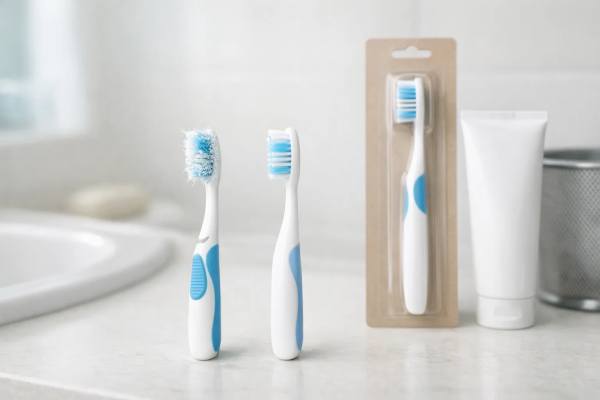
When you are getting over a cold, it is easy to look at your toothbrush and wonder whether it is quietly keeping you sick. The idea feels intuitive: you brushed while contagious, so the brush must be “loaded with germs,” and using it again must restart the illness. In reality, most colds do not work that way. Respiratory viruses spread mainly through the air and close contact, and your immune system usually prevents immediate reinfection with the same virus. At the same time, toothbrushes are not sterile tools. They can collect microbes from your mouth and bathroom environment, and in certain situations—like bacterial throat infections, immune compromise, or a brush that never fully dries—replacement is a sensible hygiene upgrade.
This article separates what is plausible from what is proven and gives practical, low-stress rules you can actually follow.
Core Points
- Replacing a toothbrush after a typical cold is usually optional, not medically necessary.
- The strongest reasons to replace are wear (frayed bristles), shared storage contamination, and certain bacterial or fungal infections.
- Most risk reduction comes from drying and separating brushes, not from frequent discarding.
- If you replace, do it once—when you are clearly improving or 24–48 hours into effective treatment for a bacterial infection.
Table of Contents
- Why this question keeps coming up
- What lives on a used toothbrush
- Cold reinfection and the real risks
- When replacing is genuinely smart
- How to handle brushes during illness
- Special cases: kids, braces, and immune risk
Why this question keeps coming up
The “replace your toothbrush after you are sick” advice persists because it sounds like common sense. You used the brush while coughing, sneezing, and swallowing mucus. The brush touches saliva, then sits in a damp bathroom. If germs can live on surfaces, why would a toothbrush be any different?
A few psychological and practical factors make the myth sticky:
- The timing trap: Colds often last 7–10 days, and symptoms fluctuate. When you start feeling better, then feel worse again, it is tempting to blame the toothbrush—when it is more likely the normal ups and downs of inflammation, sleep debt, or a second virus picked up from another person.
- Visible “grossness” bias: A toothbrush looks like it should be clean, but it is a personal hygiene tool that gets wet and stays near sinks and toilets. That contrast makes it feel especially suspect.
- A real truth in the background: Toothbrushes do accumulate microbes. They can also spread bacteria between people if brushes touch or are stored together. Because that part is real, the jump to “it must be reinfecting me with a cold virus” feels believable.
- Old advice from bacterial contexts: Some clinicians have historically suggested replacing brushes after strep throat or oral infections. People often generalize that guidance to every respiratory illness.
There is also a marketing angle: replacing a toothbrush is easy, cheap, and feels like taking control. The problem is not that replacing is harmful; it is that the reason is often wrong. The best question is not “Is my toothbrush dirty?” It almost certainly is. The better question is: “Does that dirtiness meaningfully raise my risk of staying sick or getting sick again?”
For most healthy people with an ordinary cold, the answer is: not much. Your effort is better spent on sleep, hydration, hand hygiene, and keeping your brush dry and separate from others.
What lives on a used toothbrush
A toothbrush is not a laboratory swab, but it does become a small ecosystem. Understanding what tends to show up on bristles helps separate realistic concerns from exaggerated ones.
1) Your own mouth microbes are the main residents
Your mouth naturally contains hundreds of bacterial species. Many are harmless or helpful; some contribute to cavities and gum inflammation when plaque builds up. Each time you brush, you transfer some of this community to the bristles. That is expected and, for most people, not dangerous—because it is largely “your own” flora.
2) Moisture controls how fast microbes multiply
Bacteria generally multiply more easily on a brush that stays wet, sits in a closed container, or is stored bristle-down in pooled water. A brush that air-dries between uses usually carries fewer viable organisms. This is why drying is more important than many people realize.
3) The bathroom environment can add outsiders
Brushes can pick up environmental bacteria, especially if multiple brushes are stored in the same cup and touch each other, or if the brush sits close to the sink where it is splashed. The most practical risk is not that the toilet “aerosolizes germs onto your brush” in a dramatic way, but that the general bathroom setting can be a moist, microbe-friendly space if ventilation is poor.
4) Viruses behave differently than bacteria
Respiratory viruses do not “grow” on toothbrushes. They can only replicate inside human cells. A virus particle can land on bristles, but it tends to become less infectious over time as it dries out, gets exposed to temperature changes, or is disrupted by surfactants from toothpaste and normal rinsing. In other words, a toothbrush can be contaminated with virus temporarily, but it is not a virus incubator.
5) Brush wear matters for health, independent of illness
A worn brush is less effective at plaque removal. Frayed bristles also hold moisture and debris more easily. That means an “old brush” can raise your risk of gingivitis and bad breath regardless of colds. This is one of the strongest evidence-based reasons to replace: it improves cleaning, not because it prevents reinfection.
So yes, toothbrushes carry microbes. The key issue is whether those microbes meaningfully increase illness risk compared with the bigger drivers: close contact with infected people, airborne spread, and your day-to-day habits.
Cold reinfection and the real risks
To decide whether replacing a toothbrush after a cold is “worth it,” it helps to understand what reinfection usually looks like.
Most colds are caused by many different viruses
Rhinoviruses, seasonal coronaviruses, adenoviruses, RSV, parainfluenza, and others can all produce “a cold.” Even within one virus family, there are many strains. That means you can catch a different virus soon after recovering—not because your toothbrush reinfected you, but because your immune response to one strain does not fully protect you from others.
Your immune system reduces immediate reinfection with the same virus
After you have been infected, your body develops a targeted response. It is not perfect or lifelong for all viruses, but it typically reduces the chance that you will be reinfected with the same virus in the immediate recovery window. This is one reason why the “my toothbrush gave it back to me the next day” story is usually a mismatch with how immunity works.
Fomite transmission is possible but often not the main route
Touching contaminated surfaces and then touching your nose or eyes can contribute to spread for some respiratory viruses. However, the biggest risk usually comes from close contact with an infected person and breathing shared air in poorly ventilated spaces. A toothbrush is a surface, but it is also a surface you typically use alone, with toothpaste, followed by rinsing, and then you do not immediately rub the bristles into your nasal passages. The pathway exists in theory, but the real-world probability is usually low.
The more realistic toothbrush risks are indirect
Instead of reinfecting you with a cold virus, a toothbrush is more likely to matter in these ways:
- Cross-contamination between people: Brushes touching in a shared holder, or a brush used by someone else (even briefly).
- Bacterial load in persistent sore throat situations: When the illness is bacterial (or mixed), a contaminated brush could be part of a “re-exposure loop,” especially in children or in households where multiple people are infected.
- Oral inflammation: If a brush is worn and not cleaning well, plaque and gum inflammation can worsen. That does not cause a cold, but it can make your mouth feel sore, your throat feel irritated, and your breath worse—symptoms some people misread as “still sick.”
A practical conclusion: if you are healthy and had an ordinary cold, replacing the toothbrush is not a high-impact intervention. If you are repeatedly getting sick in a household, the bigger levers are ventilation, masking during active illness, hand hygiene, and not sharing close space while symptomatic.
When replacing is genuinely smart
There are situations where replacing your toothbrush is a reasonable, evidence-aligned choice. Think of these as “high-value replacements,” where the benefit is not just peace of mind.
1) Your brush is due anyway
If you are near the typical replacement window or the bristles are splayed, replace it. This is the simplest rule: illness can be a convenient reminder, but wear is the real reason. A worn brush cleans less effectively, and that has clearer oral health consequences than cold reinfection theories.
2) You had a bacterial throat infection or oral infection
If you have strep throat (or another confirmed bacterial pharyngitis), it is reasonable to replace your brush after you have been on effective antibiotics for about 24–48 hours and are clearly improving. The goal is not to stop a cold virus; it is to reduce the chance of bacterial re-exposure and household spread. Evidence is mixed on how much toothbrush replacement changes outcomes, but this is one of the more defensible scenarios because bacteria can survive and persist more readily than respiratory viruses.
Similarly, consider replacement after:
- Oral thrush or other fungal oral infections (especially if you are immunocompromised)
- Significant gum infection or a dental abscess (your dentist may give specific instructions)
- A stomach virus with vomiting, where the brush may be contaminated with gastrointestinal pathogens
3) You shared storage with someone who is sick
If multiple brushes touch in one cup, or a child’s brush frequently contacts others, replacement can be worthwhile when one person in the home has a significant infection. Even better: fix the storage setup so new brushes stay separate.
4) The brush stayed wet, covered, or “never dries”
A brush stored in a closed travel case or a capped container while wet is more likely to support bacterial growth. If this happened repeatedly during illness, replacement is reasonable—but the bigger fix is changing the storage habit.
5) You are immunocompromised or medically fragile
If you have a condition or medication that significantly weakens immune defenses, small infection risks carry more weight. In that context, replacing a brush after an illness can be a low-cost risk reduction. The same goes for people undergoing chemotherapy, organ transplant recipients, and some advanced autoimmune therapies. Individual medical guidance matters here.
When replacement is usually not necessary
If you had a mild cold, live alone, and your toothbrush is in good condition, replacement is optional. If it helps you feel more comfortable, do it once—preferably when you are clearly improving—rather than repeatedly during the illness.
How to handle brushes during illness
If your goal is to reduce the chance of spreading germs in your home, you will get more benefit from handling and storage than from frequent replacement. The rules below are simple and realistic.
Daily handling rules that matter
- Do not share toothbrushes, ever. Even “one time” sharing can transfer saliva and pathogens.
- Rinse thoroughly after use. Remove toothpaste and debris so the brush can dry.
- Shake off water and store upright. Airflow helps bristles dry faster.
- Keep brushes separated. In a shared holder, aim for bristles not to touch. If space is tight, switch to hooks, separate cups, or a holder with dividers.
- Avoid closed covers for wet brushes. Covers and travel caps trap moisture. If you need a cover for travel, let the brush dry first when possible.
When someone is actively sick in the household
Use a simple “contain and separate” approach:
- Give the sick person their own clearly labeled storage spot.
- Keep their brush away from others’ brushes and away from shared splashing zones.
- Clean the brush holder and sink area more often than usual.
Do you need to disinfect the toothbrush?
For most people, routine disinfection is unnecessary. But if you want an extra step during illness or in higher-risk households, keep it safe and simple:
- Let the brush air-dry fully between uses (this is the most effective “low-effort” step).
- Consider occasional soaking in an antiseptic mouthwash if you tolerate it and it does not irritate your mouth. Rinse afterward and let it dry.
Avoid harsh methods that can damage bristles or introduce new risks:
- Boiling or microwaving can deform plastic and reduce cleaning effectiveness.
- Bleach or strong disinfectants risk residue exposure and are not appropriate for a tool that goes in your mouth.
- Dishwashers may degrade some brushes and are not standardized for toothbrush hygiene.
Do not forget the overlooked item: the holder
The holder is often wetter and dirtier than the brush. A weekly wash with hot soapy water (and thorough drying) is a practical upgrade, especially when someone in the home is ill.
If you do replace your toothbrush after illness, replacement is most useful when paired with better storage. Otherwise, the new brush can end up in the same damp, crowded environment as the old one.
Special cases: kids, braces, and immune risk
Some situations deserve a slightly different set of rules because brushes get contaminated more easily or the consequences of infection are higher.
Children
Kids tend to brush less thoroughly, chew on bristles, and store brushes in messy ways. They also share bathrooms and may swap brushes out of curiosity. Practical steps:
- Use a holder that keeps brushes from touching.
- Label brushes clearly, especially for siblings.
- Replace a child’s toothbrush sooner if it looks worn, chewed, or repeatedly dropped.
- After a confirmed bacterial throat infection, replacement after improvement and 24–48 hours of treatment is a reasonable household rule.
Braces, aligners, and oral appliances
Orthodontic hardware traps plaque and makes brushing more complex. This can increase bacterial load and gum irritation, which may be mistaken for “still feeling sick.”
- Replace brushes or brush heads on schedule, and sooner if bristles flare.
- Consider an orthodontic brush head or interdental tools if recommended.
- Clean aligners and removable appliances properly; a dirty appliance can reintroduce bacteria to the mouth even if the toothbrush is new.
Electric toothbrush heads
Electric heads often show wear faster than people notice because the bristles are shorter and more densely packed.
- Replace heads when bristles splay or as recommended by the manufacturer.
- During illness, focus on drying and separation the same way you would with a manual brush.
- If you replace, replace the head, not necessarily the whole handle.
People with frequent infections or chronic sinus symptoms
If you are repeatedly ill, the toothbrush is rarely the root cause. It is more useful to look at:
- Household exposure patterns (schools, workplaces, crowded indoor settings)
- Sleep and stress
- Uncontrolled allergies or asthma
- Ventilation in your home during the cold season
That said, replacing an old brush and improving storage can reduce mouth and gum inflammation that sometimes mimics throat discomfort.
Immunocompromised households
If you or someone you live with is medically fragile, a cautious approach is reasonable:
- Replace brushes after significant infections, especially bacterial or fungal conditions.
- Avoid storing brushes in closed containers while wet.
- Keep brushes physically separated, and clean holders regularly.
A simple “decision rule” that works in most homes
- If it was a typical cold and your brush is in good shape: keep it and focus on drying and separation.
- If it was a confirmed bacterial or fungal oral or throat infection: replace once you are clearly improving and have started effective treatment.
- If your brush is worn, shared, or stored wet: replace and fix the storage setup so the new brush stays cleaner.
References
- An updated systematic review on toothbrush contamination: An overlooked oral health concern among general population – PubMed 2024 (Systematic Review)
- Toothbrushes | American Dental Association 2022 (Guidance)
- SARS-CoV-2 and the role of fomite transmission: a systematic review – PMC 2021 (Systematic Review)
- Knowledge Evaluation and Assessment of Bacterial Contamination of Toothbrushes – PMC 2025 (Observational Study)
Disclaimer
This article is for general educational purposes and does not provide medical diagnosis or individualized treatment advice. Illness risk depends on your symptoms, medical history, immune status, and exposure context. If you have severe or worsening symptoms, trouble breathing, chest pain, dehydration, persistent high fever, or you are at higher risk of complications, seek prompt medical care. For suspected bacterial throat infections, oral infections, or decisions about prescription treatment, consult a licensed clinician.
If you found this guidance useful, please consider sharing it on Facebook, X (formerly Twitter), or any platform you prefer.