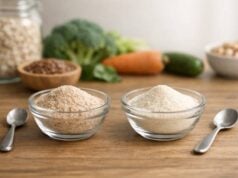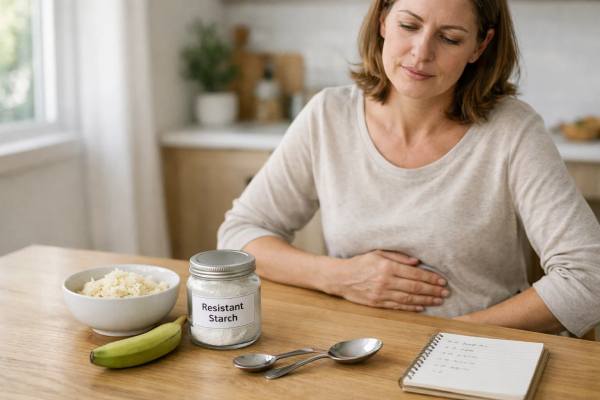
Resistant starch is a quiet overachiever in the fiber world. It behaves like a carbohydrate on your plate, but once it reaches your colon it functions more like a prebiotic—feeding microbes that produce short-chain fatty acids such as butyrate, which support the gut lining and may influence stool regularity, appetite signals, and metabolic health. The catch is that “feeding the microbiome” is not always subtle. For many people, the first week feels less like wellness and more like a balloon animal impression: gas, bloating, rumbling, and unpredictable stools.
That doesn’t mean resistant starch is a bad idea. It usually means the dose, the type, or the timing is ahead of what your current gut ecosystem can handle. This guide breaks down why symptoms happen and how to titrate slowly enough to get benefits without regretting your enthusiasm.
Core Points
- Resistant starch can support butyrate production and stool form, but the early phase often comes with extra gas as microbes adapt.
- Side effects are more likely with large jumps in dose, powder supplements, and sensitive guts (especially IBS and suspected SIBO).
- A “start low, hold steady, then step up” schedule usually works better than aiming for a target dose immediately.
- Splitting doses, pairing with meals, and choosing the right resistant starch type can reduce bloating without abandoning the plan.
- Persistent pain, worsening constipation, or new red-flag symptoms are reasons to stop and reassess rather than pushing through.
Table of Contents
- What resistant starch does in your gut
- Why gas and bloating happen
- Who should go slow or avoid it
- How to titrate resistant starch safely
- Food and supplement options that behave differently
- Fixing common problems and knowing when to stop
What resistant starch does in your gut
Resistant starch (often shortened to RS) is starch that “resists” digestion in the small intestine. Instead of being broken down quickly into glucose, it arrives in the colon where microbes ferment it. That fermentation is the whole point—and also the reason it can feel dramatic at first.
Why it is different from regular starch
Most starches are digested and absorbed before they reach the large intestine. Resistant starch is an exception, and there are a few ways it shows up in food:
- Naturally trapped starch (RS1): found in whole or partially milled grains, seeds, and legumes where the starch is physically protected.
- Raw granular starch (RS2): found in raw potato starch and unripe (green) bananas; the structure is hard for enzymes to break down.
- Retrograded starch (RS3): forms when starchy foods are cooked and then cooled (think cooled potatoes, rice, pasta, oats). Reheating doesn’t erase it completely; some remains resistant.
- Modified starches (RS4): chemically altered starches used in some packaged foods to increase fiber-like effects.
You do not need to memorize these labels, but they explain why “one tablespoon of potato starch” does not behave like “a serving of cooled rice” even if both contain resistant starch.
What fermentation produces and why that matters
When microbes ferment resistant starch, they produce short-chain fatty acids (SCFAs), including butyrate, acetate, and propionate. Butyrate is especially interesting for digestive health because colon cells use it as fuel, and a well-nourished gut lining tends to be less reactive. This is one reason resistant starch is often discussed alongside gut barrier support, stool regularity, and overall microbiome resilience.
Here is the practical translation: resistant starch is not a stimulant laxative and not a quick fix. It is more like “training input” for your ecosystem. Many people notice changes over weeks, not days—especially if they are increasing dose slowly enough to avoid symptoms.
Why early discomfort is so common
If your usual diet is relatively low in fermentable fiber, adding resistant starch is like suddenly restocking a pantry your microbes have been rationing. Some microbes bloom quickly, others lag, and gas production can rise before the system stabilizes. This transition phase is why titration matters more than the “perfect” target dose.
Why gas and bloating happen
Gas is not automatically a sign that something is wrong. It is often a sign that fermentation is happening. The problem is that fermentation can outpace your body’s ability to move gas along comfortably—especially early on.
Fermentation speed, gas type, and pressure
Resistant starch is a substrate. Microbes metabolize it and release gases such as hydrogen, methane, and carbon dioxide (the exact mix varies by person). Two people can eat the same resistant starch and experience totally different outcomes because their microbiomes differ—and because their guts handle pressure differently.
Bloating is not only “more gas.” It is also:
- Where the gas is located (small intestine vs colon, upper vs lower abdomen)
- How efficiently the gut moves contents (motility)
- How sensitive the gut nerves are (visceral hypersensitivity is common in IBS)
- Whether the abdominal wall relaxes normally (some people unconsciously brace, which increases pressure sensation)
So, the same amount of gas can feel “barely noticeable” in one person and “I need to unbutton my jeans” in another.
Why big dose jumps backfire
A common mistake is to treat resistant starch like a supplement you can start at full strength. If you go from near-zero fermentable fiber to a large daily dose of potato starch or green banana flour, you create a mismatch:
- Microbes get a sudden surplus of fermentable substrate.
- Gas production rises quickly.
- Motility may not increase at the same pace.
- The result is distention, discomfort, and sometimes diarrhea or constipation.
This is why “more” is not automatically “better,” especially in week one.
The timing trap
When you take resistant starch can shape where you feel symptoms:
- On an empty stomach: some people feel faster gurgling and pressure.
- Late evening: gas may build overnight, leading to morning bloating.
- With meals: symptoms may be gentler because digestion and motility are already active.
No timing is universally best, but if you are struggling, take it with food and avoid your largest dose right before bed.
Stool changes can amplify bloating
Constipation and bloating often travel together. If resistant starch firms stool (or if you add it without enough fluid), gas gets trapped longer. On the other hand, if your gut speeds up too quickly, you may get loose stool and urgency. Both are usually dose-and-timing problems, not a verdict on resistant starch as a whole.
Who should go slow or avoid it
Resistant starch is not a “one-size-fits-all” fiber. Some people thrive with it; others need a gentler approach or a different prebiotic strategy.
Higher-likelihood groups for gas and bloating
You should assume you need a slower titration if you relate to any of the following:
- IBS symptoms (pain, alternating stool patterns, post-meal bloating)
- A history of strong reactions to fermentable fibers (inulin, chicory root, certain fiber blends)
- Frequent constipation or a tendency to feel “backed up”
- Recent gastroenteritis with lingering sensitivity (post-infectious gut symptoms)
- Very low-fiber baseline diet (adding any fermentable fiber is a big shift)
In these cases, resistant starch can still be workable—but the “low and slow” rule becomes non-negotiable.
Situations where resistant starch may be the wrong first move
There are a few contexts where it is smarter to stabilize the gut before experimenting:
- Suspected SIBO or severe upper abdominal bloating shortly after eating
Resistant starch is typically fermented in the colon, but if you have bacterial overgrowth higher up, fermentable substrates can worsen symptoms. If your bloating is rapid, high, and paired with significant discomfort, professional evaluation can save you months of guesswork. - Active inflammatory bowel disease flare
Fiber tolerance can change dramatically during inflammation. Some people do well with specific fibers, but pushing through symptoms during a flare is not a good self-experiment. - Unexplained weight loss, anemia, persistent diarrhea, blood in stool, or waking at night with symptoms
These are reasons to pause supplementation and get medical guidance rather than troubleshooting on your own.
Medication and medical considerations
Resistant starch is still a carbohydrate source (even if less digestible). If you use glucose-lowering medications or have diabetes, any major dietary change deserves a more deliberate approach, including monitoring your response. If you have a history of bowel obstruction, strictures, or major GI surgery, you should not introduce bulking or fermentable fibers casually.
The “pushing through” myth
Mild, transient gas can be a normal adaptation. Persistent pain, worsening constipation, or daily bloating that interferes with life is not a badge of progress. When symptoms are strong, the most effective move is usually to reduce the dose, extend the hold period, or change the source—not to force the gut to comply.
How to titrate resistant starch safely
A good titration plan is boring by design. Your goal is not to “reach a dose.” Your goal is to find the highest dose you tolerate comfortably and consistently—because consistency is what allows the microbiome effects to accumulate over time.
The three rules that prevent regret
- Start smaller than you think you need.
Especially if you are using a powder (potato starch, green banana flour), treat it like a concentrated fermentable fiber. - Hold each dose long enough to learn from it.
Most people need at least 3–7 days per step to know whether the gut is adapting. - Increase in small, predictable increments.
Large jumps are the most common reason people quit.
A practical titration schedule (food-first or supplement)
Use one of these paths depending on what you prefer.
Option A: Food-first titration (often gentler)
- Week 1: Add one daily serving of a resistant-starch-leaning food (for example, lentils, beans, or a serving of cooked-and-cooled potatoes or rice).
- Week 2: Increase to two servings on most days, or add a small portion of green-leaning banana (if tolerated).
- Week 3 and beyond: Adjust portion sizes gradually. If symptoms appear, reduce portion and hold steady.
Option B: Powder titration (more precise, easier to overdo)
- Days 1–4: Start with 1 teaspoon daily mixed into yogurt, kefir, or a smoothie, taken with a meal.
- Days 5–10: If symptoms are mild, move to 2 teaspoons daily (or split into 1 teaspoon twice daily).
- Next steps: Increase by 1 teaspoon per week as tolerated, prioritizing split doses over one large dose.
If you are sensitive, an even slower version is to start at 1/2 teaspoon and increase every 7–10 days.
How to read your body’s feedback
Use symptoms as signals, not judgments:
- Mild gas for 1–3 days after an increase: hold the dose; don’t increase again yet.
- Bloating that lasts all day or disrupts sleep: reduce by one step and hold for a full week.
- Constipation: reduce dose, increase fluids, and consider pairing resistant starch with a non-fermentable stool-softening strategy (like magnesium citrate, if appropriate for you).
- Loose stool: split doses and take with meals; consider switching from powder to food sources for a while.
When to increase and when to stop increasing
You are “done” titrating when you reach a dose that gives benefits (often stool consistency, regularity, or less reactivity) without daily discomfort. That dose is highly individual. More resistant starch is not automatically more helpful, and many people do best in a moderate range they can maintain long-term.
Food and supplement options that behave differently
Not all resistant starch sources ferment the same way in your gut. The type, the food matrix, and the dose concentration all change how intense the experience feels.
Food sources and why they are often easier
Whole foods tend to be self-limiting. They come with water, other fibers, and bulk that naturally spreads fermentation over time.
Common options include:
- Legumes: lentils, chickpeas, black beans (also contain other fermentable carbs, so portion size matters)
- Cooked-and-cooled starches: potatoes, rice, pasta, oats (cooling increases RS3; reheating keeps some)
- Firm, less-ripe bananas: more RS2 than very ripe bananas
- Whole grains and seeds: contribute RS1 in a slower, mixed-fiber way
If you are prone to bloating, start with smaller portions than you think you need and build up over several weeks.
Powders and isolated sources: potent and easy to overshoot
Powders can be useful because they are convenient and measurable, but they are also concentrated.
- Potato starch (raw): typically high in RS2 and often the strongest “gas producer” if introduced too quickly.
- Green banana flour: contains resistant starch plus other components; some people tolerate it better than potato starch, others worse.
- High-amylose maize starch: often used in research and specialty products; may feel smoother for some people because the fermentation profile differs.
If you choose powders, treat them like a dial, not a switch: small changes matter.
Why “cooked and cooled” is not a magic phrase
Yes, cooling increases resistant starch formation. But two variables still matter:
- Portion size: a massive bowl of cooled rice can be harder than a modest serving.
- Your baseline fiber intake: if your microbiome is not used to fermentation, even RS3 foods can cause symptoms early on.
A useful strategy is to combine moderate RS foods with “gentler” fibers that support regularity without heavy fermentation, such as psyllium (for many people). This can reduce trapped-gas discomfort by improving transit.
Comparisons people often ask about
- Resistant starch vs inulin: inulin is highly fermentable and can trigger significant gas for sensitive guts; resistant starch can be easier for some, but not all.
- Resistant starch vs probiotics: probiotics add organisms; resistant starch feeds organisms you already have. Many people do better starting with food changes and prebiotics before layering multiple supplements.
The best source is the one you can tolerate consistently. Your gut does not reward suffering with extra points.
Fixing common problems and knowing when to stop
If resistant starch is making you miserable, you usually do not need to abandon it—you need to troubleshoot like a clinician would: change one variable, observe, and only then adjust again.
Problem: “I look pregnant by afternoon”
Try these in order:
- Cut the dose in half and hold for 7 days.
- Move your dose earlier (breakfast or lunch instead of dinner).
- Split the dose into two smaller servings taken with meals.
- Switch sources (powder to food; potato starch to cooked-and-cooled foods; or reduce legumes if they are the trigger).
If bloating is immediate after meals and high in the abdomen, consider whether resistant starch is the right project right now.
Problem: constipation got worse
This is common when resistant starch is added without enough fluid or when the dose is increased faster than transit improves.
- Reduce to the last comfortable dose.
- Increase water intake and keep it consistent day to day.
- Consider adding a steady, well-tolerated bulking fiber (many people use psyllium) rather than pushing resistant starch higher.
- If you already struggle with constipation, prioritize regular meals, movement, and magnesium strategies (only if appropriate for you medically).
Do not continue escalating resistant starch in the middle of constipation. Trapped stool often means trapped gas.
Problem: loose stool or urgency
Loose stool usually means fermentation is pulling water into the colon or speeding transit.
- Take resistant starch with meals, not alone.
- Split your dose.
- Avoid combining multiple new fermentable fibers at once (for example, resistant starch plus large amounts of inulin, sugar alcohols, or high-FODMAP foods).
If diarrhea persists beyond a short adjustment window, stop and reassess.
Problem: cramping or pain
Pain is a stronger signal than gas. If you are getting cramping, especially if it is new, persistent, or severe:
- Stop the current source for several days.
- Reintroduce at a much lower dose only if symptoms clearly settle.
- If pain returns quickly, resistant starch may not be appropriate right now, and evaluation for IBS patterns, food intolerances, or other drivers is reasonable.
When to stop experimenting and get help
Pause self-titration and seek medical guidance if you develop:
- Blood in stool, black stools, fever, or persistent vomiting
- Unexplained weight loss, worsening anemia, or new nighttime symptoms
- Severe abdominal pain or progressive constipation that does not respond to basic measures
- Symptoms that escalate steadily despite dose reductions
Resistant starch can be a helpful tool, but it should never become a “push through anything” project. The most sustainable plan is the one that respects your baseline gut reality and builds capacity gradually.
References
- Resistant starch and the gut microbiome: Exploring beneficial interactions and dietary impacts – PMC 2024 (Review)
- The gastrointestinal and microbiome impact of a resistant starch blend from potato, banana, and apple fibers: A randomized clinical trial using smart caps – PMC 2022 (RCT)
- Consumption of resistant potato starch produces changes in gut microbiota that correlate with improvements in abnormal bowel symptoms: a secondary analysis of a clinical trial – PMC 2024 (Clinical Trial Analysis)
- Additional Resistant Starch from One Potato Side Dish per Day Alters the Gut Microbiota but Not Fecal Short-Chain Fatty Acid Concentrations – PMC 2022 (RCT)
- Effects of resistant starch consumption on anthropometric and serum parameters in adults with metabolic syndrome-related risks: a systematic review and meta-analysis – PMC 2025 (Systematic Review and Meta-analysis)
Disclaimer
This article is for educational purposes and does not replace personalized medical advice, diagnosis, or treatment. Resistant starch and other fermentable fibers can worsen symptoms in some digestive conditions, and individual tolerance varies based on diet, medications, and underlying health factors. If you are pregnant, immunocompromised, managing diabetes, have inflammatory bowel disease, a history of bowel obstruction or GI surgery, or you develop severe or persistent symptoms (such as significant pain, blood in stool, unexplained weight loss, fever, or ongoing diarrhea or constipation), consult a licensed clinician before continuing or changing your intake.
If you found this guide useful, consider sharing it on Facebook, X (formerly Twitter), or any platform you prefer so others can titrate more comfortably and avoid the trial-and-error spiral.