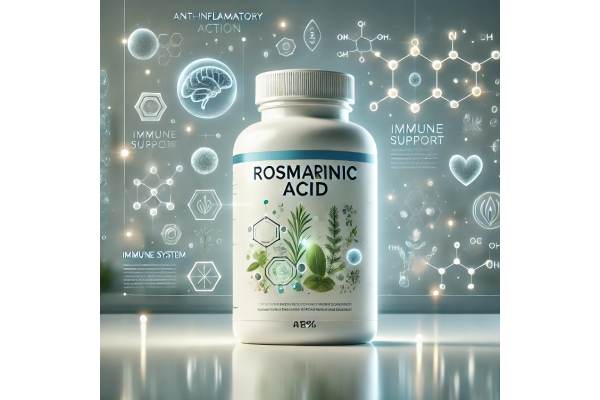
Rosmarinic acid is a naturally occurring polyphenol concentrated in aromatic herbs such as rosemary, lemon balm, perilla, sage, basil, spearmint, and oregano. It is best known for its strong antioxidant and anti-inflammatory activity, along with potential benefits for allergies, joints, skin, and brain health. Because it is a defined molecule rather than a whole herb, rosmarinic acid can be standardized in supplements and extracts, making dosage and research more consistent than with traditional teas alone.
In recent years, several human trials have examined rosmarinic-acid-rich extracts for seasonal allergies, mild cognitive changes, and joint discomfort. Results are promising but still preliminary, and most data come from short to medium-term studies. This guide walks you through what rosmarinic acid is, how it works in the body, where it may help, how to use it sensibly, and which risks to keep in mind. It is designed to help you have an informed, balanced conversation with your healthcare professional before deciding whether it fits your needs.
Key Insights on Rosmarinic acid
- Rosmarinic acid is a plant-derived antioxidant and anti-inflammatory compound found in rosemary, lemon balm, perilla, basil, oregano, and related herbs.
- Human studies suggest potential benefits for seasonal allergies, mild joint discomfort, and neuropsychiatric symptoms in mild cognitive disorders, with generally good short-term tolerability.
- Typical supplemental intakes in research range from about 50–500 mg rosmarinic acid per day, often taken in one or two doses with food.
- People who are pregnant or breastfeeding, have bleeding disorders, autoimmune disease, epilepsy, or take anticoagulant, antiplatelet, or immunosuppressive medicines should avoid self-supplementing rosmarinic acid without medical guidance.
- The most commonly reported side effects are mild digestive upset or headache; serious reactions have been rare in published short-term trials.
Table of Contents
- What is rosmarinic acid and how does it work?
- Key health benefits and properties of rosmarinic acid
- How to use rosmarinic acid in daily life
- Rosmarinic acid dosage, forms, and timing
- Side effects, interactions, and who should avoid it
- What the science currently says about rosmarinic acid
What is rosmarinic acid and how does it work?
Rosmarinic acid is a polyphenolic ester formed from two smaller phenolic compounds, caffeic acid and 3,4-dihydroxyphenyllactic acid. In nature, it is produced by plants in the mint family (Lamiaceae) and in some members of the borage family (Boraginaceae). Culinary herbs such as rosemary, lemon balm, sage, thyme, basil, oregano, marjoram, perilla, and spearmint are among the richest dietary sources.
Chemically, rosmarinic acid is a powerful antioxidant. It can neutralize several types of reactive oxygen species and helps stabilize cell membranes. In cell and animal models, it also increases the activity of the body’s own antioxidant enzymes, including superoxide dismutase, catalase, and glutathione peroxidase. This dual action—direct radical scavenging plus indirect support of endogenous defenses—explains why rosmarinic-acid-rich herbs are often described as “high antioxidant” plants.
Beyond antioxidant activity, rosmarinic acid has broad anti-inflammatory effects. Experiments suggest that it can reduce the activation of the NF-κB pathway, which is a central regulator of inflammatory gene expression. As a result, it can lower the production of molecules such as tumor necrosis factor alpha (TNF-α), interleukins (IL-1β, IL-6, IL-8), and enzymes like cyclooxygenase-2 (COX-2) and inducible nitric oxide synthase (iNOS). These changes may underlie its observed benefits in models of allergy, arthritis, inflammatory bowel disease, and neuroinflammation.
Rosmarinic acid also appears to modulate immune cell behavior. In models of allergy, it can reduce eosinophil and neutrophil infiltration into tissues and dampen histamine release and chemokine signaling. In brain-related models, it has been shown to interact with amyloid and tau processing, as well as to influence neurotransmitter systems (for example, through effects related to cholinergic and GABAergic signaling), which may contribute to its proposed neuroprotective effects.
After oral intake, rosmarinic acid is absorbed in the small intestine and further metabolized by gut microbiota. In humans, peak blood levels of total rosmarinic acid and its metabolites generally occur within one to three hours. The parent compound is rapidly converted to conjugated forms and to simpler phenolic acids such as caffeic acid and ferulic acid, which also have biological activity. Most of the absorbed dose is eliminated through the kidneys within about a day.
Because much of what circulates in the bloodstream consists of metabolites rather than intact rosmarinic acid, many researchers now consider it a “pro-compound”: it delivers a network of phenolic metabolites that work together, rather than acting alone. This helps explain why complex herbal extracts and RA-rich teas can still show effects even when only modest amounts of intact rosmarinic acid are detectable in plasma.
Overall, rosmarinic acid is best thought of as a pleiotropic plant compound with antioxidant, anti-inflammatory, immunomodulatory, and potential neuroprotective actions that extend beyond the simple scavenging of free radicals.
Key health benefits and properties of rosmarinic acid
Interest in rosmarinic acid comes from a combination of traditional herbal use and modern laboratory and clinical research. While not a cure for any disease, it shows several promising areas where it may provide supportive benefits.
Allergy and respiratory support is one of the best studied domains. In a controlled human trial, people with seasonal allergic rhinoconjunctivitis who received a rosmarinic-acid-enriched perilla extract for three weeks experienced reductions in nasal and eye symptoms compared with placebo, along with lower levels of inflammatory cells and mediators in nasal fluid. This aligns with preclinical work showing that rosmarinic acid can reduce IgE-mediated responses, histamine release, and infiltration of eosinophils and neutrophils into mucosal tissues.
Joint and pain support is another key area. Rosmarinic-acid-rich spearmint and rosemary extracts have been evaluated for knee osteoarthritis and other musculoskeletal discomforts. Participants typically report modest but meaningful improvements in pain scores, stiffness, and physical function. Mechanistically, rosmarinic acid may reduce inflammatory signaling in cartilage, protect chondrocytes from oxidative stress, and modulate pain-related pathways in the nervous system.
In skin health, rosmarinic acid is widely used in topical formulations for photoaging, irritation, and acne-prone or sensitive skin. In experimental models, it protects skin cells from UV-induced oxidative damage, reduces the release of inflammatory mediators, and can inhibit matrix metalloproteinases that break down collagen. Because of its relatively low molecular weight and lipophilicity, rosmarinic acid can penetrate the outer skin layers when formulated appropriately, making it attractive for cosmeceutical use.
Neuroprotection and cognitive support may be the most high-profile potential benefits. In animal models of neurodegenerative disease, rosmarinic acid can inhibit aggregation of amyloid-β, reduce tau phosphorylation, lower neuroinflammation, and preserve synaptic markers. Human trials with lemon balm (Melissa officinalis) extracts containing 500 mg of rosmarinic acid per day have suggested good tolerability and possible benefits for neuropsychiatric symptoms and behavioral measures in mild dementia, with ongoing research in older adults without dementia. These findings are early but consistent with the compound’s actions on oxidative stress, inflammation, and neurotransmission.
Metabolic and cardiovascular support is another emerging area. Preclinical studies indicate that rosmarinic acid can improve insulin sensitivity, reduce oxidative damage to blood vessels, modulate lipid profiles, and protect heart and kidney tissues in models of metabolic syndrome and diabetes. While human data here are limited, they suggest potential for rosmarinic-acid-rich extracts as adjuncts to lifestyle and standard therapies, not replacements.
Finally, rosmarinic acid shows antiviral, antibacterial, and anticancer activities in cell and animal models, including effects on viral entry, bacterial biofilms, and tumor cell signaling pathways. These lines of research are still experimental and should not be interpreted as evidence that rosmarinic acid can treat infections or cancer in humans.
Altogether, rosmarinic acid appears most promising as an adjunct for allergy symptoms, mild joint discomfort, general antioxidant and anti-inflammatory support, and possibly brain health. However, its role is supportive, not central, and decisions about its use should always prioritize evidence-based medical care.
How to use rosmarinic acid in daily life
There are two main ways to include rosmarinic acid in your routine: through rosmarinic-acid-rich herbs as foods or teas, and through standardized supplements or extracts.
Using culinary herbs is the most traditional approach. Rosemary, thyme, oregano, basil, marjoram, sage, lemon balm, spearmint, and perilla are all valuable sources. Regularly cooking with these herbs, adding them generously to soups, stews, roasted vegetables, and marinades, or drinking them as herbal infusions can increase your baseline intake of rosmarinic acid and related polyphenols. This approach provides lower doses spread throughout the day, combined with other beneficial plant compounds and dietary fiber.
Herbal teas offer a second food-based option. Lemon balm, rosemary, sage, and mixed “Mediterranean” teas often contain notable amounts of rosmarinic acid. Steeping these herbs for 10–15 minutes in hot (not boiling) water can help extract more of the polyphenols. Drinking one to three cups per day as part of a varied diet is a gentle, low-risk way to incorporate rosmarinic acid, especially if you are not seeking a therapeutic-level dose.
Standardized extracts and supplements provide more precise and often higher amounts. These products may list “rosmarinic acid” in milligrams, or they may specify an herb extract “standardized to X% rosmarinic acid.” Common examples include:
- Lemon balm extract standardized to a defined percentage of rosmarinic acid.
- Rosemary leaf extract with quantified rosmarinic acid alongside other phenolics.
- Perilla or spearmint extracts enriched in rosmarinic acid for allergy or joint support.
When evaluating a supplement, focus on:
- Standardization: Look for products that state the exact amount of rosmarinic acid per capsule or serving.
- Formulation: Some products combine rosmarinic acid with vitamin C or other antioxidants, or deliver it in liposomal or nanoparticle forms to improve bioavailability.
- Third-party testing: Independent quality certification can help ensure that the labeled content matches what is inside and that contaminants are within safe limits.
For many people, a layered approach works well: consistent use of herbs and teas in the diet, and, if appropriate, a modest-dose standardized extract for a specific purpose (such as seasonal allergy support) during limited periods.
Rosmarinic acid is usually taken with meals to improve absorption and reduce the risk of stomach upset. Because it may have mild alerting or focusing effects in some individuals, daytime use (morning and/or midday) is often preferred, particularly when using higher doses.
If you already use medications, have chronic conditions, or are considering higher doses for a targeted purpose, it is important to speak with a healthcare professional first. They can help you choose a realistic dose, duration, and monitoring plan, and ensure that rosmarinic acid does not conflict with your current treatment.
Rosmarinic acid dosage, forms, and timing
There is no universally accepted “standard dose” of rosmarinic acid. Doses in human studies vary widely depending on the condition being investigated, the delivery form, and whether the goal is general antioxidant support or treatment of a specific symptom.
Food and tea intake typically provides tens of milligrams of rosmarinic acid per day, depending on how heavily you season foods and which herbs you use. This is considered safe for most people and fits within a normal healthy diet.
In supplement and extract form, rosmarinic-acid intakes in research have generally fallen into the following ranges:
- Around 50–200 mg per day from enriched perilla or mixed herbal extracts for seasonal allergy symptoms over several weeks.
- Approximately 250–350 mg per day from spearmint or rosemary extracts standardized to rosmarinic acid and related phenolics for joint comfort.
- About 500 mg per day of rosmarinic acid from lemon balm extract in studies of mild dementia and older adults with cognitive complaints for periods of 24–96 weeks, under close medical monitoring.
For general wellness and antioxidant support, many practitioners suggest staying at the lower end of this spectrum, such as 50–200 mg per day of rosmarinic acid from a standardized extract, often divided into one or two doses with food. This is not an official guideline but a practical range consistent with published use and typical supplement labeling.
When considering dosage, think about:
- Purpose: Short-term allergy support or seasonal use often calls for a clear start and stop date, whereas cognitive or joint applications may involve longer courses, always under medical oversight.
- Body weight and sensitivity: Smaller individuals or those with sensitive digestion may start at the lower end (for example, 50–100 mg per day) and increase slowly if tolerated and advised by a professional.
- Combination with herbs: If you consume large amounts of rosemary, sage, lemon balm, and similar herbs, your background rosmarinic acid intake may already be appreciable, which may influence how much supplemental RA you actually need.
Timing can be adapted to your goals. For allergy symptoms, dividing the daily dose into morning and early afternoon may help maintain more stable blood levels during the day. For joint support, once-daily dosing with the main meal is common. For cognitive purposes, trials have typically used morning or morning plus noon dosing to avoid potential interference with sleep, although heavy sedation is not a typical effect.
Because rosmarinic acid and its metabolites reach peak levels within a few hours and are largely cleared within a day, it usually does not accumulate strongly in the body. Nonetheless, most experts recommend reassessing the need for continued supplementation after 8–12 weeks, especially at higher doses. Long-term use beyond this period should be considered an individualized medical decision rather than a default choice.
Importantly, high-dose rosmarinic acid is not a substitute for established therapies. For conditions such as allergic rhinitis, asthma, arthritis, or neurodegenerative disease, any supplement use should be adjunctive and coordinated with your clinician, who may recommend regular monitoring of blood counts, liver and kidney function, and clinical endpoints.
Side effects, interactions, and who should avoid it
In published clinical studies, rosmarinic-acid-rich extracts have generally been well tolerated. Short- to medium-term trials using doses up to about 500 mg of rosmarinic acid per day have not reported major safety signals in healthy volunteers, people with seasonal allergies, or individuals with mild dementia. Routine laboratory tests, including liver and kidney markers and blood counts, have usually remained within normal ranges.
That said, mild side effects can occur. The most commonly reported issues include:
- Gastrointestinal discomfort: nausea, mild stomach pain, or loose stools, especially when taken on an empty stomach or at higher doses.
- Headache or lightheadedness in sensitive individuals.
- Rare reports of skin rash or itching, which may reflect sensitivity either to rosmarinic acid or to other components of the herb extract.
Because rosmarinic acid is often consumed as part of complex herbal preparations, distinguishing its specific side effects from those of the whole plant can be challenging. For example, rosemary and sage contain essential oils that may have their own effects on blood pressure, heart rhythm, or uterine tone, separate from rosmarinic acid itself.
Potential interactions are an important consideration:
- Anticoagulant and antiplatelet drugs: Rosmarinic acid and related polyphenols may influence platelet aggregation and coagulation pathways in experimental systems. People on warfarin, direct oral anticoagulants, heparins, or antiplatelet agents such as aspirin and clopidogrel should not add high-dose rosmarinic acid supplements without medical supervision.
- Immunosuppressive therapy: Because rosmarinic acid modulates immune and inflammatory pathways, there is theoretical potential to interfere with immunosuppressive medications used for autoimmune diseases or following organ transplantation.
- Antihypertensive and antidiabetic medications: Experimental data suggest that rosmarinic acid can modestly affect blood pressure and blood glucose. Anyone on medications for hypertension or diabetes should monitor levels more closely if starting an RA-rich supplement.
- Antiepileptic drugs: High doses of rosemary and related herbs have historically raised concern about proconvulsant effects in some contexts, although data are mixed. Out of caution, people with epilepsy or a seizure history should avoid concentrated rosmarinic acid supplements unless supervised by a neurologist.
Certain groups should avoid self-supplementation with rosmarinic acid:
- Pregnant or breastfeeding individuals, due to limited safety data at supplemental doses.
- Children, unless specifically advised and monitored by a pediatric specialist.
- People with active bleeding disorders or low platelet counts.
- Individuals with known allergy to Lamiaceae herbs (rosemary, sage, mint, basil, oregano, lemon balm, etc.), as cross-reactivity is possible.
If you decide to try a rosmarinic-acid-containing product, start with a low dose, take it with food, and monitor for any changes in digestion, energy, sleep, skin, breathing, or mood. If you notice unusual bruising, bleeding, persistent headaches, allergic symptoms, or any worsening of your underlying condition, stop the supplement and contact your healthcare provider promptly.
As with any bioactive compound, the absence of major side effects in short-term studies does not guarantee safety for long-term, high-dose use. Treat rosmarinic acid as a potent plant-derived molecule, not a neutral “natural” additive, and make safety and medical coordination your first priorities.
What the science currently says about rosmarinic acid
Research on rosmarinic acid spans several decades, with rapid growth in the last 10–15 years. The evidence base includes in vitro experiments, animal models, human pharmacokinetic and safety studies, and a limited but growing number of randomized clinical trials.
From a pharmacokinetic standpoint, rosmarinic acid is now fairly well characterized. Human studies show that a single 500 mg dose of rosmarinic-acid-rich lemon balm extract leads to detectable levels of intact and conjugated rosmarinic acid in serum within an hour, with additional peaks from downstream metabolites later on. Food intake can increase overall exposure and slightly delay peak levels, suggesting that taking rosmarinic acid with meals is reasonable for both safety and absorption.
Mechanistic research supports several core actions: strong free radical scavenging, upregulation of endogenous antioxidant enzymes, modulation of inflammatory signaling pathways, protection of cell membranes and mitochondria, and interference with protein aggregation and misfolding in neurodegenerative models. Many of these findings are consistent across different cell types and animal species, which boosts confidence in the underlying biology, even though translation to human disease is still ongoing.
Clinical evidence is more modest but noteworthy:
- In seasonal allergic rhinoconjunctivitis, a double-blind trial of perilla extract enriched in rosmarinic acid demonstrated improved symptom scores and reduced inflammatory cell counts compared with placebo over 21 days.
- In osteoarthritis and joint discomfort, trials using high-rosmarinic-acid spearmint teas or extracts have shown reductions in pain and stiffness and better physical function measures, though sample sizes have been relatively small.
- In the context of mild dementia due to Alzheimer’s disease, a 24-week trial of lemon balm extract containing 500 mg rosmarinic acid per day found that the regimen was safe and well tolerated and suggested benefits on neuropsychiatric symptoms, even though core cognitive measures did not markedly improve over placebo.
- Longer-term studies in older adults without dementia have investigated whether rosmarinic-acid-rich extracts can slow cognitive decline, with mixed results and more subtle effects seen in specific subgroups.
Several comprehensive reviews published in recent years have synthesized this literature, emphasizing that rosmarinic acid is a promising multi-target antioxidant and anti-inflammatory agent with potential roles in allergy, neurodegeneration, metabolic disease, and tissue protection. At the same time, they stress that the current human evidence is not strong enough to recommend rosmarinic acid as a primary treatment for any condition.
Key gaps include:
- Limited large-scale trials with robust clinical endpoints.
- Few head-to-head comparisons of different doses, delivery systems, or co-administered nutrients.
- Sparse long-term safety data beyond one to two years of continuous use.
- Uncertainty about how well rosmarinic acid or its metabolites reach and sustain effective levels in specific tissues such as the brain or joint cartilage.
In practical terms, the existing science supports considering rosmarinic-acid-rich preparations as adjuncts for certain indications—especially seasonal allergies and perhaps behavioral symptoms in mild cognitive disorders—rather than as standalone therapies. Its antioxidant and anti-inflammatory profile may also be helpful as part of broader lifestyle and nutritional strategies for cardiometabolic and brain health, provided that expectations remain realistic and safety precautions are observed.
Future research will need to clarify which patient groups benefit most, what optimal dosing strategies look like, and how rosmarinic acid compares to or complements other nutraceutical and pharmaceutical options. Until then, informed, moderate, and medically supervised use remains the most sensible approach.
References
- Rosmarinic Acid-Human Pharmacokinetics and Health Benefits – PubMed 2021 (Review)
- Frontiers | A Review of the Anti-Inflammatory Effects of Rosmarinic Acid on Inflammatory Diseases 2020 (Systematic Review)
- Biomedical features and therapeutic potential of rosmarinic acid | Archives of Pharmacal Research 2022 (Review)
- Extract of Perilla frutescens enriched for rosmarinic acid, a polyphenolic phytochemical, inhibits seasonal allergic rhinoconjunctivitis in humans – PubMed 2004 (RCT)
- Safety and efficacy of Melissa officinalis extract containing rosmarinic acid in the prevention of Alzheimer’s disease progression 2020 (RCT)
Disclaimer
The information in this article is for educational purposes only and is not intended to replace individualized medical advice, diagnosis, or treatment. Rosmarinic acid is a biologically active compound that may interact with medications or underlying health conditions. Always consult a qualified healthcare professional before starting, changing, or stopping any supplement, including rosmarinic acid or rosmarinic-acid-rich herbal extracts. Never delay seeking or disregard professional medical advice because of something you have read here.
If you found this guide helpful, you are warmly invited to share it on Facebook, X (formerly Twitter), or any platform you prefer, and to follow our work on social media. Your thoughtful support by sharing our articles helps our team continue creating clear, evidence-informed content for readers around the world.