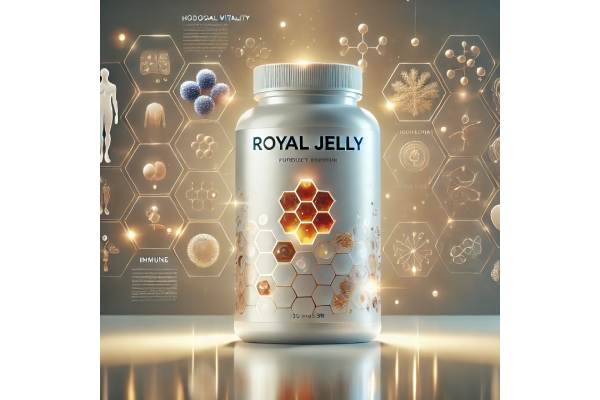
Royal jelly has a special status in natural health: it is the nutrient-rich food that turns an ordinary worker bee larva into a queen that lives years longer than the rest of the hive. In human nutrition, royal jelly is sold as a functional food and dietary supplement, often promoted for energy, immune support, healthy aging, and hormone balance. It contains proteins, unique fatty acids, vitamins, and antioxidants that may influence inflammation, blood lipids, blood sugar, and tissue repair.
Modern research suggests that royal jelly can modestly support cardiometabolic health, menopausal comfort, and markers of oxidative stress in some people, especially when used regularly for several weeks. At the same time, it is not a cure-all, and some trials show neutral results. Serious allergic reactions, including anaphylaxis, have been reported, particularly in people with asthma or known allergies to bee products.
This guide explains what royal jelly is, how it is used, potential benefits, practical dosage ranges, and key safety concerns so you can discuss it knowledgeably with a healthcare professional.
Royal jelly Quick Overview
- Royal jelly is a bee-derived secretion that may modestly support cardiovascular, metabolic, and menopausal health when used consistently.
- Typical supplemental intakes in human trials range from about 500 mg to 3,000 mg of royal jelly (or protease-treated royal jelly) per day for 4–12 weeks.
- Serious allergic reactions, including asthma attacks and anaphylaxis, have been reported after royal jelly ingestion, especially in people with allergies to bee products or severe atopy.
- Individuals with asthma, severe allergies, a history of anaphylaxis, or those taking multiple medications should only use royal jelly under medical supervision, if at all.
- Pregnant or breastfeeding people, children, and those with complex medical conditions should avoid royal jelly unless their clinician specifically recommends it.
Table of Contents
- What is royal jelly and how does it work?
- Royal jelly benefits for common health goals
- How to take royal jelly day to day
- Royal jelly dosage ranges and timing
- Royal jelly side effects, interactions, and who should avoid it
- What the research really says about royal jelly
What is royal jelly and how does it work?
Royal jelly is a thick, milky secretion produced by the hypopharyngeal and mandibular glands of young worker bees. In the hive, it is the exclusive food of queen bees and very young larvae. The queen’s lifelong royal jelly diet drives intense growth, fertility, and a dramatically longer lifespan than worker bees, which is why royal jelly has long been associated with vitality and longevity in traditional medicine systems.
Nutritionally, royal jelly is composed of roughly 50–60% water, 12–18% proteins, 10–16% carbohydrates, and 3–7% lipids, along with vitamins, minerals, trace elements, and small bioactive compounds. A distinctive group of proteins called major royal jelly proteins (MRJPs) and several unusual fatty acids, especially 10-hydroxy-2-decenoic acid (10-HDA), are considered among its most important active components.
Laboratory research suggests that royal jelly influences multiple biological pathways:
- Antioxidant support: Royal jelly can enhance cellular defenses, increasing the activity of enzymes that neutralize reactive oxygen species and helping maintain membrane stability.
- Anti-inflammatory actions: Its proteins and fatty acids appear to reduce pro-inflammatory signaling molecules, which may be relevant for cardiovascular, metabolic, and joint health.
- Metabolic modulation: Royal jelly may affect lipid metabolism, insulin sensitivity, and weight regulation through nuclear receptors and adipokine signaling.
- Neuroendocrine effects: Some components seem to interact with the nervous and endocrine systems, potentially influencing mood, stress responses, and hormone-related symptoms.
Commercial royal jelly products may contain:
- Fresh or frozen royal jelly (often sold in small jars and kept refrigerated).
- Lyophilized (freeze-dried) royal jelly in capsules or tablets, sometimes standardized to a minimum percentage of 10-HDA.
- Protease-treated royal jelly, where proteins are enzymatically broken down to smaller peptides, which can improve stability and may alter allergenic potential.
Because royal jelly is sensitive to heat, light, and oxidation, proper storage is essential. Fresh forms need refrigeration or freezing, while freeze-dried products should be stored in cool, dry, dark conditions and used before the expiry date to preserve potency.
Royal jelly benefits for common health goals
Many marketing claims about royal jelly go far beyond the evidence, but a growing number of human trials and systematic reviews point to some realistic areas of benefit. These tend to be modest improvements in measurable markers or symptoms, not dramatic cures.
1. Cardiometabolic health
Royal jelly has been studied for its impact on blood lipids, inflammation, and oxidative stress—factors related to cardiovascular and metabolic risk. In several randomized trials, adults receiving daily royal jelly for a few weeks to a few months showed:
- Small reductions in total cholesterol and sometimes LDL cholesterol.
- Increases in adiponectin, a hormone linked with improved insulin sensitivity and fat metabolism.
- Improvements in markers of oxidative stress and systemic inflammation, such as reduced reactive oxygen species and lower high-sensitivity C-reactive protein in some groups.
One study in healthy adults reported improved endothelial function (the flexibility and responsiveness of blood vessels) and slight improvements in liver enzymes after about a month of royal jelly intake, suggesting potential benefit for early vascular changes and liver health.
2. Menopausal comfort and women’s health
Royal jelly is often marketed for women experiencing menopausal symptoms. Clinical trials using approximately 800–1,000 mg per day for 8–12 weeks have found:
- Reductions in overall menopausal symptom scores.
- Improvements in specific issues such as hot flashes, anxiety, and low back pain in some participants.
- Better self-rated quality of life in domains like mood, sleep, and physical comfort.
Results vary between studies, and royal jelly is not a replacement for hormone therapy or other established medical options, but it may provide additional support for some women.
3. Dry eye and mucosal moisture
Royal jelly appears to support secretory glands. Trials in people with dry eye have found that daily royal jelly increases tear production and improves subjective eye comfort. Separate research suggests benefits for dry mouth (xerostomia), with participants reporting reduced dryness and improved oral comfort when taking royal jelly regularly. These findings are especially relevant for older adults and people taking medications that reduce moisture in mucous membranes.
4. Energy, fatigue, and physical performance
Some investigations have looked at royal jelly in older adults and athletes. Short-term use of protease-treated royal jelly has been associated with:
- Slight improvements in grip strength or walking performance in older individuals when combined with exercise.
- Reduced markers of muscle damage and modest improvements in subjective fatigue or recovery in people engaged in regular physical training.
These studies are small and exploratory, but they suggest that royal jelly might be a useful adjunct for those seeking better recovery and energy within a structured exercise program.
5. Body weight and body composition
Meta-analyses of royal jelly trials that measured weight and body mass index (BMI) generally show only minor changes. Some subgroup analyses suggest small reductions in weight and BMI at moderate doses, but overall effects are modest and evidence quality is limited. Royal jelly is unlikely to be a meaningful weight-loss tool on its own, though it may fit into broader diet and lifestyle strategies.
In short, royal jelly may provide small advantages for cardiometabolic markers, menopause-related symptoms, mucosal moisture, and aspects of physical performance, particularly when combined with healthy lifestyle changes.
How to take royal jelly day to day
If you and your healthcare professional decide that royal jelly might be appropriate, the next step is choosing a form and integrating it sensibly into your routine.
Common forms and how they are used
- Fresh royal jelly: Usually taken by the teaspoon, held briefly under the tongue or swallowed. Because potency varies, dosing can be less precise and storage needs are stricter (refrigeration or freezing).
- Freeze-dried royal jelly capsules or tablets: The most common supplemental form. These products are more stable, easier to dose, and often standardized to a certain content of 10-HDA or total royal jelly.
- Protease-treated royal jelly: Used in some clinical trials and products marketed for better absorption or reduced allergenic potential. Taken as capsules or powders.
- Liquid ampoules or vials: Royal jelly mixed with water, honey, or fruit juice in single-dose bottles.
Practical daily use strategies
- Start low and go slow: Begin at the lower end of the dose range suggested on the label, especially if you have a history of allergies or sensitive digestion.
- Take with food: Many people tolerate royal jelly better when it is taken with breakfast or another main meal, which can reduce stomach upset.
- Monitor your response: Keep brief notes on changes in energy, mood, sleep, joint comfort, or other target symptoms. Evaluate after 4–8 weeks whether you notice consistent benefits.
- Use time-limited “trials”: For example, use royal jelly for an 8–12 week period to see whether menopausal symptoms, cholesterol levels, or dry eye improve, then reassess with your clinician.
Combining royal jelly with lifestyle measures
Royal jelly is most effective when used as part of a broader health strategy. For cardiometabolic goals, pairing royal jelly with a balanced diet, regular movement, adequate sleep, and appropriate medications (if prescribed) is far more impactful than relying on the supplement alone. For menopause-related symptoms, lifestyle measures such as sleep hygiene, stress management, and physical activity remain foundational, with royal jelly as a possible supportive add-on.
Special considerations
- Because taste and texture of fresh royal jelly can be strong, some people prefer encapsulated or mixed forms.
- Combination products that include honey, propolis, or herbal extracts can be convenient but may make it harder to adjust or isolate the effect of royal jelly itself.
- If you have a history of allergies, especially to bee products, pollen, or insect stings, any trial of royal jelly should be discussed first with an allergist or physician and may need to be avoided entirely.
Royal jelly dosage ranges and timing
No single “official” dosage of royal jelly exists, but clinical studies and practical experience offer reasonable ranges for adults. Doses are usually given as total royal jelly per day, using lyophilized or protease-treated forms.
Typical daily doses in human trials
- General health, lipids, and inflammation: Around 500–1,000 mg of royal jelly per day for 4–12 weeks.
- Vascular function and liver markers: Approximately 600–700 mg per day for about 4 weeks.
- Menopausal symptoms: About 800–1,000 mg per day, sometimes in divided doses, for 8–12 weeks.
- Dry eye and dry mouth: Around 800–1,200 mg per day over 8–12 weeks.
- Body weight and composition: Studies have used from 500 mg to about 4,800 mg per day, though higher doses have not consistently shown better outcomes.
Because freeze-dried royal jelly is more concentrated than fresh royal jelly, labels often list both the dehydrated weight and “fresh equivalent.” For example, 230 mg of freeze-dried powder might be equivalent to 690 mg of fresh royal jelly.
Practical dosage guidance (for generally healthy adults, with clinician approval)
- A cautious starting dose is 500–1,000 mg per day, taken once or split into two doses.
- For specific goals under supervision, some protocols increase gradually to 2,000–3,000 mg per day, especially if tolerated and if higher doses have been used in relevant clinical studies.
- It is wise to avoid long-term high-dose use (for example, above 3,000 mg per day) without regular medical monitoring, as long-term safety at such levels is not well established.
Timing and course of use
- Time of day: Morning is often preferred, as some users feel mildly energized after taking royal jelly. If using twice daily, morning and early afternoon dosing is typical to avoid potential interference with sleep.
- Course length: Many studies observe effects after about 8–12 weeks. If there is no clear benefit by then, continuing may not make sense.
- Repeating cycles: For ongoing goals, some people repeat cycles of several weeks on royal jelly followed by a break, rather than taking it continuously year-round.
These ranges are not intended for children, pregnant or breastfeeding people, or individuals with serious medical conditions; those groups require individualized medical advice. Regardless of the dose, royal jelly should be considered an adjunct to—not a replacement for—evidence-based medical care.
Royal jelly side effects, interactions, and who should avoid it
While many people tolerate royal jelly without problems, it is not risk-free. The most important safety concern is allergy, which can range from mild symptoms to life-threatening reactions.
Allergic reactions and anaphylaxis
Royal jelly contains multiple proteins capable of triggering allergic responses. Case reports document:
- Rapid-onset hives, itching, and swelling of the lips or face.
- Wheezing or asthma attacks shortly after ingestion.
- Severe anaphylaxis requiring emergency treatment.
In at least one well-documented case, a specific royal jelly protein (major royal jelly protein 3, MRJP3) was identified as the cause, and cross-reactivity with other bee-derived substances was demonstrated. This highlights how sensitization to one bee product can increase risk with others.
People at especially high risk include those who:
- Have asthma, particularly if it is not well controlled.
- Have known allergies to bee stings, honey, propolis, or pollen.
- Have a strong history of atopic disease (multiple food or environmental allergies).
For these individuals, royal jelly is generally considered unsafe unless thoroughly evaluated by an allergy specialist, and often it is best avoided entirely.
Other potential side effects
Beyond allergic reactions, reported issues with royal jelly use include:
- Mild gastrointestinal upset such as nausea, stomach cramps, or loose stools.
- Headache, dizziness, or restlessness in a small number of users.
- Occasional skin rashes or itching, which may signal delayed hypersensitivity.
Anyone who experiences new or worsening symptoms soon after starting royal jelly should stop taking it and seek medical advice.
Medication and disease interactions
Royal jelly may interact with certain health conditions and medications:
- Asthma and chronic lung disease: Because of documented asthma exacerbations, royal jelly should be used, if at all, only under specialist guidance in these populations.
- Autoimmune or immune-related conditions: Royal jelly can influence immune signaling, so people with autoimmune diseases or those on immunosuppressive therapy should discuss risks and benefits with their treating physicians.
- Cardiometabolic medications: If royal jelly modestly improves lipids, glucose, or blood pressure, it may amplify the effects of statins, antidiabetic agents, or antihypertensives. Medication doses might need adjustment, and regular lab monitoring is important.
- Hormone-sensitive conditions: Because royal jelly is sometimes used for menopausal symptoms, people with hormone-sensitive cancers should review any planned use with their oncology team.
Who should avoid royal jelly unless clearly indicated
- Anyone with a history of anaphylaxis, especially related to bee products.
- People with uncontrolled asthma or severe respiratory disease.
- Individuals with known allergies to honey, bee venom, propolis, or pollen.
- Pregnant or breastfeeding people, due to limited safety data.
- Children, unless under direct care of a pediatric specialist who recommends it.
Recognizing early signs of a serious reaction is crucial. Swelling of the face or throat, difficulty breathing, chest tightness, rapid heartbeat, lightheadedness, or a feeling of impending doom are emergency signs; in such cases, urgent medical care is needed and royal jelly should be avoided permanently thereafter.
What the research really says about royal jelly
The scientific literature on royal jelly includes cell and animal studies, human pharmacology work, randomized clinical trials, and several systematic reviews and meta-analyses. Together, these sources give a nuanced picture: royal jelly is biologically active and potentially helpful in certain contexts, but it is not a miracle remedy.
Findings from reviews and meta-analyses
Recent comprehensive reviews describe royal jelly as a complex, multi-component substance with antioxidant, anti-inflammatory, antimicrobial, and tissue-protective properties. Clinical trials are most common in areas such as:
- Cardiometabolic risk factors (blood lipids, oxidative stress, inflammation).
- Menopausal symptom relief.
- Dry eye and dry mouth.
- Body weight and composition.
- Exercise performance and recovery.
Across these areas, meta-analyses often show modest positive effects. For example, pooled data indicate small improvements in oxidative stress markers and inflammatory indicators in adults taking royal jelly compared with placebo. Trials in overweight or asymptomatic adults report subtle shifts in cholesterol profiles, satiety, and antioxidant capacity.
Studies in menopausal women show reductions in symptom scores and improvements in quality-of-life measures when royal jelly is used consistently for a few months. Dry eye and dry mouth trials demonstrate measurable gains in tear production and subjective comfort. However, many studies are small, and results are not always replicated exactly, which lowers overall certainty.
Limitations of the current evidence
Several challenges make it difficult to draw sweeping conclusions:
- Heterogeneous products: Different trials use fresh, freeze-dried, or protease-treated royal jelly, often at different doses and with varying 10-HDA content.
- Short durations: Most studies last from a few weeks to a few months, so long-term efficacy and safety remain less clear.
- Small sample sizes: Many trials include fewer than 100 participants, and some are single-center studies.
- Diverse outcomes: Researchers measure different endpoints—lab markers, symptom scores, quality-of-life questionnaires—which complicates comparison and pooling of results.
Despite these limitations, the overall body of work suggests that royal jelly can influence human biology in clinically observable ways, particularly when used regularly and in appropriate doses. Its strongest role appears to be as a supportive functional food or supplement that may nudge risk factors and symptoms in a favorable direction, rather than as a primary therapy.
Looking ahead, larger, well-designed randomized controlled trials with standardized products will be essential to clarify which populations benefit most, what doses and durations are optimal, and how royal jelly compares with or complements conventional treatments. Until such data are available, thoughtful, cautious use—always coordinated with a healthcare professional—is the most responsible approach.
References
- Royal Jelly: Biological Action and Health Benefits 2024 (Systematic Review)
- Royal jelly a promising therapeutic intervention and functional food supplement: A systematic review 2024 (Systematic Review)
- Effects of royal jelly consumption on inflammation and oxidative stress: A systematic review and meta-analysis of randomized controlled trials 2025 (Systematic Review and Meta-Analysis)
- Effects of Royal Jelly Administration on Lipid Profile, Satiety, Inflammation, and Antioxidant Capacity in Asymptomatic Overweight Adults 2019 (Randomized Controlled Trial)
- A Case of Anaphylaxis Caused by Major Royal Jelly Protein 3 of Royal Jelly and Its Cross-Reactivity with Honeycomb 2021 (Case Report)
Disclaimer
The information in this article is provided for general educational purposes and is not intended to diagnose, treat, cure, or prevent any disease. Royal jelly is not a substitute for professional medical advice, evaluation, or treatment. Never start, stop, or change any medication or supplement regimen based solely on this content. Always consult a qualified healthcare professional—such as a physician, pharmacist, or registered dietitian—before using royal jelly, especially if you are pregnant, breastfeeding, taking prescription medications, have chronic health conditions, or have any history of allergy or asthma.
If you found this article useful, you are warmly invited to share it with others on Facebook, X (formerly Twitter), or any platform you prefer, and to follow our work on social media. Your thoughtful support by sharing our content helps our team continue creating clear, balanced, and evidence-informed health guides.