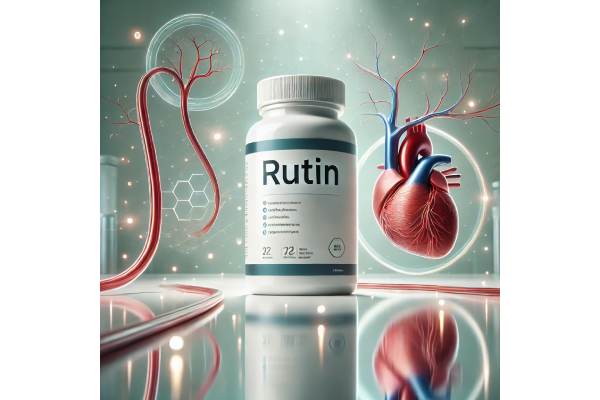
Rutin is a plant flavonoid often labelled as rutoside, quercetin rutinoside or “vitamin P.” It occurs naturally in buckwheat, citrus peel, apples, and many traditional herbal formulas. Today it is widely sold as a dietary supplement, usually promoted for vein health, capillary strength, and antioxidant protection. Interest has grown as newer research links rutin to anti-inflammatory, analgesic, and potential cardiometabolic effects.
At the same time, rutin has relatively low oral bioavailability and most of the impressive data come from cell and animal studies rather than large human trials. Risk assessors have also started to define what looks safe for long-term supplemental use.
This guide walks you through what rutin is, how it may work, which benefits are best supported, how people typically take it, and who should avoid it. The goal is to give you a realistic, safety-first view rather than marketing promises.
Key Facts about Rutin
- Supports vein tone, microcirculation, and capillary strength, especially in the legs.
- Provides antioxidant and anti-inflammatory activity that may complement vitamin C and other flavonoids.
- Common supplement doses range from 50–500 mg per day; conservative safety assessments support 25 mg per day for adults.
- High-dose use beyond three months has limited human safety data and should be approached cautiously.
- People who are pregnant, breastfeeding, have chronic kidney disease, hormone-sensitive cancers, or take blood thinners should avoid rutin unless medically supervised.
Table of Contents
- What is rutin and how does it work?
- Science backed benefits of rutin
- How to take rutin: dosage and forms
- Rutin for veins, skin and heart health
- Side effects, risks and who should avoid rutin
- What the research says about rutin
What is rutin and how does it work?
Rutin is a flavonoid glycoside: chemically, it is quercetin bound to a disaccharide (rutinose). This sugar attachment changes how the molecule dissolves, absorbs, and circulates in the body. In plants, rutin helps protect tissues from oxidative stress and UV damage; in humans it appears to play a similar protective role at the cellular level.
Dietary rutin comes mainly from buckwheat, asparagus, citrus peel, apples, berries, and some medicinal herbs such as Japanese pagoda tree (Sophora japonica). Supplements typically contain purified rutin or standardized plant extracts rich in rutin and related compounds (sometimes called rutosides or oxerutins).
Once ingested, rutin is only partly absorbed in the small intestine. Gut microbiota and digestive enzymes gradually break off the sugar moiety, releasing quercetin and other metabolites. This means that many of rutin’s actions may actually come from these downstream compounds rather than from intact rutin itself. Human studies show relatively low blood levels after oral doses, which is why researchers keep exploring formulations that improve its bioavailability.
Mechanistically, rutin and its metabolites can:
- Neutralize reactive oxygen species (antioxidant action).
- Reduce activation of pro-inflammatory transcription factors such as NF-κB, lowering inflammatory cytokine output.
- Modulate nitric oxide production and endothelial function, which influences blood flow and vascular tone.
- Stabilize capillary walls and reduce capillary permeability, contributing to less leakage and swelling.
- Influence pain pathways by dampening inflammatory mediators and oxidative stress in nerve tissue.
Interestingly, recent work suggests rutin may show “hormesis,” a biphasic curve where low to moderate doses trigger beneficial adaptive responses, while much higher exposures might not give extra benefit and could even be counterproductive. This pattern is fairly common for polyphenols and is one reason “more” is not always “better.”
Overall, rutin is best understood as a multi-target modulator of oxidative stress, inflammation, and microcirculation rather than a single-mechanism drug.
Science backed benefits of rutin
Rutin is often marketed as a cure-all, but the strength of evidence varies by indication. The most consistent findings relate to blood vessels, microcirculation, and some pain and inflammation pathways.
One of the most studied areas is chronic venous insufficiency and related vein problems. In this condition, leg veins struggle to return blood to the heart, leading to heaviness, swelling, night cramps, and visible varicose veins. Clinical trials of hydroxyethylrutosides (semisynthetic derivatives of rutin, sometimes grouped together with “rutin”) show modest improvements in symptoms such as leg pain, heaviness, and edema when used alongside standard measures like compression. These data suggest that rutin-type flavonoids can help tone the venous wall and reduce capillary leakage, although they are not a replacement for compression stockings or surgery where needed.
Rutin also has a long history of use to support fragile capillaries. People with easy bruising, nosebleeds, or “broken capillaries” on the skin sometimes take rutin, often paired with vitamin C. Experimental work indicates that rutin can reduce capillary permeability and protect small vessels from oxidative damage. Human trials in this area are smaller and more heterogeneous, but the mechanism is plausible and consistent with venous data.
A growing body of preclinical research links rutin to analgesic and neuroprotective actions. In animal models, rutin reduces inflammatory and neuropathic pain behaviors, likely through lowering pro-inflammatory cytokines and oxidative stress in nerve tissue. Early human data are limited, so it is too soon to call rutin an established pain supplement, but the mechanistic groundwork is promising.
Beyond blood vessels and pain, rutin shows antioxidant and anti-inflammatory effects across many organ systems in cell and animal studies, including the heart, liver, kidneys, and metabolic tissues. These studies report improvements in oxidative markers, lipid profiles, insulin signaling, and tissue damage under various stressors. Translating those findings into clear human benefits will require more rigorous trials, but they support the idea of rutin as a broad “cell protection” compound rather than a narrowly targeted drug.
In short, the best-grounded benefits at present relate to venous symptoms and microcirculation, with emerging but still preliminary support for pain modulation and general antioxidant support.
How to take rutin: dosage and forms
Rutin is sold in several formats:
- Stand-alone rutin capsules or tablets.
- Complexes with vitamin C and other bioflavonoids (often labelled as “citrus bioflavonoids”).
- Specialized venous formulas containing rutin derivatives such as oxerutins, sometimes alongside horse chestnut, diosmin, or hesperidin.
Dietary supplements commonly provide between 50 and 500 mg of rutin per day. A recent risk assessment by a European authority concluded that 25 mg per day appears safe for adults over at least three months, with 5 mg per day considered safe for children from four years of age. Commercial products often exceed these conservative safety thresholds, so it is important to consider both dosage and duration when choosing a supplement.
In clinical studies of venous disease, hydroxyethylrutosides are usually given in total daily doses around 1000–2000 mg, divided into two or three doses. These are not identical to plain rutin, and many of those preparations are regulated as drugs in specific countries rather than as over-the-counter supplements. Self-treating with comparable doses of generic rutin is not advisable without medical supervision.
A cautious, pragmatic approach for otherwise healthy adults who have discussed supplementation with a clinician might look like:
- Staying near the lower end of common supplement strengths, such as 50–100 mg once or twice daily.
- Taking rutin with meals to improve tolerability and possibly absorption.
- Limiting unsupervised use at higher doses (for example 250–500 mg per day) to relatively short periods, such as up to three months, while monitoring for side effects.
- Using rutin as an adjunct, not a substitute, for fundamentals such as exercise, compression therapy for venous issues, balanced diet, and prescribed medications.
Because rutin can influence blood vessels and inflammatory pathways, it is wise to coordinate with a physician or pharmacist if you take blood thinners, antiplatelet drugs, blood pressure medications, or other agents that affect circulation. People with chronic conditions, especially kidney disease or hormone-sensitive cancers, should avoid guessing at dose and instead seek personalized advice or skip rutin entirely.
There is no strong evidence that taking rutin at a particular time of day is crucial. Many people simply tie doses to breakfast and/or dinner to build a consistent habit.
Rutin for veins, skin and heart health
Most people encounter rutin because they are searching for natural support for varicose veins, swelling, bruising, or capillary “spider veins.” Rutin’s reputation here comes from its capillary-stabilising and venotonic properties.
In chronic venous disease, pooling of blood in the lower legs leads to increased venous pressure, fluid leakage into tissues, and inflammation. Rutin-derived compounds can reduce capillary filtration and improve microcirculatory tone, which in turn may ease symptoms such as heaviness, aching, and ankle swelling. Clinical trials of hydroxyethylrutosides suggest modest but meaningful improvements in patient-reported symptoms and leg volume when used alongside standard care. For everyday users, this translates to the idea that rutin may help “take the edge off” venous discomfort rather than fully resolving advanced varicose veins or ulcers.
Rutin may also be helpful in conditions where capillary fragility is prominent, such as easy bruising, frequent nosebleeds, or visible broken capillaries on the cheeks and legs. By supporting collagen and elastin networks and acting as an antioxidant within vessel walls, rutin can theoretically make capillaries more resilient to mechanical stress. Many traditional formulations pair rutin or related flavonoids with vitamin C for this purpose, as vitamin C is essential for collagen synthesis.
On the skin, rutin’s antioxidant and anti-inflammatory properties underpin its inclusion in topical creams and serums aimed at redness, rosacea, or sun-related damage. In vitro work shows that rutin and its derivatives can reduce UV-induced oxidative stress, modulate inflammatory mediators, and protect keratinocytes. Topical data in humans are more limited, but rutin is generally well tolerated on the skin and may be a useful supportive ingredient rather than a stand-alone treatment.
Cardiovascular effects of rutin are an active research area. Animal and early human studies suggest modest improvements in markers such as LDL oxidation, endothelial function, and blood pressure under certain conditions. Still, these findings are far from proving that rutin prevents heart attacks or strokes on its own. The most realistic view is that rutin may contribute to a broader cardio-protective lifestyle that already includes a plant-rich diet, regular activity, and appropriate medical care.
In all of these areas, rutin is better viewed as a supportive tool that can complement, but not replace, established therapies and lifestyle measures.
Side effects, risks and who should avoid rutin
In clinical research and risk assessments, rutin has generally shown a favourable short-term safety profile at modest doses. Most human studies report few and mostly mild adverse effects, such as digestive discomfort, headache, or transient skin reactions. Serious toxicity from typical supplement doses is rare.
That said, “low side effects so far” is not the same as “risk free.” Several factors deserve attention:
- Dose and duration: A scientific risk assessment concluded that 25 mg rutin per day appears safe for adults over at least three months, based on available human data. Commercial supplements often provide more, and some experimental or therapeutic protocols use far higher doses. Long-term safety of high-dose rutin beyond a few months is much less certain, especially in people with underlying disease.
- Kidney and liver function: Flavonoids and their metabolites are processed by the liver and excreted via the kidneys. People with reduced kidney or liver function may handle these compounds differently, increasing the risk of accumulation or subtle adverse effects.
- Pregnancy and breastfeeding: There is a lack of robust, well-controlled data on rutin use in pregnancy and lactation. Because some flavonoids can influence hormone pathways and drug-metabolising enzymes, most authorities advise against high-dose supplemental rutin during pregnancy or while breastfeeding unless a clinician recommends it for a very specific reason.
- Hormone-sensitive cancers: Some data on related flavonoids suggest possible concerns at higher intakes in people with estrogen-dependent cancers. It is not clear whether routine dietary or supplemental doses of rutin pose a risk, but out of caution many experts recommend avoiding high-dose rutin in people with a history of breast, ovarian, endometrial, or prostate cancers that are hormone-responsive unless an oncologist approves.
- Drug interactions: Rutin and its metabolites may influence platelet aggregation, vascular tone, and drug-metabolising enzymes and transporters. Practical implications are still being mapped out, but people taking warfarin, direct oral anticoagulants, antiplatelet drugs, some chemotherapy agents, immunosuppressants, or multiple cardiovascular medications should be particularly cautious. Even if major interactions are unlikely at low doses, combining several products that all affect clotting or blood vessels can add up.
- Allergy and intolerance: As a plant-derived compound, rutin may rarely provoke allergic reactions, especially in people with multiple plant or pollen allergies. Symptoms could include rash, itching, swelling, or breathing difficulty; these require immediate medical evaluation.
In general, the following groups should avoid self-prescribing rutin supplements or use them only with medical supervision:
- Children and adolescents.
- Pregnant or breastfeeding individuals.
- People with chronic kidney or significant liver disease.
- Those with hormone-sensitive cancers or a strong family history.
- Anyone on blood thinners or complex medication regimens.
For healthy adults who wish to use rutin for a limited time at conservative doses, the main safety rules are to avoid exceeding product directions, monitor for new or unusual symptoms, and keep all of your healthcare providers informed about your supplement use.
What the research says about rutin
Rutin has attracted renewed research interest in the past decade. Several themes emerge when you look across experimental, clinical, and safety-assessment literature.
First, experimental data are remarkably consistent in showing antioxidant, anti-inflammatory, and cytoprotective effects. In cell cultures and animal models, rutin reduces oxidative damage, tunes inflammatory signalling pathways, and often improves functional outcomes in tissues ranging from nerves and joints to liver and heart. Newer work also emphasises hormetic dose-response patterns, where low to moderate exposures provoke adaptive protection while higher levels offer diminishing returns.
Second, preclinical studies of pain are particularly encouraging. In multiple rodent models of inflammatory and neuropathic pain, rutin lowers pain behaviours and modulates mediators such as TNF-α, interleukin-1β, COX-2, iNOS, and key signalling cascades. These mechanistic insights support the traditional use of rutin-rich plants in pain and inflammation, but translation to human pain management will require properly designed clinical trials.
Third, clinical data are strongest for venous insufficiency and related microcirculatory complaints, but even here the picture is nuanced. Trials of hydroxyethylrutosides show statistically significant improvements in leg pain, heaviness, and cramps compared with placebo, with good tolerability. However, these benefits are typically modest and best viewed as part of a comprehensive venous care plan that also includes compression, movement, and in some cases procedural interventions.
Fourth, safety-focused work has started to define upper intake levels. A recent risk assessment that pooled data from more than twenty randomized trials found few adverse effects at studied doses but still recommended conservative supplemental limits (5 mg per day for children, 25 mg per day for adults) for routine use in the general population, with higher doses reserved for monitored therapeutic contexts. This cautious stance reflects limited data on long-term, high-dose use rather than evidence of clear harm at typical supplement strengths.
Fifth, researchers are actively exploring ways to improve rutin’s bioavailability and formulation. Approaches include esterification with fatty acids, proniosomal gels, and combination products designed to enhance absorption or target specific tissues. Early toxicological profiles of these novel forms are encouraging, but they remain experimental and should not be assumed equivalent to standard oral rutin supplements without further human data.
Taken together, the research supports viewing rutin as a promising supportive flavonoid with real but bounded benefits, especially for venous symptoms and oxidative stress, rather than as a stand-alone cure for complex chronic diseases. Used thoughtfully and within reasonable dose and duration limits, it can be a useful adjunct in a broader health strategy.
References
- RUTIN, a widely consumed flavonoid, that commonly induces hormetic effects 2024 (Review)
- Rutin: a pain-relieving flavonoid 2025 (Review)
- Rutin bioconjugates as potential nutraceutical prodrugs: An in vitro and in ovo toxicological screening 2022 (Experimental study)
- Rutin and Quercetin – Health Risks of Intake of Food Supplements 2024 (Risk assessment)
- A systematic review of the efficacy and tolerability of hydroxyethylrutosides for improvement of the signs and symptoms of chronic venous insufficiency 2015 (Systematic Review and Meta-analysis)
Disclaimer
The information in this article is for general educational purposes only and is not intended to replace individual medical advice, diagnosis, or treatment. Rutin can affect blood vessels, inflammation, and drug handling in the body, and its safety and suitability depend on your personal health history and medications. Always consult a qualified healthcare professional before starting, stopping, or changing any supplement, especially if you have a medical condition, are pregnant or breastfeeding, or take prescription or over-the-counter medicines.
If you found this guide helpful, you are warmly invited to share it with friends, family, or colleagues on Facebook, X (formerly Twitter), or any platform you prefer, and to follow us on social media. Your thoughtful support by sharing our articles helps our team continue creating careful, evidence-informed content.
Alternative H1 title options:
Rutin benefits for veins and heart health: dosage, uses, and side effects explained
Rutin supplement guide: vein support, antioxidant properties, safe dosage, and side effect risks
Rutin for circulation and capillaries: evidence based benefits, proper use, and safety overview