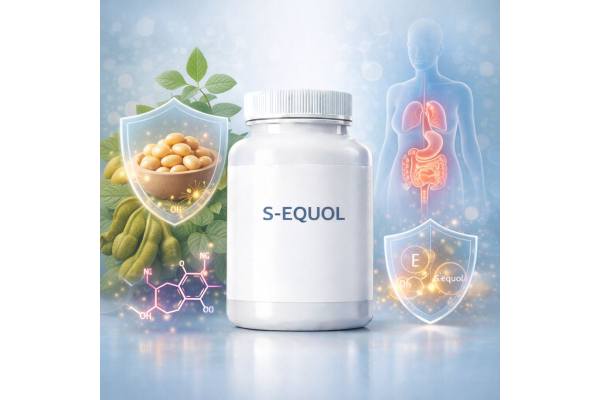
S-equol is a soy-derived compound that has attracted attention as a targeted, nonhormonal option for menopause symptoms, bone support, and prostate health. Unlike general soy isoflavones, S-equol is a specific metabolite that only some people can make in their intestines. Supplement forms are designed to deliver a consistent dose even in “non-producers.”
Because S-equol binds selectively to estrogen receptor beta and can blunt the activity of the androgen dihydrotestosterone, it behaves differently from both standard hormone therapy and many plant estrogens. Early research suggests it may reduce hot flashes, muscle and joint stiffness, and markers of bone loss, with additional data emerging for cardiovascular, metabolic, and prostate outcomes.
At the same time, S-equol is still a relatively new nutraceutical. Most trials are short- to medium-term, in specific groups such as Japanese postmenopausal women, and often sponsored by manufacturers. Understanding what is known—along with the remaining uncertainties—can help you and your clinician decide if S-equol fits into your overall health plan.
Key Insights
- S-equol is a soy-derived metabolite that selectively targets estrogen receptor beta and may also reduce dihydrotestosterone activity.
- Clinical trials most often use 10 mg per day of natural S-equol, with some studies testing 20–40 mg per day for limited periods.
- Short-term use is generally well tolerated, but abdominal discomfort and, rarely, endometrial thickening have been reported.
- People with a history of estrogen-sensitive cancers, unexplained uterine bleeding, pregnancy, or breastfeeding should avoid S-equol unless specifically advised by a specialist.
- Those taking hormone therapies, anti-androgen drugs, or anticoagulants should discuss potential interactions with their healthcare professional before using S-equol.
Table of Contents
- What is S-equol and how does it work?
- Proven benefits of S-equol in humans
- How to take S-equol for menopause or prostate health
- Factors that influence response to S-equol
- S-equol side effects and safety concerns
- What the research says and remaining questions
What is S-equol and how does it work?
S-equol is a compound derived from the soy isoflavone daidzein. When certain intestinal bacteria are present, they can convert daidzein into equol. Equol itself has two mirror-image forms (enantiomers), called S-equol and R-equol. Humans naturally produce only the S-form, which is why supplements also use S-equol.
Only about a quarter to half of adults, depending on ethnicity and diet, are “equol producers.” Non-producers can eat large amounts of soy yet still have little or no equol in their blood. This variability is one reason standardized S-equol supplements were developed: they deliver a known amount regardless of the gut microbiome.
Most commercial S-equol is made by fermenting soy germ isoflavones with specific bacteria, then purifying the resulting S-equol. One common ingredient, often labeled as a fermented soy germ extract, is sometimes referred to in the literature as SE5-OH. It provides S-equol along with small amounts of other soy isoflavones.
Mechanistically, S-equol is classified as a phytoestrogen, but its behavior is more selective than that of many plant estrogens. It has a stronger affinity for estrogen receptor beta (ERβ) than for estrogen receptor alpha (ERα). ERβ is expressed in tissues such as bone, blood vessels, the prostate, and parts of the brain, while ERα predominates in the uterus and breast. Preferential binding to ERβ may help explain why S-equol can exert beneficial hormonal effects without as much stimulation of uterine tissue as classical estrogens.
In addition, S-equol can bind to dihydrotestosterone (DHT), the potent androgen involved in prostate growth and some hair and skin changes. By binding DHT, S-equol may reduce its ability to activate androgen receptors in certain tissues. This dual action—ERβ modulation plus DHT binding—underpins its study in both women (for menopausal and bone effects) and men (for benign prostatic hyperplasia and related symptoms).
Pharmacokinetic studies suggest that S-equol is rapidly absorbed after oral dosing, reaching peak levels within a few hours and having an elimination half-life of roughly 7–8 hours. It is highly bioavailable and largely excreted in urine. This profile supports once- or twice-daily dosing in most clinical trials.
Overall, S-equol is best viewed as a targeted, tissue-selective phytoestrogen with additional anti-androgen activity, rather than a weak “plant estrogen” in the broad sense.
Proven benefits of S-equol in humans
Human research on S-equol has focused mainly on menopausal symptoms, bone health, and prostate-related outcomes, with additional work in cardiovascular and cognitive areas. Most data come from randomized controlled trials in Japanese populations, often using 10 mg per day of natural S-equol.
Menopausal hot flashes and quality of life
Several double-blind, placebo-controlled trials in postmenopausal Japanese women who do not naturally produce equol have found that 10 mg per day of S-equol for 8–12 weeks:
- Reduces the frequency of hot flashes more than placebo.
- Decreases the severity of hot flashes and night sweats.
- Improves neck and shoulder muscle stiffness and sometimes general fatigue or irritability.
In one large trial, women taking S-equol had roughly a 50–60 percent reduction in daily hot flashes from baseline, compared with about a one-third reduction in the placebo group. Benefits typically emerged over several weeks, with the largest improvements seen by week 8–12.
A smaller comparative study looked at S-equol versus soy isoflavones and suggested that higher doses of S-equol (20–40 mg per day) could be at least as effective, and in some analyses more effective, than standard soy isoflavones for women with frequent hot flashes.
Bone health
Bone turnover increases after menopause, with accelerated loss of mineral density. A one-year trial in non–equol-producing postmenopausal women found that 10 mg per day of S-equol:
- Reduced a biomarker of bone resorption (breakdown).
- Slightly attenuated whole-body bone mineral density loss compared with placebo.
The magnitude of the effect was modest, but it suggests that S-equol may help slow bone loss rather than rebuild bone. It should not be seen as a replacement for established osteoporosis treatments, but it may be a supportive option in selected women, particularly when combined with adequate calcium, vitamin D, and weight-bearing exercise.
Cardiometabolic parameters
In small randomized trials in overweight or obese individuals, S-equol supplementation (typically 10 mg per day) has been associated with:
- Modest reductions in LDL cholesterol.
- Improvements in certain measures of arterial stiffness.
- Slight decreases in HbA1c (a marker of long-term blood glucose) in some studies.
However, these findings are not fully consistent across trials, and most studies are relatively short and small. At present, S-equol should not be used as a stand-alone therapy for cardiovascular or metabolic disease but may offer additional benefits within a broader lifestyle and medical plan.
Prostate and lower urinary tract symptoms
Because of its DHT-binding and ERβ activity, S-equol has been tested in men with benign prostatic hyperplasia (BPH) and bothersome urinary symptoms. Early-phase studies using relatively low doses (for example, 6 mg twice daily) have reported:
- Improvements in symptom scores such as the International Prostate Symptom Score (IPSS).
- Lower levels of circulating DHT.
- Possible improvements in quality-of-life measures related to urination.
These studies are promising but still preliminary. Larger, longer trials are needed before S-equol can be recommended as a primary therapy for BPH.
Cognition and brain aging
Observational research suggests that people who naturally produce equol may have a lower risk of cognitive decline and certain types of dementia compared with non-producers, possibly due to vascular and anti-inflammatory effects. Interventional trials specifically testing S-equol for cognitive outcomes are still small and inconclusive. At this stage, brain-related benefits should be considered experimental.
How to take S-equol for menopause or prostate health
Because S-equol is an active hormone-modulating compound, it should be used thoughtfully and ideally under medical supervision, especially when taken for more than a few months or alongside other hormonal treatments.
Typical supplemental forms
Most S-equol supplements provide:
- A standardized amount of natural S-equol produced by fermentation of soy isoflavones.
- Doses often structured as 5 mg tablets or capsules, taken once or twice daily.
- Small amounts of residual daidzein, genistein, and related isoflavones in some formulations.
Always check the label for the exact amount of S-equol per serving rather than assuming that “soy extract” or “isoflavone complex” contains meaningful S-equol.
Evidence-based dose ranges
Clinical trials have used the following oral doses:
- Menopausal symptoms
- Most evidence: 10 mg per day of S-equol, often as 5 mg twice daily.
- Some trials: 20–40 mg per day, particularly in women with more frequent hot flashes.
- Bone health support
- 10 mg per day for one year in non–equol-producing postmenopausal women.
- Prostate and urinary symptoms
- Doses such as 6 mg twice daily (12 mg per day total) have been tested in men with BPH-related symptoms, generally for several months.
Higher doses have been explored in short-term pharmacokinetic and phase I studies without major safety signals, but routine daily use beyond about 40 mg is not well studied in the general population.
Practical steps for use
- Discuss with a clinician.
Before starting S-equol, talk with a healthcare professional if you have a history of hormone-sensitive cancers, endometrial abnormalities, blood clots, liver disease, thyroid disorders, or if you use hormone therapy, anti-androgen drugs, or anticoagulants. - Start with research-based doses.
- For menopausal symptom relief, many clinicians consider 10 mg per day a reasonable starting point based on published trials.
- For men with urinary symptoms considering S-equol, existing evidence supports low-dose regimens (around 10–12 mg per day), always as a complement—not an alternative—to established BPH treatments.
- Allow enough time.
Improvements in hot flashes or joint discomfort typically take 4–8 weeks to become noticeable. Bone and cardiometabolic effects require even longer. If there is no benefit after about three months, continued use should be reassessed with your clinician. - Use for defined periods.
Given limited long-term safety data, it is prudent to use S-equol for defined intervals (for example, 3–12 months) with regular clinical review rather than indefinite, unsupervised use. - Combine with lifestyle measures.
S-equol works best as part of a broader strategy that may include sleep optimization, stress management, regular physical activity, a balanced diet rich in plant foods, and, where appropriate, evidence-based medications.
Never stop or change prescribed hormone therapy or BPH medications solely to begin S-equol without direct medical advice.
Factors that influence response to S-equol
Not everyone experiences the same degree of benefit from S-equol. Several biological and lifestyle factors may shape individual responses.
Equol producer status
People who naturally produce equol from dietary soy may have different baseline hormone and metabolite profiles than non-producers. In many trials, the greatest benefit of S-equol supplementation has been observed in confirmed non-producers, presumably because supplementation provides something they cannot generate on their own.
Equol producer status can be determined by specialized urine or blood tests after a soy challenge, but these tests are not widely available in routine clinical practice. In everyday settings, clinicians often make decisions based on symptoms and overall health rather than testing.
Diet and gut microbiome
Because equol is normally formed by gut bacteria, broader aspects of gut health may influence how S-equol behaves in the body, even when it is taken as a supplement. Diets rich in fiber, fermented foods, and plant diversity may support a more resilient microbiome, potentially affecting:
- Absorption of the supplement.
- Conversion into conjugated forms.
- Circulation time and tissue distribution.
Conversely, frequent antibiotic use, inflammatory bowel disease, or highly restrictive diets might alter S-equol handling, though this has not been thoroughly studied.
Hormonal milieu and life stage
S-equol’s actions depend partly on the surrounding hormonal environment:
- Perimenopausal vs postmenopausal women may respond differently, as endogenous estrogen levels vary widely.
- Men with high DHT levels or more pronounced BPH may experience different effects than those with mild symptoms.
- Younger adults with intact ovarian or testicular hormone production have not been as extensively studied.
These differences underscore the importance of individualized assessment rather than assuming a uniform effect.
Genetic and receptor differences
Polymorphisms in estrogen receptors, enzymes involved in steroid metabolism, or transport proteins could influence who benefits most from S-equol. For example, variations in ERβ expression might change the balance between positive effects (such as bone or vascular support) and potential unwanted stimulation in sensitive tissues. Research in this area is still in early stages.
Formulation and co-ingredients
Products can vary in:
- Purity and exact dose of S-equol.
- Presence of additional isoflavones or herbal extracts.
- Manufacturing quality and testing standards.
These differences may explain why two people taking “equol supplements” from different brands or formulas do not experience the same results. Choosing products from reputable manufacturers that disclose exact S-equol content and have independent testing is advisable.
Baseline symptom severity and expectations
Trials indicate that people with more frequent or severe hot flashes at baseline sometimes show larger absolute improvements. Expectations also matter: placebo responses in menopausal symptom trials are often substantial. Realistic goals and symptom tracking (for example, a simple hot flash diary) can help distinguish true benefit from day-to-day fluctuation.
S-equol side effects and safety concerns
Overall, clinical studies suggest that S-equol is generally well tolerated at doses commonly used in supplements, but this does not mean it is risk-free. Understanding its safety profile is essential, particularly for long-term use.
Short- to medium-term human data
In randomized controlled trials using 10–40 mg per day of S-equol for 8–52 weeks in adults, reported side effects have included:
- Abdominal distension, gas, or discomfort.
- Mild gastrointestinal symptoms such as constipation or diarrhea.
- Headache or fatigue in a minority of participants.
Most events were mild to moderate and resolved without stopping treatment. However, some studies reported a higher overall rate of “treatment-emergent adverse events” compared with placebo, especially at higher doses.
A particular concern in a few trials was endometrial thickening (endometrial hypertrophy) in a small number of women. In these cases, the thickening generally did not involve atypical cells, but it underscores that S-equol does have physiologic estrogen-like effects on the uterus in some individuals.
Phase I dose-escalation studies have tested single doses up to around 320 mg and repeated doses up to about 160 mg twice daily in healthy volunteers. These studies did not reveal major organ toxicity, significant changes in standard blood tests, or clear signals of serious adverse effects, although gastrointestinal symptoms were more frequent at high doses.
Preclinical toxicology
Animal studies of SE5-OH, a fermented soy germ preparation rich in S-equol, have shown:
- An oral LD50 (lethal dose) greater than 4,000 mg/kg in rats.
- A no-observed-adverse-effect level (NOAEL) of 2,000 mg/kg/day in 91-day subchronic studies.
- Negative results in multiple genotoxicity assays, including bacterial mutagenicity and chromosomal aberration tests.
These findings support a relatively wide safety margin between doses used in human supplements and levels that cause toxicity in animals. However, animal data cannot fully predict rare or long-term effects in humans.
Who should be especially cautious or avoid S-equol
Because S-equol modulates estrogen and androgen pathways, extra caution is warranted for:
- Individuals with a current or past history of estrogen-sensitive cancers (such as certain breast, uterine, or ovarian cancers).
- Women with unexplained uterine bleeding, known endometrial hyperplasia, or thickening.
- People with a history of venous thromboembolism, stroke, or clotting disorders, particularly if related to hormone therapy.
- Pregnant or breastfeeding women, since safety in these groups has not been established.
- Individuals with severe liver disease or active hormone-related conditions unless closely supervised.
Potential interactions
Theoretical or observed interactions include:
- Hormone replacement therapy (HRT) and contraceptives: S-equol may modify the body’s response to estrogens or progestins, though data are limited.
- Anti-androgen or prostate medications: By binding DHT, S-equol could add to or complicate the effects of drugs targeting androgen pathways.
- Thyroid medications: Isoflavones in general can influence thyroid hormone handling in specific contexts, especially with iodine deficiency, though S-equol-specific data are limited.
- Anticoagulants and antiplatelet drugs: There is no clear evidence that S-equol increases bleeding risk, but caution is reasonable with any new supplement in people on blood thinners.
Monitoring and practical safety tips
If you and your clinician decide to use S-equol:
- Report new or unusual vaginal bleeding, pelvic pain, or breast changes promptly.
- Monitor hot flash diaries, mood, and joint symptoms to ensure there is benefit to justify ongoing use.
- For longer-term use, routine gynecologic care and appropriate cancer screening are essential.
- Stop the supplement and seek medical advice if you experience persistent abdominal pain, severe mood changes, chest pain, or signs of clotting (leg swelling, sudden shortness of breath).
What the research says and remaining questions
Research on S-equol has progressed from basic chemistry and microbiology to clinical trials in targeted conditions, but it is still evolving. Understanding the strengths and limitations of the evidence helps put marketing claims into context.
What is well supported
- Menopausal symptom relief: Multiple randomized, placebo-controlled trials show that 10 mg per day of natural S-equol can reduce hot flash frequency and severity, particularly in postmenopausal women who do not naturally produce equol. Improvements in neck and shoulder stiffness and overall somatic symptoms have also been documented.
- Bone turnover markers: At least one year-long trial indicates that S-equol can reduce a marker of bone resorption and slightly slow whole-body bone mineral density loss in non–equol-producing postmenopausal women.
- Pharmacokinetics and general tolerability: S-equol’s absorption, half-life, and excretion are well characterized, and short-term exposure to doses higher than those used in typical supplements has not shown major safety concerns in healthy volunteers.
- Preclinical safety margin: High-dose animal studies, including acute, subchronic, and genotoxicity tests, support a wide safety margin when human doses are in the 10–40 mg per day range.
Where evidence is promising but incomplete
- Cardiovascular and metabolic outcomes: Small trials suggest possible reductions in LDL cholesterol, arterial stiffness, and some metabolic markers, but results are mixed and based on limited sample sizes. Larger, longer trials in diverse populations are needed.
- Prostate health and BPH: Early human studies show symptom improvements and DHT reductions, but existing trials are small and often open-label or short-term. Robust randomized trials against standard therapies or as add-on options are still lacking.
- Cognition and dementia risk: Observational studies imply that equol producers may have lower risks of certain brain aging outcomes, but intervention trials of S-equol specifically for cognition are preliminary.
Key limitations to keep in mind
- Many trials involve Japanese or East Asian participants, often with specific dietary patterns and genetic backgrounds. Results may not fully generalize to other populations.
- Several studies are industry-sponsored, which is common in nutraceutical research but increases the need for independent replication.
- Long-term safety beyond about one to two years of continuous use remains uncertain, especially regarding hormone-sensitive cancers and cumulative uterine effects.
- Dose–response relationships are not fully defined. It is not clear whether doses above 10–20 mg per day deliver proportionally greater benefits or simply add cost and potential side effects.
Practical takeaway
S-equol appears to be a meaningful option for some people—particularly equol non-producing postmenopausal women seeking nonhormonal relief from vasomotor symptoms and possibly modest bone support. It may also evolve into a useful adjunctive therapy for BPH and cardiometabolic health. However, it should be approached as a targeted, evidence-informed tool within a broader medical and lifestyle plan, not as a universal or risk-free solution.
Future research will clarify who benefits most, what doses are optimal, and how S-equol compares or adds to established therapies. Until then, shared decision-making with a knowledgeable clinician is the safest way to integrate S-equol into a personalized care strategy.
References
- S-equol 2021 (Evidence Summary)
- The pharmacokinetics of S-(-)equol administered as SE5-OH tablets to healthy postmenopausal women 2009 (Randomized Crossover Study)
- A natural S-equol supplement alleviates hot flushes and other menopausal symptoms in equol nonproducing postmenopausal Japanese women 2012 (Randomized Controlled Trial)
- Acute and subchronic toxicity and genotoxicity of SE5-OH, an equol-rich product produced by Lactococcus garvieae 2008 (Toxicology Study)
- Management of Benign Prostatic Hyperplasia: Could Dietary Polyphenols Be an Alternative to Existing Therapies? 2017 (Review Article)
Disclaimer
The information in this article is for general educational purposes only and is not a substitute for personalized medical advice, diagnosis, or treatment. S-equol is a biologically active compound that can influence hormone-related pathways. Decisions about starting, stopping, or changing any supplement or medication, including S-equol, should be made in consultation with a qualified healthcare professional who understands your medical history, medications, and risk factors. Never ignore or delay seeking professional advice because of information you have read online.
If you found this article helpful, please consider sharing it on Facebook, X (formerly Twitter), or any platform you prefer, and follow our work on social media. Your support by sharing our content helps our team continue to provide carefully researched, high-quality health information.