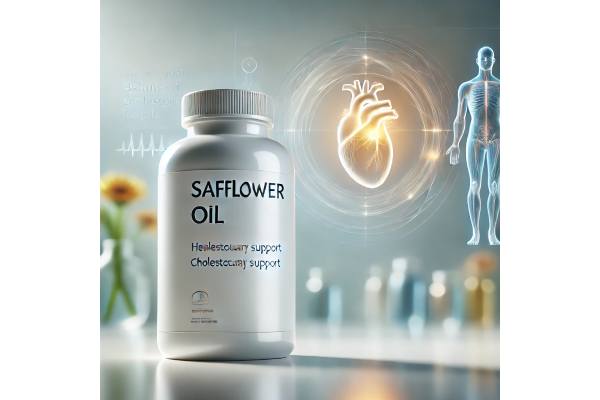
Safflower oil comes from the seeds of the safflower plant (Carthamus tinctorius), a thistle-like crop that has been used for centuries as a dye, food oil, and medicinal ingredient. Today, it is best known as a neutral-tasting cooking oil that is rich in unsaturated fats, especially linoleic acid, an omega-6 fatty acid. When safflower oil replaces saturated fats in the diet, research suggests it may help improve blood lipid levels, insulin sensitivity, and markers of metabolic health in some populations, such as people with type 2 diabetes or metabolic syndrome.
Safflower oil also appears widely in skincare products, high-oleic frying oils, and dietary supplements, including products marketed for weight management. At the same time, questions often arise about the long-term effects of seed oils, omega-6 intake, and overall safety. This guide explains what safflower oil is, how it works in the body, where its benefits are most relevant, how to use it correctly, appropriate dosage ranges, and who should avoid or limit its use.
Quick Overview for Safflower Oil
- Safflower oil is a high–unsaturated fat seed oil that may modestly improve cholesterol levels, insulin sensitivity, and abdominal fat when it replaces saturated fats.
- Short-term clinical studies show potential benefits for people with type 2 diabetes or metabolic syndrome.
- Typical intake is 1–2 tablespoons per day from food or about 4–8 g per day when used as a supplement.
- People with bleeding disorders, seed allergies, or those who are pregnant or taking blood thinners should seek medical advice before use.
Table of Contents
- What is safflower oil and how does it work?
- Proven benefits of safflower oil for health
- How to use safflower oil day to day
- Safflower oil dosage and common supplement forms
- Side effects, risks and who should avoid safflower oil
- How safflower oil compares to other cooking oils
What is safflower oil and how does it work?
Safflower oil is an edible vegetable oil extracted from the seeds of the safflower plant, a drought-tolerant annual cultivated in many parts of the world. It is naturally liquid at room temperature, free of cholesterol, and composed primarily of unsaturated fatty acids. Its nutritional profile is similar to that of sunflower oil and other seed oils.
There are two primary types of safflower oil available today:
- High-linoleic safflower oil, which contains a large proportion of linoleic acid, an essential omega-6 polyunsaturated fatty acid.
- High-oleic safflower oil, which contains mostly oleic acid, a monounsaturated fat similar to that found in olive oil.
The type depends on plant breeding and processing, and labels may specify which version is used. High-linoleic safflower oil is more common in salad oils and dressings, while high-oleic versions are often marketed for frying due to better heat stability.
Safflower oil influences health primarily through its fatty acid composition:
- Linoleic acid is required for cell membrane integrity, skin barrier function, and the production of signaling molecules. When it replaces saturated fat in the diet, it is typically associated with lower LDL cholesterol and total cholesterol levels.
- Oleic acid supports favorable lipid profiles and offers improved resistance to oxidation during cooking.
Safflower oil also contains modest amounts of vitamin E and plant sterols, particularly when minimally refined. Cold-pressed oils generally preserve more of these compounds than heavily refined varieties.
Beyond food use, safflower oil appears in dietary supplements and cosmetic formulations. In skincare, its light texture and high linoleic acid content support hydration and barrier repair without a greasy feeling.
Overall, safflower oil supports health not through a single powerful effect, but by shifting dietary fat intake toward unsaturated fats and away from more harmful saturated or trans fats.
Proven benefits of safflower oil for health
The potential benefits of safflower oil depend largely on how it is used and what it replaces in the diet. Most evidence comes from controlled human studies examining metabolic health, cardiovascular risk factors, and body composition.
Metabolic health and blood sugar control
Short-term trials in adults with obesity, type 2 diabetes, or metabolic syndrome have found that supplementing modest amounts of safflower oil can improve markers such as fasting blood glucose, insulin sensitivity, and long-term blood sugar control. Improvements have also been observed in inflammation-related markers and beneficial hormones involved in glucose metabolism.
These effects appear most relevant for people who already have insulin resistance and when safflower oil is added in controlled amounts alongside existing medical care. They are not large enough to replace standard treatments but may offer supportive benefits.
Cholesterol and cardiovascular risk factors
When safflower oil replaces saturated fats such as butter or lard, studies consistently show reductions in LDL cholesterol and total cholesterol. These changes are clinically meaningful because LDL cholesterol is a major contributor to cardiovascular risk.
The effects on triglycerides and HDL cholesterol are generally neutral to mildly favorable. Large comparisons of dietary fats suggest that oils rich in linoleic acid rank among the most effective for lowering LDL cholesterol, although long-term effects on cardiovascular events are more modest and depend on the overall diet pattern.
Body composition and fat distribution
Research comparing safflower oil with conjugated linoleic acid supplements suggests that safflower oil may reduce abdominal fat while supporting lean body mass, particularly in women with metabolic disease. These changes are modest and do not necessarily lead to large weight loss, but reductions in visceral fat are considered metabolically beneficial.
Skin health and inflammation
Linoleic acid plays a key role in maintaining the skin barrier, and safflower oil is widely used in cosmetic products for dry or sensitive skin. When applied topically, it can help retain moisture and support a smooth skin texture.
Dietary concerns about omega-6 fats and inflammation are complex. While some mechanisms suggest potential pro-inflammatory effects, human studies generally show neutral or beneficial outcomes when omega-6 fats replace saturated fats and are consumed as part of a balanced diet that includes omega-3 fatty acids.
How to use safflower oil day to day
Using safflower oil effectively means choosing the right type for the right purpose and integrating it into an overall healthy fat pattern.
Culinary applications
High-linoleic safflower oil has a neutral flavor and works well for:
- Salad dressings and vinaigrettes
- Baking as a substitute for butter or shortening
- Light sautéing and general cooking
High-oleic safflower oil is better suited for higher-heat uses such as pan-frying or roasting, due to improved oxidative stability.
The main benefit comes when safflower oil replaces saturated fats rather than adding extra calories. For example, replacing butter in baking or creamy dressings with oil-based alternatives can improve fat quality without increasing total fat intake.
Balancing with other oils
A practical approach is to rotate oils based on their strengths:
- Olive or canola oil for everyday cooking and dressings
- Safflower oil for neutral flavor needs or higher-heat cooking
- Small amounts of omega-3–rich oils for cold uses
This rotation supports fatty acid balance and culinary flexibility.
Topical use
Safflower oil can also be applied directly to the skin as a lightweight moisturizer or blended with other oils in skincare routines. A patch test is recommended, especially for individuals with sensitive skin.
Storage tips
Store safflower oil in a cool, dark place and keep containers tightly sealed. Discard oil that smells rancid or bitter, as oxidation reduces both quality and safety.
Safflower oil dosage and common supplement forms
There is no single official dosage for safflower oil, but research and dietary guidelines provide useful benchmarks.
Dietary intake
From food alone, many adults consume:
- 1–2 tablespoons per day (14–28 g), typically spread across meals
This amount fits well within common recommendations for unsaturated fat intake and usually provides ample linoleic acid.
Supplement use
In clinical studies targeting metabolic health, safflower oil supplements are typically used at:
- Up to 8 g per day, often in divided doses with meals, for periods of 12–16 weeks
Such supplementation is best considered short-term and supervised, especially for people with chronic conditions.
CLA supplements from safflower oil
Some supplements use modified safflower oil to deliver conjugated linoleic acid. Typical doses range from:
- 3–6 g per day of CLA, divided across meals
Results for weight and fat loss are inconsistent, and potential effects on insulin sensitivity mean these products require caution.
Practical guidance
For most people, using safflower oil as a cooking fat is preferable to long-term supplement use. If your diet already includes significant amounts of seed oils, additional supplementation may not provide meaningful benefit.
Side effects, risks and who should avoid safflower oil
Safflower oil is generally safe when used as a food, but higher intakes and supplements warrant attention.
Possible side effects
Some individuals may experience mild digestive discomfort, especially when starting supplements or consuming large amounts quickly. These effects often improve when intake is reduced or spread throughout the day.
Bleeding risk
Because unsaturated fats can influence platelet function, people taking blood thinners or antiplatelet medications should consult a healthcare provider before using safflower oil supplements. Discontinuation before surgery may be advised.
Allergic reactions
Although uncommon, people with seed allergies may experience allergic reactions. Any signs of swelling, rash, or breathing difficulty require immediate medical attention.
Who should avoid or limit use
- Individuals on anticoagulant therapy
- People with known seed allergies
- Pregnant individuals considering high-dose supplements
- Those with complex medical conditions without professional guidance
Moderation and balance remain key principles.
How safflower oil compares to other cooking oils
Understanding how safflower oil fits among other fats helps guide practical choices.
Versus butter and tropical oils
Safflower oil contains far less saturated fat than butter, lard, or coconut oil. Replacing those fats with safflower oil generally improves cholesterol profiles.
Versus olive and canola oils
Olive and canola oils offer more monounsaturated fat and additional bioactive compounds, especially in minimally processed forms. Safflower oil excels where neutrality or higher heat tolerance is needed but lacks some of olive oil’s unique phytochemicals.
Versus other seed oils
Nutritionally, safflower oil is similar to sunflower, corn, and soybean oils. None appears dramatically superior in isolation; overall dietary pattern matters more than the specific seed oil chosen.
Safflower oil works best as part of a varied fat intake that emphasizes whole foods, balance, and moderation.
References
- Time-dependent effects of safflower oil to improve glycemia, inflammation and blood lipids in obese, post-menopausal women with type 2 diabetes: a randomized, double-masked, crossover study 2011 (RCT)
- Comparison of dietary conjugated linoleic acid with safflower oil on body composition in obese postmenopausal women with type 2 diabetes mellitus 2009 (RCT)
- Effects of oils and solid fats on blood lipids: a systematic review and network meta-analysis 2018 (Systematic Review)
- Safflower (Carthamus tinctorius L.) oil could improve abdominal obesity, blood pressure, and insulin resistance in patients with metabolic syndrome: A randomized, double-blind, placebo-controlled clinical trial 2022 (RCT)
- Effects of Dietary Linoleic Acid on Blood Lipid Profiles: A Systematic Review and Meta-Analysis of 40 Randomized Controlled Trials 2023 (Systematic Review)
Disclaimer
This content is provided for informational purposes only and does not constitute medical advice, diagnosis, or treatment. Always consult a qualified healthcare professional before making changes to your diet, using supplements, or addressing a health condition, especially if you are pregnant, taking medications, or managing a chronic illness.
If you found this guide helpful, consider sharing it on Facebook, X (formerly Twitter), or another platform you enjoy, and following us on social media. Your support helps us continue producing clear, evidence-informed health content.