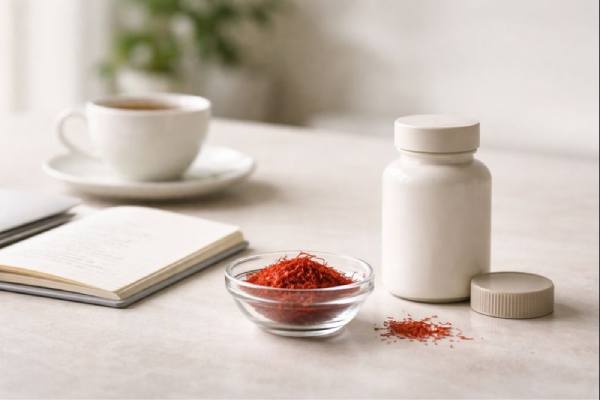
Saffron is best known as a vivid, aromatic spice, but standardized extracts of Crocus sativus have also been studied for mood support. For some people with mild to moderate symptoms, saffron may offer a gentle improvement in depressive symptoms, anxious distress, or sleep quality—often without the sedation or emotional flattening some individuals report with other options. Its most discussed active compounds (including crocin and safranal) appear to influence oxidative stress, inflammation signaling, and neurotransmitter activity that matters for mood regulation.
Still, “natural” does not mean risk-free. Saffron supplements can interact with certain medications, may be inappropriate in pregnancy, and are not a replacement for urgent mental health care when safety is at stake. Used thoughtfully, saffron can be a practical, measurable trial—one that prioritizes symptom tracking, realistic expectations, and medication safety.
Essential Insights
- Saffron extracts may reduce depressive symptoms and anxious distress for some people, especially in mild to moderate cases.
- Benefits are usually gradual, often showing up over several weeks rather than overnight.
- Drug interactions are possible, particularly with antidepressants, blood thinners, sedatives, and blood pressure medications.
- Start with a conservative dose from a tested, standardized extract and reassess after 6–8 weeks.
- If symptoms are severe, worsening, or linked to self-harm thoughts, prioritize professional care over supplementation.
Table of Contents
- What saffron is and how it works
- What the evidence says for depression
- What the evidence says for anxiety and sleep
- Dosage, timing, and how to choose a supplement
- Side effects and drug interactions to know
- How to run a safe and informative trial
What saffron is and how it works
Saffron comes from the dried stigmas of the Crocus sativus flower. In cooking, the dose is tiny; in research, the focus is usually on standardized extracts designed to deliver consistent amounts of key bioactive compounds. The mood research most often discusses crocin and crocetin (carotenoid-like compounds linked to antioxidant activity) and safranal (an aromatic compound associated with saffron’s characteristic scent). These compounds are not “antidepressants” in the pharmaceutical sense, but they may influence biological systems that shape mood and stress tolerance.
One useful way to think about saffron is as a signal modulator rather than a stimulant. People who respond often describe fewer “sharp edges” to their symptoms: less rumination, slightly improved motivation, a calmer baseline, or a smoother transition into sleep. Those changes matter because depression and anxiety often amplify each other. When sleep improves, anxiety may soften. When anxious arousal drops, it can be easier to follow routines that protect mood (regular meals, movement, and consistent bedtime).
Mechanisms that may matter for mood
Research discussions commonly center on several overlapping pathways:
- Oxidative stress and inflammation balance: Chronic stress can increase oxidative burden and inflammatory signaling, which can influence energy, motivation, and cognitive clarity.
- Neurotransmitter signaling: Saffron’s compounds are discussed in relation to serotonergic, dopaminergic, and glutamatergic activity—systems that affect mood, reward, and anxious arousal.
- HPA-axis stress signaling: Some hypotheses suggest saffron may influence stress-response patterns that shape irritability, sleep quality, and resilience.
Why responses vary
Even when a supplement has real biological effects, people respond differently. Variation can come from baseline symptom severity, sleep debt, medication use, hormonal status, and genetics. Quality also matters: saffron is expensive, and adulteration or low-potency products can lead to disappointing results.
The practical takeaway is simple: saffron is worth considering as a measured trial for the right person, not as a universal solution. You are trying to learn whether it improves function in your real life—mood stability, anxiety intensity, and daily consistency.
What the evidence says for depression
Saffron’s strongest mental health evidence is for depressive symptoms, especially mild to moderate depression and related distress. Across randomized trials and pooled analyses, saffron often performs better than placebo and can look comparable to certain standard antidepressants in symptom-scale outcomes. That does not mean saffron is “the same as an SSRI.” It means that, in controlled settings, some people experienced similar symptom reductions on validated questionnaires.
A grounded interpretation is this: saffron may be a reasonable option when symptoms are not severe, when someone cannot tolerate certain medication side effects, or when a clinician-supported plan includes it as an adjunct. It is not appropriate as a stand-alone strategy for severe depression, psychosis, or urgent safety concerns.
What improvements typically look like
People who benefit often report changes such as:
- Less frequent or less intense low-mood episodes
- Improved interest in activities and reduced “emotional heaviness”
- Better stress tolerance and fewer spirals after small setbacks
- Slight improvements in concentration that follow mood stabilization
These effects are usually gradual. Expect a trajectory measured in weeks, not days. In many trials, the evaluation window is around 6–8 weeks, which fits how mood biology often changes: sleep consistency improves, appetite steadies, and cognitive load feels less overwhelming.
Adjunct use and realistic expectations
If saffron is added alongside psychotherapy, lifestyle changes, or medication, it can be hard to isolate what did what. That is not a failure—it is real life. The key is to define success clearly. “Feeling 10 out of 10” is not a realistic first goal. A more useful target might be:
- A measurable drop in symptom scores
- Fewer missed responsibilities
- Reduced morning dread
- Improved ability to initiate tasks
One original insight worth keeping: mood improvements often show up first as behavioral friction reduction. You may still feel depressed, but getting out of bed takes less negotiation. You may still feel anxious, but you can complete a task without restarting five times. Those changes are small on paper and large in daily life.
What the evidence says for anxiety and sleep
Anxiety outcomes in saffron research are promising but more variable than depression outcomes. That variability is not surprising: “anxiety” includes generalized worry, panic symptoms, social anxiety, anxious depression, and stress-related insomnia, which can behave differently. In studies where anxiety improves, the shift often looks like lower anxious tension and better sleep continuity, rather than a dramatic change in fear-based symptoms.
Sleep is worth highlighting because it is one of the fastest ways anxiety and depression reinforce each other. Poor sleep increases emotional reactivity, reduces impulse control, and makes worry stickier. If saffron improves sleep quality for you, mood and anxiety may improve indirectly even if saffron is not acting as a direct anxiolytic.
How sleep changes may present
When saffron helps sleep, people commonly describe:
- Falling asleep with less mental “noise”
- Fewer awakenings or an easier return to sleep
- Less grogginess than with sedating sleep aids
- A calmer morning baseline that improves the whole day’s tone
Not everyone gets sleep benefits. If insomnia is driven by severe anxiety, trauma, stimulant timing, alcohol use, or sleep apnea, saffron alone is unlikely to be enough. But for stress-related sleep disruption, it can be a reasonable, low-intensity option to test—especially when paired with consistent wake time and reduced late-day caffeine.
What saffron is unlikely to fix
Saffron is not a substitute for evidence-based anxiety care when symptoms are intense or impairing. It is also unlikely to overcome:
- Chronically short sleep opportunity (too little time in bed)
- Late-night screens and irregular wake times
- Heavy alcohol intake (which fragments sleep)
- Uncontrolled thyroid issues or other medical drivers
A useful approach is to treat saffron as a “support beam,” not the entire structure. If you build a stable sleep window and reduce obvious sleep disruptors, saffron has a better chance of producing a detectable effect. If the foundation is unstable, any supplement signal may be drowned out.
Dosage, timing, and how to choose a supplement
Most mood studies use a relatively narrow dosing range of standardized saffron extract. In practical terms, that makes saffron easier to test than many supplements: you do not need to guess wildly. Still, dose is only one part of success. The other major variable is product quality.
Common studied dose ranges
A typical research pattern is:
- 30 mg per day of a standardized saffron extract, often divided into 15 mg twice daily
- A trial duration of 6–8 weeks before deciding whether it is helpful
- Some protocols use different doses, but most mood outcomes cluster around a modest daily amount rather than very high dosing
If you are sensitive to supplements, a conservative strategy is to start at half-dose for 3–7 days, then increase if tolerated. This can reduce early nausea or headache and makes it less likely you will abandon the trial due to avoidable side effects.
Timing strategies for mood and sleep
Timing is not one-size-fits-all. Two practical options:
- Split dosing (morning and early evening): supports steady exposure and may reduce stomach upset.
- Earlier-in-the-day dosing: preferred if you notice vivid dreams or stimulation.
If the goal includes sleep quality, some people prefer one dose later in the day, but avoid taking it right at bedtime until you know how you respond.
How to choose a saffron supplement
Saffron quality varies. Look for signals that the product is designed for clinical-style consistency:
- Standardization: the label should indicate standardization to key saffron compounds or a defined extract profile.
- Third-party testing: independent testing for identity, contaminants, and potency is a meaningful quality marker.
- Transparent dosing: clearly states mg of extract per serving, not just “proprietary blend.”
- Reasonable price-to-dose: extremely cheap saffron supplements can be a red flag for adulteration or low potency.
One overlooked point: since saffron is potent at low milligram doses, “more is better” is not a good default. The goal is the minimum effective dose that produces meaningful improvement without creating side effects or interaction risk.
Side effects and drug interactions to know
Saffron is often well tolerated at typical supplemental doses, but side effects and interactions can occur—especially when people stack multiple mood supplements or combine saffron with prescription medications. The safest mindset is to treat saffron as a biologically active agent, not as a harmless flavoring.
Common side effects
At standard doses, reported side effects are usually mild and may include:
- Nausea, stomach discomfort, or appetite changes
- Headache
- Dizziness or lightheadedness
- Restlessness or changes in sleep and dreaming
If side effects occur, reduce the dose and reassess. Side effects that persist beyond a week, or that interfere with sleep or daily function, are a reason to stop and discuss with a clinician.
Drug interactions that deserve extra caution
Saffron may interact with medications through overlapping effects on neurotransmitters, blood pressure, sedation, or bleeding risk. The highest-priority categories to review with a clinician or pharmacist include:
- Antidepressants and other serotonergic drugs: combining multiple serotonergic agents can raise concern for serotonin toxicity in susceptible cases. Do not add saffron to antidepressant therapy without a safety review.
- Blood thinners and antiplatelet drugs: if a supplement increases bleeding tendency, it may compound medication effects. This matters for people on anticoagulants, antiplatelets, or those with bleeding disorders.
- Blood pressure medications: if saffron lowers blood pressure for you, it could amplify antihypertensive effects and increase dizziness or faintness risk.
- Sedatives and sleep medications: combining agents that promote relaxation or sleep can increase next-day impairment, especially in older adults.
Who should avoid saffron supplements or use only with clinician guidance
Avoid or use only with clear medical guidance if you are in any of these groups:
- Pregnancy: saffron supplementation is not a good idea in pregnancy due to concerns about uterine effects and limited safety data at supplemental doses.
- Bipolar disorder: any mood-active supplement can potentially destabilize mood in susceptible individuals, particularly if it contributes to agitation or sleep reduction.
- Severe depression, suicidality, or self-harm risk: supplements should not delay urgent, evidence-based care.
- Significant medical complexity: liver disease, kidney disease, bleeding disorders, or multiple interacting medications.
A practical rule: if you would hesitate to add an over-the-counter sleep medication to your current regimen, you should apply the same caution to saffron—especially when antidepressants, sedatives, or blood thinners are involved.
How to run a safe and informative trial
If you try saffron, the goal is not hope and guesswork. The goal is a short, structured experiment that produces a clear answer: helpful, not helpful, or unclear due to confounders. This approach protects safety and prevents the common pattern of “taking it forever without knowing if it matters.”
Step 1: Do a quick safety screen
Before starting, run through three questions:
- Medication conflicts: Are you on antidepressants, sedatives, blood thinners, or blood pressure meds? If yes, get professional input first.
- Diagnosis context: Do you have bipolar disorder, panic disorder with severe symptoms, or a history of mania? If yes, do not self-prescribe mood supplements.
- Urgency: Are you having thoughts of self-harm, inability to function, or rapid worsening? If yes, prioritize urgent mental health care.
Step 2: Define what “success” means
Choose 2–3 outcomes you genuinely care about. Examples:
- Fewer days with heavy morning dread
- Reduced anxious rumination at night
- Better sleep continuity (fewer awakenings)
- Improved task initiation and reduced avoidance
Keep outcomes behavioral and measurable. “Feeling happier” is real, but it is harder to track reliably.
Step 3: Use a consistent dose and timeline
A clean plan looks like this:
- Use a standardized product at a conservative dose for 6–8 weeks.
- Avoid adding other new supplements, major diet shifts, or new exercise programs during the first 2–3 weeks, if possible.
- Keep caffeine timing consistent so you do not mistake a stimulant change for a supplement effect.
Step 4: Track weekly, not hourly
Daily mood fluctuates. Weekly patterns tell the truth. Once per week, rate:
- Depression severity (0–10)
- Anxiety severity (0–10)
- Sleep quality (0–10)
- Side effects (0–10)
Add one sentence about major life events that week. This prevents false conclusions.
Step 5: Decide and simplify
At week 6–8, choose one:
- Continue: clear benefit and tolerable side effects
- Stop: no meaningful benefit, or side effects outweigh gains
- Re-test later: unclear due to a major stressor, illness, or schedule disruption
The most valuable outcome is clarity. If saffron helps, you have a tool. If it does not, you can stop spending money and attention on it and focus on strategies with higher impact for you.
References
- Effect of Saffron Versus Selective Serotonin Reuptake Inhibitors (SSRIs) in Treatment of Depression and Anxiety: A Meta-analysis of Randomized Controlled Trials 2025 (Systematic Review and Meta-Analysis)
- New horizons for the study of saffron (Crocus sativus L.) and its active ingredients in the management of neurological and psychiatric disorders: A systematic review of clinical evidence and mechanisms 2024 (Systematic Review)
- Saffron and Sleep Quality: A Systematic Review of Randomized Controlled Trials 2023 (Systematic Review)
- The Pharmacological Activities of Crocus sativus L.: A Review Based on the Mechanisms and Therapeutic Opportunities of its Phytoconstituents 2022 (Review)
- Exploring the Potential of Saffron as a Therapeutic Agent in Depression Treatment: A Comparative Review 2024 (Review)
Disclaimer
This article is for educational purposes only and does not provide medical advice. Depression and anxiety can be serious and may require professional evaluation and treatment. Do not use saffron supplements as a substitute for prescribed medications, psychotherapy, or urgent care. If you take antidepressants, blood thinners, sedatives, or blood pressure medications, or if you are pregnant, have bipolar disorder, or have severe or worsening symptoms, consult a qualified clinician before using saffron. Seek immediate help if you have thoughts of self-harm, feel unsafe, or cannot care for yourself.
If you found this article helpful, please consider sharing it on Facebook, X (formerly Twitter), or any platform you prefer.