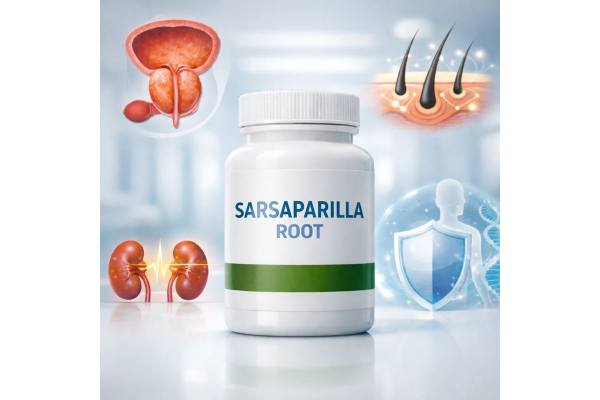
Sarsaparilla root comes from several climbing vines in the Smilax genus, long used in traditional medicine across Central and South America, the Caribbean, and Asia. Herbalists have turned to the root as a “blood purifier,” a digestive and skin remedy, and a tonic for joints, hormones, and general vitality. Today, sarsaparilla is sold as capsules, tinctures, teas, and powdered extracts, sometimes as a single herb and sometimes as part of complex formulas.
Modern laboratory studies suggest that Smilax roots are rich in steroidal saponins and other phytochemicals with anti-inflammatory, antioxidant, and antimicrobial actions. However, high-quality human research is limited, and there is no approved medical indication for sarsaparilla. This guide walks you through what is known so far: how sarsaparilla appears to work, which traditional benefits are most plausible, common forms and dosage ranges used by herbal practitioners, and important safety issues, including who should avoid it and how to discuss it with your healthcare professional before use.
Key Insights for Sarsaparilla Root
- Traditional uses focus on skin health, joint comfort, and “blood-cleansing” detox support.
- Active compounds include steroidal saponins and polyphenols with anti-inflammatory and antioxidant actions.
- Herbal starting doses often range from 3–12 g dried root per day, or 2–4 mL tincture up to three times daily.
- People who are pregnant, breastfeeding, have kidney disease, or take drugs like digoxin or lithium should avoid or use only under specialist guidance.
- Evidence in humans is still limited, so sarsaparilla should not replace standard medical care for any diagnosed condition.
Table of Contents
- What is sarsaparilla root and how it works
- Sarsaparilla root benefits and traditional uses
- How to take sarsaparilla root safely
- Sarsaparilla root dosage for different goals
- Sarsaparilla root side effects and precautions
- What research says about sarsaparilla root
What is sarsaparilla root and how it works
“Sarsaparilla” usually refers to the dried roots and rhizomes of several Smilax species, such as Smilax officinalis, Smilax aristolochiifolia, Smilax ornata, and Smilax glabra. These woody, thorny vines grow in tropical and subtropical regions and have been part of Indigenous medical systems for centuries. The root has a mildly spicy, vanilla-like aroma and historically flavored tonics and some early “root beer”-type beverages, although modern commercial root beer rarely contains true sarsaparilla.
It is important not to confuse American sarsaparilla (Smilax species) with “Indian sarsaparilla” (Hemidesmus indicus) or with sassafras, which is a different plant altogether. When buying supplements, look for the botanical name on the label so you know which herb you are actually getting.
Chemically, sarsaparilla root is rich in:
- Steroidal saponins such as sarsasapogenin derivatives, smilagenin, and related compounds.
- Phenolic compounds and flavonoids, including various flavonol glycosides and phenolic acids.
- Phytosterols (plant sterols) and other minor constituents.
In laboratory and animal models, these molecules show several actions that might explain traditional uses:
- Anti-inflammatory effects, including reduced pro-inflammatory cytokines and modulation of immune cell activity.
- Antioxidant effects, helping neutralize reactive oxygen species and protecting tissues from oxidative stress.
- Potential endocrine-modulating effects, as some steroidal saponins have weak hormone-like activity or influence hormone metabolism.
- Mild diuretic and detox-supporting effects, which fit historical descriptions of “blood-cleansing” and promoting elimination through urine and stool.
However, these mechanisms are mostly derived from in vitro and animal work. Human studies are sparse, often use complex formulas instead of single-herb sarsaparilla, and are not strong enough to prove clear clinical benefits. Because of this, sarsaparilla should be viewed as a traditional herbal supplement with plausible, but not definitively proven, effects.
Sarsaparilla root benefits and traditional uses
Across regions—from Mesoamerica to China and India—sarsaparilla root has been used in surprisingly similar ways. While the specific language varies (“clearing damp heat” in Traditional Chinese Medicine, “blood purifier” in Western herbalism), the core themes are detoxification, skin health, joint support, and chronic inflammatory conditions.
Common traditional and proposed benefits include:
- Skin health and chronic eruptions
Sarsaparilla has a long history as a remedy for psoriasis, eczema, and other chronic rashes. Herbalists often combine it with other alterative herbs (such as burdock or cleavers) to support the liver, bowels, and kidneys. The rationale is that by improving elimination and calming inflammation, the skin burden is reduced. Laboratory data showing anti-inflammatory and antioxidant activity supports a possible mechanistic basis, though high-quality clinical trials are lacking. - Joint and rheumatic complaints
In folk medicine, sarsaparilla is used for aching joints, “rheumatism,” and gout. Some animal studies suggest Smilax extracts may reduce uric acid levels and inflammatory mediators, which might theoretically benefit gout or inflammatory arthritis. In praxis, herbalists rarely rely on sarsaparilla alone; it is usually part of a broader plan that includes diet, movement, and other herbs. - Historical use in infections
In the 16th and 17th centuries, sarsaparilla became popular in Europe as a treatment for syphilis and later leprosy. Today we have far more effective and reliable antibiotics, and sarsaparilla should never be used to treat serious infections on its own. Still, this history highlights that physicians once considered it a powerful systemic remedy. - Metabolic and cardiovascular support
Early animal work suggests that certain Smilax extracts may influence blood lipids, blood glucose, or elements of metabolic syndrome. This has led to modern marketing claims for weight management or “metabolic detox.” At this stage, these claims are hypothesis-generating rather than proven. Using sarsaparilla should never substitute for structured treatment of diabetes, high cholesterol, or cardiovascular disease. - General tonic and libido support
Because of its steroid-like saponins, sarsaparilla has been marketed as a hormonal or sexual tonic, particularly for men. The evidence in humans is weak, and perceived benefits may be due more to improved overall vitality, circulation, or placebo effects than to direct testosterone modulation. Still, some people report modest improvements in energy or libido when using it as part of a healthy lifestyle.
In summary, sarsaparilla’s reputation leans heavily on tradition, case experience, and basic science, not on modern clinical trials. Its most sensible role today is as a supportive herbal addition for skin, joint, or detox-oriented protocols, under professional guidance and alongside—not instead of—proven therapies.
How to take sarsaparilla root safely
Because there is no officially established therapeutic dose, responsible use of sarsaparilla focuses on starting low, monitoring carefully, and staying in traditional ranges. Always check product labels, as strengths and extraction ratios vary widely.
Common preparations include:
- Dried root (cut or powdered)
Used in teas, decoctions, or encapsulated. Whole or cut root is simmered in water; powder can be added to capsules or mixed into liquids. - Standardized or concentrated extracts
Sold as capsules or tablets. Labels may list an extraction ratio (for example, 4:1) or a standardized amount of saponins. These products can be more potent per gram than dried root. - Tinctures and liquid extracts
Hydroalcoholic extracts (often 1:5 or 1:2 strength) measured in milliliters or drops. These absorb faster but also contain alcohol, which may not suit everyone. - Traditional formulas
In TCM or naturopathic practice, sarsaparilla is seldom used alone. It is combined with other herbs targeting the person’s pattern—such as herbs for digestive sluggishness, heat and dampness, or joint stagnation.
To use sarsaparilla more safely:
- Clarify your goal. Are you hoping to support skin health, digestion, joint comfort, or general detox support? This helps determine whether sarsaparilla is even appropriate, and which other therapies should be prioritized.
- Consult a professional. Because sarsaparilla can interact with medications and may not be suitable with certain health conditions (especially kidney problems, hormone-sensitive conditions, or pregnancy), it is wise to involve a healthcare provider trained in herbal medicine.
- Start at the low end of common ranges. Begin with a small dose and gradually increase only if well tolerated and if your practitioner agrees.
- Limit the trial period. Many herbal clinicians use sarsaparilla for several weeks to a few months, then reassess. Long-term continuous use at higher doses is not well studied.
- Monitor your body’s response. Watch for digestive upset, new rashes, changes in urination, or any unexpected symptoms. If you notice anything worrisome, stop the herb and seek medical advice.
- Avoid self-treating serious disease. Skin diseases like psoriasis, autoimmune arthritis, infections, and metabolic disorders need medical evaluation. Sarsaparilla can sometimes be a supportive adjunct but should not replace standard care.
Because product quality varies, try to choose brands that:
- Identify the botanical species (for example, Smilax officinalis),
- Provide batch numbers and expiry dates,
- Use third-party testing or share contaminant and potency data where possible.
This is particularly important because roots from wild-harvested plants can be contaminated with heavy metals, pesticides, or adulterant herbs if not properly sourced.
Sarsaparilla root dosage for different goals
Because major evidence-based references state that there is insufficient clinical data to define an official therapeutic dose, all dosage ranges below should be viewed as traditional starting points, not medical prescriptions. They are best used under the supervision of a knowledgeable practitioner.
Typical ranges used by herbal clinicians include:
- Dried root (tea or decoction)
- About 3–12 g dried root per day, often divided into two or three servings.
- For a decoction, 1–2 teaspoons (roughly 2–4 g) of cut root may be simmered in 250–300 mL of water for 10–20 minutes, then strained and consumed once or twice daily.
- The higher end of the range is usually reserved for short-term use and under professional guidance.
- Dry extract (for example, 4:1)
- Because a 4:1 extract is roughly four times as concentrated as the raw root, doses might fall in the 1–4 g per day range.
- These products vary widely, so following the manufacturer’s suggested serving size is essential.
- Tincture or liquid extract (around 1:5 strength)
- Common practice is 2–4 mL up to three times per day, diluted in water or juice.
- Sensitive individuals, older adults, or those taking multiple medications may start around 1 mL once or twice daily.
- Combination formulas
- In multi-herb formulas for skin or joint health, the per-day amount of sarsaparilla is often lower, with the overall effect relying on synergy among several herbs.
How these ranges are used for different goals:
- General skin and detox support
- Lower to mid-range doses (for example, 3–6 g dried root daily or 2–3 mL tincture twice daily) for a limited period—often 4–8 weeks—combined with hydration, bowel regularity, and dietary measures.
- Joint and metabolic support (adjunctive only)
- Similar ranges to skin support, often as part of a formula that also includes herbs like turmeric, nettle, or anti-inflammatory spices. The emphasis is on inflammation modulation rather than strong diuretic or purgative effects.
- Short-term intensive cleansing protocols
- Some traditional protocols use higher doses for brief periods (for example, near the upper end of the dried root range), but this increases the risk of digestive upset and potential kidney irritation. Such use should only occur with professional supervision and clear exit criteria.
Key dosage principles:
- There is no “more is better” rule. Once a given dose saturates the relevant pathways, higher doses mostly increase side-effect risk.
- Children, frail adults, and people with chronic disease should generally avoid sarsaparilla unless a specialist is involved.
- Cycle off periodically. Even if tolerated, it is reasonable to build in herb-free intervals to give your system a rest and reassess whether continued use is needed.
If your healthcare provider approves sarsaparilla as part of your plan, bring them the exact product label and agree on a dose, duration, and review date before starting.
Sarsaparilla root side effects and precautions
For many centuries, people have consumed sarsaparilla in foods, beverages, and traditional formulas, which suggests a relatively low toxicity at customary doses. That said, modern safety data are incomplete, and side effects can occur, especially with concentrated extracts or prolonged high-dose use.
Commonly reported side effects
- Mild digestive upset, including nausea, stomach discomfort, or loose stools.
- Increased urination due to diuretic effects.
- Occasional skin reactions or itching, particularly in people with multiple plant allergies.
These effects often resolve when the dose is reduced or the herb is stopped. Taking the herb with food and plenty of water may improve tolerance.
More serious or theoretical risks
- Kidney strain or irritation
Some herbal sources warn that high doses over time could irritate the kidneys, especially in individuals who already have reduced kidney function. If you have any history of kidney disease, stones, or unexplained changes in kidney tests, you should avoid sarsaparilla unless a nephrologist and herbal specialist explicitly agree otherwise. - Drug interactions
Saponins can increase the permeability of the gut wall, potentially enhancing the absorption of some medications. There are also concerns, based on mechanistic and limited clinical data, that sarsaparilla might: - Increase the effects or side effects of cardiac glycosides like digoxin.
- Alter lithium excretion when combined with lithium and diuretic drugs.
- Add to the effects of other diuretics or uric-acid-lowering drugs.
- Interfere with drugs metabolized by certain liver enzymes. Because the interaction data are incomplete, the safest approach is to have a pharmacist or clinician review your full medication list before you use sarsaparilla.
- Hormone-sensitive conditions
Some Smilax extracts show weak estrogenic or anti-estrogenic activity in experimental models. If you have a history of breast, uterine, ovarian, or prostate cancer, endometriosis, fibroids, or other hormone-sensitive conditions, you should avoid sarsaparilla unless your oncology or endocrine team agrees on its use. - Allergic and respiratory reactions
Occupational asthma from inhaling sarsaparilla root dust has been reported. If you have asthma, multiple allergies, or previous reactions to Liliaceae/Smilacaceae plants, use extra caution and stop immediately if you experience wheezing, chest tightness, or difficulty breathing.
Who should avoid sarsaparilla
- People who are pregnant or breastfeeding (lack of safety data and potential hormone effects).
- Children and adolescents, unless under specialist care.
- Anyone with moderate to severe kidney disease or unexplained kidney test abnormalities.
- People taking digoxin, lithium, potent diuretics, or complex polypharmacy regimens, unless a clinician familiar with herb–drug interactions approves.
- Individuals with known hormone-sensitive cancers or on active cancer treatment, without oncologist approval.
- Anyone who has experienced a prior allergic reaction to Smilax or unknown multi-herb formulas containing it.
If you develop new or worsening symptoms—such as rash, swelling, breathing problems, severe abdominal pain, dark urine, or marked fatigue—stop the herb and seek immediate medical attention.
What research says about sarsaparilla root
Modern research on sarsaparilla focuses more on chemical constituents and experimental models than on well-designed human trials.
Phytochemistry and mechanisms
Detailed analyses of Smilax species show a rich profile of steroidal saponins, including spirostane, isospirostane, furostane, and related structures, along with flavonoids and phenolic acids. These constituents have been linked to:
- Anti-inflammatory effects in cell and animal models, including reduced cytokine production and modulation of immune cell function.
- Antioxidant actions that protect tissues from oxidative stress.
- Potential metabolic effects, such as improving markers in animal models of obesity, hyperuricemia, or metabolic syndrome.
- Antimicrobial and antifungal activity in vitro, including activity against certain pathogenic fungi and bacteria.
This growing phytochemical evidence supports the idea that sarsaparilla is biologically active, but it does not by itself validate specific clinical uses in humans.
Preclinical and traditional-pattern research
Studies using animal models have explored:
- Joint and rheumatic models, where Smilax extracts reduced experimental paw swelling and inflammatory mediators.
- Gout and hyperuricemia models, where certain preparations decreased uric acid levels and improved symptoms in rodents.
- Liver and metabolic models, where extracts sometimes protected against toxin-induced liver damage or reduced markers linked to metabolic syndrome.
- Dermatologic and immune models, where isolated compounds such as astilbin improved psoriasis-like lesions in mice and modulated immune pathways.
While promising, these findings are often based on doses and extract types that do not translate directly to commercial supplements. Results in rodents also do not guarantee similar outcomes in humans.
Human and clinical evidence
Compared with many other herbs, human data for sarsaparilla are sparse:
- Historical reports describe improvements in syphilis, leprosy, or psoriasis when sarsaparilla was used, often alongside other treatments. However, these accounts are uncontrolled, and confounding factors are many.
- Some modern clinical observations involve multi-herb formulas (for example, a TCM combination containing Smilax glabra for gout), making it impossible to attribute benefits specifically to sarsaparilla.
- Authoritative reference monographs consistently conclude that there is insufficient evidence to recommend sarsaparilla for any specific medical indication and that dosing guidelines are not firmly established.
How to interpret the evidence
Putting this together:
- Laboratory and animal studies suggest that sarsaparilla’s saponins and related compounds have genuine anti-inflammatory, antioxidant, and metabolic effects.
- Traditional use and practitioner experience suggest it can be helpful as a supportive herb, especially for chronic inflammatory skin and joint conditions, when combined with broader lifestyle and medical care.
- The absence of strong human trials means that claims of cure or robust treatment effects are not scientifically justified.
For you as a user, this means:
- Treat sarsaparilla as a complementary, experimental option, not a proven therapy.
- Discuss it with your healthcare team, especially if you have complex health conditions or are taking multiple medications.
- Critically evaluate products or marketing that promise dramatic benefits without acknowledging the limited evidence base.
References
- Sarsaparilla Uses, Benefits & Dosage. 2025. (Monograph)
- Sarsaparilla – Uses, Side Effects, and More. 2023. (Consumer Monograph)
- Sarsaparilla: The Benefits, Risks, and Side Effects. 2023. (Overview Article)
- Steroidal Saponins from the Genus Smilax and Their Biological Activities. 2017. (Systematic Phytochemical Review)
- Steroidal saponins from Smilax officinalis. 1996. (Phytochemistry Study)
Disclaimer
The information in this article is for general educational purposes only and is not intended to provide medical advice, diagnose any condition, or replace a one-to-one relationship with a qualified healthcare professional. Sarsaparilla root is an herbal supplement with limited human research, and its safety and effectiveness for specific diseases have not been firmly established. Always consult your physician, pharmacist, or a licensed practitioner trained in herbal medicine before starting, stopping, or changing any supplement, especially if you are pregnant, breastfeeding, have chronic health conditions, or take prescription or over-the-counter medications. Never delay seeking or disregard professional medical advice because of something you have read here.
If you found this guide helpful, you are welcome to share it with others—on Facebook, X (formerly Twitter), or any platform you prefer—and to follow our future work on social media. Your thoughtful sharing helps support the continued creation of clear, evidence-informed health content for the community.