A breakout on the scalp can be surprisingly disruptive. It hurts when you brush, stings in the shower, and turns simple habits such as washing or styling into a negotiation with your skin. Many people call every tender bump “scalp acne,” but that label is only partly accurate. Some cases are true acne. Others are folliculitis, yeast-driven inflammation, product-related irritation, or an early sign of a condition that needs a more specific diagnosis.
That distinction matters because the best treatment depends on what is actually happening in the follicle. A pore-clogging styling product calls for a different approach than a pustular scalp eruption driven by bacteria, yeast, or chronic inflammation.
This guide explains the common causes behind scalp acne, how to choose products that have the best rationale, what a practical at-home routine looks like, and which warning signs suggest it is time to move beyond self-care and get targeted treatment.
Core Points
- Many “scalp acne” breakouts are actually forms of folliculitis, so the pattern of bumps matters as much as the bumps themselves.
- Benzoyl peroxide, salicylic acid, and antifungal shampoos can be helpful, but the right choice depends on whether oil, clogged follicles, yeast, or infection is driving the flare.
- Deep painful lumps, drainage, scarring, or visible hair loss are not typical mild scalp acne and deserve faster medical review.
- A medicated wash or shampoo used 2 to 3 times weekly and left on for 3 to 5 minutes is often a practical starting point, unless the label or a clinician advises otherwise.
Table of Contents
- What Scalp Acne Usually Is
- Common Causes and Triggers
- How to Tell It From Look-Alikes
- Best Products and Ingredients to Try First
- How to Build a Routine That Helps
- When It Needs Medical Treatment
What Scalp Acne Usually Is
“Scalp acne” is a useful search term, but it is not always a precise diagnosis. In everyday use, people apply it to almost any red, painful, or pus-filled bump on the scalp. Dermatologically, those bumps can come from several different processes. Some are acneiform lesions related to oil, keratin buildup, and inflammation. Many are forms of folliculitis, which means inflammation centered around the hair follicle. On the scalp, the two can look similar enough that the distinction is easy to miss without considering pattern, itch, scale, tenderness, and what else is happening on the skin.
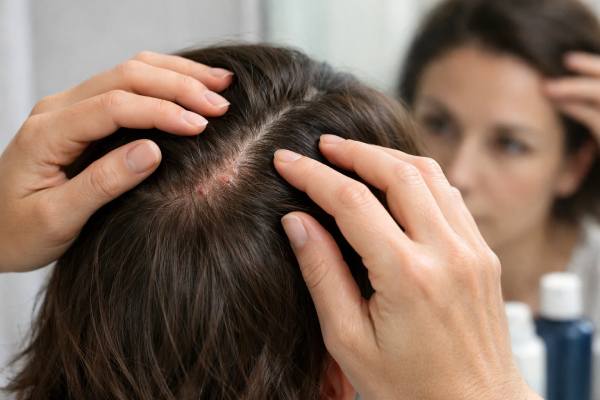
The scalp is a special environment. It has dense hair follicles, active oil glands, warmth, sweat, friction from hats and pillows, and frequent contact with styling products. All of that makes it a place where follicles can become blocked or inflamed more easily than many people expect. In mild cases, the bumps are small, scattered, and annoying rather than severe. They may look like tiny red papules, small pustules, or sore bumps that are easiest to feel rather than see. In other cases, the scalp develops clusters of pustules, significant tenderness, or deeper nodules that signal something more than a simple breakout.
One reason scalp acne feels confusing is that blackheads and whiteheads are not always obvious there. Hair hides them, and the scalp’s biology tends to push the presentation toward inflamed bumps rather than the classic forehead or chin picture people associate with acne. That means a person may say, “I do not have acne-prone skin, so this cannot be acne,” when the scalp is behaving differently from the face.
Another reason for confusion is that treatment language often gets blurred. A bottle may promise relief for scalp acne, scalp bumps, folliculitis, dandruff, and oil control all at once. That does not mean all those conditions are the same. It means they overlap enough that the same ingredients sometimes help more than one problem. Benzoyl peroxide can help acne-type inflammation and bacterial folliculitis. Salicylic acid can reduce surface buildup and clogged follicles. Antifungal shampoos may help when yeast and dandruff are part of the picture. The same product category can be useful for different reasons.
The practical takeaway is this: scalp acne is often real, but it is also often a shorthand for several follicle-based disorders that look alike at first glance. That is why the first step is not choosing the strongest treatment. It is understanding what kind of breakout pattern you are dealing with. Once that is clear, the product choices and the need for medical treatment become much easier to judge.
Common Causes and Triggers
Most scalp breakouts do not come from one dramatic mistake. They usually develop from a mix of local conditions that keep follicles irritated, blocked, inflamed, or colonized by microbes. The most common contributors are oil, sweat, product residue, friction, yeast overgrowth, bacteria, and an already reactive scalp.
Excess oil is an obvious starting point. The scalp has many sebaceous glands, and in people who naturally run oily, those glands create an environment where dead skin cells and follicular debris can stick together more easily. Add a leave-in oil, thick pomade, wax, or heavy dry shampoo, and the follicle opening may become even more congested. This does not mean every scalp oil is harmful. It means some formulas and habits increase the chance of buildup enough to trigger bumps.
Sweat and friction matter too. Workouts, hot weather, helmets, snug hats, headbands, and even frequent scratching can turn a mildly reactive scalp into one with visible pustules. Friction does not cause every breakout, but it can worsen a vulnerable follicle and keep inflammation active.
Microbial triggers are another major piece. Some scalp eruptions behave more like bacterial folliculitis than classic acne. Others appear to involve Malassezia, the yeast also linked with dandruff and seborrheic dermatitis. This is why itchy, uniform bumps on an oily or flaky scalp sometimes respond better to an antifungal shampoo than to a standard acne product. If the scalp already has visible flaking, grease, or itching, it helps to think beyond acne alone and consider overlap with seborrheic dermatitis-related scalp inflammation.
Hair care habits can also be a quiet driver. Common patterns include:
- infrequent washing despite heavy sweating or styling buildup
- repeated use of thick leave-in products at the roots
- sleeping in product-heavy hair
- using occlusive headwear for long periods
- aggressive scratching or picking
- applying facial acne products to the scalp without considering irritation
Some breakouts are medication-related or hormonally influenced, especially in people who already get acne on the face, chest, or back. In those cases, the scalp is acting like one more acne-prone zone. But it is important not to overstate hormones as the explanation for every scalp bump. On the scalp, local triggers often matter at least as much as systemic ones.
An underappreciated trigger is simple mismatch between the scalp and the routine. A person with a very oily scalp who washes once a week because their hair texture tolerates that schedule may still need some kind of targeted cleansing between wash days. A person with a dry, curly scalp may need gentler products but still react to thick edge-control formulas or fragranced scalp oils. The trigger is not always “dirty hair.” More often, it is a scalp environment that stays inflamed because the routine is not aligned with what the follicles are actually dealing with.
How to Tell It From Look-Alikes
The most important skill in managing scalp acne is recognizing when it may not be acne at all. A tender papule on the scalp can be acneiform, but scalp eruptions also mimic one another so closely that treatment often fails simply because the working label was wrong.
True acne-type scalp breakouts often come with oily skin elsewhere, a history of facial or truncal acne, and inflamed bumps that are tender more than itchy. Folliculitis, by contrast, may center more clearly around follicles and often shows up as small pustules or red bumps, sometimes with itch. On the scalp, that distinction is not always obvious at home, which is why pattern matters so much.
A few clues can help:
- Uniform itchy bumps suggest yeast-related folliculitis more than classic acne.
- Tender pustules with crusting may point toward bacterial folliculitis.
- Greasy flakes with itching raise suspicion for seborrheic dermatitis overlap.
- Burning, stinging, or rash after a new product suggests irritation or allergy.
- Deep nodules, drainage, or scars suggest a more serious inflammatory disorder.
The itch question is especially useful. Acne can itch, but intense itch makes yeast-driven or irritant causes more likely. The flake question matters too. If the scalp has abundant scale, yellowish flaking, or a chronic “dirty roots no matter what I do” feeling, the picture may have more in common with dandruff or seborrheic dermatitis than with isolated acne. If that difference is confusing, a closer look at flake and dryness patterns can make the comparison easier.
There are also inflammatory and scarring conditions that should not be dismissed as routine scalp acne. Folliculitis decalvans can cause pustules, crusting, tufted hairs, and scarring. Dissecting cellulitis of the scalp can start with painful nodules and progress to drainage and permanent hair loss. These are not the kind of breakouts to manage with a stronger shampoo and patience.
Contact dermatitis is another common imitator. Hair dye, fragrance, essential oils, preservative systems, and leave-in styling products can trigger itchy, sore, acne-like bumps. The lesions may look pustular, but the underlying problem is inflammation from exposure rather than ordinary acne biology. When the timing follows a new product or color treatment, it helps to consider product allergy versus irritation before assuming you need an acne routine.
The simplest rule is this: mild scalp acne usually improves with consistent scalp-friendly care. Look-alikes either do not improve, improve only partly, or flare in patterns that do not make sense for acne. If the bumps are monomorphic, very itchy, crusted, draining, patchy, or tied to hair loss, the scalp is asking for a more specific diagnosis. Recognizing that early can save weeks of trial and error.
Best Products and Ingredients to Try First
When people search for the best products for scalp acne, what they usually need is not a brand list but an ingredient strategy. The best product is the one that matches the pattern of bumps without over-drying the scalp or coating it with more residue.
For many mild cases, the most useful starting products fall into four categories.
1. Benzoyl peroxide washes or cleansers
These are most helpful when the scalp has inflamed papules or pustules and the pattern feels close to acne or bacterial folliculitis. Benzoyl peroxide helps reduce acne-related inflammation and has antibacterial activity. A lower-strength formula is often easier to tolerate on the scalp than a very strong one. The main practical drawback is bleaching. It can fade towels, pillowcases, and dark fabrics if not rinsed well.
2. Salicylic acid shampoos or scalp treatments
Salicylic acid can help when the scalp feels congested, oily, or covered with sticky buildup that seems to trap follicles. It is not the same as a deep scrub. It works more as a chemical keratolytic, helping loosen dead skin and reduce the kind of surface plugging that can keep bumps coming back. If the scalp is already raw or very dry, it may sting.
3. Antifungal shampoos
These are especially useful when the breakout is itchy, fairly uniform, and overlaps with dandruff, grease, or recurrent follicular pustules. Ketoconazole and zinc pyrithione are common examples in this category. They are not “acne products” in the classic sense, but they can be the smartest first move when yeast or seborrheic inflammation is part of the picture. If flakes and root-level oiliness are prominent, a look at anti-dandruff shampoo ingredients often helps clarify why these formulas work.
4. Light, non-occlusive scalp and styling products
Sometimes the best product change is subtraction. If the scalp is reacting to pomades, scalp oils, waxy stylers, or repeated dry shampoo, switching to lighter formulas may matter as much as adding treatment.
A few practical guidelines improve the odds of success:
- start one active product at a time
- use enough contact time to matter
- do not combine three medicated products on day one
- avoid rough physical scrubs on inflamed follicles
- patch-test when your scalp is sensitive
In real life, many people do best with a medicated shampoo or wash used a few times a week rather than daily. Leaving it on for several minutes before rinsing usually works better than applying and rinsing immediately. Between treatment days, a gentle shampoo can help prevent over-drying.
What should you skip at first? Thick scalp oils, gritty scrubs, frequent picking, and harsh facial acne serums applied directly to large scalp areas without guidance. The goal is not to strip the scalp until it squeaks. It is to reduce the type of inflammation you actually have. That is why product selection should feel targeted, not aggressive.
How to Build a Routine That Helps
A good scalp-acne routine is usually simpler than people expect. The aim is to keep follicles clear, reduce the specific type of inflammation involved, and avoid the habits that quietly restart the cycle. Most failures come from one of two extremes: doing almost nothing while buildup accumulates, or attacking the scalp with so many actives that the skin barrier becomes irritated and the bumps become harder to interpret.
A practical routine often starts with cleansing rhythm. If your scalp gets oily quickly, sweats heavily, or reacts to styling residue, regular washing matters. That does not mean every scalp needs daily shampooing. It means the interval should make sense for your oil level, hair density, exercise pattern, and product use. If your roots feel coated, itchy, or sour by wash day, the schedule may be too stretched. If you need help judging that balance, when and how often to clarify is often part of the answer.
A basic routine can look like this:
- Use a gentle shampoo on most wash days.
- Replace it with a medicated wash or shampoo 2 to 3 times weekly if bumps are active.
- Leave the medicated product on for 3 to 5 minutes before rinsing, unless directed otherwise.
- Keep conditioner and masks mainly on mid-lengths and ends, not the scalp.
- Reduce root-level leave-ins, waxes, and dry shampoo while the scalp is flaring.
It also helps to clean up “small” triggers that add up:
- wash after heavy sweating when possible
- avoid sleeping in thick styling product
- clean brushes, bonnets, pillowcases, and helmet liners regularly
- stop picking or squeezing bumps
- avoid layering scalp oils over active pustules
- be cautious with heavy edge products around the hairline and crown
One important nuance is hair texture. People with coily, curly, or dry-prone hair often need to preserve moisture, and a too-aggressive acne routine can create a different problem: tightness, flaking, or breakage. In that setting, the goal is not maximal degreasing. It is targeted treatment at the scalp with minimal unnecessary exposure to the hair shaft.
Progress is usually gradual. A scalp eruption that has been cycling for weeks rarely looks calm in three days. Many people need several weeks of steady routine before they can judge whether the plan is truly helping. That is why consistency matters more than intensity.
The best routine is the one you can actually repeat. A medicated shampoo you use reliably is better than a complicated rotation you abandon after ten days. If the bumps improve but keep returning whenever you stop treatment, that is useful information too. It may mean the trigger is still present, or it may mean the condition is less like simple acne and more like chronic folliculitis or seborrheic inflammation that needs a longer-term plan.
When It Needs Medical Treatment
Scalp acne deserves medical treatment when it is painful, persistent, recurrent, or showing signs that the diagnosis may be more complex than a mild breakout. The most common reason home care fails is not that the person used the wrong shampoo once. It is that the scalp condition has crossed into a category that needs prescription therapy, culture, or a dermatologist’s eye.
A reasonable threshold for seeking care is a breakout that has not clearly improved after several weeks of consistent, targeted self-care. That matters even more if the bumps are spreading, becoming deeper, or starting to affect hair density. Painful nodules, crusting, drainage, tufted hairs, and areas of thinning suggest a more inflammatory scalp disorder than ordinary mild acne.
Doctors may prescribe different treatments depending on the pattern:
- topical antibiotics for localized bacterial folliculitis
- benzoyl peroxide and antibiotic combinations to reduce resistance risk
- antifungal therapy when yeast is strongly suspected
- topical corticosteroids in selected inflammatory cases
- oral antibiotics for more extensive or tender pustular eruptions
- oral isotretinoin in selected, stubborn acneiform cases
- culture or biopsy when the pattern is atypical or scarring is a concern
The decision to escalate treatment is not only about severity. It is also about consequences. The scalp is hair-bearing skin, and chronic inflammation there can be more costly than facial acne that heals cleanly. Repeated inflammation can lead to post-inflammatory dark marks, tenderness, and in some conditions permanent follicle damage. That is why recurrent pustules and crusting should not be brushed off indefinitely.
Certain patterns deserve faster review:
- deep painful lumps under the scalp
- pus or bloody drainage
- thick crusts that recur in the same area
- scalp pain out of proportion to the visible bumps
- visible scarring or shiny skin
- localized hair loss where bumps keep appearing
- fever or swollen lymph nodes
These features move the situation away from “annoying scalp acne” and toward disorders such as severe folliculitis, folliculitis decalvans, or dissecting cellulitis of the scalp. If the bumps behave more like that than like mild acne, the management path starts to overlap more with scalp folliculitis treatment decisions than with over-the-counter acne care.
There is also a quality-of-life reason to get help sooner. A scalp that hurts during washing, sleep, exercise, or styling can become hard to manage psychologically as well as physically. Needing treatment does not mean the situation is extreme. It means the scalp has moved beyond what a home routine can reliably sort out.
In short, seek medical treatment when the condition is lingering, painful, spreading, scarring, or diagnostically unclear. On the scalp, waiting too long is often less helpful than getting the right diagnosis earlier.
References
- Guidelines of care for the management of acne vulgaris – PubMed 2024 (Guideline)
- A Practical Algorithm for the Management of Superficial Folliculitis of the Scalp: 10 Years of Clinical and Dermoscopy Experience – PMC 2023 (Review and Algorithm)
- The Role of Malassezia in Nonscarring Scalp Folliculitis, The Disease Course, and the Treatment Responses: A Retrospective Case Series – PubMed 2024 (Case Series)
- Treatments for Dissecting Cellulitis of the Scalp: A Systematic Review and Treatment Algorithm – PMC 2023 (Systematic Review)
Disclaimer
This article is for educational purposes only and is not a diagnosis or a substitute for medical care. Scalp acne can overlap with bacterial folliculitis, yeast-related folliculitis, seborrheic dermatitis, contact reactions, and scarring scalp disorders that require different treatment. Seek medical advice for severe pain, drainage, spreading pustules, recurrent crusting, visible hair loss, scarring, fever, or any breakout that does not improve with appropriate self-care. Use prescription medicines and medicated shampoos according to their label or a clinician’s instructions.
If this article helped you, please share it on Facebook, X, or your preferred platform.