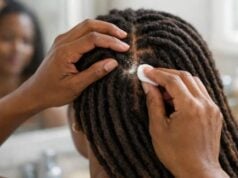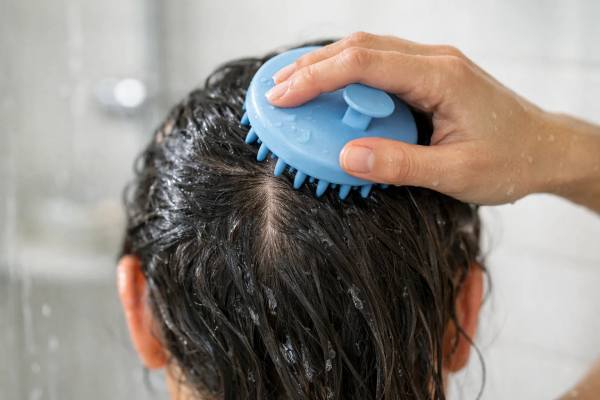
Scalp brushes have moved from niche shower gadget to mainstream hair-care tool, usually promoted with two promises: a cleaner scalp and faster hair growth. The first claim has some practical logic behind it. The second is far less certain. A soft silicone brush can help spread shampoo, loosen flakes, and make scalp massage easier, but that does not automatically mean it can grow hair in a clinically meaningful way. The scalp is living skin, not a surface that always improves with more stimulation.
That is why the real question is not whether scalp brushes are good or bad. It is whether they are being used for the right purpose, on the right scalp, and with the right amount of pressure. For some people, a scalp brush is a pleasant wash-day tool that improves cleansing. For others, especially those with dandruff, eczema, psoriasis, folliculitis, tenderness, or active shedding, it can become one more source of friction and inflammation.
Core Points
- Scalp brushes may help distribute shampoo, loosen visible flakes, and make cleansing feel more thorough.
- Strong evidence that a consumer scalp brush alone stimulates meaningful hair regrowth is still lacking.
- Overuse can worsen itching, burning, tenderness, breakage, and scalp irritation, especially on sensitive or inflamed skin.
- Gentle use for about one to three minutes during washing is usually safer than long, forceful daily scrubbing.
- Stop if the scalp becomes red, sore, more itchy, or if shedding clearly increases after use.
Table of Contents
- What Scalp Brushes Actually Do
- Do They Really Help Hair Growth
- When They Can Help the Scalp
- When They Cause Irritation or Damage
- Who Should Be Cautious or Avoid Them
- How to Use a Scalp Brush Safely
What Scalp Brushes Actually Do
Most scalp brushes are not really brushes in the classic sense. They are usually handheld tools with flexible silicone tips designed to move over the scalp during shampooing or massage. Some are meant only for the shower. Others are marketed for dry use with oils or serums. Their basic functions are mechanical: they lift product, move hair aside, create friction across the scalp surface, and add light massage pressure.
That mechanical action can make a scalp feel cleaner, but it is important to understand what is actually happening. A scalp brush does not “detox” follicles or open pores in a dramatic way. What it can do is help loosen sebum, flakes, dead skin, and residue sitting on the scalp surface. It can also improve shampoo spread, especially in thicker hair, curly hair, or styles where fingers do not easily reach the scalp. In that sense, the tool is most useful as a cleansing aid rather than a true treatment.
A second effect is sensory. Many people enjoy the massage-like feeling and interpret that as proof the scalp is getting healthier. Comfort matters, but pleasure is not the same as evidence. A brush can feel stimulating without creating any clinically important change in hair density. That distinction is where a lot of consumer marketing gets blurry.
There is also a third effect people often forget: friction. Even soft silicone tips still create repeated contact against the skin and hair shafts. If the movement is gentle and brief, that may be fine. If it is forceful, prolonged, or repeated over already tender areas, the same motion that helps lift flakes can start to irritate skin or stress fragile hairs. This is especially relevant when a scalp brush is used with long nails, harsh scrubs, medicated shampoos, or repeated circular rubbing over the same spot.
In practical terms, scalp brushes tend to do best in three roles:
- helping distribute cleanser through dense hair
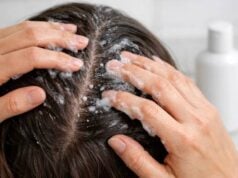
- loosening superficial flakes and light buildup
- adding a gentle massage step to a wash routine
They tend to do worst when they are treated like therapy devices that can scrub away dandruff, replace diagnosis, or force dormant follicles back to life. That is also why they overlap with, but are not identical to, a hand-based massage routine. If your interest is really the massage side rather than the cleansing side, a separate guide to scalp massage for hair growth gives a more accurate picture of what mechanical stimulation may and may not do.
A scalp brush is a tool. Whether it helps depends less on the tool itself than on the scalp underneath it and the way it is used.
Do They Really Help Hair Growth
This is the claim most people care about, and it is the one that needs the most caution. Right now, there is not strong evidence that a consumer scalp brush by itself reliably regrows hair in a clinically meaningful way. The growth argument rests mostly on indirect evidence: small scalp-massage studies, mechanobiology research on stretching forces, and the reasonable idea that a healthier scalp environment may support better retention. Those are interesting signals, but they are not the same as robust brush-specific proof.
The most commonly cited hair-growth logic goes like this: massage increases circulation, mechanical stimulation may influence dermal papilla signaling, and better signaling could support thicker hair. Some small studies on standardized scalp massage suggest that consistent manual or device-assisted massage may increase hair thickness over time. That is worth noting. But even those studies are limited by small sample sizes, self-reported outcomes, or protocols that do not resemble how most people use a silicone shower brush for 45 seconds while shampooing.
That difference matters. A structured massage protocol is not the same thing as casual scrubbing. A controlled device study is not the same thing as an inexpensive brush bought online with no standard pressure, no standard duration, and no consistent technique. When a scalp brush is marketed as a hair-growth device, the evidence is often being borrowed from broader mechanical-stimulation concepts rather than from direct trials on the product itself.
Another issue is that hair growth depends on cause. If someone has androgenetic alopecia, telogen effluvium, iron deficiency, thyroid disease, traction alopecia, psoriasis, or allergic dermatitis, a scalp brush does not meaningfully solve the underlying problem. At best, it may make cleansing feel better or improve product spread. At worst, it adds friction to a scalp that is already inflamed or to hairs that are already miniaturized and vulnerable.
A more accurate way to frame the growth question is this:
- Can a scalp brush improve the scalp environment a little? Possibly.
- Can gentle mechanical stimulation influence follicle biology in theory? Yes, to some extent.
- Does that mean a scalp brush is a proven hair-growth treatment? No.
That does not make scalp brushes useless. It simply puts them in the right lane. They are grooming tools with possible supportive benefits, not first-line treatments for real hair loss. If the concern is thinning rather than buildup, it is more useful to separate breakage from true hair loss before leaning on a shower device for answers.
The most honest conclusion is that scalp brushes may support comfort, cleansing, and routine consistency, but they should not be sold as evidence-based growth treatments on the same level as proven hair-loss therapies. They may help the scalp feel better. They may not help the hair grow more. Those are two different outcomes.
When They Can Help the Scalp
Scalp brushes are at their best when the goal is practical scalp care, not miracle growth. For the right person, a brush can make washing more effective and more comfortable. This is especially true in people with thicker hair, textured hair, dense roots, or heavy product use, where fingertips alone may not move cleanser evenly across the scalp.
One useful role is buildup management. Hairsprays, dry shampoos, leave-ins, waxes, oils, and edge products can collect at the roots and make the scalp feel coated. A brush can help lift that residue during washing so shampoo reaches the skin more evenly. That does not mean it removes every type of buildup or replaces a clarifying strategy, but it can make routine cleansing more thorough. In that setting, it works best as a gentle helper rather than a scraping tool. Readers who struggle with residue often get more benefit from pairing a brush with a smarter wash routine than from scrubbing harder, which is why fixing product buildup usually starts with product choice and wash frequency, not just accessories.
A second role is flake loosening. Mild superficial flaking sometimes lifts more easily when shampoo is worked in with a soft silicone brush. This can make the scalp look cleaner after washing and reduce the feeling that flakes are “stuck” at the roots. The benefit is cosmetic and mechanical, not curative. If the flakes come from dandruff, seborrheic dermatitis, or psoriasis, the brush is not treating the cause. It is only helping manage surface debris.
A third role is massage support. Some people find that a brush makes gentle scalp massage easier because it reduces finger fatigue and helps them apply light pressure more evenly. That may improve adherence to a scalp-care ritual. Routine matters. A tool people actually use gently and consistently can be more useful than a theoretically perfect technique they never follow.
Scalp brushes may also help with:
- distributing medicated shampoos through dense hair
- improving access to the scalp under protective styles that still allow washing
- making wash days feel less rushed and more deliberate
- reducing the urge to scratch with fingernails during shampooing
The final point is more important than it seems. For people who scratch their scalp hard in the shower, a very soft brush can sometimes be the less damaging alternative, provided it is used gently.
The key limit is that benefit depends on scalp condition. A brush can help a relatively calm scalp feel cleaner. It is much less likely to help an already inflamed scalp. If your main problem is flakes, scale, or residue, a guide to scalp exfoliation without irritation usually offers a better framework than treating a brush as a cure-all.
Used appropriately, a scalp brush can improve scalp hygiene and comfort. That is a real benefit. It just is not the same thing as guaranteed growth.
When They Cause Irritation or Damage
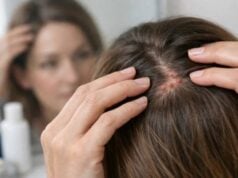
A scalp brush becomes a problem when stimulation crosses into friction. The signs are often subtle at first. The scalp feels a little hot after washing. It itches more later that day. Tender spots appear along the crown, hairline, or part. Flakes seem worse, not better. Hair feels rougher near the roots. These reactions are easy to dismiss because the tool itself looks harmless, especially when the tips are soft silicone. But repeated mechanical stress can still aggravate a sensitive scalp.
The most common mistake is using too much pressure. Many people press harder when the scalp feels oily, flaky, or itchy, assuming that more scrubbing means a better result. In reality, aggressive rubbing can worsen barrier disruption, increase redness, and trigger more itching. A scalp that already has seborrheic dermatitis, psoriasis, eczema, folliculitis, or recent sunburn is particularly vulnerable. In these settings, a brush can turn routine washing into a repeated irritation event.
Another problem is false cleanliness. If a brush lifts flakes temporarily, it can create the impression that the underlying issue is improving even while inflammation is worsening. This is especially risky when the brush is used with harsh exfoliants, essential oils, or medicated shampoos that already challenge the barrier. Mechanical friction plus active ingredients is sometimes a bad combination, particularly on a sensitive scalp.
Hair itself can suffer too. A scalp brush is aimed at skin, but hair shafts sit in the path of that motion. On tangled, wet, bleached, relaxed, or otherwise fragile hair, repeated rubbing can contribute to breakage. This is more likely when the brush is dragged through lengths rather than kept at the scalp, or when it is used to “detangle” in the shower. That is not what these tools are for.
Watch for these warning signs:
- persistent stinging, burning, or soreness after use
- increased flaking that looks more inflamed, not less
- tiny scabs, excoriations, or pinpoint tenderness
- a worsening urge to scratch
- more broken hairs near the roots or along the hairline
- shedding that clearly increases after vigorous use
A more nuanced point is that irritation does not always look dramatic. Sensitive scalp can present as burning, trichodynia, or discomfort without obvious rash. That means a brush may still be too much even when the scalp “looks normal.” If symptoms such as itching, burning, or tenderness are already part of the picture, it helps to review itchy scalp causes and warning signs before adding more stimulation.
The safest rule is simple: a scalp brush should never leave the scalp feeling scraped, raw, or more reactive than before. When that happens, the tool is no longer helping hygiene. It is becoming part of the problem.
Who Should Be Cautious or Avoid Them
Scalp brushes are not universally unsafe, but some scalps are poor candidates for them. The people most likely to run into trouble are those whose scalp barrier is already inflamed, whose follicles are already under stress, or whose hair shafts are unusually fragile.
The first group to be cautious is anyone with active inflammatory scalp disease. That includes seborrheic dermatitis, psoriasis, eczema, allergic contact dermatitis, scalp rosacea, and some forms of folliculitis. In these settings, the brush may feel satisfying at first because it dislodges scale or relieves itch for a moment. But repeated friction can intensify irritation, worsen microtrauma, and make the scalp harder to calm down. This is particularly true when there is redness, burning, weeping, or crusting.
A second group is people with sensitive scalp or scalp pain. If your scalp already burns, tingles, aches, or becomes sore with products and heat, a brush may add more stimulation than your skin can comfortably tolerate. Sensitive scalp is common in people with hair shedding and certain scalp disorders, so “no visible rash” does not automatically mean “safe to scrub.”
A third group includes those with active shedding or fragile hair. If you are going through telogen effluvium, postpartum shedding, recent illness-related shedding, or significant breakage, vigorous manipulation may worsen the appearance of loss or increase breakage near the root. This does not mean a soft, brief wash-day massage is always forbidden. It means the margin for error is smaller, and technique matters much more.
You should be particularly cautious if you have:
- open scratches, pimples, sores, or scabs on the scalp
- scalp sunburn
- recent chemical burns or recent bleaching near the root
- tightly installed extensions, braids, or adhesive pieces
- scarring alopecia or suspected inflammatory hair loss
- heavy dandruff with soreness rather than simple dry flaking
Children and older adults with thin, delicate scalp skin may also need a gentler approach than standard marketing suggests.
Another overlooked group is people who react to many hair products. Sometimes the brush is blamed when the true issue is the shampoo, oil, scrub, or serum used with it. But sometimes the brush makes that irritation worse by increasing penetration and friction. When you have a reactive scalp, the combination matters as much as the tool.
If the scalp is already inflamed, the better question is rarely “Which brush is best?” It is usually “Why is the scalp inflamed?” A person with persistent burning, tenderness, or visible reaction benefits more from calming the scalp first than from adding another accessory. That is why any discussion of brushes needs to sit beside a broader understanding of scalp inflammation signs rather than pretending stimulation is always therapeutic.
Caution is not the same as fear. It simply means that some scalps need less input, not more.
How to Use a Scalp Brush Safely
If you decide to use a scalp brush, the safest strategy is to treat it like a light-touch cleansing tool, not a scrubber. Most problems come from excess: too much pressure, too much time, too much frequency, or too many actives layered at once.
A good starting method is simple:
- Wet the scalp thoroughly first.
- Apply shampoo with your hands before bringing in the brush.
- Use very light pressure, almost as if you are moving cleanser around rather than digging into the skin.
- Keep the motion slow and controlled for about one to three minutes.
- Focus on the scalp, not the hair lengths.
- Rinse well and stop if the scalp feels hot, sore, or more itchy afterward.
That short time frame matters. You do not need a long session for routine cleansing. In fact, longer is often worse. The goal is distribution and light loosening, not aggressive exfoliation.
A few technique choices reduce trouble:
- Use the brush mainly during washing, not repeatedly on a dry scalp.
- Avoid pairing it with gritty scrubs unless you already know your scalp tolerates them.
- Do not use it over pimples, scabs, or cracked skin.
- Skip vigorous circular rubbing over the same small patch.
- Wash the brush regularly so it does not collect residue, oil, or microbes.
Frequency should match scalp tolerance, not marketing advice. For some people, once or twice a week is enough. Others tolerate it every wash day. Daily use is often unnecessary, especially on dry or reactive scalps. More stimulation does not automatically mean a healthier scalp.
It is also worth comparing it against the simplest alternative: fingertips. Many people do just as well, or better, using the pads of their fingers gently during shampooing. A brush is optional, not required. If it adds irritation, you are not failing at scalp care by returning to hands only.
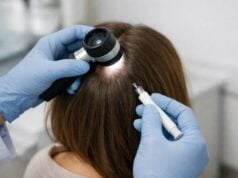
Stop and reassess if the brush seems to increase flaking, tenderness, or breakage over two to three weeks. At that point, the scalp may be telling you that the routine is too abrasive or that a brush is not the right tool for your condition. If symptoms persist, spread, or come with real shedding, it is time to read up on when to see a dermatologist for hair loss and scalp symptoms instead of experimenting harder.
The best use case for a scalp brush is modest: gentle shampoo support on a calm scalp. Once expectations stay that realistic, the tool becomes much easier to use wisely.
References
- Hair regeneration: Mechano-activation and related therapeutic approaches 2025 (Review)
- Allergic contact dermatitis of the scalp: a review of an underdiagnosed entity 2024 (Review)
- Hair Product Allergy: A Review of Epidemiology and Management 2024 (Review)
- Standardized Scalp Massage Results in Increased Hair Thickness by Inducing Stretching Forces to Dermal Papilla Cells in the Subcutaneous Tissue 2016 (Exploratory Study)
- Self-Assessments of Standardized Scalp Massages for Androgenic Alopecia: Survey Results 2019 (Survey Study)
Disclaimer
This article is for educational purposes only and is not a diagnosis or substitute for medical care. Scalp itching, tenderness, flaking, burning, and hair shedding can have many causes, including dandruff, seborrheic dermatitis, psoriasis, contact allergy, folliculitis, autoimmune hair loss, and other scalp disorders. A scalp brush may be helpful for some routines, but it can also aggravate sensitive or inflamed skin. Seek professional evaluation if symptoms are persistent, worsening, painful, patchy, or associated with noticeable hair loss.
If this article helped you, please share it on Facebook, X, or any platform you prefer so others can make a safer, more informed decision about scalp brushes.