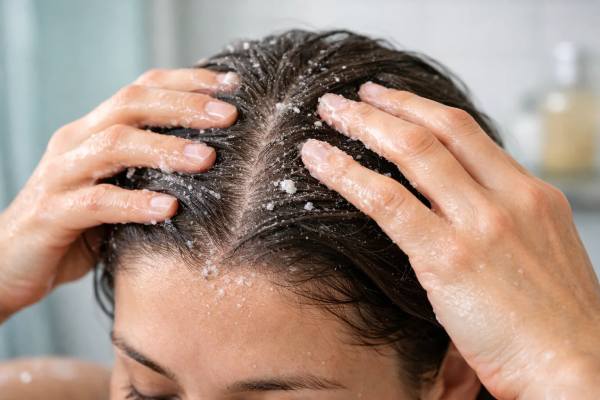
A healthy scalp sheds dead cells quietly. You do not notice the process because it is supposed to be small, steady, and self-regulating. Trouble starts when that natural turnover collides with oil, sweat, dry shampoo, styling products, mineral residue, and inflammation. Then the scalp can feel coated, flaky, itchy, or oddly tight at the same time. That is when many people reach for a “deep scrub” or a harsh detox treatment, only to end up with more irritation than relief. Good scalp exfoliation is not about scraping the skin clean. It is about loosening and removing excess surface buildup in a way the scalp can tolerate. Done well, it can reduce visible flakes, help shampoos work better, and make the roots feel lighter. Done badly, it can trigger stinging, rebound oiliness, barrier damage, and confusion about what problem you are actually treating. The safest approach is usually gentler, simpler, and more targeted than trend-driven routines suggest.
Key Takeaways
- Scalp exfoliation can help remove excess flakes, oil, and product film when ordinary shampooing is no longer enough.
- Chemical exfoliation is often gentler and more even than gritty physical scrubs, especially on sensitive or dandruff-prone scalps.
- Over-exfoliation can worsen burning, tightness, redness, and flaking instead of fixing them.
- A practical starting point is exfoliating no more than once weekly, and often less, unless a clinician advises otherwise.
- The best routine matches the actual problem: buildup, dandruff, oily scale, or sensitivity do not all need the same method.
Table of Contents
- What scalp exfoliation actually does
- Who needs it and who does not
- Chemical vs physical exfoliation
- Best ingredients and tools
- How to exfoliate without irritation
- Signs you are overdoing it
What scalp exfoliation actually does
Scalp exfoliation is a targeted way to loosen and remove excess material sitting on the scalp surface. That material may include dead skin cells, adherent scale, oxidized sebum, dry shampoo residue, styling film, sweat, and environmental grime. The goal is not to force the scalp to shed faster than normal. It is to help clear a backlog when normal washing is no longer handling the load.
That distinction matters because many people use the word exfoliation when they really mean cleansing. Cleansing removes oil, dirt, and water-soluble residue. Exfoliation focuses more on surface debris that clings: compacted flakes, sticky film, or dense buildup around follicles and hair shafts. In practice, the two often overlap. A well-formulated clarifying or medicated shampoo may do some of the exfoliating work on its own by loosening scale and improving rinse-off. That is one reason simple routines often outperform elaborate “scalp detox” trends.
Exfoliation can be useful when the scalp feels coated, the roots stay heavy after washing, or flakes seem stuck rather than loose. It may also help when a treatment shampoo is not contacting the scalp well because residue is blocking it. In those cases, the benefit is functional as much as cosmetic. A cleaner scalp often feels calmer, looks less congested, and responds better to the next step in the routine.
But exfoliation has clear limits. It does not treat every itchy scalp. It does not cure psoriasis, seborrheic dermatitis, eczema, folliculitis, or allergic reactions on its own. It also does not “pull toxins out” of the skin. When those claims appear on labels, they are usually marketing language, not scalp biology. The scalp already has its own systems for barrier repair, immune signaling, and cell turnover. Good care supports those systems. It does not try to outcompete them.
Another important point is that visible flakes do not all come from the same process. Some are simply loose scale mixed with product residue. Others reflect inflammatory disorders, yeast-driven dandruff, or irritation from hair products. That is why exfoliation should be used as a precision tool, not as a universal answer. If the scalp improves after one careful reset, buildup was likely a real part of the problem. If it burns, tightens, or flakes more, the method may have been too aggressive or the diagnosis may be wrong.
For many readers, the best starting move is not a scrub at all. It is a better wash routine and occasional residue removal with a properly timed clarifying shampoo. Exfoliation becomes useful when buildup is stubborn, not when the scalp simply needs ordinary cleansing done more consistently.
In short, scalp exfoliation works best when it is treated as a selective cleanup step. It should make the scalp more comfortable and manageable, not stripped, shiny, or sore.
Who needs it and who does not
Not every scalp needs regular exfoliation. In fact, many people do well without it as long as their shampooing frequency matches their oil production, styling habits, and activity level. Exfoliation becomes useful when there is a clear mismatch between what the scalp is collecting and what normal washing is removing.
People most likely to benefit are those who use a lot of leave-in products, root powders, dry shampoo, wax sticks, scalp sunscreens, or rich oils. The same is true for frequent exercisers, swimmers, and anyone living with heavy sweat or mineral-rich water exposure. In these settings, residue accumulates faster, and the scalp may begin to feel greasy and clogged at the same time. Hair can look flat, separate into pieces, or seem dirty again only hours after washing.
Another group that may benefit is people with adherent flaky buildup rather than loose, powdery dryness. Their scalp often feels waxy or coated, especially at the crown, hairline, or behind the ears. Some notice that shampoo stops lathering well or that treatment products seem to sit on top instead of reaching the skin. Exfoliation can help loosen that layer so ordinary cleansing works again.
But there are many people who should be more cautious. If your scalp is easily irritated, reactive to fragrance, prone to burning, or already inflamed, routine exfoliation may make things worse. The same goes for people with scalp eczema, psoriasis, open sores, active folliculitis, or a known product allergy. In these cases, removing buildup still matters, but it usually needs to be done with gentler cleansing and targeted medical treatment rather than with exfoliating acids or scrubs.
Dry scalp deserves special mention because it is frequently over-treated. People see flakes and assume exfoliation is the answer, when the real problem may be barrier stress or low-grade irritation. Flaking caused by dandruff, dry scalp, and product residue can look similar at first glance, but the treatment logic differs. A useful way to sort that out is to compare the patterns seen in dandruff and dry scalp before deciding that more exfoliation is needed.
A few practical questions can help you decide whether exfoliation belongs in your routine:
- Do your roots feel coated or heavy even after washing?
- Are flakes stuck to the scalp instead of brushing away easily?
- Do you use products that intentionally stay on the scalp or near it?
- Does one careful reset make the scalp feel much better for several days?
If the answers are mostly yes, exfoliation may help. If the scalp is mainly red, painful, burning, or unpredictably reactive, it is smarter to simplify the routine instead of adding another active step.
The bottom line is that scalp exfoliation is a situational tool. It suits buildup-prone scalps much more than fragile, inflamed, or mystery-problem scalps. The first sign you need it should be persistent residue, not the assumption that every healthy routine must include one more product.
Chemical vs physical exfoliation
When people think of exfoliation, they often picture a scrub. On the scalp, that is usually the riskier option. Physical exfoliation depends on friction from granules, brushes, or textured tools to dislodge surface material. Chemical exfoliation uses ingredients that loosen the bonds between surface cells or help soften and lift adherent scale. In most cases, chemical methods are gentler and more controllable.
Physical exfoliation can work, but it comes with obvious drawbacks. Hair makes scalp access uneven, so it is hard to apply pressure consistently. One area may barely be touched while another gets rubbed repeatedly. If the scalp already has dandruff, inflammation, or tiny scratches from nails, gritty scrubs can aggravate the problem. Even soft brushes can become too aggressive when used with the idea that more friction equals more cleansing. It rarely does. Often it just creates tenderness and post-wash irritation.
Chemical exfoliation has a different advantage: it can soften and loosen debris before the rinse phase, reducing the need for aggressive rubbing. Salicylic acid is the most familiar example because it helps break up compacted surface scale and works especially well in oily, flaky settings. Some scalp formulas also use milder hydroxy-acid systems or keratolytic ingredients that help lift buildup more evenly. This does not make them harmless. Used too often or at the wrong strength, chemical exfoliants can still sting or over-dry the scalp. But when compared with a rough scrub, they usually offer more precision and less mechanical damage.
That said, chemical does not always mean better for every scalp. A very sensitive or fragrance-reactive scalp may tolerate neither a peel-like solution nor a scrub. In those cases, the safest “exfoliation” may simply be thorough cleansing with a suitable shampoo and longer rinse time. This is where people often overshoot. They assume the scalp needs a special exfoliating category product when it may only need less residue, more consistent washing, or a switch away from irritating formulas. Readers who are not sure whether strong cleansing is necessary may find it helpful to compare their habits against who actually benefits from gentler shampoo choices.
There is also a hybrid category: cleansing products with light keratolytic support. These include some anti-dandruff or scale-targeting shampoos. They are not marketed as peels, but they do exfoliating work in a controlled wash-off format. For many scalps, that is the sweet spot.
A simple rule helps here:
- Physical exfoliation is best kept minimal and occasional.
- Chemical exfoliation is often more even and less abrasive.
- Medicated or clarifying shampoo may do enough on its own.
If your main goal is removing buildup without irritation, the safest path is usually to start with the least abrasive method that can plausibly solve the problem. On the scalp, that often means choosing chemistry over friction, and cleansing over theatrics.
Best ingredients and tools
The best scalp-exfoliation ingredients are the ones that match the residue you are trying to remove. There is no universal “best” active, because oily compacted scale, product buildup, and inflammatory dandruff do not behave the same way. Still, a few categories stand out as genuinely useful.
Salicylic acid is the classic scalp exfoliating ingredient for a reason. It helps loosen adherent flakes and works especially well when oil and scale are mixed together. This makes it a strong option for buildup-prone or dandruff-prone scalps that feel congested rather than simply dry. It is usually more helpful as a wash-off step or a well-formulated pre-shampoo treatment than as an improvised leave-on acid experiment. The goal is controlled loosening, not peeling for the sake of peeling.
Keratolytic support also appears in some anti-dandruff products. These are especially useful when flaking is part of seborrheic dermatitis rather than plain residue. In those situations, the scalp often needs both exfoliation and treatment. That is why shampoos built around antifungal or anti-flake ingredients can outperform cosmetic scrubs. If the main issue is recurrent greasy flaking, it is often more useful to focus on anti-dandruff shampoo ingredients that match the pattern than to chase a separate exfoliator.
Clarifying shampoos deserve a place here too, even though they are not classic exfoliants. They help remove stubborn styling residue, oils, and film that make the scalp feel dirty or coated. For many readers, a clarifier used correctly will solve the problem well enough that a separate exfoliating product is unnecessary.
As for tools, less is more. Fingertips are often the safest tool because they allow pressure control and let you feel tender areas immediately. A soft silicone shampoo brush can help distribute lather and loosen debris, but it should glide, not scrape. It is most useful for dense hair where shampoo has trouble reaching the scalp evenly. It is least useful when the scalp is inflamed, tender, or already overworked.
Ingredients and tools that often sound appealing but deserve caution include:
- gritty sugar or salt scrubs
- essential-oil-heavy “tingling” formulas
- facial acids repurposed for the scalp
- baking soda or highly alkaline DIY mixtures
- harsh brushes used as if the scalp were a callused surface
The best setup is usually simple: one appropriate shampoo, one occasional exfoliating aid if needed, and gentle hands. If you also use a lot of dry shampoo, root powder, or styling creams, keeping your brush and combs cleaner matters more than many people realize. Good brush cleaning habits reduce the amount of old product and skin debris that gets redeposited onto a freshly washed scalp.
A product is only helpful if the scalp tolerates it. The right ingredient should make washing easier and the scalp calmer, not create a new problem to fix.
How to exfoliate without irritation
The safest scalp-exfoliation routine is slow, brief, and boring. That is a good thing. The scalp usually responds better to mild consistency than to occasional extremes. Most irritation happens because people combine too many active steps, leave products on too long, or assume the scalp should feel tingly to prove the routine is working.
A simple method works best:
- Start with a dry or lightly damp scalp only if the product directs that use; otherwise begin on a fully wet scalp.
- Apply the exfoliating product to scalp sections rather than dumping it on top of the hair.
- Use fingertips with light pressure. If you use a brush, keep the movement small and gentle.
- Follow the product timing exactly. More time is not automatically more benefit.
- Rinse thoroughly, then shampoo if the product is pre-wash.
- Condition mainly the mid-lengths and ends unless the product is specifically meant for scalp conditioning.
Frequency matters as much as technique. For many people, once weekly is already enough, and many only need exfoliation every 2 to 4 weeks. Oily, buildup-prone scalps may tolerate slightly more frequent use. Dry, sensitive, or color-treated routines often need less. It is better to start low and increase only if the scalp clearly benefits.
Your wash schedule also affects how much exfoliation you need. A scalp that goes too long between washes often seems to “need” an exfoliator when what it truly needs is more regular cleansing. That pattern is especially common in people who rely on dry shampoo to extend styles. If that sounds familiar, reviewing whether dry shampoo is creating a bigger scalp problem may be more useful than buying another exfoliating product.
A few practical rules keep irritation low:
- Do not exfoliate on the same day you have scratched, picked, or strongly brushed the scalp.
- Do not stack exfoliation with another strong active unless the routine is intentional and well tolerated.
- Skip exfoliation if the scalp is sunburned, freshly dyed, visibly cracked, or actively inflamed.
- Do not assume every flake means you should exfoliate more often.
If your scalp feels clean but comfortable after the rinse, that is success. If it feels tight, hot, unusually shiny, or sore the next day, the routine was probably too much. Another common mistake is mistaking “squeaky” for healthy. The scalp does not need to feel stripped to be clean.
A well-executed routine should improve the next few wash days, not create a cycle where the scalp becomes more reactive and product-dependent. Exfoliation without irritation is mostly about restraint: correct product, correct interval, correct pressure, and a willingness to stop when the scalp is already doing well.
Signs you are overdoing it
The earliest sign of over-exfoliation is not always obvious redness. Often it is a change in feel. The scalp starts to feel tight after washing, stings when sweat hits it, or becomes oddly oily and dry at the same time. That mixed feeling matters because it often reflects barrier stress. The scalp has lost some of its tolerance, and now even ordinary products feel sharper than they used to.
Other signs are more visible. Flakes may get finer and more numerous instead of decreasing. The scalp may look pink, shiny, or irritated around the part line and hairline. Shampoo can burn where it never burned before. You may find yourself wanting to exfoliate again quickly because the scalp feels “unclean,” when the real problem is rebound discomfort rather than true buildup. This is one reason over-treatment can become self-reinforcing. The irritated scalp feels wrong, so more product gets added, which creates more irritation.
Physical signs that should make you stop exfoliating include:
- persistent burning or stinging
- tenderness to touch
- increased redness after washing
- worsening flaking despite cleaner roots
- small sores, scabs, or broken skin
- sudden reaction to products you previously tolerated
At that point, the best move is usually subtraction. Pause exfoliants. Use a mild shampoo. Avoid fragranced or alcohol-heavy scalp products for a stretch. Keep nails off the scalp. If needed, reduce wash-day friction rather than reducing all washing. This is especially important because some people misread irritation as proof that the exfoliator is “purging” buildup. The scalp does not purge in that way. It signals irritation.
There is also a point where the problem is no longer cosmetic. Persistent scale, painful itching, greasy yellow flakes, thick plaques, or follicle-centered bumps may suggest seborrheic dermatitis, psoriasis, contact dermatitis, or folliculitis rather than simple buildup. If the scalp remains uncomfortable after simplifying the routine, you may need targeted treatment instead of another exfoliator. A helpful next step is recognizing the warning patterns in itchy scalp symptoms that deserve closer attention.
Seek clinical help sooner if you also have hair shedding, patchy thinning, eyebrow involvement, extension of the rash beyond the scalp, or symptoms that interfere with sleep. Exfoliation should never be the main plan for a scalp that is painful, inflamed, or progressively worsening.
The best scalp routine is not the one with the most steps. It is the one that keeps the barrier stable while removing the specific things that do not belong there. If exfoliation is working, the scalp becomes quieter. If it is not, the scalp usually tells you quickly.
References
- The Impact of Shampoo Wash Frequency on Scalp and Hair Conditions 2021
- On Hair Care Physicochemistry: From Structure and Degradation to Novel Biobased Conditioning Agents 2023
- Scalp microbiome: a guide to better understanding scalp diseases and treatments 2024
- Ketoconazole Shampoo for Seborrheic Dermatitis of the Scalp: A Narrative Review 2024
- Child and Adult Seborrheic Dermatitis: A Narrative Review of the Current Treatment Landscape 2025
Disclaimer
This article is for educational purposes only and is not a diagnosis or treatment plan. Scalp flaking, itch, redness, and buildup can overlap with dandruff, seborrheic dermatitis, psoriasis, contact allergy, folliculitis, and inflammatory hair-loss conditions. If symptoms are persistent, painful, worsening, or accompanied by unusual shedding, seek evaluation from a qualified clinician rather than relying on repeated exfoliation.
If this guide helped, consider sharing it on Facebook, X, or another platform you prefer so someone else can build a gentler, smarter scalp routine.