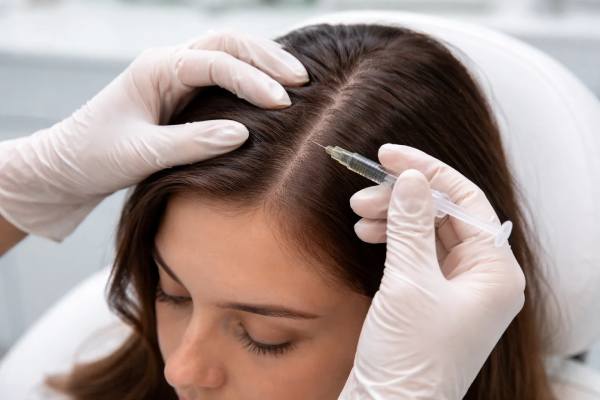
Hair loss treatments often focus on pills, topical medications, or surgical procedures. Yet in many clinics around the world, another approach has gained attention: scalp mesotherapy. This technique involves injecting small amounts of vitamins, peptides, medications, or plant-derived compounds directly into the scalp. The idea is simple—deliver potentially helpful ingredients closer to the hair follicle rather than relying on topical absorption or systemic circulation.
Supporters describe mesotherapy as a targeted method that may improve scalp circulation, reduce inflammation, or stimulate follicles in early hair thinning. Critics point out that formulas vary widely, standard protocols are lacking, and scientific evidence remains uneven.
For people researching treatment options, the key question is not whether scalp mesotherapy exists—it clearly does—but whether it works, what is actually injected, and what risks come with repeated scalp injections.
Understanding the ingredients, clinical evidence, and limitations helps place this therapy in a realistic context. It can then be evaluated alongside established treatments rather than viewed as a miracle solution or dismissed outright.
Key Insights
- Scalp mesotherapy delivers mixtures of vitamins, peptides, and medications directly into the scalp with the goal of supporting follicle activity and improving hair density.
- Some small studies show modest improvement in early hair thinning, especially when used alongside established therapies.
- Treatment protocols vary widely, and inconsistent ingredient formulas make the overall evidence difficult to compare.
- Sessions are typically performed every 1–4 weeks in the initial phase, often followed by maintenance treatments every few months.
- Risks include scalp irritation, infection, allergic reactions, and inflammation if injections are poorly performed or ingredients are unsuitable.
Table of Contents
- What Scalp Mesotherapy Involves
- Ingredients Used in Mesotherapy
- Evidence for Hair Growth
- How Treatment Sessions Work
- Risks, Side Effects, and Safety
- How Mesotherapy Compares With Other Treatments
What Scalp Mesotherapy Involves
Scalp mesotherapy is a minimally invasive procedure designed to deliver small amounts of active substances directly into the superficial layers of the scalp. The treatment uses fine needles to inject a solution containing vitamins, medications, peptides, or other compounds believed to influence hair follicle function.
The concept originated in European aesthetic medicine decades ago. Initially, mesotherapy was used for pain management and cosmetic purposes such as cellulite reduction. Over time, clinicians began adapting the technique for hair loss, based on the idea that localized delivery could influence scalp circulation, follicle metabolism, and inflammatory signaling around hair follicles.
During a typical procedure, multiple microinjections are placed across areas of thinning hair. Each injection usually penetrates the upper dermis at depths ranging from about 1 to 4 millimeters. The injected solution spreads locally through the tissue surrounding nearby follicles.
The theoretical advantages include:
- targeted delivery close to hair follicles
- reduced systemic exposure compared with oral medications
- the ability to combine several active ingredients in one session
- localized stimulation of scalp circulation
However, the technique is not standardized. Different clinics may use different needle depths, injection spacing, and solution compositions. Some practitioners rely on manual injections with syringes, while others use automated mesotherapy devices designed to deliver consistent microinjections.
Hair loss conditions treated with scalp mesotherapy often include:
- early androgenetic alopecia
- diffuse hair thinning
- chronic telogen effluvium
- hair weakening associated with scalp inflammation
Patients considering the procedure should understand that hair loss itself can have many causes. In some cases, the underlying mechanism is hormonal or genetic, which may respond better to targeted treatments such as medications that influence follicle signaling. For example, individuals with pattern thinning often benefit from therapies that directly affect follicle cycling, such as topical treatments discussed in how minoxidil supports hair growth.
Mesotherapy therefore tends to function more as a supportive or complementary therapy rather than a primary standalone solution for all types of hair loss.
Ingredients Used in Mesotherapy
One of the defining features of scalp mesotherapy is the variety of substances that can be injected. Unlike regulated medications with fixed formulations, mesotherapy solutions are often customized by the practitioner. This flexibility allows clinics to tailor mixtures for specific goals, but it also makes scientific evaluation difficult because protocols vary widely.
Most mesotherapy cocktails contain combinations of several ingredient categories.
1. Vitamins and micronutrients
Many formulas include vitamins believed to support hair follicle metabolism:
- biotin
- vitamin B complex
- vitamin C
- vitamin D
- trace minerals such as zinc
These nutrients are important for hair biology, but injecting them into the scalp does not necessarily correct systemic deficiencies. If nutritional deficiencies contribute to hair loss, testing and correction may be more appropriate than relying on local injections. For instance, low iron stores can play a role in shedding patterns, which is explored in iron deficiency and hair shedding.
2. Peptides and growth-supporting compounds
Some mesotherapy formulas include peptides designed to influence follicle signaling pathways or dermal papilla activity. These may include synthetic peptides or biomimetic molecules thought to support hair growth signals.
Peptide-based scalp products have also become common in topical treatments, as described in peptide-based scalp care ingredients.
3. Vasodilators and circulation enhancers
Certain formulations include substances that may increase local blood flow or improve nutrient delivery to follicles.
These may include:
- minoxidil derivatives
- organic silica
- plant extracts with vasodilatory effects
The goal is to improve the environment surrounding hair follicles and support active growth phases.
4. Anti-inflammatory and antioxidant ingredients
Inflammation can influence hair loss in several conditions. Some mesotherapy cocktails include compounds designed to reduce oxidative stress or calm scalp inflammation.
These may include:
- amino acids
- coenzymes
- antioxidant vitamins
- plant extracts
Because these mixtures vary so much, it is difficult to compare outcomes between studies. Two clinics may both offer “mesotherapy,” yet their injection formulas may contain entirely different ingredients.
This lack of standardization remains one of the main reasons researchers caution against drawing broad conclusions about the effectiveness of the procedure.
Evidence for Hair Growth
Scientific evidence for scalp mesotherapy in hair loss treatment is still evolving. Compared with widely studied therapies such as topical minoxidil or oral medications, the research supporting mesotherapy is relatively limited and often consists of small clinical studies.
Several studies have explored mesotherapy for androgenetic alopecia, the most common form of pattern hair loss. In some trials, patients receiving mesotherapy experienced modest improvements in hair density or hair thickness over a period of several months.
However, interpreting these findings requires caution for several reasons.
First, treatment protocols vary significantly. Studies may use different ingredient mixtures, injection depths, session frequencies, and treatment durations. This makes it difficult to compare results or determine which components are responsible for any improvements.
Second, many studies involve small patient groups. Small sample sizes increase the risk that results may not generalize to broader populations.
Third, mesotherapy is frequently used alongside other therapies. For example, patients may also use topical medications, nutritional supplements, or microneedling treatments. When improvements occur, it can be difficult to isolate which intervention produced the benefit.
Researchers also emphasize that hair growth treatments often require months before visible change occurs because follicles cycle slowly. Hair fibers grow gradually, and follicles transition between growth and resting phases over extended periods. Understanding these biological cycles helps explain why hair treatments typically require patience, as outlined in typical hair growth timelines.
Overall, current evidence suggests that mesotherapy may offer supportive benefits for some patients, particularly in early-stage thinning. However, the strength of evidence remains weaker than for established therapies.
More standardized clinical trials are needed to determine:
- which ingredients provide measurable benefit
- which patient groups respond best
- how mesotherapy compares with other treatments
- optimal treatment schedules
Until such data become available, mesotherapy is generally considered an adjunctive therapy rather than a primary evidence-based treatment for hair loss.
How Treatment Sessions Work
A typical scalp mesotherapy session is relatively quick, but it involves several steps designed to ensure safety and consistent delivery of the injected solution.
The process generally begins with a consultation. During this stage, the clinician reviews the patient’s hair loss pattern, medical history, and potential causes of thinning. This step is important because mesotherapy is not suitable for every type of hair loss.
After evaluation, the scalp is cleaned and disinfected. Some practitioners apply a topical anesthetic cream to reduce discomfort during the injections. Because the needles are very fine, pain is usually mild, though sensitivity varies from person to person.
The injections are then delivered across the affected scalp areas. A typical session may involve dozens of microinjections spaced roughly one centimeter apart. Each injection introduces a small amount of solution into the upper layers of the scalp skin.
The entire injection phase usually takes between 10 and 30 minutes depending on the treatment area.
Most treatment plans involve an initial series of sessions. A common schedule may include:
- weekly or biweekly sessions during the first month
- monthly sessions during the following months
- maintenance treatments every three to six months
These schedules vary between clinics because standardized protocols do not yet exist.
After the procedure, patients may notice mild redness, swelling, or tenderness in the treated area. These effects usually resolve within a day or two.
Practitioners often advise avoiding vigorous scalp massage, intense exercise, or hair washing for several hours after treatment to reduce irritation. Gentle scalp care is typically recommended during the recovery period.
Some patients combine mesotherapy with other treatments aimed at improving follicle stimulation or scalp health. One frequently paired technique is microneedling, which also involves controlled micro-injury to the scalp. The differences between these approaches are discussed in microneedling methods for hair growth.
Understanding the procedure itself helps set realistic expectations. Mesotherapy sessions are short and minimally invasive, but meaningful hair changes usually require multiple sessions over several months.
Risks, Side Effects, and Safety
Although scalp mesotherapy is often marketed as a low-risk cosmetic treatment, it still involves injections into living tissue. As with any procedure involving needles, certain side effects and complications can occur.
Most common side effects are mild and temporary. These may include:
- redness at injection sites
- mild swelling
- localized tenderness
- small bruises
These reactions typically resolve within a few days as the scalp tissue heals.
However, more significant risks are possible, especially when procedures are performed improperly or when unsuitable substances are injected.
Potential complications include:
- infection from non-sterile technique
- allergic reactions to injected ingredients
- inflammation or granuloma formation
- scalp scarring
- worsening hair shedding
Allergic reactions are particularly important because mesotherapy solutions often contain multiple substances. Patients may not know exactly which compounds are included in the mixture.
In rare cases, severe inflammatory reactions have been reported following cosmetic injection procedures involving unregulated substances.
Another consideration is the potential for scalp irritation in individuals who already have underlying scalp conditions such as dermatitis or folliculitis. Injecting solutions into an inflamed scalp may worsen symptoms rather than improve them.
Patients with chronic scalp disorders should discuss treatment risks carefully with a qualified professional. For example, inflammatory scalp diseases can themselves contribute to hair thinning, as described in hair loss associated with seborrheic dermatitis.
Ensuring safety involves several important precautions:
- treatment performed by trained medical professionals
- sterile equipment and proper injection technique
- clear disclosure of injected ingredients
- avoidance of treatment during active scalp infections
Even when performed correctly, mesotherapy should be viewed as a medical procedure rather than a simple cosmetic spa service.
How Mesotherapy Compares With Other Treatments
When evaluating scalp mesotherapy, it helps to compare it with other commonly used hair loss treatments. Each option works through different mechanisms, and each has its own evidence base.
Topical medications
Topical treatments remain the most widely studied options for hair loss. These products are applied directly to the scalp and act on hair follicles through biochemical signaling pathways. Some have decades of clinical research supporting their effectiveness in pattern hair loss.
Compared with mesotherapy, topical treatments are noninvasive and can be used at home. However, they require consistent long-term use and may cause scalp irritation in some individuals.
Oral medications
Certain prescription medications target hormonal pathways that influence hair follicle miniaturization. These therapies can significantly slow hair loss progression in appropriate candidates.
However, oral medications may have systemic side effects, which leads some patients to explore localized approaches such as mesotherapy.
Biologic and regenerative procedures
Other in-clinic procedures include platelet-rich plasma injections, microneedling, and emerging regenerative therapies. These approaches aim to stimulate hair follicles through growth factors or tissue repair mechanisms.
Some patients explore mesotherapy as an alternative to platelet-based injections. The differences between these procedures are examined in comparisons of PRP with other hair loss treatments.
Ultimately, treatment choice often depends on the cause of hair loss, the patient’s medical history, and personal preferences.
Many clinicians recommend combining therapies rather than relying on a single method. For example, a patient with early androgenetic alopecia might use topical medication while undergoing periodic scalp treatments designed to support follicle health.
The key principle is realistic expectations. Mesotherapy may provide supportive benefits in certain situations, but it is not universally effective and should not replace therapies with stronger clinical evidence when those treatments are appropriate.
References
- Mesotherapy in Androgenetic Alopecia: A Review of the Literature 2021 (Review)
- Mesotherapy as a Promising Option for Hair Loss Treatment 2021 (Review)
- Treatment of Androgenetic Alopecia: Current Guidance and Unmet Needs 2022 (Review)
- Platelet-Rich Plasma and Other Emerging Treatments for Hair Loss 2023 (Review)
Disclaimer
This article is intended for educational purposes only and should not be interpreted as medical advice. Hair loss can result from many medical conditions, and treatments such as scalp mesotherapy may not be appropriate for every individual. Anyone considering injection-based therapies should consult a qualified healthcare professional to discuss potential benefits, risks, and alternative treatments based on their specific diagnosis.
If you found this article helpful, consider sharing it on Facebook, X, or another platform so others researching hair health can benefit from the information.