Severe dry eye is not just “dryness.” For many people it becomes a cycle of burning, light sensitivity, fluctuating vision, and recurrent corneal damage that can make work, driving, and even keeping the eyes open uncomfortable. Scleral lenses are a specialty contact lens option designed for this level of disease. Unlike standard contacts, they vault over the cornea and hold a reservoir of fluid against the ocular surface, creating a protected, hydrated “micro-environment” for hours at a time. For the right candidate, that can mean less pain, clearer vision, and fewer surface breakdowns—often when drops, gels, and prescription anti-inflammatories are not enough.
They are not a quick fix, though. Success depends on careful fitting, strict hygiene, realistic expectations, and ongoing follow-up to manage fogging, redness, and the rare but serious risk of infection. This guide explains how scleral lenses work, who qualifies, what benefits are realistic, and what trade-offs matter most.
Quick Overview
- Scleral lenses can reduce severe dry eye pain and protect the cornea by maintaining a fluid reservoir all day.
- Many patients gain more stable vision by masking surface irregularity and reducing tear evaporation between blinks.
- They require disciplined cleaning and safe handling, because poor hygiene can raise the risk of serious eye infection.
- A practical starting point is an evaluation with a specialty lens fitter who can assess ocular surface health, eyelid anatomy, and the likelihood of success before ordering a custom lens.
Table of Contents
- How scleral lenses relieve severe dry eye
- Who qualifies and who may struggle
- Benefits you can realistically expect
- Downsides, risks, and common problems
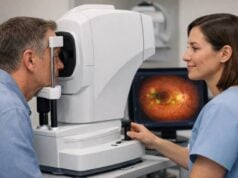
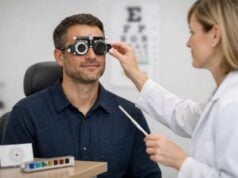
- The fitting process and why it takes time
- Daily care routine and long-term success
How scleral lenses relieve severe dry eye
Scleral lenses are large-diameter, rigid gas-permeable lenses that rest on the white of the eye (the sclera) rather than on the cornea. The key design feature is the vault: the lens bridges over the cornea and limbus without touching them, leaving space that is filled with sterile, preservative-free saline before insertion. That liquid layer becomes a steady “tear substitute” that stays in place far longer than drops.
Why the fluid reservoir matters
With severe dry eye, the surface often suffers from a combination of friction, inflammation, and tear film instability. The fluid reservoir can help in several ways:
- Continuous hydration: It buffers the surface from evaporative loss between blinks, which is especially helpful when the tear film breaks up rapidly.
- Mechanical protection: The lens shields the cornea from eyelid friction, which can reduce pain and protect fragile epithelium.
- Optical smoothing: By creating a smooth front surface, scleral lenses can reduce vision fluctuation caused by surface dryness or irregularity.
Not all “scleral” lenses are the same
You may hear terms like mini-scleral, semi-scleral, or PROSE-style devices. The core concept is similar—vaulting with a fluid reservoir—but diameters and designs vary. Larger diameters can be more stable and protective, while smaller designs can be easier for some people to handle. The best choice depends on your anatomy, eyelid tension, and how compromised the ocular surface is.
Where scleral lenses sit in severe dry eye care
Scleral lenses are usually considered when standard therapies are not providing adequate protection or symptom control. That does not mean you must “fail everything” first, but it does mean they are typically used for more advanced disease: significant pain, visual disability, recurrent epithelial breakdown, or inflammation-driven surface compromise. They also tend to be considered earlier in certain high-risk situations, such as exposure keratopathy or autoimmune-related ocular surface disease, where the cornea needs physical protection to stay intact.
A helpful way to frame the mechanism is simple: drops coat the surface briefly; scleral lenses create a controlled environment around the surface for hours. That difference explains why some patients describe scleral wear as the first time their eyes feel “calm” all day. It also explains why handling, fit, and hygiene are non-negotiable—because you are wearing a device that changes the ocular surface environment for a long period.
Who qualifies and who may struggle
The best candidates for scleral lenses are not defined only by “how dry” the eyes feel. Qualification is based on severity, ocular surface risk, and whether a custom lens can sit safely and comfortably on your eye. A specialist will evaluate both symptoms and objective findings—because a person can feel miserable with modest staining, or feel “okay” while the cornea is quietly deteriorating.
Common reasons scleral lenses are recommended
Scleral lenses are often used for severe or refractory dry eye related to:
- Autoimmune disease (such as Sjögren’s syndrome) with tear deficiency and surface damage
- Ocular graft-versus-host disease with pain and epithelial compromise
- Exposure keratopathy from incomplete blinking or eyelid closure
- Neurotrophic keratopathy where corneal healing is fragile
- Persistent epithelial defects or recurrent erosions that need surface protection
- Severe meibomian gland dysfunction with evaporative instability when other strategies have not been enough
They can also be used when dry eye overlaps with corneal irregularity (for example, post-surgery irregularity or ectasia) and the main complaint is unstable vision and discomfort.
What can make fitting harder
Some factors do not automatically disqualify you, but they raise the complexity:
- Very tight lids or strong blink force that dislodges lenses or causes edge awareness
- Marked conjunctival swelling (chemosis) or scarring that prevents stable landing
- Significant eyelid margin disease that increases debris and inflammation
- Poor manual dexterity or tremor that makes safe insertion and removal unreliable
- Low pain sensitivity or reduced corneal sensation (paradoxically) because infection or injury may be noticed late
If handling is the barrier, it is worth knowing that tools exist—large plungers, stands, lighting setups—and training is part of the process. Still, a person who cannot reliably insert, remove, and clean the lens safely is not a good candidate until that barrier is solved.
Red flags that require extra caution
Certain situations call for a more conservative approach:
- History of severe contact lens-related infection or poor hygiene adherence
- Active ocular infection or uncontrolled inflammation that must be treated first
- Inability to attend follow-up visits (early follow-up is crucial for safety and fit refinement)
Qualification is ultimately a partnership: the eye must be anatomically fit-able, and the person must be able to use the system safely. When those align, scleral lenses can be one of the most meaningful quality-of-life interventions for severe dry eye.
Benefits you can realistically expect
The most compelling benefit of scleral lenses for severe dry eye is not “less dryness.” It is a quieter ocular surface—less friction, fewer flare-ups, and more predictable vision. For some people, the change is dramatic. For others, it is moderate but still meaningful because it reduces daily dependence on frequent drops and allows longer stretches of comfortable function.
Symptom relief and pain reduction
Many severe dry eye patients report improvements in:
- Burning, stinging, and foreign-body sensation
- Light sensitivity driven by surface irritation
- End-of-day “shutdown” fatigue where the eyes become intolerable by afternoon
- Wind and air-conditioning intolerance
This benefit is most consistent when symptoms are driven by surface exposure and friction. The lens acts like a barrier that prevents the eyelid from scraping a compromised cornea and reduces evaporative stress over the day.
Corneal protection and healing support
In severe disease, the goal is often to protect the cornea from breakdown. Scleral lenses can support:
- Reduced corneal staining and epithelial disruption
- Improved stability in recurrent erosions (when appropriately monitored)
- Better tolerance of necessary environments (work screens, travel, dry buildings) because the surface is buffered
They are sometimes used to help maintain an intact epithelium in conditions where repeated breakdown threatens scarring or infection risk.
More stable vision
Dry eye can cause vision to fluctuate minute to minute. By creating a smooth optical surface, scleral lenses often improve:
- Clarity and stability during reading and screen use
- Visual quality in glare-producing environments
- Function in tasks that depend on consistent contrast
People with surface irregularity (even mild) may notice a clearer “snap” of focus than they have had in years.
Reduced medication burden for some patients
While scleral lenses are not a replacement for anti-inflammatory care when it is needed, some patients find they can reduce the frequency of rescue drops or rely less on short-term topical steroids. A realistic expectation is not “no more treatments,” but “fewer crisis days.”
What benefits are less predictable
Scleral lenses do not reliably fix underlying inflammation, lid disease, or tear gland dysfunction. They manage the environment. If the root problem is active and unaddressed—severe blepharitis, untreated meibomian gland dysfunction, allergy, or systemic drivers—comfort may still be limited. The best outcomes happen when scleral lenses are integrated into a full plan that treats lid margins, inflammation, and environmental triggers.
A practical mindset is to define success in daily tasks: reading time without pain, fewer interruptions at work, less dependence on constant drops, and fewer episodes of corneal breakdown. Those are the outcomes that tend to matter most.
Downsides, risks, and common problems
Scleral lenses can be life-changing, but they come with real trade-offs. The most common downsides are not dangerous—they are logistical and comfort-related. The most serious risks are rare but must be respected because they can threaten vision.
Daily burden and learning curve
Many people underestimate how “hands-on” scleral lenses are. Expect:
- Longer morning setup time (filling, inserting, checking bubbles)
- A learning period measured in weeks, not days
- Occasional mid-day removal and refill if fogging is severe
- Ongoing supply needs (sterile saline, cleaning and disinfection products)
If you want the benefits, you must be willing to operate the system consistently.
Fogging, debris, and fluctuating comfort
A frequent frustration is mid-day fogging: the fluid reservoir becomes cloudy, often from mucus, lipid debris, or inflammatory cells. This can blur vision and reduce comfort. Fogging is not a “failure,” but it usually means the fit or the surface environment needs refinement. Common contributors include eyelid margin inflammation, meibomian gland dysfunction, allergic conjunctivitis, or a lens that allows excessive tear exchange.
Redness can also occur, especially around the limbus. Sometimes it reflects mechanical pressure, suction, or inadequate oxygen transmission. Sometimes it reflects inflammation. A specialist can differentiate these patterns, but it requires follow-up and honest reporting.
Hypoxia and pressure-related issues
Modern materials are highly oxygen-permeable, yet oxygen delivery is still a concern because the lens is thick and the fluid reservoir adds distance. Fit choices—lens thickness, vault, and landing zone design—matter. Potential problems include:
- Corneal swelling in susceptible eyes
- Limbal redness from mechanical stress
- Conjunctival “imprint” or blanching from excessive edge pressure
- Elevated eye pressure in some individuals, especially if suction is strong
These risks are why “more vault” is not always better. The goal is enough clearance for safety without excessive fluid thickness.
Infection risk and why hygiene is critical
Any contact lens raises infection risk, and severe dry eye eyes may be more vulnerable because the surface is compromised. Poor cleaning, topping off solutions, using non-sterile fluids, or wearing lenses when the eye is actively inflamed increases risk. A painful red eye with light sensitivity and reduced vision during lens wear should be treated as urgent until proven otherwise.
Cost and access
Scleral lenses are custom medical devices and the fitting process is time-intensive. Costs can be significant, and coverage varies. Even when coverage exists, prior authorization and documentation are often required, and replacement schedules can be strict.
The honest summary: most “downsides” are manageable with good fitting, surface disease control, and routine discipline. The non-negotiables are hygiene, follow-up, and a willingness to troubleshoot rather than expecting perfect comfort from day one.
The fitting process and why it takes time
Scleral lens success is built in the fitting chair, not just in the lens lab. The eye is not a standard shape, and severe dry eye eyes are often extra complex due to inflammation, conjunctival swelling, scarring, or irregularity. A careful fitting process protects the cornea while aiming for comfort and stable vision.
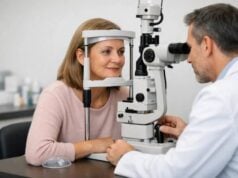
What happens at the evaluation
A specialty fitter typically assesses:
- Corneal and conjunctival health, including staining patterns and epithelial integrity
- Eyelid anatomy and blink behavior (tight lids, incomplete blink, exposure)
- Tear film characteristics and lid margin disease
- Eye pressure considerations and risk factors for glaucoma
- Corneal shape data when relevant
They also discuss lifestyle goals—computer use, driving, work environment, and whether you can manage the handling routine.
Diagnostic lens trial and early safety checks
Most fittings begin with a diagnostic lens placed on the eye to evaluate vault, landing, and movement. The clinician checks:
- Central and limbal clearance (enough to avoid touch)
- Landing zone alignment (no excessive blanching or edge lift)
- Signs of suction or trapped bubbles
- Early comfort and vision quality
You may leave with a temporary plan or an order for a custom lens based on these measurements. Early in the process, the goal is safe geometry, not perfection.
Why multiple visits are normal
The ocular surface often changes once the cornea is protected. Swelling can reduce, staining can improve, and symptoms can shift. That means lens parameters may need adjustment. Common early refinements include:
- Reducing excessive vault to improve oxygen delivery and reduce suction
- Adjusting the landing zone to reduce redness and improve comfort
- Changing diameter to improve stability under the lids
- Tweaking optics to improve clarity, especially if vision fluctuates
Training is part of fitting
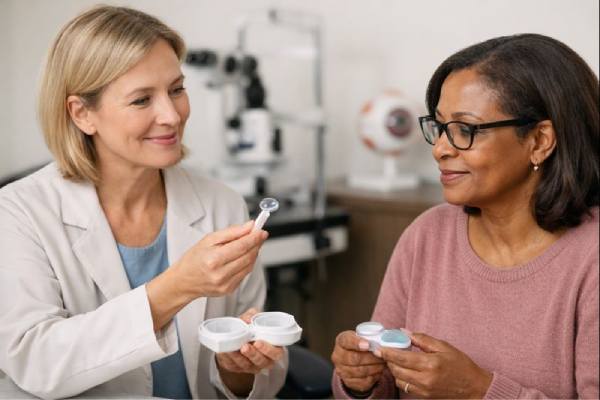
Many clinics treat training as a formal step: insertion, removal, cleaning, and emergency rules. The first successful insertion at home is often the biggest hurdle, and it is normal to need practice. A good program prepares you for real life: how to avoid bubbles, how to recognize early warning signs, and how to reset the lens without damaging the surface.
If your fitting feels “slow,” that is often a sign of careful practice rather than inefficiency. The goal is a lens that protects the eye safely for hours, day after day. That requires precision and patience.
Daily care routine and long-term success
A scleral lens can only be as safe as the routine around it. Long-term success comes from making the process reliable: clean hands, sterile filling, consistent disinfection, and a clear plan for discomfort days. If you are considering scleral lenses, it helps to picture the routine now—because adherence is the hidden qualifier.
A practical daily workflow
Most successful wearers follow a predictable sequence:
- Wash and dry hands thoroughly before touching lenses or eyelids.
- Clean and disinfect the lens according to the prescribed system (daily cleaning plus approved disinfection).
- Fill the lens with sterile, preservative-free saline to the brim to reduce bubble risk.
- Insert and check for bubbles (a bubble can cause discomfort and surface drying).
- Set a wear strategy that matches your eye’s needs—some people wear all day; others plan a mid-day refill.
If vision suddenly becomes cloudy or uncomfortable, the safest fix is often remove, clean, refill, and reinsert—assuming the eye is not red or painful in a way that suggests infection.
What not to do
Common unsafe shortcuts include:
- Using tap water or homemade saline to fill or rinse
- “Topping off” old solution instead of fully cleaning and disinfecting
- Wearing lenses through active infection symptoms
- Sleeping in lenses unless specifically directed and closely monitored (this is uncommon and higher risk)
Avoiding water exposure is especially important. Water can carry organisms that are dangerous to the cornea.
Managing fogging and discomfort
If fogging is frequent, long-term solutions often involve treating the source:
- Improve eyelid margin health (inflammation and oil instability often drive debris)
- Adjust lens fit to reduce tear exchange or suction patterns
- Review filling technique and ensure the lens is truly bubble-free
- Consider whether allergy or mucus production is flaring
Dry eye is dynamic, so your lens plan should be dynamic too. It is normal to need periodic refits as the ocular surface changes.
When to treat symptoms as urgent
Seek urgent eye care if you develop significant pain, increasing redness, light sensitivity, reduced vision, or discharge—especially if symptoms persist after removing the lens. Severe dry eye eyes can deteriorate quickly if an infection or corneal ulcer develops.
Scleral lenses work best when they are treated as a medical device: used consistently, cleaned correctly, and monitored carefully. When that foundation is in place, they can provide something many severe dry eye patients rarely experience—hours of steady comfort and stable vision.
References
- Scleral Lenses for Managing Dry Eye Disease in the Absence of Corneal Irregularities: What Is the Current Evidence? – PMC 2024 (Review)
- Scleral lenses and PROSE: indications, complications, and future challenges – PMC 2025 (Review)
- Short-Term Efficacy and Safety of Scleral Lenses in the Management of Severe Dry Eye in a Chinese Population – PMC 2025 (Clinical Study)
- Scleral lenses in the management of ocular surface disease – PubMed 2014 (Clinical Study)
Disclaimer
This article is for general educational purposes and does not provide medical advice. Severe dry eye can involve inflammation, infection risk, corneal damage, and other conditions that require individualized evaluation and treatment by a qualified eye-care professional. Scleral lenses are medical devices that must be fitted and monitored by trained clinicians, and unsafe handling or improper hygiene can lead to serious complications, including vision-threatening infection. Seek urgent eye care for sudden vision changes, significant eye pain, rapidly increasing redness, new light sensitivity, discharge, or the feeling that something is seriously wrong—especially during contact lens wear.
If you found this article helpful, please consider sharing it on Facebook, X (formerly Twitter), or any platform you prefer.