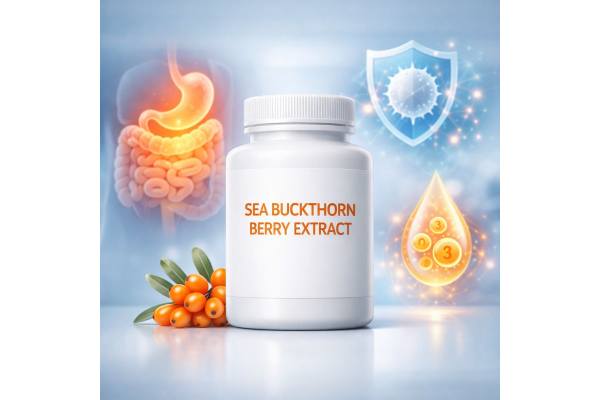
Sea buckthorn (Hippophae rhamnoides L., also called Elaeagnus rhamnoides) is a hardy shrub that produces bright orange berries rich in vitamins, plant fats, and polyphenols. From these berries, manufacturers prepare sea buckthorn berry extract and oils that are used in supplements for skin health, cardiovascular support, metabolic balance, and mucosal dryness (such as dry eyes and mouth). Modern analyses show the berries contain nearly 200 distinct nutrients and bioactive compounds, including vitamin C, vitamin E, carotenoids, flavonoids, and unique omega-7 fatty acids in the pulp oil.
Sea buckthorn has a long history in traditional medicine in Asia and Eastern Europe. Today it appears in capsules, liquid extracts, functional foods, and topical products. Because the composition can vary widely between products, understanding what “sea buckthorn berry extract” actually contains is essential before using it for specific goals such as supporting cholesterol levels, skin barrier function, or overall antioxidant status. This guide walks through how sea buckthorn berry extract works, what the human studies show so far, practical dosage ranges, and important safety points so you can discuss it more confidently with your healthcare professional.
Quick Overview for Sea Buckthorn Berry Extract
- Sea buckthorn berry extract provides concentrated antioxidants, omega fatty acids, and carotenoids that may support skin, cardiovascular, and metabolic health.
- Human trials suggest possible benefits for cholesterol profiles, markers of metabolic syndrome, and symptoms of dryness in skin and mucous membranes, though data are still limited.
- Typical oral intakes in studies range from about 800 mg of berry or pulp oil to 2 g of sea buckthorn oil daily, or around 60–90 g of berry puree per day.
- Mild digestive upset and a change in body or urine odor are the most commonly reported side effects at usual doses.
- People who are pregnant or breastfeeding, have bleeding disorders, take anticoagulant or antiplatelet drugs, or have very low blood pressure should avoid sea buckthorn supplements unless advised otherwise by a clinician.
Table of Contents
- What is sea buckthorn berry extract?
- How does sea buckthorn berry extract work?
- Evidence based benefits of sea buckthorn berry extract
- How to use sea buckthorn berry extract day to day
- Sea buckthorn berry extract dosage guidelines
- Side effects of sea buckthorn berry extract and who should avoid it
- What the research says overall
What is sea buckthorn berry extract?
Sea buckthorn is a thorny shrub native to Europe and Asia that has adapted to severe climates and poor soils. The small orange berries are unusually dense in vitamin C, vitamin E, carotenoids, plant sterols, and polyphenolic flavonoids such as quercetin and isorhamnetin. When these berries are pressed or extracted, manufacturers can obtain several different ingredients, which are often sold under similar names:
- Berry or pulp oil – a lipid extract from the soft outer part of the berry rich in omega-7 (palmitoleic acid), omega-9 (oleic acid), and carotenoids.
- Seed oil – pressed from the seeds; higher in omega-3 and omega-6 fatty acids and vitamin E.
- Whole berry extract or puree – usually water or hydroalcoholic extracts or concentrated purees that preserve vitamin C, flavonoids, and some lipids.
The term “sea buckthorn berry extract” on labels may refer to any of these, or a mixture. Some products standardize to specific compounds, such as a minimum percentage of flavonoids, proanthocyanidins, or carotenoids, while others simply declare “sea buckthorn berry powder” or “sea buckthorn oil” without details. This is important because the biological effects can differ; for example, lipid-rich pulp oil is often chosen for skin and mucosal dryness, while polyphenol-rich extracts and purees are more often studied for cardiovascular and metabolic markers.
Sea buckthorn ingredients appear in:
- Stand-alone capsules or softgels of berry and seed oil
- Multi-ingredient antioxidant or “beauty from within” formulas
- Functional foods and beverages, such as juices, shots, and gummies
- Topical creams and serums for skin support
Because of this diversity, reading the supplement facts panel to see whether you are getting oil, powder, or puree – and from which part of the plant – is a key first step before thinking about dose or expected effects.
How does sea buckthorn berry extract work?
Sea buckthorn berry extract acts through multiple mechanisms that overlap in the areas of antioxidant defense, inflammation control, lipid metabolism, and barrier function in skin and mucous membranes.
From a biochemical perspective, sea buckthorn berries provide high levels of vitamin C, vitamin E, carotenoids, and flavonoids. These compounds help neutralize reactive oxygen species and regenerate other antioxidants, supporting endogenous defense systems such as glutathione peroxidase and superoxide dismutase. By reducing oxidative stress in cell membranes and lipoproteins, they may slow processes that contribute to atherosclerosis, insulin resistance, and tissue damage.
Polyphenols and flavonoids from sea buckthorn also appear to modulate inflammatory pathways. Experimental work suggests that isolated compounds and berry extracts can down-regulate NF-κB activation and reduce the production of inflammatory cytokines such as TNF-α and IL-6, while up-regulating protective enzymes like heme oxygenase-1. This anti-inflammatory profile is one reason the plant has been explored in conditions associated with chronic low-grade inflammation, including metabolic syndrome, obesity, and certain skin disorders.
The berry and seed oils contribute unique fatty acids: omega-7 palmitoleic acid, omega-3 alpha-linolenic acid, omega-6 linoleic acid, and omega-9 oleic acid, alongside phytosterols. This combination can influence lipid metabolism, potentially improving cholesterol efflux, supporting HDL function, and altering membrane fluidity in ways that affect insulin signaling and vascular health.
For skin and mucosal surfaces, omega-7 rich pulp oil and vitamin-dense extracts seem particularly relevant. Clinical and preclinical data suggest that these lipids can:
- Enhance skin barrier integrity and hydration
- Support epithelial cell turnover and repair
- Influence sebum composition and surface lipids
Finally, sea buckthorn components may interact with the gut microbiota. Early human work with berry purees indicates shifts in microbial composition and metabolic profiles that could partly explain improvements in lipid markers and inflammatory parameters seen in some trials.
Overall, sea buckthorn berry extract is best understood not as a single-target product, but as a multi-component mixture that modestly influences several interconnected pathways rather than acting like a drug on one receptor.
Evidence based benefits of sea buckthorn berry extract
Human and animal studies on sea buckthorn use a range of preparations, from pure berry oil to whole berry purees and mixed seed and pulp oils. While results are not uniform and sample sizes are often modest, several benefit areas appear repeatedly.
Metabolic and cardiovascular markers
Sea buckthorn berry products have been studied in people with high cholesterol, hypertension, or features of metabolic syndrome. In hypercholesterolemic adults, high daily intakes of sea buckthorn puree over several months have improved multiple lipid parameters and altered metabolomic and gut microbiota profiles in ways consistent with better cardiometabolic health, compared with placebo. Other trials using seed oil in hypertensive and hypercholesterolemic subjects have reported reductions in blood pressure, total cholesterol, triglycerides, and oxidized LDL over 30 days, though these were relatively short-term interventions.
In obese children with a high-risk “hypertriglyceridemic waist” phenotype, several weeks of sea buckthorn pulp oil supplementation improved inflammatory markers, oxidative stress indices, and carotid artery intima-media thickness, suggesting potential benefits for early vascular health, although longer follow-up would be needed to know whether the effects persist.
Skin and mucosal health
Sea buckthorn oils are frequently marketed for skin and mucous membranes. In a randomized trial of adults with dry eye symptoms, oral sea buckthorn oil taken for three months reduced tear film osmolarity and some subjective symptoms compared with placebo during the dry winter season. Observational and small interventional studies also suggest that oral sea buckthorn oil may improve certain aspects of skin hydration, elasticity, and texture, likely by altering skin surface lipids and providing antioxidant protection, but the evidence remains preliminary and heterogeneous.
Topical products containing sea buckthorn extracts have been explored for dermatitis, wound healing, and photoaging, usually in combination with other actives. These studies are difficult to interpret in isolation, but they support the rationale that berry lipids and antioxidants can contribute to barrier repair and antioxidant defense when applied directly to the skin.
Antioxidant and anti-inflammatory support
Both whole berries and standardized extracts show strong in-vitro antioxidant capacity. Small human studies using juices or functional products have reported improvements in biomarkers such as total antioxidant capacity and reductions in markers of lipid peroxidation after regular intake. These findings are consistent with the dense mix of vitamins, carotenoids, and flavonoids in the berries, but they do not yet translate into clear reductions in hard clinical outcomes such as heart attacks or diabetes complications.
In summary, sea buckthorn berry extract appears promising as a supportive nutrient for cardiometabolic and skin health, particularly in people with elevated risk markers. However, it should be viewed as an adjunct to, not a replacement for, established lifestyle and medical therapies.
How to use sea buckthorn berry extract day to day
Because “sea buckthorn berry extract” covers several product types, it helps to match the form to your main goal and to use it consistently rather than sporadically.
For cardiometabolic support, human trials have used:
- Berry purees or concentrates taken once daily, often around 60–90 g of puree providing fiber, polyphenols, and natural sugars
- Seed or mixed oils in softgels or liquid form at doses under 1 mL per day for seed oil, or up to 2 g per day for mixed oils
In practice, people typically choose capsules or softgels standardized to berry and seed oils because they are easier to dose precisely. Taking them with meals that contain some fat generally improves absorption of fat-soluble carotenoids and vitamin E.
For skin and mucosal health, pulp-rich oils and combinations of berry and seed oils are often preferred due to their omega-7 and carotenoid content. These may be used:
- Orally, in the same ranges as for cardiometabolic support
- Topically, in serums, creams, or balms applied once or twice daily to clean skin
If you are already taking a high-quality fish oil or algae omega-3 supplement, sea buckthorn berry extract may offer complementary benefits by providing omega-7 and polyphenols rather than duplicating EPA and DHA. Many combination “hair, skin, and nail” or “beauty from within” products pair sea buckthorn with vitamin C, collagen, hyaluronic acid, or biotin.
General practical tips include:
- Start at the lower end of suggested intakes for at least 1–2 weeks to check tolerance.
- Keep a simple log of any changes in digestion, skin, or energy while using it.
- Re-evaluate after 8–12 weeks, as most clinical studies ran for 1–3 months.
- Treat it as part of a broader plan that includes diet, activity, sleep, and medical treatment where needed.
As always, it is wise to involve your healthcare professional before adding sea buckthorn berry extract if you have chronic conditions, take prescription medication, or are planning surgery.
Sea buckthorn berry extract dosage guidelines
There is no universally accepted “standard dose” for sea buckthorn berry extract, and products vary widely in strength and composition. However, clinical studies provide useful reference points for typical human intakes.
Below are approximate daily intakes used in research, which can guide a discussion with your clinician and help you interpret product labels:
| Preparation type | Example daily amount used in studies | Typical use focus |
|---|---|---|
| Berry puree or concentrate | 60–90 g puree (about 60–90 mL) | Cholesterol and cardiovascular risk markers |
| Pulp or mixed pulp and seed oil (oral) | 800 mg–2,000 mg oil | Metabolic markers, skin and mucosal dryness |
| Seed oil (oral) | Around 0.75 mL (about 600–800 mg) | Blood pressure and lipid markers |
| General commercial capsules (mixed oils) | Commonly 500–1,000 mg per capsule | Broad antioxidant and “beauty from within” use |
In many commercially available supplements, a typical daily serving falls between 500 and 2,000 mg of sea buckthorn oil or standardized berry extract for adults. Staying within this range is reasonable for most generally healthy adults, provided there are no contraindications and the product is from a reputable manufacturer.
Practical dosage considerations:
- Follow the label of the specific product first, as standardization (for flavonoids, carotenoids, or omega-7) can change how much you actually receive per capsule.
- Split doses with meals if taking more than about 1,000 mg per day to reduce the chance of digestive discomfort.
- Limit self-experimentation at higher doses (above 2,000 mg oil daily or well beyond 90 g of puree) because long-term safety data at those levels are limited.
- Adjust for body size and sensitivity; smaller or sensitive individuals may do better at the lower end of studied ranges.
Children, pregnant or breastfeeding individuals, and people with chronic illness should not use sea buckthorn berry extract without specific medical guidance, even at doses that appear safe in adult trials.
Side effects of sea buckthorn berry extract and who should avoid it
Overall, sea buckthorn oil and berry products have shown a good safety profile in both animal and human work. In a rodent toxicity study, oral sea buckthorn oil given at very high doses for 90 days produced no clear signs of toxicity and established a high no-observed-adverse-effect level, which is far above typical human supplement intakes.
In human clinical trials using up to 2 g per day of sea buckthorn oil or around 90 g per day of berry puree for several months, adverse effects were generally mild and transient. The most commonly reported issues include:
- Digestive symptoms such as soft stools, mild nausea, or abdominal discomfort
- A characteristic fruity or oily aftertaste
- In rare cases, headache or a feeling of warmth or flushing
Because the berries are rich in carotenoids, very high chronic intakes could theoretically contribute to harmless yellowish skin discoloration (carotenodermia), similar to high carrot or pumpkin intake, although this has not been widely reported specifically with sea buckthorn.
Important cautions and situations where medical advice is essential include:
- Bleeding risk – The combination of vitamin E, polyphenols, and possible antiplatelet effects means people on anticoagulants, antiplatelet drugs, or with bleeding disorders should only use sea buckthorn under supervision.
- Blood pressure and cardiovascular drugs – Trials showing modest reductions in blood pressure and lipids are encouraging, but they also mean that those on antihypertensives or lipid-lowering medications should be monitored for additive effects.
- Pregnancy and breastfeeding – Human safety data are limited; most guidelines recommend avoiding concentrated supplements during pregnancy and lactation unless there is a clear medical indication and professional oversight.
- Gallbladder and pancreatic disease – Any fat-rich supplement can aggravate symptoms in some people with gallbladder or pancreatic disorders.
- Allergy – Individuals with known allergies to sea buckthorn, plants in the Elaeagnaceae family, or ingredients in the capsule should not use these products.
Stop the supplement and seek medical care promptly if you experience signs of an allergic reaction (such as rash, swelling, or difficulty breathing), unexplained bruising or bleeding, or persistent gastrointestinal pain.
What the research says overall
Sea buckthorn berry extract sits in an interesting middle ground between traditional herbal remedy and modern functional food. The scientific literature has expanded rapidly over the last decade with several comprehensive reviews summarizing its phytochemistry and health effects.
Taken together, the evidence suggests that:
- Sea buckthorn berries are unusually dense in biologically active nutrients, particularly antioxidants and specialized fatty acids.
- Human trials, while modest in size, show consistent trends toward improvements in blood lipids, certain inflammatory markers, and subjective measures of dryness when standardized products are used for 1–3 months.
- Safety data in humans and animals are generally reassuring at doses typical of supplements and functional foods, with few serious adverse events reported.
However, there are important limitations:
- Many studies are short term, often under 3 months, so long-term effects remain uncertain.
- Preparations differ widely (seed oil, pulp oil, purees, mixed extracts), making it difficult to generalize results across all “sea buckthorn” supplements.
- Most outcomes are intermediate markers (cholesterol, inflammatory cytokines, tear osmolarity) rather than hard clinical endpoints such as cardiovascular events.
For now, the most balanced view is to see sea buckthorn berry extract as a potentially useful adjunct for people looking to support cardiometabolic health, skin and mucosal comfort, or overall antioxidant intake, especially when lifestyle measures are already in place. It is not a substitute for prescribed medications or medical care, but when chosen carefully and used under appropriate guidance, it can form part of a broader, evidence-informed self-care strategy.
When evaluating products, prioritize:
- Clear labeling of plant part (berry, pulp, seed, or mixture) and extraction method
- Standardization to meaningful markers (for example, total flavonoids, carotenoids, or omega-7 content)
- Third-party testing for purity and contaminants
- Realistic health claims that do not promise cures or dramatic results
If you have existing health conditions or take regular medication, treating sea buckthorn berry extract like any other active supplement – with thoughtful planning and professional input – is the safest and most effective approach.
References
- Bioactive Compounds in Sea Buckthorn and their Efficacy in Human Health 2023 (Systematic Review)
- Phytochemistry, health benefits, and food applications of sea buckthorn (Hippophae rhamnoides L.): A comprehensive review 2022 (Systematic Review)
- The impact of sea buckthorn oil fatty acids on human health 2019 (Systematic Review)
- Oral sea buckthorn oil attenuates tear film osmolarity and symptoms in individuals with dry eye 2010 (RCT)
- Acute and subchronic toxicity studies of seabuckthorn (Hippophae rhamnoides L.) oil in rodents 2017 (Toxicology Study)
Disclaimer
The information in this article is intended for general educational purposes only and does not replace individual medical advice, diagnosis, or treatment. Sea buckthorn berry extract can interact with health conditions and medications, and its benefits and risks may differ from person to person. Always consult a qualified healthcare professional before starting, stopping, or changing any supplement, especially if you are pregnant, breastfeeding, under 18, have chronic medical conditions, or take prescription or over-the-counter drugs. Never disregard or delay seeking professional medical advice because of something you have read here.
If you found this guide helpful, you are warmly invited to share it with others on Facebook, X (formerly Twitter), or any platform you prefer, and to follow our work on social media. Your considerate support by sharing our content helps our team continue to research, write, and update high-quality, evidence-informed health articles.