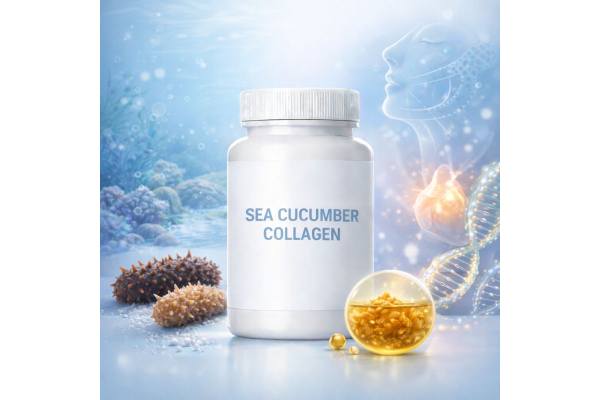
Sea cucumber collagen has moved from traditional Asian kitchens into modern nutricosmetics and joint support formulas. Extracted mainly from the thick body wall of marine sea cucumbers, this collagen is rich in small bioactive peptides, glycosaminoglycans, and other compounds that may support skin structure, wound repair, and inflammatory balance. Early laboratory and animal studies suggest antioxidant, anti-photoaging, and tissue-regenerating effects, especially when collagen is hydrolyzed into low–molecular weight peptides that the body can absorb more easily. At the same time, there are almost no robust human trials focused specifically on sea cucumber collagen supplements, and safety questions remain for people with seafood allergies, on blood thinners, or pregnant. This guide walks you through what sea cucumber collagen is, how it behaves in the body, potential benefits, realistic dosage ranges, and safety caveats, so you can discuss it more confidently with your healthcare professional before deciding if it fits your routine.
Key Insights for Sea Cucumber Collagen
- Sea cucumber collagen provides type I collagen and bioactive peptides that may support skin elasticity, wound healing, and inflammation balance.
- Most benefit data come from animal and cell studies, so human effects remain uncertain and should be considered experimental.
- Practical oral intake often falls around 1–5 g of collagen peptides per day, but there is no officially established “correct” dosage.
- People with seafood allergy, on anticoagulant or antiplatelet therapy, or who are pregnant or breastfeeding should avoid or use only under medical supervision.
Table of Contents
- What is sea cucumber collagen and how does it work?
- Science backed benefits for skin, joints and overall health
- How to take sea cucumber collagen: forms, dosage and timing
- Choosing a quality sea cucumber collagen product
- Side effects, interactions and who should avoid it
- What the research actually shows and key evidence gaps
What is sea cucumber collagen and how does it work?
Sea cucumbers are marine invertebrates related to sea urchins and starfish. Their thick, leathery body wall is rich in structural proteins, and type I collagen is the dominant one. In some species, collagen makes up the majority of the body wall’s protein content. This collagen forms a fibrous network that allows the animal’s body to stiffen or soften rapidly, a property known as “mutable collagen,” which has attracted interest for biomaterials and tissue engineering.
Sea cucumber collagen is still type I collagen, but it differs subtly from bovine or porcine collagen in amino acid composition and thermal behavior. It often has a slightly lower content of imino acids (proline and hydroxyproline), giving it a lower denaturation temperature and different flexibility compared to mammalian collagen. Researchers have isolated type I collagen from several sea cucumber genera (such as Stichopus, Holothuria, and Cucumaria) and shown that it forms fibrils and gels with properties similar to other marine collagens, but with some distinctive rheological and film-forming characteristics.
For supplements, this native collagen is usually enzymatically hydrolyzed into smaller peptides. These “collagen hydrolysates” or “collagen peptides” are typically below 3 kDa in size. Small peptides are more likely to survive digestion and appear in the bloodstream, where they may interact with skin fibroblasts, chondrocytes, endothelial cells, and immune cells. Work on sea cucumber–derived peptides suggests they can act as antioxidants, modulate inflammatory signaling pathways, and influence enzymes that break down the extracellular matrix.
Sea cucumber tissues also contain glycosaminoglycans (for example, chondroitin sulfate and fucosylated chondroitin sulfate), polysaccharides, and saponins. These non-collagen components are not “collagen” in the strict sense, but many commercial sea cucumber collagen products include them, so their biological actions can overlap with or complement peptide effects.
Mechanistically, sea cucumber collagen is thought to support tissues in two main ways: providing building blocks (amino acids and peptides) for new collagen synthesis, and delivering bioactive fragments that signal cells to reduce oxidative stress and inflammation or increase matrix production. Most of this evidence comes from laboratory and animal studies, so how strongly these mechanisms translate to humans is still uncertain.
Science backed benefits for skin, joints and overall health
Skin health, elasticity and photoaging
Skin applications are the most publicized potential use of sea cucumber collagen. In controlled animal models, oral sea cucumber and its hydrolysate reduced ultraviolet A (UVA)–induced photoaging in hairless mice: transepidermal water loss and wrinkle formation decreased, while genes related to skin barrier function and inflammation shifted in a protective direction.
Other preclinical work shows that sea cucumber collagen and its low–molecular weight peptides can:
- Increase antioxidant enzyme activity and decrease markers of oxidative damage in skin models.
- Promote keratinocyte migration and wound closure in scratch assays, especially with peptides in the 1–3 kDa range.
- Support dermal matrix integrity by influencing collagen fiber organization and reducing collagen degradation enzymes.
These findings underpin claims that sea cucumber collagen may help with fine lines, dryness, and repair after minor skin injury. However, they are based almost entirely on animal and cell models. Human clinical trials that test oral sea cucumber collagen for wrinkles, elasticity, or hydration are not yet available, so the real-world cosmetic effect size in people is unknown.
Joint comfort and connective tissue support
Sea cucumber body wall naturally contains collagen plus chondroitin sulfate and related glycosaminoglycans, which are also used in some joint supplements. In vitro studies suggest sea cucumber extracts can support osteoblast activity and may influence cartilage-related pathways, but joint-specific human data for sea cucumber collagen are extremely limited.
By analogy with better-studied bovine and fish collagen peptides, it is biologically plausible that sea cucumber collagen peptides could:
- Provide amino acids (glycine, proline, hydroxyproline) needed for cartilage and tendon repair.
- Modulate inflammatory mediators in joint tissues.
- Potentially support joint comfort over months of continuous use.
At present, though, these are extrapolations rather than proven benefits. People with osteoarthritis or tendon issues should not replace established therapies with sea cucumber collagen, but it may be considered as an adjunctive experimental option under professional guidance.
Metabolic, cardiovascular and systemic effects
A growing body of work examines sea cucumber–derived peptides and other compounds for broader systemic benefits:
- Metabolic health: In animal models, sea cucumber components (including peptides and sulfated polysaccharides) have shown anti-obesity, anti-hyperglycemic, and lipid-lowering effects through modulation of insulin signaling, gut microbiota, and inflammatory markers.
- Anti-inflammatory actions: Peptides and glycosaminoglycan-rich fractions can reduce pro-inflammatory cytokines and support resolution of inflammation in various tissues, including gut and skin.
- Potential neuroprotective and anti-fatigue effects: Some sea cucumber peptides have been studied for anti-fatigue, memory, and exercise performance benefits in rodents, pointing to central nervous system and mitochondrial targets.
These findings suggest that sea cucumber collagen–derived peptides may have whole-body effects beyond the skin. Yet once again, nearly all of the evidence comes from animals. Only a small number of human studies on sea cucumber extracts (not pure collagen) exist, and they are typically small, preliminary, and heterogenous in dosage and formulation.
How to take sea cucumber collagen: forms, dosage and timing
Because human research is sparse, there is no officially established or universally accepted dosage for sea cucumber collagen. Drug and clinical monographs generally state that an appropriate dose has not been defined and recommend following manufacturer instructions and consulting a healthcare professional.
Still, existing products and general collagen research provide a practical framework. Sea cucumber collagen commonly appears as:
- Powders: Often labeled as “sea cucumber collagen peptides” or “sea cucumber hydrolysate,” intended to be mixed into water, smoothies, or other beverages.
- Capsules or tablets: Concentrated extracts that may contain a mix of collagen, glycosaminoglycans, and other sea cucumber bioactives.
- Liquids or functional drinks: Ready-to-drink nutricosmetic formulations combining sea cucumber with vitamin C, hyaluronic acid, or other ingredients.
- Topical products: Creams and serums using sea cucumber collagen or extract primarily for local skin effects, not systemic support.
For oral use, typical collagen-peptide dosing in human studies (from bovine or fish sources) ranges roughly from 2–10 g per day. Sea cucumber collagen capsules and powders often fall at the lower end of this spectrum by volume, for example:
- 500–2,000 mg of sea cucumber extract per day (in capsules), or
- About 1–5 g of collagen peptides per day when using powders as the primary collagen source.
Given the absence of sea cucumber–specific dosing trials, a cautious approach is:
- Start low: Begin with the manufacturer’s lowest suggested daily amount (for example, 500–1,000 mg of extract or 1–2 g of collagen peptides).
- Take consistently: Collagen studies in general often run for 8–12 weeks or longer before assessing changes in skin or joint outcomes.
- Co-ingest with vitamin C–rich foods: Vitamin C is needed for collagen synthesis and may support effectiveness, even though this has not been directly proven for sea cucumber collagen.
- Adjust slowly: If well tolerated after a few weeks, some people choose to move toward mid-range doses (for example, 2–5 g collagen peptides daily), staying below very high long-term intakes unless supervised.
Timing is flexible. Many users take collagen in the morning with breakfast or in the evening as part of a routine drink. There is no strong evidence that timing relative to meals dramatically alters effects, though taking it with food may help reduce any digestive discomfort.
Ultimately, because no evidence-based upper limit has been defined, it is important to:
- Follow product-specific labels.
- Avoid stacking multiple sea cucumber products unknowingly.
- Discuss use with a clinician, especially if you take other supplements or medications.
Choosing a quality sea cucumber collagen product
Choosing a high-quality product is particularly important for marine-sourced supplements, both for efficacy and safety. Sea cucumbers can accumulate heavy metals and persistent organic pollutants from their environment, and some analyses show that mercury, cadmium, lead, and arsenic in sea cucumbers can, in certain contexts, approach or exceed recommended limits if not carefully controlled.
Key points to consider when selecting a sea cucumber collagen product include:
1. Clear species and raw material information
Look for labels that specify:
- The sea cucumber species (for example, Cucumaria frondosa, Stichopus japonicus).
- The body part used (ideally body wall collagen rather than unspecified “whole animal” powder).
- Whether the product contains pure collagen peptides, a broader extract, or a mix of collagen with polysaccharides and other compounds.
This helps you understand whether you are buying a primarily collagen-focused supplement or a multi-compound sea cucumber extract.
2. Collagen and peptide details
Higher-quality products often state:
- The amount of collagen per serving (in grams or milligrams).
- Whether the collagen is hydrolyzed into peptides and, sometimes, a molecular weight range (for example, “less than 3 kDa”).
- Absence of unnecessary fillers, artificial colors, or excessive sweeteners.
If the label uses “proprietary blend” language without disclosing how much sea cucumber collagen is present, it is harder to judge both efficacy and safety.
3. Safety testing and certifications
Because of potential heavy metal and contaminant issues, prioritize products that:
- Provide third-party testing or certificates of analysis for heavy metals and microbiological safety.
- Follow good manufacturing practices or similar quality standards.
- Are produced by companies that share sourcing regions and sustainability policies for sea cucumbers.
Sustainability matters: wild sea cucumber populations in some regions have been heavily exploited. Responsible brands typically mention managed fisheries or aquaculture and may carry eco-labels.
4. Product format and combination ingredients
Consider how the product fits your routine:
- Powders are flexible and cost-effective per gram of collagen.
- Capsules are convenient for lower doses and travel.
- Combined formulas (for example, sea cucumber collagen plus vitamin C or hyaluronic acid) may be more convenient but often cost more per unit of collagen.
If you also use other marine supplements (fish oil, other marine collagens, seaweed extracts), check for overlapping ingredients and total intake of iodine, sodium, and other nutrients to avoid unintended excess.
Side effects, interactions and who should avoid it
For most healthy adults, small amounts of sea cucumber eaten as food appear to be well tolerated. Traditional culinary use is long-standing, and modern references report few documented side effects from ingestion in typical food quantities. However, supplement use concentrates bioactive components and may carry different risks.
Commonly reported issues and tolerability
In clinical and safety summaries, serious adverse effects from oral sea cucumber are rare, but potential mild reactions include:
- Digestive discomfort (bloating, soft stools, or nausea)
- Fishy aftertaste or reflux when taken as powder
- Occasional headaches or skin flushing in sensitive individuals (based on user reports)
If these occur, lowering the dose, taking the supplement with food, or switching brands can sometimes help. Persistent or severe symptoms are a reason to stop and seek medical advice.
Allergy and hypersensitivity
Sea cucumber is a marine animal, and people with seafood allergies (especially to related echinoderms or sometimes shellfish and fish) are generally advised not to use sea cucumber supplements.
Occupational reports describe skin, respiratory, and eye irritation in workers processing sea cucumbers, likely due to airborne defensive compounds, underscoring that sensitization is possible.
Bleeding risk and interactions with anticoagulants
Sea cucumbers contain sulfated polysaccharides with anticoagulant-like properties. Clinical monographs therefore advise avoiding sea cucumber if you are taking:
- Warfarin or other vitamin K antagonists
- Direct oral anticoagulants (such as apixaban, rivaroxaban, dabigatran)
- Antiplatelet drugs (such as clopidogrel)
The concern is theoretical potentiation of bleeding risk rather than frequent documented cases, but given the seriousness of bleeding complications, conservative avoidance or very careful medical supervision is prudent.
Other groups who should avoid or use with caution
It is sensible to avoid sea cucumber collagen supplements, or to use them only under individualized medical supervision, if you:
- Are pregnant or breastfeeding (safety data for supplements are lacking, although occasional food use is likely safe).
- Have chronic liver or kidney disease, where additional protein and potential contaminants may pose extra strain.
- Have autoimmune conditions or are on immunosuppressive therapy, because immunomodulatory peptides might, in theory, interact with your treatment plan.
- Are scheduled for surgery or dental work and already use anticoagulants or antiplatelet agents.
Heavy metals and contaminants
Sea cucumbers can accumulate heavy metals and persistent organic pollutants depending on environment and processing. Some reviews highlight that, in certain cases, mercury, cadmium, lead, arsenic, and specific organic pollutants in sea cucumber tissues can be high enough that frequent consumption may approach or exceed health-based guidance values, especially if products are poorly regulated.
This reinforces the importance of:
- Limiting intake to moderate, label-recommended amounts.
- Favoring products with transparent third-party contaminant testing.
- Avoiding unverified powders from unknown sources.
If you take sea cucumber collagen and notice unusual bleeding, bruising, severe gastrointestinal symptoms, rash, or breathing problems, stop the supplement and contact a healthcare professional promptly.
What the research actually shows and key evidence gaps
Sea cucumber collagen sits at an interesting point between promising laboratory science and limited real-world evidence. Understanding where the science stands helps set realistic expectations.
What is relatively well established
From compositional and preclinical research, we have reasonably strong evidence that:
- Sea cucumber body wall is rich in type I collagen with distinctive structural and thermal features compared with mammalian sources.
- Enzymatically hydrolyzed collagen from sea cucumber yields peptides with antioxidant, anti-inflammatory, and enzyme-modulating activities in vitro and in animal models.
- In UVA-irradiated hairless mice, oral sea cucumber and its collagen hydrolysate can improve skin barrier parameters and wrinkle scores, indicating genuine biological activity in living organisms.
- Sea cucumber tissues can accumulate heavy metals and other contaminants, making safety and sourcing important considerations for frequent consumers.
Where evidence is limited or missing
Key limitations include:
- Few human trials and none focused solely on collagen: Reviews of sea cucumber bioactives find only a small number of clinical studies using diverse extracts, not standardized collagen peptides.
- Heterogenous formulations: Sea cucumber products vary widely in species, extraction methods, peptide size, and content of non-collagen components. This makes it hard to generalize results or define a typical dose-response relationship.
- No consensus on dosage: Authoritative information sources explicitly state that appropriate supplement dosages are unknown.
- Insufficient long-term safety data: Long-term, high-dose intake in humans has not been studied systematically, especially in populations with comorbidities or concomitant medications.
How to interpret the current state of evidence
Given the above, a cautious evidence-based interpretation would be:
- Sea cucumber collagen is biologically active in preclinical models and has interesting properties for skin, connective tissue, and metabolic health.
- For humans, its use should be considered experimental and adjunctive, not a replacement for proven therapies or a guaranteed cosmetic solution.
- Benefits, if they occur, are likely modest and may require months of consistent use, similar to other collagen supplements.
- Safety appears acceptable for most healthy adults at moderate intakes from reputable products, but specific high-risk groups should avoid or be closely monitored.
If you are considering sea cucumber collagen, it is reasonable to:
- Clarify your primary goal (for example, cosmetic skin support versus general wellness).
- Discuss your full medication and supplement list with a healthcare professional, especially regarding seafood allergy and anticoagulants.
- Trial a carefully selected product for a defined period (for example, 8–12 weeks), tracking any changes and side effects, then reassess.
As research evolves, especially if well-designed human trials on standardized sea cucumber collagen preparations emerge, guidance on dosing, benefits, and safety will become more precise. Until then, informed, moderate, and supervised use is the safest approach.
References
- Sea Cucumber Derived Type I Collagen: A Comprehensive Review 2020 (Systematic Review)
- Research progress on the chemical components and biological activities of sea cucumber polypeptides 2023 (Systematic Review)
- Oral supplementation of sea cucumber and its hydrolysate mitigates ultraviolet A-induced photoaging in hairless mice 2022 (In Vivo Study)
- Food Safety Risks Posed by Heavy Metals and Persistent Organic Pollutants (POPs) related to Consumption of Sea Cucumbers 2022 (Systematic Review)
- Sea Cucumber | Memorial Sloan Kettering Cancer Center 2025 (Clinical Summary/Guideline)
Disclaimer
The information in this article is for educational purposes only and is not a substitute for personalized medical advice, diagnosis, or treatment. Sea cucumber collagen supplements have not been approved to prevent, treat, or cure any disease, and high-quality human research on their benefits and long-term safety is limited. Always speak with a qualified healthcare professional before starting, stopping, or changing any supplement, especially if you have a medical condition, take prescription or over-the-counter medications, are pregnant, planning pregnancy, or breastfeeding. Never disregard or delay seeking professional medical advice because of something you have read here.
If you found this guide useful, you are welcome to share it with others on Facebook, X (Twitter), or any platform you prefer, and to follow our work on social media. Your support by sharing helps our team continue creating carefully researched, high-quality health content.