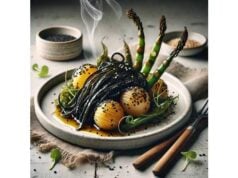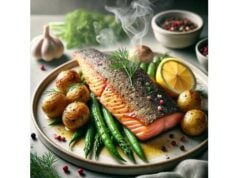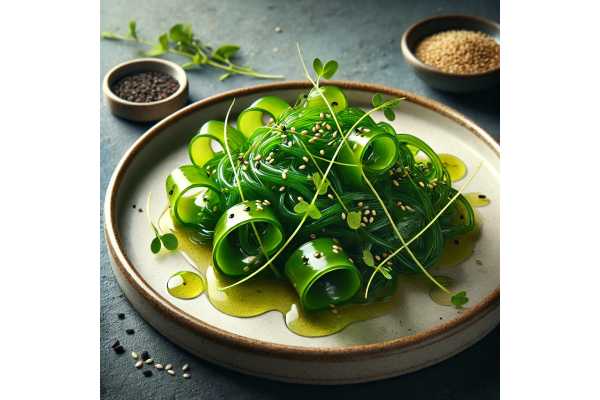
Sea lettuce (Ulva spp.) is a bright-green, paper-thin sea vegetable with a clean, briny taste and a tender bite. It grows along temperate and tropical coasts and has been eaten for centuries from Ireland to Japan. Cooks like it for its fast prep and versatility: scatter ribbons into salads, fold into omelets, pulse into pesto, or simmer into brothy soups. Dietitians value it for concentrated minerals and prebiotic fibers while noting the wide natural variability that comes with any wild or farmed seaweed. Compared with many land greens, sea lettuce is especially notable for iodine (for thyroid function), iron, and magnesium, and it supplies unique sulfated polysaccharides that act like soluble fiber. The caveat is moderation: a little goes a long way for flavor and micronutrients, and responsible sourcing matters. Below, you’ll find practical guidance on nutrition, benefits, risks, buying and storage, cooking, and smart portions—so you can enjoy sea lettuce confidently and well.
Nutrition Snapshot
- Provides iodine for normal thyroid hormone production; also supplies iron and magnesium.
- Typical dried serving is small (2–5 g), 1–2 times per week is sensible for most healthy adults.
- Seaweeds may concentrate iodine and trace metals; choose trusted sources and avoid daily high intakes.
- People with thyroid disorders, on amiodarone, or on lithium should discuss seaweeds with their clinician.
Table of Contents
- Detailed Overview
- Nutrition Profile
- Evidence-Based Health Benefits
- Risks, Allergies and Interactions
- Selecting, Quality, Sustainability and Storage
- Preparation, Cooking and Nutrient Retention
- Portions, Comparisons and FAQs
Detailed Overview
Sea lettuce refers to several edible species within the genus Ulva, a thin, bright-green macroalga that resembles delicate lettuce leaves. In markets you’ll see it sold fresh, dried sheets or flakes, freeze-dried powders, or salted (packed with sea salt to preserve texture and color). Culinary traditions use sea lettuce for its marine freshness: Irish cooks stir it into potato dishes; Japanese and Korean cooks add it to miso soup, rice balls, or cold noodle salads; Scandinavian chefs pair it with fish and butter sauces. Because its structure is very thin, it cooks in seconds and can also be eaten raw after rinsing.
Nutritionally, sea lettuce is a mineral-dense vegetable. As with all seaweeds, composition varies by species, harvest site, season, and processing. Protein content in Ulva commonly ranges from about 15–25% of dry weight. Carbohydrates include sulfated polysaccharides (notably ulvan), which function like soluble fiber. Fat is low, but the small amount present includes polyunsaturated fatty acids. Micronutrients of interest include iodine (a thyroid-essential trace element), iron, magnesium, calcium, and vitamin K. Potassium and sodium are present in meaningful amounts; potassium is naturally embedded in the algal tissue, while sodium largely reflects seawater exposure and any added salt during processing.
Flavor-wise, sea lettuce offers gentle ocean notes and a mild, green aroma. Fresh leaves have a delicate crunch; dried products rehydrate to a soft, silky texture. It’s a natural flavor booster: crumbling a teaspoon of dried flakes into vinaigrettes, eggs, or roasted vegetables adds umami and subtle salinity without much volume or calories.
Sustainability and safety hinge on the source. Responsible producers test for iodine and contaminants, harvest from clean waters, and apply low-impact drying or blanching steps that can reduce excessive iodine and some metals. Farmed Ulva—grown on ropes or in tanks with filtered seawater—helps control quality, takes pressure off wild beds, and can be part of regenerative aquaculture systems that remove excess nutrients from coastal waters.
If you’re new to sea lettuce, start small. Think of it like a seasoning vegetable rather than a staple green. Fold 2–3 grams of dried flakes into a four-serving soup, or toss 10–15 grams of fresh leaves into a salad for pleasant marine lift. That approach captures the culinary upside while keeping iodine and sodium intake reasonable.
Nutrition Profile
The values below summarize typical ranges for dried sea lettuce (Ulva* spp.) per 100 g of edible portion. Natural variability is high; brands differ. Dried flakes are far more concentrated than fresh leaves. Percent Daily Values (%DV) use adult DVs for a 2,000 kcal diet.*
Macros and Electrolytes (per 100 g dried)
| Nutrient | Amount | %DV |
|---|---|---|
| Energy | ~160 kcal | — |
| Protein | 20.0 g | 40% |
| Total Carbohydrate | 53.0 g | 19% |
| Dietary Fiber | 35.0 g | 125% |
| Total Sugars | 0.5 g | — |
| Total Fat | 1.5 g | 2% |
| Saturated Fat | 0.3 g | 2% |
| Sodium | 1,000 mg | 43% |
| Potassium | 1,500 mg | 32% |
| Water | ~10 g | — |
Fats and Fatty Acids (per 100 g dried)
| Component | Amount |
|---|---|
| Polyunsaturated Fatty Acids (PUFA) | ~0.8 g |
| Monounsaturated Fatty Acids (MUFA) | ~0.2 g |
| Omega-3 (incl. ALA/EPA, trace) | ~0.1–0.2 g |
| Omega-6 (LA, trace) | ~0.3–0.4 g |
| Cholesterol | 0 mg |
Vitamins (per 100 g dried)
| Vitamin | Amount | %DV |
|---|---|---|
| Vitamin K | 200 µg | 167% |
| Vitamin A (RAE) | 150 µg | 17% |
| Vitamin C | 15 mg | 17% |
| Folate (DFE) | 120 µg | 30% |
| Vitamin B12* | 0.5–2.0 µg | 21–83% |
*Seaweeds can contain both active and analog forms of B12; bioavailability varies by product.
Minerals and Trace Elements (per 100 g dried)
| Mineral | Amount | %DV |
|---|---|---|
| Iodine | ~2,000 µg (variable) | 1,333% |
| Iron | 8.0 mg | 44% |
| Magnesium | 250 mg | 60% |
| Calcium | 500 mg | 38% |
| Zinc | 2.0 mg | 18% |
| Manganese | 1.0 mg | 43% |
Bioactives / Phytonutrients
- Ulvan (sulfated polysaccharide): a soluble fiber with prebiotic and antioxidant activity in experimental models.
- Pigments: chlorophylls and carotenoids (lutein/zeaxanthin).
- Phenolic compounds: modest levels compared with brown seaweeds, but still contribute antioxidant capacity.
Allergens & Intolerance Markers
- Rare primary allergy to green seaweeds is reported; most reactions are to crustaceans, mollusks, or cross-contact.
- High iodine and sodium content can be problematic for sensitive individuals (see Risks section).
Contaminants / Residues (context)
- Concentrations of inorganic arsenic, cadmium, and lead depend on species and waters. Ulva tends to be lower in iodine than brown kelps but can still be high relative to land foods; testing and processing can mitigate risk.
Serving Perspective
- A typical dried culinary serving is 2–5 g. At 5 g, the iodine above would be about 100 µg (≈67% DV), with large variability by brand and processing. Always check producer testing and use modest amounts.
*Footnote: “Per 100 g” is required for comparison; real-world portions are much smaller. Values reflect unfortified, dried *Ulva* products.*
Evidence-Based Health Benefits
Supports normal thyroid hormone production (via iodine). Iodine is a critical building block for thyroxine (T4) and triiodothyronine (T3). Many diets meet iodine needs through iodized salt or seafood; sea lettuce can be an alternative iodine source in small amounts. Because iodine content varies widely among seaweeds and brands, consistent moderation is key. For most adults, the daily iodine DV is 150 µg; a few grams of a tested, moderately iodine seaweed can help meet—but easily exceed—this amount, depending on the product.
Contributes prebiotic fibers for gut health. Sea lettuce contains ulvan, a sulfated polysaccharide that behaves like soluble fiber. In lab and animal models, ulvan shows fermentability by gut microbes, yielding short-chain fatty acids and promoting beneficial bacterial taxa. Human data are limited but mechanistically aligned with other soluble fibers. Practically, even tiny servings add fermentable fiber without significant calories.
Supplies iron and magnesium. Dried Ulva often provides meaningful iron (commonly listed around 5–10 mg/100 g) and magnesium (~200–300 mg/100 g). Given real-world serving sizes (2–5 g), contributions are modest but can be meaningful across a week. Combining sea lettuce with vitamin-C-rich foods (citrus, peppers) supports non-heme iron absorption.
Antioxidant pigments and carotenoids. Chlorophylls and carotenoids in green macroalgae scavenge reactive species in vitro. While the antioxidant story in humans is more about overall dietary pattern than single foods, sea lettuce adds variety of plant pigments not common in land vegetables.
Culinary salt replacement with potassium balance. Dried sea lettuce flakes layered into sauces or dressings bring savory depth. Used as a flavor accent, it can help reduce added salt in a dish, and it contributes potassium, a mineral that opposes sodium’s effects on blood pressure. This does not make it a low-sodium food; rather, it’s a strategic seasoning that can replace some salt while boosting flavor.
Sustainable, low-impact crop when farmed responsibly. Seaweed aquaculture can absorb dissolved nutrients and carbon, buffer coastal acidification locally, and create habitat. Farmed Ulva grows fast and can be cultivated in integrated multi-trophic systems, potentially reducing environmental footprints compared to some land crops when managed well.
Who benefits most.
- Flexitarians and pescatarians seeking seafood-adjacent nutrients with minimal calories.
- Cooks who want umami from a plant source.
- Diets low in iodized salt but monitored by a clinician for iodine sufficiency.
How to use benefits wisely.
Treat sea lettuce as a concentrated garnish. A teaspoon of dried flakes (≈1 g) in an omelet or a tablespoon (≈3 g) in soup can deliver marine flavor and incremental minerals without overshooting iodine or sodium.
Risks, Allergies and Interactions
Iodine excess and thyroid effects. Seaweeds are among the richest natural iodine sources. While a moderate intake helps meet needs, high or frequent intakes can exceed the tolerable upper level for adults (1,100 µg/day), potentially triggering hypo- or hyperthyroid symptoms in susceptible people. Iodine content varies by species and processing; kombu/kelp is often extremely high, while Ulva tends to be lower but still concentrated compared with land foods. To reduce risk, choose producers that publish iodine test results and avoid daily large servings.
Trace metals. Seaweeds may concentrate cadmium, lead, mercury, and arsenic—especially inorganic arsenic in some brown species. Levels depend on species and waters. Ulva typically shows lower inorganic arsenic than hijiki or some kelps, but due diligence remains important: look for batch testing, harvest from clean waters, and prefer farmed or audited sources. Processing steps like blanching, soaking, and rinsing can lower iodine and some minerals, though reductions vary.
Sodium load in salted products. Salt-packed sea lettuce can be very high in sodium. Thorough rinsing and soaking reduce sodium, but final levels remain higher than unsalted, dried products. People with hypertension or sodium-restricted diets should opt for tested, unsalted products and use sparingly.
Drug interactions and medical conditions.
- Thyroid disease (hypo/hyperthyroidism), thyroiditis, nodular goiter: even moderate iodine variability can complicate management; consult your clinician before adding seaweeds.
- Medications: amiodarone (iodine-rich), lithium, and some antithyroid drugs interact with iodine metabolism.
- Seafood/shellfish allergy: allergy to seaweed is uncommon and distinct from shellfish allergy, but cross-contact in processing facilities is possible; check labels.
- Kidney disease: potassium and sodium loads merit caution; discuss with your renal dietitian.
Sensitive groups.
- Pregnancy and lactation: iodine needs increase, but excess can also be harmful. Rely on balanced dietary sources (e.g., iodized salt as advised by your clinician) rather than frequent seaweed intake.
- Infants and young children: avoid routine seaweed for iodine unpredictability unless guided by a pediatric professional.
- People on low-iodine protocols (e.g., before thyroid therapy): avoid seaweed.
Practical risk-reduction tips.
- Rotate seaweeds and keep servings small.
- Soak and rinse salted or very briny products; a brief blanch can reduce iodine and some metals in certain species.
- Buy from producers who publish contaminant and iodine testing and who harvest from audited waters.
- Treat powders and capsules as concentrated; avoid unless labeled with verified iodine content.
Selecting, Quality, Sustainability and Storage
How to choose.
- Form: Dried flakes or sheets are the most versatile; powders work in doughs and smoothies; fresh or salted leaves deliver superior texture in salads and soups.
- Color and aroma: Look for vibrant green with a clean, ocean scent. Dull brownish-green or fishy aromas suggest age or poor drying.
- Transparency: Prefer brands that share batch testing for iodine and metals, harvest location, and processing steps (e.g., rinsing, blanching).
- Additives: Plain sea lettuce needs no additives. If salted, check sodium on the label and plan to rinse/soak before use.
Sustainability markers.
- Farmed Ulva grown in controlled waters or land-based systems can be highly sustainable. Certifications and third-party audits (where available) signal better practices.
- Wild harvest should follow local management plans that prevent over-stripping and protect habitat. Responsible producers rotate beds and hand-harvest, allowing regrowth.
- Local, small-boat harvests can reduce transport emissions; quality is often higher because drying starts promptly.
Storage.
- Dried: Keep in an airtight container away from light and humidity. Quality is best within 6–12 months; flavor slowly fades.
- Fresh (refrigerated): Rinse, spin-dry, and store in a sealed bag with a paper towel; use within 2–3 days.
- Salted: Store chilled; before use, rinse and soak in several changes of water to remove excess salt.
- Freezing: Blanched sea lettuce freezes well. Dip in boiling water for 15–30 seconds, chill in ice water, drain thoroughly, then freeze in thin sheets. Use within 3–4 months for best texture.
Quality checks at home.
- Rehydrate a small piece: it should turn supple and bright.
- Taste test: expect clean brine and gentle “green” flavor; harsh bitterness or metallic notes suggest poor source or age.
- If a package smells strongly fishy on opening, or shows moisture clumping, it’s past its prime.
Smart sourcing questions to ask sellers.
- Where was this harvested or farmed, and when?
- Do you test for iodine and heavy metals? Can I see recent results?
- Is it salted or unsalted? Was it blanched?
Preparation, Cooking and Nutrient Retention
Prep basics (dried).
- Rinse quickly to remove any surface salt if labeled salted.
- Rehydrate in cool water for 2–3 minutes; it softens fast.
- Drain and squeeze gently; chop or leave in ribbons.
- Use lightly: sea lettuce can dominate if overused—think garnish, not main vegetable.
Prep basics (fresh or salted).
- For salted products, soak 5–10 minutes, changing water once or twice, then rinse well. Taste a strand; repeat soak if still very salty.
- For fresh leaves, remove any tough edges, then rinse and spin dry.
Cooking methods and what they do.
- Blanching (15–30 seconds): brightens color, removes surface grit and some iodine; minimal nutrient loss due to short time.
- Quick sauté (30–60 seconds): adds savory depth; use neutral oil or butter, finish with lemon.
- Simmering in soups (2–3 minutes): infuses broth with marine umami; overcooking dulls color and softens texture.
- Oven or pan “crisping” (low heat): drives off moisture to create flakes for sprinkling.
Retention tips.
- Add sea lettuce near the end of cooking to preserve color, vitamin C, and delicate aromas.
- Pair with vitamin-C-rich ingredients (citrus, tomatoes, peppers) to support non-heme iron absorption.
- For lower iodine per serving, use a brief blanch and discard the blanching water; this sacrifices some minerals but improves predictability.
Flavor pairings.
- Proteins: white fish, mussels, eggs, tofu.
- Vegetables: cucumber, fennel, potatoes, spring onions.
- Acids: lemon, rice vinegar, yogurt.
- Aromatics: sesame, ginger, dill, chive, black pepper.
- Starches: noodles, new potatoes, brown rice.
Five quick ideas.
- Green miso: stir 1–2 g dried flakes into miso soup with tofu and spring onion.
- Coastal pesto: pulse rehydrated sea lettuce with parsley, lemon, olive oil, and almonds; spoon over roasted carrots.
- Egg ribbons: whisk 1 g flakes into omelets or scrambled eggs.
- Crunch topper: pan-dry rehydrated strands until crisp; crumble over avocado toast.
- Grain bowl: toss warm brown rice with sesame oil, cucumber, and sea lettuce ribbons.
Portions, Comparisons and FAQs
Practical portions.
- Dried flakes: 1–3 grams per serving as a garnish (≈½–1½ teaspoons).
- Fresh leaves: 10–15 grams in salads or soups.
- Frequency: For most healthy adults, 1–2 times per week is a conservative, food-enjoyment approach—especially if you do not routinely use iodized salt. If you do use iodized salt, smaller and less frequent seaweed portions are prudent.
How it compares to other greens.
- Versus spinach: Sea lettuce is far saltier and more variable in iodine but provides unique sulfated fibers and oceanic flavors; spinach has more predictable folate, oxalate, and iron data per serving.
- Versus nori: Nori (red seaweed) is typically lower in iodine and used in very thin sheets; sea lettuce is softer and more herb-like when rehydrated.
- Versus kelp/kombu: Kombu is usually much higher in iodine; small amounts flavor broths. Sea lettuce is gentler and easier to eat in salads.
Common questions.
Is sea lettuce raw-safe?
Yes, when harvested from clean waters and handled hygienically. Rinse well. If uncertain, give it a quick blanch. People who are pregnant, immunocompromised, or very young should favor cooked preparations.
Can I use it instead of table salt?
Not exactly. It can replace some salt for flavor, but it still contributes sodium and iodine. Use as a flavor accent and keep added salt modest.
Does it contain B12 I can rely on?
Some Ulva products contain bioactive B12, while others contain analogs with uncertain activity. Treat any B12 contribution as a bonus, not a guaranteed source—especially for vegans who should rely on fortified foods or supplements per clinician guidance.
What about oxalates?
Ulva tends to have lower oxalates than spinach, though levels vary. If you’re prone to calcium oxalate kidney stones, moderation and variety remain best.
Can children eat it?
Occasional tiny amounts are generally safe in family meals, but because iodine is highly variable, avoid frequent or large servings in young children unless advised by a pediatric professional.
What if I’m on a thyroid medication?
Discuss with your clinician. Even small daily amounts of high-iodine seaweed can interfere with thyroid management; intermittent, very small, tested amounts may be acceptable in some cases.
Quick portion visual.
- 1 g dried flakes: a generous pinch; flavor accent for 2 eggs.
- 3 g dried flakes: about 1½ teaspoons; seasons 2 bowls of soup.
- 10 g fresh: a small handful; adds color and brine to a salad.
References
- Iodine – Health Professional Fact Sheet 2024 (Guideline)
- An overview on the nutritional and bioactive components of edible seaweeds 2023 (Systematic Review)
- Seaweeds as a Functional Ingredient for a Healthy Diet 2020 (Review)
- Dietary exposure to heavy metals and iodine intake via consumption of seaweed and halophytes 2023 (Risk Assessment)
- Inorganic arsenic in seaweed: a fast HPLC-ICP-MS method for routine measurement 2024 (Methodology/Risk Context)
Disclaimer
This article is for general information and education. It does not substitute for personalized medical advice, diagnosis, or treatment. Always consult a qualified healthcare professional about dietary choices if you have thyroid disease, kidney conditions, are pregnant or breastfeeding, or take medications that interact with iodine or electrolytes. If you have food allergies or sensitivities, review product labels and discuss new foods with your clinician.
If you found this guide useful, please consider sharing it with friends or colleagues on Facebook, X (formerly Twitter), or any platform you prefer. Your support helps us continue creating clear, reliable nutrition content.