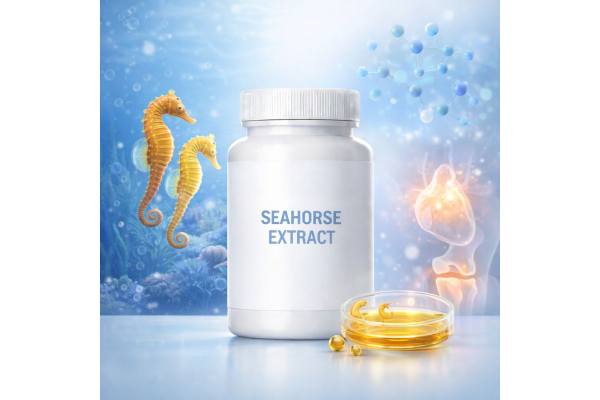
Seahorse extract sits at the crossroads of traditional Chinese medicine, modern nutraceutical marketing, and growing concern about marine conservation. Dried seahorses have been used for centuries in East Asia, especially in formulas aimed at “tonifying kidney yang,” a concept linked to vitality, sexual function, and resilience. Today, concentrated extracts are sold in capsules, powders, tinctures, and tonic wines, often promoted for libido, energy, joint and bone support, and anti-aging effects.
Behind these claims there is some interesting early science. Laboratory and animal studies suggest that seahorse extracts contain peptides, fatty acids, and steroid-like compounds with antioxidant, anti-inflammatory, and potential fertility-supporting effects. At the same time, high-quality human trials are scarce, seahorses are vulnerable wild species, and supply chains can be poorly regulated.
This guide walks you through what seahorse extract is, what the evidence actually shows, how products are typically used, the main risks and limitations, and why ethics and sustainability must be part of any decision to use it.
Quick Overview
- Seahorse extract is a traditional marine remedy studied mainly for sexual health, fatigue, inflammation, and neuroprotection, but human evidence remains very limited.
- Experimental data show antioxidant, anti-fatigue, and fertility-related effects in animals, yet these findings do not reliably predict benefits in people.
- Traditional preparations often use about 3–9 g dried seahorse per day, while modern supplements may provide roughly 300–1,000 mg extract daily, always requiring professional supervision due to weak safety data.
- People who are pregnant or breastfeeding, children, individuals with hormone-sensitive conditions, or anyone with cardiovascular, kidney, or major chronic disease should avoid seahorse extract unless specifically advised and monitored by a qualified clinician.
- Because wild seahorses are vulnerable and heavily traded, many conservation experts recommend avoiding seahorse-based products altogether or choosing fully traceable, aquaculture-sourced alternatives.
Table of Contents
- What is seahorse extract?
- Traditional uses and modern claims
- Does seahorse extract work for health?
- Dosage, forms, and how to use it
- Safety, side effects, and who should avoid it
- Ethics, sustainability, and better alternatives
- Research summary and practical takeaways
What is seahorse extract?
Seahorse extract is a concentrated preparation made from dried seahorses of the genus Hippocampus. In Chinese and other East Asian traditions, specific species are recognized as medicinal materials. Dried whole animals are usually soaked, decocted, powdered, or extracted with alcohol or other solvents to produce capsules, pills, liquids, or topical preparations.
Chemically, seahorses are rich in:
- Proteins and peptides – including bioactive peptides with antioxidant, anti-fatigue, and possible enzyme-modulating activity.
- Fatty acids – notably polyunsaturated fatty acids such as EPA and DHA, which are common to many marine organisms.
- Steroid-like compounds and cholesterol – sometimes cited to explain hormone-like effects in animal studies.
- Minerals and trace elements – such as magnesium, calcium, and zinc, which contribute to their traditional classification as “tonifying” materials.
“Seahorse extract” is not a standardized product. Composition varies with:
- The species used (Hippocampus kuda, H. trimaculatus, H. comes, and others).
- Origin (wild-caught vs farmed).
- Body part (whole animal vs specific tissues).
- Extraction method (water decoction, ethanol, enzymatic hydrolysis, etc.).
This variability means that two products labeled “seahorse extract” may differ substantially in potency, active components, and safety profile. Traditional pharmacopeias describe seahorse mainly as part of multi-herb formulas, not as a high-dose isolated extract taken on its own, which is important when considering modern supplement practices.
From a regulatory perspective, seahorse-based supplements are generally sold as foods or traditional remedies rather than as licensed medicines. They are not approved for treating any disease in most jurisdictions. Quality control, contamination testing, and verification of species or source can be inconsistent.
Given this lack of standardization and the ecological status of seahorses, many clinicians encourage people to consider whether they truly need a seahorse-based product, or whether more sustainable, better-studied options might achieve the same goals.
Traditional uses and modern claims
In traditional Chinese medicine (TCM), seahorse (often called “haima”) is categorized as a warm, salty animal substance that “tonifies kidney yang.” In this framework, kidney yang is tied to reproductive function, physical vigor, and resilience against chronic fatigue and coldness. Formulas containing seahorse are historically used for:
- Reduced libido and erectile difficulties
- Male infertility and low sperm quality
- Lower back and knee weakness attributed to kidney deficiency
- Certain chronic respiratory issues, like asthma
- Joint pain, swelling, and some types of arthritis
Classical texts and more recent TCM compilations describe seahorse as being used in combination with herbs such as ginseng, epimedium, and other yang-tonifying ingredients. It often appears in pills, capsules, medicinal wines, or powders, not as a stand-alone high-dose extract.
Modern marketing extends these traditional uses and often promotes seahorse extract for:
- Sexual performance and fertility – particularly for men, sometimes framed as a “natural testosterone booster.”
- Energy and anti-fatigue – based on animal and small human studies of seahorse hydrolysates in combination with ingredients like red ginseng.
- Joint and bone support – referencing in vitro and animal work on osteoblast activity and bone health.
- Brain health and mood – drawing on preclinical data that suggest neuroprotective and anti-inflammatory effects.
- Skin and anti-aging – leveraging research on antioxidant peptides from seahorses and other marine sources.
However, there is a crucial gap between traditional case-based experience, laboratory experiments, and robust clinical evidence. Traditional use often occurred within a holistic treatment plan that included diet, lifestyle, and other herbs, and was guided by pattern-based diagnosis. Modern supplements, by contrast, are typically taken independently and in higher, more concentrated doses than those described in classical sources.
Additionally, traditional uses were never evaluated with modern trial standards. Many contemporary claims rely on extrapolating from animal studies or biochemical assays, not from large, well-controlled human trials. When evaluating seahorse extract for any health goal, it is important to distinguish cultural and historical reputation from what has been directly tested in people.
Does seahorse extract work for health?
The short answer is that evidence is preliminary and mostly preclinical. There are promising signals in specific areas, but almost all data come from cell experiments and animal models, with very limited human research.
Key areas that have been explored include:
Sexual health and fertility
- In a controlled rat study using Hippocampus comes extract, oral doses of 150–300 mg/kg improved sperm concentration, motility, and viability in an infertility model without clear signs of liver or kidney toxicity in standard blood tests.
- Older animal and in vitro work suggests that ethanol or peptide-rich extracts can influence testicular function and possibly support androgen-related pathways in rodents.
These findings are intriguing but do not prove that seahorse extract improves fertility or testosterone in humans. Animal doses are generally much higher (per kilogram of body weight) than supplement doses used in people, and rodent models do not fully reflect the complexity of human fertility.
Anti-fatigue and physical performance
- Seahorse hydrolysate (enzyme-digested protein) combined with red ginseng has shown anti-fatigue effects in mouse and small human studies, such as improved swimming time and favorable shifts in markers like blood lactate and glycogen after exertion.
- Isolated peptides from seahorse species have demonstrated anti-fatigue effects in animals, potentially by enhancing antioxidant defenses and modulating energy metabolism.
Because these preparations often combine seahorse with other active ingredients, it is difficult to separate which component contributes most to the observed effects.
Anti-inflammatory, antioxidant, and neuroprotective effects
Laboratory studies report that:
- Extracts and purified compounds from seahorses can reduce markers of oxidative stress and inflammation in cell lines.
- Certain peptides may inhibit enzymes and signaling pathways associated with neuroinflammation and cartilage or bone breakdown.
- Seahorse-derived compounds have been tested for potential roles in protecting nerve cells, supporting bone formation, and modulating immune responses in preclinical models.
Again, these are mechanistic clues, not clinical proof. Many natural compounds look promising in isolated cells or animal models but fail to translate into meaningful benefits in human trials.
What this means in practice
Taken together, current data suggest that seahorse extract:
- Has biologically active components capable of influencing inflammation, oxidative stress, and reproductive parameters in experimental systems.
- May have future potential as a source of drug leads or as part of rigorously tested formulas.
- Does not yet have strong, direct evidence from high-quality randomized controlled trials in humans for any specific condition.
For health goals such as erectile dysfunction, infertility, fatigue, mood, or joint pain, there are better-studied options—with clearer risk–benefit profiles and no conservation concerns—that should be considered first. If seahorse extract is used at all, it should be viewed as experimental and adjunctive, not as a primary or proven therapy.
Dosage, forms, and how to use it
There is no universally accepted or clinically validated dosage for seahorse extract in humans. Most of what is known comes from traditional pharmacopeias and experimental research rather than from standardized clinical dosing studies.
Traditional dosing
In classical TCM sources, dried seahorse is typically:
- Used in decoctions (boiled with other herbs) at about 3–9 g of dried seahorse per day, often divided into two doses.
- Combined with other ingredients in pills, capsules, or medicinal wines designed for specific patterns, such as kidney yang deficiency or chronic fatigue.
In this context, seahorse is part of a broader formula and not used as a highly concentrated extract on its own.
Modern supplement forms
Today’s commercial products may include:
- Capsules or tablets – often standardized to an unspecified ratio, such as “10:1 extract,” with each capsule providing somewhere around 300–500 mg of extract.
- Powders and granules – designed to be mixed into beverages or foods, sometimes marketed as performance or libido boosters.
- Liquid tinctures or tonics – including tonic wines containing seahorse and other herbs, popular in some East Asian markets.
- Topical preparations – such as ointments or plasters, usually combined with other ingredients for joint or muscle complaints.
Because labeling standards differ between countries, some products may not clearly state which species are used, how the animals were sourced, or what extraction process was applied.
Practical guidance if someone still chooses to use it
From a health and safety perspective, the most conservative approach is to avoid seahorse extract altogether, given the limited evidence and conservation issues. If someone nevertheless decides to use a product, they should:
- Work with qualified professionals
- Consult both a medical doctor (especially if you have existing conditions or take medications) and a licensed practitioner experienced in traditional medicine.
- Start low and stay cautious
- Follow the product’s instructions and professional guidance.
- For capsule products, that often means no more than about 300–1,000 mg of extract per day, at least initially, while monitoring for side effects.
- Limit duration
- Use for short trial periods, such as a few weeks, rather than continuous long-term use unless under close supervision.
- Monitor health parameters
- People with cardiovascular, metabolic, liver, or kidney conditions should have periodic checks of blood pressure, glucose, and relevant lab values if using seahorse-based products.
- Choose traceable, ethical sources
- If you cannot verify that the product is from legally farmed, traceable seahorses and has been tested for contaminants, it is safer not to use it.
No one should consider seahorse extract a replacement for proven treatments, especially in serious conditions like infertility, hormone disorders, cardiovascular disease, or depression.
Safety, side effects, and who should avoid it
Safety data for seahorse extract in humans are limited and incomplete. Traditional texts generally describe seahorse as having few side effects when used appropriately within formulas, but modern experience with concentrated extracts at higher doses is less well documented.
Potential side effects
Reported or theoretically possible effects include:
- Digestive upset – nausea, stomach discomfort, or diarrhea, especially at higher doses or in alcohol-based preparations.
- Allergic reactions – as with other marine products, there is a risk of allergy, particularly in people with known seafood allergies. Symptoms could range from skin reactions to more serious responses.
- Blood pressure or cardiovascular effects – some experimental findings suggest bioactive peptides with blood-pressure-modulating properties; how this translates clinically is unclear, but caution is sensible in people with hypertension or cardiovascular disease.
- Hormone-related effects – because seahorse extract is often used for sexual and reproductive issues, and some studies suggest androgen-like activity in animals, there is a theoretical risk of influencing hormone-sensitive conditions.
In the rat fertility study mentioned earlier, doses up to 300 mg/kg did not cause obvious abnormalities in standard liver and kidney blood tests. However, this cannot be assumed to guarantee safety in humans, especially over longer durations or in people with comorbidities.
Interactions with medicines and conditions
Potential concerns include:
- Blood pressure medications – if seahorse peptides do have angiotensin-converting enzyme (ACE) inhibitory effects, they could theoretically add to the effect of ACE inhibitors or ARBs, increasing the risk of low blood pressure in susceptible individuals.
- Anticoagulants or antiplatelet agents – as with many animal- and plant-based extracts, untested effects on clotting factors are possible.
- Hormone therapies – men or women on testosterone, fertility treatments, or other hormone-modulating drugs should be cautious about adding any substance with suspected androgen-like activity.
Because rigorous interaction studies have not been performed, a careful “better safe than sorry” approach is justified.
Who should avoid seahorse extract unless specifically advised by a specialist?
- Pregnant or breastfeeding individuals – due to the lack of reproductive safety data.
- Children and adolescents – particularly because of potential endocrine effects and long-term unknowns.
- People with hormone-sensitive conditions – such as hormone-dependent cancers, significant prostate problems, or severe endometriosis.
- Individuals with serious cardiovascular, liver, or kidney disease – unless a specialist explicitly approves and monitors use.
- Anyone with known shellfish or fish allergies – because of potential cross-reactivity.
In addition, people who are trying to conceive should be especially careful about self-experimenting with unproven agents. While seahorse extract has shown some fertility-related effects in animals, inappropriate use or contamination could theoretically harm, rather than help, reproductive health.
Ethics, sustainability, and better alternatives
Any discussion of seahorse extract needs to address conservation and ethics. Seahorses are not just medicinal commodities; they are wild marine animals facing substantial pressure from overfishing, bycatch, and habitat loss.
Key points:
- High global demand – Dried seahorses are heavily traded for traditional medicine, curios, and the aquarium industry. Large volumes originate from wild-caught fisheries, many of which are poorly regulated or monitored.
- Threatened status – Several Hippocampus species are listed as vulnerable or endangered on the IUCN Red List. Populations in some regions have declined significantly over the past few decades.
- International controls – All seahorses in the genus Hippocampus are listed under CITES (the Convention on International Trade in Endangered Species of Wild Fauna and Flora), meaning that international trade is supposed to be regulated and monitored. Studies indicate that CITES listing has reduced certain aspects of the live seahorse trade, but illegal and unreported trade in dried specimens remains a concern.
- Aquaculture is not a simple fix – Seahorse farming can reduce pressure on wild populations, but it raises questions about welfare, disease, and environmental impact. In some cases, “farmed” seahorses may still be partly dependent on wild broodstock or feed sourced from other wild fish.
From an ethical standpoint, many conservation scientists, marine biologists, and environmentally conscious clinicians argue that seahorse consumption should be minimized or avoided. This position becomes even stronger when we recognize that human health benefits are not well established and that alternative interventions exist.
Considering alternatives
If your goal is to support:
- Sexual health or fertility – evidence-based strategies may include lifestyle changes (sleep, exercise, weight management, smoking cessation), addressing underlying conditions (hormones, metabolic health), and, when appropriate, well-studied medications or supplements such as certain vitamins, minerals, or herbal products with stronger clinical data.
- Energy and anti-fatigue – structured exercise, sleep optimization, stress reduction, and, where appropriate, evaluation for anemia, thyroid disorders, or sleep apnea are far more impactful than relying on a speculative marine extract.
- Bone and joint health – vitamin D, calcium, resistance training, and approved treatments for osteoporosis have substantial evidence compared with experimental marine products.
- General resilience and aging – focusing on diet, physical activity, social connection, and management of cardiovascular risk factors gives far greater return on effort and carries no ecological cost.
Choosing not to use seahorse extract—or opting for ethical, traceable alternatives—can be a powerful way to align personal health decisions with broader responsibility for marine ecosystems.
Research summary and practical takeaways
Seahorse extract is an example of a traditional remedy that has attracted modern scientific interest but has not yet made the leap to well-established, evidence-based therapy.
What the research supports so far
- Rich bioactive profile – Seahorses contain peptides, unsaturated fatty acids, steroids, minerals, and other compounds that show a range of biological effects in preclinical studies.
- Experimental benefits – Laboratory and animal data suggest antioxidant, anti-inflammatory, anti-fatigue, neuroprotective, bone-supporting, and fertility-related effects.
- Some safety signals in animals – In specific rodent experiments, seahorse extract at controlled doses did not cause overt organ toxicity on basic blood panels.
What remains uncertain or unproven
- Human efficacy – There is a lack of large, rigorous human trials showing clear benefits for defined conditions (for example, infertility, erectile dysfunction, chronic fatigue, depression, or arthritis).
- Long-term safety – No robust data exist on chronic use, interaction with modern drugs, or effects in vulnerable populations.
- Standardization – Products on the market vary widely, with limited transparency about species, extraction methods, dose equivalence to traditional use, and potential contaminants.
Practical bottom line
- If you are generally healthy and curious – It is more prudent to focus on proven lifestyle, nutritional, and medical approaches rather than experimenting with seahorse extract, especially given conservation concerns.
- If you are considering seahorse extract for a specific health issue – Discuss your situation with a qualified healthcare professional and, if relevant, a licensed TCM practitioner. In most cases, there will be safer, better-studied options to try first.
- If you decide to use it despite the limitations – Use the lowest reasonable dose, for the shortest necessary period, under professional supervision; monitor your health; and prioritize products with credible sourcing and quality documentation.
- From a planetary health perspective – Avoiding or minimizing the use of seahorse-based remedies is a meaningful contribution to marine conservation, especially when potential health gains are speculative and modest at best.
Ultimately, seahorse extract illustrates a broader principle: even when traditional remedies show promising biological activity, responsible use requires careful evaluation of evidence, safety, ethics, and environmental impact—not just fascination with the unusual or exotic.
References
- Advances in the Global Distribution, Chemical Constituents, and Pharmacology of Hippocampus, a Traditional Marine Chinese Medicine 2021 (Systematic Review)
- A Review – Biology, Aquaculture and Medical Use of Seahorse, Hippocampus spp 2017 (Review)
- Dried seahorse in traditional medicine: A narrative review 2021 (Narrative Review)
- The seahorse (Hippocampus comes L.) extract ameliorates sperm qualities, testosterone level, and serum biochemistry in rats induced by depo medroxyprogesterone acetate 2023 (RCT in Animal Model)
- Seahorses – a source of traditional medicine 2012 (Review)
Disclaimer
The information in this article is for educational purposes only and is not a substitute for personal medical advice, diagnosis, or treatment. Seahorse extract is not approved to prevent, treat, or cure any disease, and human evidence for its benefits and risks remains limited. Always consult a qualified healthcare professional before starting, stopping, or changing any supplement or medication, especially if you are pregnant or breastfeeding, have existing health conditions, or take prescription drugs. Never disregard professional medical advice or delay seeking it because of something you have read here.
If you found this guide helpful, you are warmly invited to share it with others on Facebook, X (formerly Twitter), or any platform you prefer, and to follow our work on social media. Your support in sharing our articles helps our team continue to research and provide clear, evidence-informed content for readers around the world.