Seasonal allergies and asthma often travel together because the nose and lungs share the same job: filtering and conditioning the air you breathe. When pollen or outdoor mold inflames the nasal lining, the lower airways can become more reactive—leading to cough, chest tightness, wheeze, and reduced exercise tolerance. The encouraging part is that this connection gives you leverage. A focused allergy plan can lower asthma flare-ups, improve sleep, and reduce the day-to-day “background inflammation” that makes breathing feel fragile during peak season.
This guide is designed to be practical: how to spot your specific triggers, what prevention looks like before symptoms begin, and how to set up a treatment plan that is safe for both allergic rhinitis and asthma. You will also learn when home care is enough and when an escalation plan or medical review is the smarter move.
Core Points
- Controlling nasal allergy inflammation can reduce asthma symptoms, nighttime cough, and rescue inhaler use during peak seasons.
- A prevention plan works best when started before pollen counts rise, not after symptoms are already intense.
- Correct inhaler and nasal spray technique can improve results without increasing medication doses.
- Overusing rescue inhalers or certain decongestants can signal poor control and should trigger a plan adjustment.
- Track symptoms and peak flow for 1–2 weeks during season changes to catch early deterioration and step up care sooner.
Table of Contents
- Allergies and asthma: why they connect
- Seasonal triggers that spark flares
- Prevention before pollen peaks
- Treating allergies without worsening asthma
- Asthma action plan for allergy season
- Testing, immunotherapy, and when to escalate
Allergies and asthma: why they connect
Seasonal allergies (often called hay fever or allergic rhinitis) are not “just a nose problem.” The same immune signals that inflame the nasal lining can increase sensitivity in the lower airways, making asthma symptoms easier to trigger and harder to settle. Many people notice this as a predictable pattern: congestion and sneezing first, then cough and chest tightness a few days later—especially at night.
The united airway effect
Your nose, sinuses, throat, and lungs form a connected airway. When the upper airway is inflamed, several downstream effects can worsen asthma:
- Mouth breathing increases: a congested nose pushes you to breathe through your mouth, which delivers colder, drier, less-filtered air to the lungs. That alone can provoke bronchospasm in sensitive airways.
- Postnasal drip irritates the throat: mucus dripping backward can trigger cough and throat clearing. In someone with asthma, that cough can become a feedback loop—coughing irritates the airway, which leads to more cough.
- Inflammation amplifies reactivity: allergic inflammation can lower the “trigger threshold,” so exposures that normally feel fine (exercise, cold air, perfume) suddenly provoke symptoms.
Why symptoms can feel confusing
Allergy-related breathing problems do not always feel like classic wheezing. Common presentations include:
- A dry, persistent cough (often worse at night)
- Chest tightness without a clear wheeze
- Reduced stamina during walks or workouts
- “Needing to sigh” or take deep breaths more often
- Waking up tired because nasal blockage and nighttime coughing disrupt sleep
These patterns matter because they can be misread as a lingering cold, reflux, or “just being out of shape,” delaying the treatment changes that would help.
Two dials to watch: nose and lungs
During allergy season, many people do best with a simple mental model: you have two dials to keep low.
- The nose dial reflects sneezing, itch, congestion, and drip.
- The lung dial reflects cough, tightness, wheeze, and rescue inhaler need.
If you turn down only one dial, the other often stays loud. A complete plan treats both together, starting early enough to prevent the escalation that makes spring or fall feel like months of constant vigilance.
Seasonal triggers that spark flares
Seasonal allergy triggers are not all the same, and your asthma risk depends on the specific exposure, its intensity, and your personal sensitivity. The more precisely you identify your triggers, the easier it becomes to prevent flare-ups without over-restricting your life.
Common seasonal triggers
Most seasonal flares come from:
- Tree pollen: often peaks in spring, though timing varies by region and weather.
- Grass pollen: commonly peaks late spring through summer.
- Weed pollen (including ragweed): often peaks late summer into fall.
- Outdoor molds: can spike in damp weather, after storms, and in leaf piles.
People often assume “pollen” is one uniform trigger. In reality, you might react strongly to one category and barely notice another. That is why some people struggle in early spring while others feel fine until late summer.
Weather patterns that intensify symptoms
Certain conditions increase exposure or airway sensitivity:
- Windy, dry days: tend to lift and spread pollen.
- Warm nights after a warm day: can keep pollen in the air longer.
- Thunderstorm conditions: can coincide with sudden symptom surges in some people, likely because storms redistribute particles and encourage intense exposure during a short window.
- Cold snaps: can make airways more reactive even if pollen is not extreme, especially when congestion forces mouth breathing.
Non-pollen triggers that often ride along
During peak allergy seasons, other irritants can amplify asthma symptoms:
- Air pollution and wildfire smoke
- Tobacco smoke and vaping aerosols
- Strong fragrances and cleaning chemicals
- Workplace dusts or outdoor occupational exposures
- Respiratory viruses that circulate alongside seasonal changes
This “stacking effect” matters because you may blame pollen for everything when the true driver is a combination: pollen plus smoke plus a mild viral infection.
Build your personal trigger map
Instead of trying to remember every detail, track a few high-value signals for 10–14 days during a flare:
- Nasal symptoms (0–10) and asthma symptoms (0–10)
- Rescue inhaler use (times per day)
- Night waking (yes/no)
- Main exposures (outdoors, mowing, storms, pets, smoke, heavy cleaning)
Patterns show up quickly. If symptoms reliably worsen after outdoor exercise, you can shift timing, add pre-exposure steps, or adjust medications in a targeted way—without living indoors all season.
Prevention before pollen peaks
Prevention is not about avoiding the outdoors; it is about reducing exposure enough that your airway does not stay in a constant inflamed state. The most effective plans start before symptoms peak, because once inflammation is entrenched, you often need more medication and more time to regain control.
Start early: the “lead time” advantage
If you have predictable seasonal symptoms, begin your prevention routine 1–2 weeks before your usual flare window. Early steps often include consistent nasal anti-inflammatory treatment, reviewing inhaler technique, and minimizing high-exposure activities during the first surge of the season.
A useful sign you started too late is needing repeated rescue medication or waking at night within the first few days of symptoms.
Reduce exposure without extreme lifestyle changes
Focus on a handful of high-impact habits:
- Time outdoor activities strategically: if your symptoms are worse in the morning or on windy days, schedule exercise later in the day or after rainfall when air feels clearer.
- Create a “clean air” routine at home: change clothes after heavy outdoor exposure, shower before bed during peak weeks, and keep windows closed on high-exposure days if that reliably helps you.
- Protect the nose when exposure is unavoidable: a well-fitted mask can reduce pollen inhalation, especially during yard work or long time outdoors.
- Control bedroom exposure: the bedroom is where symptoms most often convert into poor sleep, and poor sleep worsens asthma resilience. Keep bedding clean, reduce indoor dust buildup, and aim for comfortable humidity that does not dry your nasal lining.
Plan for travel and work exposures
Allergy and asthma flares often surprise people during travel because routines change. Consider a short checklist:
- Pack your rescue inhaler in an easy-to-reach location.
- Bring your daily controller medications and any nasal treatments.
- If you are sensitive to smoke or strong scents, choose lodging and transport options that reduce those exposures.
- Keep hydration steady; dry air can thicken mucus and increase cough.
Make prevention measurable
During peak season, prevention should show up as real outcomes:
- Fewer nights waking from cough or congestion
- Less reliance on rescue inhaler
- Ability to exercise with less chest tightness
- Clearer nose that stays clear longer
If prevention is not producing those outcomes within a week or two, it is usually a sign to adjust your plan rather than “try harder.” The goal is steady control, not constant troubleshooting.
Treating allergies without worsening asthma
A good seasonal plan treats allergic rhinitis in a way that supports asthma control. The safest strategy is to use treatments that reduce inflammation and improve airflow, while avoiding common pitfalls—like rebound congestion from overused decongestant sprays or sedating medications that disrupt breathing patterns and sleep quality.
First-line tools for nasal control
For many people, these options form the foundation:
- Intranasal corticosteroid sprays: best for persistent nasal congestion, sneezing, and inflammation. Consistency matters more than dose. Results often build over several days, with fuller benefit after 1–2 weeks.
- Second-generation oral antihistamines: helpful for itching, sneezing, and watery drip, especially when symptoms are strongly allergen-driven.
- Intranasal antihistamines: can provide faster relief for some people and may help both allergic and nonallergic rhinitis patterns.
If your main complaint is congestion, relying only on oral antihistamines often disappoints. Congestion usually reflects swelling that responds better to anti-inflammatory nasal therapy.
Saline as a “support tool,” not a cure
Saline sprays and rinses can improve comfort, thin mucus, and reduce allergen load. They also help medication sprays reach the nasal lining more effectively. The practical approach is simple:
- Use saline when mucus is thick, the nose feels dry, or exposure was heavy.
- Avoid overly aggressive rinsing if your nasal lining is raw or bleeding.
- Use safe water and clean devices carefully if you do high-volume rinses.
Decongestants: use with caution
Decongestants can feel effective quickly, but they have drawbacks:
- Topical decongestant sprays can cause rebound congestion if used beyond a short period, trapping you in a cycle of worsening blockage.
- Oral decongestants may increase heart rate, raise blood pressure, or cause jitteriness and sleep disruption—problems that can indirectly worsen asthma control.
If you need decongestants repeatedly, treat that as a signal that baseline allergy control is insufficient.
Common mistakes that keep symptoms going
- Using nasal sprays with poor technique, so medication drains down the throat instead of coating nasal tissue
- Treating only the nose while ignoring the asthma controller plan
- Switching products every day, never giving an effective option enough time
- Overusing sedating antihistamines, especially at night, which can worsen daytime fatigue and impair symptom monitoring
When allergy treatment is well-matched, you should notice fewer nighttime symptoms and less chest irritability. That is the overlap you want: a calmer nose and calmer lungs.
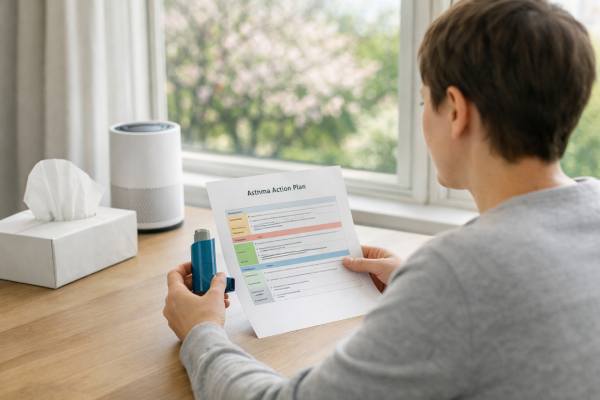
Asthma action plan for allergy season
Seasonal allergies can turn stable asthma into a “tight chest week” quickly, so a seasonal asthma plan should be proactive, measurable, and easy to follow when you are tired or symptomatic. The goal is not perfection; it is early adjustment before a flare becomes an urgent situation.
Know your baseline and your early warning signs
Before peak season, define what “controlled” looks like for you:
- Minimal daytime symptoms
- No regular nighttime waking from cough or tightness
- Rescue inhaler use is infrequent, not routine
- Normal exercise tolerance for your usual activities
Early warning signs often include subtle changes: waking with cough, needing your rescue inhaler before activities that never used to require it, or feeling “winded” on stairs.
Use a step-up strategy, not a panic strategy
Many people wait too long, then try to catch up with multiple changes at once. A calmer approach:
- Confirm technique and adherence: incorrect inhaler technique and missed doses are common in seasonal flares.
- Reduce exposure stacking: if pollen plus smoke plus strong scents are piling up, reduce the most modifiable exposure first.
- Step up treatment per your clinician’s plan: this may mean a temporary adjustment in controller therapy during peak weeks, or a clear plan for how to respond when symptoms increase.
If you do not have an asthma action plan, ask for one. The best plan is written in plain language and includes what to do for mild worsening, moderate worsening, and emergency signs.
Track rescue inhaler use like a vital sign
Rescue medication is meant for relief, not daily maintenance. If you notice a rising pattern, treat it as actionable data:
- Using rescue medication more often than usual
- Needing it for sleep or multiple days in a row
- Symptoms returning quickly after relief
These patterns often mean inflammation is increasing and needs a controller-focused response rather than repeated “quick fixes.”
Consider objective tracking during peak weeks
If you have a peak flow meter, it can help you spot worsening earlier than symptoms alone—especially if you tend to minimize symptoms or have “quiet” asthma. Track:
- Morning peak flow for 1–2 weeks during peak season
- Symptoms and rescue inhaler use
- Night waking and exercise tolerance
Objective tracking is most useful when you act on it early, not after you feel severely unwell.
Emergency signs
Get urgent medical care if you have significant shortness of breath at rest, difficulty speaking full sentences, blue or gray discoloration around lips, confusion, faintness, or symptoms that are rapidly worsening despite rescue medication.
Testing, immunotherapy, and when to escalate
If seasonal allergies repeatedly destabilize asthma, you do not have to accept that as inevitable. Testing can clarify what you are reacting to, and longer-term treatments can reduce sensitivity over time. Escalation is not a failure; it is often the most efficient way to reduce the overall medication burden and restore predictable breathing.
When allergy testing is worth it
Consider testing if:
- You have seasonal symptoms most years and still struggle despite consistent treatment
- You cannot identify triggers, or you suspect multiple triggers
- Symptoms interfere with sleep, work, school, or exercise
- Asthma worsens reliably during seasonal peaks
Testing can be done with skin testing or blood testing, depending on your medical history and medication needs. The most useful outcome is a clear “trigger list” you can plan around.
When asthma testing should be revisited
If your asthma plan was created years ago, seasonal worsening is a good reason to reassess. A review may include:
- Spirometry to understand current lung function and reversibility
- Symptom pattern review (including nighttime symptoms and exercise tolerance)
- Assessment of inhaler technique and medication adherence
- Discussion of comorbid contributors such as chronic rhinitis or reflux
Asthma often changes over time. A plan that worked three years ago may not match your current triggers or exposure patterns.
Immunotherapy: a long-term option for the right person
Allergen immunotherapy (via allergy shots or sublingual options in some cases) aims to reduce immune overreaction to specific allergens. It tends to be most helpful when:
- Triggers are clearly identified and clinically relevant
- Symptoms are moderate to severe and recur reliably
- You want a long-term strategy rather than expanding medication indefinitely
- Asthma is stable enough to pursue treatment safely under medical supervision
Immunotherapy is not an instant fix. It is a longer horizon option, usually requiring sustained treatment over years to achieve meaningful and durable benefits.
When to escalate treatment sooner
You should seek medical advice promptly if:
- You have frequent asthma symptoms during allergy season despite consistent controller use
- You are waking at night from breathing symptoms
- Rescue inhaler need is rising or becoming routine
- You have had urgent visits, steroid bursts, or emergency care in past seasons
- You are avoiding activity because breathing feels unreliable
A seasonal plan is successful when it keeps you out of the urgent-care loop and lets you live normally. If that is not happening, the right next step is not more guesswork—it is a structured reassessment and a clearer plan.
References
- 2025 GINA Strategy Report – Global Initiative for Asthma – GINA 2025 (Guideline)
- Allergic Rhinitis and Its Impact on Asthma (ARIA)-EAACI Guidelines-2024-2025 Revision: Part I-Guidelines on Intranasal Treatments – PubMed 2025 (Guideline)
- International consensus statement on allergy and rhinology: Allergic rhinitis – 2023 – PubMed 2023 (Guideline)
- Allergen immunotherapy for asthma prevention: A systematic review and meta-analysis of randomized and non-randomized controlled studies – PubMed 2022 (Systematic Review)
Disclaimer
This article is for general educational purposes and does not replace medical advice, diagnosis, or treatment. Seasonal allergies and asthma can range from mild to severe, and the safest treatment plan depends on your age, medical history, triggers, and current medications. Seek urgent medical care if you have significant shortness of breath at rest, trouble speaking full sentences, blue or gray discoloration around lips or face, confusion, fainting, or symptoms that rapidly worsen despite rescue medication. If you are pregnant, immunocompromised, caring for a child with asthma, or you have frequent flare-ups during allergy season, consult a qualified healthcare professional to create or update a personalized asthma action plan.
If you found this article helpful, please share it on Facebook, X (formerly Twitter), or any platform you prefer.