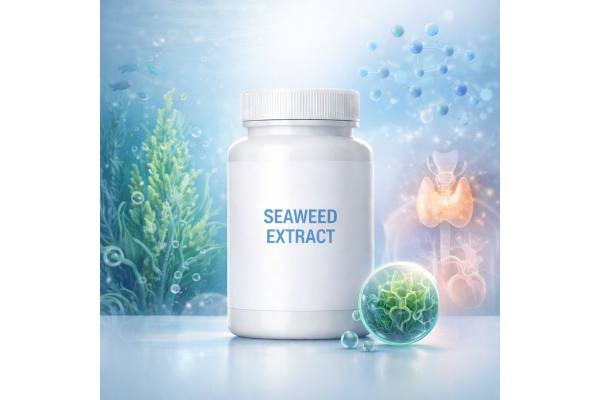
Seaweed extract has moved from the shoreline to the supplement shelf, promoted for everything from thyroid balance to blood sugar support and skin health. Extracts are usually concentrated forms of compounds found in edible seaweeds, especially brown varieties such as kelp, Ascophyllum nodosum, and Ecklonia cava. They can provide iodine, prebiotic fibers, unique polysaccharides like fucoidan, and antioxidant polyphenols that are difficult to obtain from land-based plants.
At the same time, seaweed is not a risk-free “superfood.” Iodine content varies dramatically between species and products, making both deficiency and excess possible, and some seaweeds can accumulate heavy metals, including arsenic. The result is a supplement category with real biological power, but also real potential for harm if used carelessly.
This guide explains what seaweed extract actually is, how it is studied in human trials, realistic benefits for metabolic, cardiovascular, gut, and skin health, how to choose and dose supplements, and which safety issues and restrictions to take seriously—so you can decide whether seaweed extract has a place in your routine.
Quick Overview
- Seaweed extract provides iodine, prebiotic fibers, fucoidan, and polyphenols that may support thyroid, metabolic, and gut health.
- Human trials suggest brown seaweed extract can modestly improve post-meal blood glucose and some cardiometabolic markers when used with diet changes.
- Typical supplemental intakes range from about 100–1,000 mg of standardized extract per day, often providing roughly 150–600 µg of iodine, depending on the product.
- People with thyroid disease, pregnant or breastfeeding individuals, and anyone already near the iodine upper limit should only use seaweed extracts under medical supervision.
- Consumers should avoid hijiki seaweed products due to consistently high inorganic arsenic levels and choose tested products with declared iodine and contaminant data.
Table of Contents
- What is seaweed extract and how it works
- Evidence based benefits of seaweed extract
- How to take seaweed extract dosage and forms
- Using seaweed extract in daily life
- Side effects of seaweed extract and who should avoid it
- What the science says and key open questions
What is seaweed extract and how it works
“Seaweed extract” is a broad term. In supplements, it usually refers to concentrated preparations from edible marine macroalgae, especially brown seaweeds such as Ascophyllum nodosum, Fucus vesiculosus, Laminaria species, and Ecklonia cava, but sometimes red (for example, dulse or nori) or green seaweeds as well. Extracts may be standardized for specific compounds (like fucoidan or polyphenols) or simply for iodine content.
Key bioactive components include:
- Iodine – an essential mineral for thyroid hormone production. Seaweed is one of the richest dietary iodine sources, but levels can range from very low to thousands of micrograms per serving.
- Sulfated polysaccharides – fucoidan (from brown seaweed) and other sulfated polysaccharides show antioxidant, anticoagulant, antiviral, and immunomodulatory activities in experimental models.
- Fibers and alginates – viscous fibers can slow gastric emptying and carbohydrate absorption, increase satiety, and act as prebiotics feeding beneficial gut microbes.
- Polyphenols (phlorotannins) – mainly in brown seaweeds, these compounds have antioxidant and enzyme-modulating effects, including inhibition of carbohydrate-digesting enzymes such as alpha-amylase and alpha-glucosidase.
Taken together, these components can:
- Alter digestion and absorption of carbohydrates and fats.
- Provide antioxidant and anti-inflammatory activity.
- Modulate immune responses and gut barrier integrity.
- Affect thyroid function through iodine supply, for better or worse, depending on the dose and baseline status.
Seaweed extract can be consumed as capsules, tablets, powders, or liquid drops. Some functional foods also include standardized seaweed extracts for metabolic or gut-health claims. Because composition varies by species, harvest location, and processing, two “seaweed extract” products can behave quite differently in the body.
Understanding the type of seaweed, standardization, and iodine content is therefore crucial before treating any product as a simple, interchangeable “natural” source of minerals or fiber.
Evidence based benefits of seaweed extract
Most modern research on seaweed extract focuses on brown seaweed, its fucoidan polysaccharides, polyphenols, and iodine-rich fractions. Evidence ranges from cell experiments to animal models and human clinical trials, with human data still representing the smallest portion.
Metabolic and blood sugar control
Several randomized trials and a meta-analysis have investigated brown seaweed extracts, often Ascophyllum nodosum and Fucus vesiculosus mixtures or Ecklonia cava extracts, for glycemic control:
- Extracts taken before or with carbohydrate-rich meals have been shown to modestly reduce peak postprandial glucose and the overall glucose response.
- Benefits appear in healthy volunteers, people with overweight and insulin resistance, and in some individuals with type 2 diabetes, although effects are generally modest in size.
These results are consistent with proposed mechanisms such as inhibition of carbohydrate-digesting enzymes, delayed gastric emptying, and changes in gut microbiota.
Weight management and cardiometabolic markers
Brown seaweed polyphenol-rich extracts have been studied alongside calorie-restricted diets and lifestyle programs:
- Trials report additional improvements in fasting glucose, insulin sensitivity, and some inflammatory markers compared with diet alone, even when overall weight loss is similar between groups.
- Some studies also find small improvements in blood lipids or blood pressure, though results are not yet robust enough to consider seaweed extract a primary treatment for cardiovascular risk.
Gut health and immunity
Seaweed-derived fibers and fucoidan function as prebiotics, enhancing short-chain fatty acid production and supporting gut barrier integrity:
- Early human work with brown seaweed-derived prebiotics suggests increases in beneficial microbial functions, including short-chain fatty acid biosynthesis, with good tolerability.
- Experimental models show improved mucosal barrier function and moderated immune responses, which may translate into benefits for low-grade inflammation and metabolic health.
Antioxidant, anti-inflammatory and anticancer potential
Fucoidan and other seaweed polysaccharides show wide-ranging bioactivities:
- Laboratory studies document antioxidant, anti-tumor, immunomodulatory, antiviral, and anti-thrombotic actions across a range of cell and animal models.
- Early human data, often in small pilot studies, suggest low toxicity and potential supportive roles in oncology and immune health, though far more research is needed.
Overall, the best-supported human benefits of seaweed extract are modest improvements in postprandial glucose and some cardiometabolic markers, plus plausible gut and immune benefits. Claims beyond these, especially strong anticancer or “detox” narratives, should be considered unproven until larger, high-quality clinical trials are available.
How to take seaweed extract dosage and forms
Because seaweed species, extraction methods, and iodine content vary widely, there is no single “standard” dosage for seaweed extract. Sensible use revolves around three principles: know the extract type, account for iodine, and stay within established safety limits unless a specialist advises otherwise.
Common supplemental forms
- Standardized iodine extracts
- Often kelp-based, labeled primarily as iodine sources. They might specify “150 µg iodine per tablet,” sometimes with the seaweed species named.
- Fucoidan-rich extracts
- Standardized for sulfated polysaccharide content (for example, 100–500 mg fucoidan per dose), usually from brown seaweed such as Fucus vesiculosus or Undaria pinnatifida.
- Polyphenol-rich brown seaweed extracts
- Used in metabolic and weight-management trials at daily doses around 400–1,000 mg, providing a defined amount of phlorotannins.
- Whole-powder extracts
- Dried and milled seaweed sold as capsules or powders with partial standardization (for example, a declared iodine range, but not detailed polyphenols).
Typical dosage ranges
For adults with normal thyroid function, many practitioners align seaweed extract dosing with iodine and fucoidan data:
- Iodine-focused kelp or seaweed extract
- Aim to meet, not exceed, daily iodine requirements (about 150 µg for adults), staying under a total intake of roughly 600–1,100 µg per day from all sources, including food, iodized salt, and multivitamins.
- A common pattern is 150–300 µg iodine per day from supplements for those with low dietary intake, always under medical guidance.
- Fucoidan or polyphenol-rich extracts
- Human studies often use 300–1,000 mg of standardized extract per day, divided into one to three doses taken with meals, sometimes providing modest iodine amounts or being partially de-iodinated.
Practical dosing tips
- Check total iodine exposure
- Add iodine from iodized salt, dairy, eggs, seafood, multivitamins, and any thyroid-targeted supplements before adding a seaweed extract.
- Start low, then adjust
- Begin at the lower end of the label’s range (for example, 150–300 mg extract or 150 µg iodine daily) for several weeks to assess tolerance.
- Take with food
- Co-administration with meals may reduce digestive discomfort and help with adherence, especially for higher-fiber extracts.
- Avoid stacking multiple seaweed products
- Combining seaweed capsules, seaweed snacks, and kelp-based iodine tablets can easily overshoot safe iodine levels or raise heavy metal exposure.
- Follow medical advice for special cases
- Thyroid disease, pregnancy, kidney impairment, or anticoagulant therapy require individualized dosing and sometimes complete avoidance.
If you plan to use seaweed extract regularly, it is reasonable to ask manufacturers or suppliers for detailed information on iodine content, fucoidan or polyphenol standardization, and contaminant testing.
Using seaweed extract in daily life
Seaweed extract can be incorporated into your routine in several ways, depending on your goals and dietary preferences. The key is to treat it as a targeted tool rather than a cure-all.
For metabolic and blood sugar support
If you and your clinician decide to try a brown seaweed extract for blood sugar or weight management, it is usually layered onto existing lifestyle changes:
- Take the supplement shortly before or with carbohydrate-containing meals, following the dosing used in human studies (often 300–600 mg of standardized extract one to two times daily).
- Maintain balanced meals, controlled portions, regular movement, and adequate sleep. Seaweed extract is best viewed as a modest adjunct, not a replacement for foundational habits.
For gut health and prebiotic support
Seaweed-derived fibers and fucoidan may support beneficial gut bacteria and short-chain fatty acid production:
- Introduce seaweed extract slowly, as you would any new fiber source, to limit gas or bloating.
- Combine with a generally high-fiber diet (vegetables, legumes, whole grains) and fermented foods such as yogurt or kefir to broaden microbiome support.
For thyroid-related strategies
Some people consider seaweed extract as a “natural iodine booster.” This approach needs caution:
- If you have low iodine intake and normal thyroid function, small, well-measured doses may help meet requirements.
- If you have Graves’ disease, Hashimoto’s disease, nodular goiter, or are taking thyroid medication, adding seaweed extract can destabilize your thyroid status, even at modest intakes. In these situations, iodine intake should be planned and monitored with a healthcare professional.
Combining with other supplements
Seaweed extract is often combined with:
- Omega-3 supplements (fish oil or algae oil) for cardiometabolic support.
- Vitamin D and magnesium as part of a general metabolic-health regimen.
- Probiotics, to complement prebiotic fibers from seaweed extract.
Avoid combining seaweed extract with additional high-dose iodine products, or with herbal blends that already contain undeclared seaweed powders.
Lifestyle fit
Consider practical aspects as well:
- If you already enjoy eating nori, wakame, or dulse once or twice weekly, you may not need a high-dose extract.
- If you dislike the taste or cannot easily access seaweed in your diet, a carefully chosen extract might be a convenient alternative, provided safety issues are addressed.
Seaweed extract works best when fitted into a broader health plan that includes diet, movement, sleep, and stress management, rather than as a stand-alone solution.
Side effects of seaweed extract and who should avoid it
Seaweed extract is often marketed as gentle and natural, but its concentrated iodine and potential contaminants deserve serious attention. Side effects range from mild digestive symptoms to clinically relevant thyroid changes in susceptible individuals.
Common, usually mild effects
At typical supplemental doses, some people notice:
- Bloating, gas, or loose stools, especially with higher-fiber extracts.
- Mild nausea or a “sea” taste after swallowing capsules.
- Transient headaches or fatigue in sensitive users.
These effects usually resolve by lowering the dose, taking the supplement with food, or choosing a different extract type.
Iodine excess and thyroid dysfunction
The most important safety concern is iodine overload:
- Regular high-iodine seaweed consumption can easily push total iodine intake above recommended upper limits, sometimes by several-fold.
- Both acute and chronic iodine excess can provoke hypothyroidism, hyperthyroidism, or a shift from one state to the other, particularly in people with underlying thyroid autoimmunity or nodular thyroid disease.
- Changes in thyroid-stimulating hormone (TSH) and thyroid hormone levels have been observed in populations with frequent seaweed intake, even without overt symptoms at first.
Because iodine content in seaweed products can vary by more than a hundred-fold between species and producers, two similar-looking supplements may carry very different risks.
Heavy metals, especially arsenic
Seaweeds naturally accumulate minerals from seawater. Most edible species contain mainly organic arsenic, which appears to be far less toxic. However:
- Hijiki (a brown seaweed) consistently contains high levels of inorganic arsenic, the more toxic form, leading several food safety authorities to advise consumers to avoid hijiki altogether.
- Occasional recalls of seaweed products due to elevated arsenic or other metals show that quality control is essential, especially for daily-use supplements.
Other metals (cadmium, lead, mercury) can also be present at low levels and may accumulate with very frequent use, particularly if multiple seaweed products are combined.
Who should avoid seaweed extract or use it only with specialist care
- People with thyroid disease (Hashimoto’s, Graves’, nodular goiter, thyroid cancer) or on thyroid medication.
- Pregnant and breastfeeding individuals, due to heightened sensitivity of the fetus and infant to iodine fluctuations.
- Anyone with known iodine allergy or previous adverse reactions to iodine-containing contrast media.
- People with chronic kidney disease, where handling electrolyte and mineral loads is impaired.
- Individuals on iodine-rich drugs such as amiodarone, or those needing tightly controlled thyroid function for medical reasons.
- Children and adolescents, unless a paediatric specialist is supervising use for a specific indication.
If you experience palpitations, neck discomfort, unexplained weight change, heat or cold intolerance, or sudden mood shifts after starting seaweed extract, stop taking it and seek prompt medical assessment, including thyroid function tests.
What the science says and key open questions
Seaweed extract sits at the intersection of nutrition, pharmacology, and environmental health. Evidence has progressed rapidly in recent years, but several gaps remain.
What is reasonably well supported
- Brown seaweed extracts can modestly improve postprandial glucose and related metabolic markers in humans, especially when taken with carbohydrate-rich meals and combined with calorie control.
- Fucoidan-rich extracts demonstrate a broad range of biological activities in preclinical models, including antioxidant, anti-inflammatory, immunomodulatory, and potential anticancer properties, with early human data suggesting acceptable tolerability at studied doses.
- Regular seaweed consumption or high-iodine seaweed extract use can easily push total iodine intake above established upper limits in a substantial fraction of consumers and is associated with altered thyroid markers in observational studies.
- Hijiki seaweed specifically is a reliable source of high inorganic arsenic and should generally be avoided, especially by frequent seaweed users.
What remains uncertain
- Long-term outcomes – Large, long-duration trials are still needed to determine whether seaweed extract reduces the incidence of type 2 diabetes, cardiovascular events, or other hard endpoints.
- Optimal standardization – It is not yet clear whether benefits depend mainly on fucoidan content, polyphenols, specific fibers, or particular combinations and molecular structures.
- Individual variability – Genetic differences, gut microbiome composition, and baseline iodine status likely affect responses to seaweed extract but are not routinely measured.
- Safe high-frequency use – Occasional seaweed intake is compatible with good health, and extreme intakes can cause thyroid dysfunction; the safest long-term supplemental “middle ground” still needs better definition.
Practical bottom line
For most people:
- Occasional consumption of edible seaweed, or short-term use of a well-characterized extract within iodine limits, can be part of a healthy lifestyle.
- Seaweed extract may be most useful as a targeted adjunct for postprandial glucose control, metabolic support, or gut health, rather than as a broad, high-dose thyroid supplement.
- Careful attention to iodine content, contaminant testing, and personal risk factors is essential.
If you are considering seaweed extract, a good next step is to discuss your thyroid status, current iodine intake, and metabolic goals with a healthcare professional who can interpret lab results and help you select (or avoid) this supplement intelligently.
References
- Therapeutic Effects of Fucoidan: A Review on Recent Studies 2019 (Systematic Review)
- Effect of brown seaweed on plasma glucose in healthy, at-risk, and type 2 diabetic individuals: systematic review and meta-analysis 2022 (Systematic Review)
- Iodine, Seaweed, and the Thyroid 2021 (Review)
- Iodine Status and Thyroid Function in a Group of Seaweed Consumers in Norway 2020 (Observational Study)
- Inorganic arsenic and hijiki seaweed consumption 2019 (Food Safety Advisory)
Disclaimer
This article is for general information and education only and does not replace personal medical, nutritional, or professional advice. Seaweed extracts and other supplements are not intended to diagnose, treat, cure, or prevent any disease. Their effects and risks vary between individuals and may interact with medications or underlying conditions, particularly thyroid and kidney disorders. Always consult a qualified healthcare professional before starting, changing, or stopping any supplement, especially if you are pregnant or breastfeeding, have diagnosed health problems, take prescription or over-the-counter medicines, or are planning surgery. Local regulations and safety standards for seaweed products differ by country; you are responsible for complying with the laws and guidance that apply where you live.
If you found this guide helpful, you are warmly invited to share it on Facebook, X (formerly Twitter), or any platform you prefer, and to follow our future work on social media. Your considerate support by sharing our content helps our team continue to research and publish accurate, balanced, and practical health information.