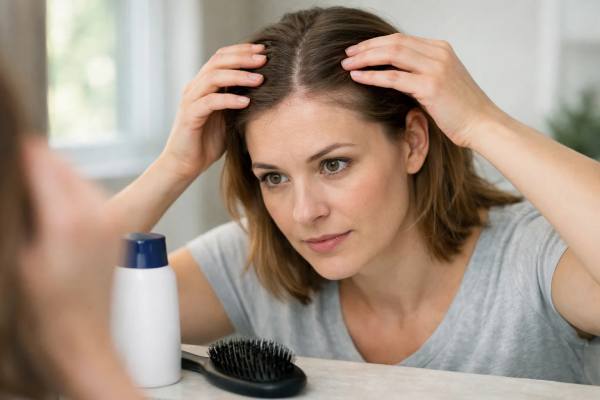
Seborrheic dermatitis often starts quietly: a dusting of flakes on a dark top, an itchy patch near the hairline, or a scalp that feels both oily and irritated at the same time. Then it becomes harder to ignore. The scale turns stickier, the itch more persistent, and the cycle of scratching and flaking begins to feel never-ending.
What makes this condition frustrating is that it can look like ordinary dandruff, dry scalp, eczema, or even psoriasis. It is also chronic, which means it tends to improve, then flare again. The good news is that seborrheic dermatitis is usually very manageable once you know what you are treating and which shampoo ingredients actually target the problem.
This guide explains the symptoms that matter, the triggers that commonly set off flares, and the shampoo actives most likely to help. It also covers how to use medicated shampoos well enough to see real improvement without turning your scalp care routine into another source of irritation.
Key Insights
- Consistent medicated shampoo use often reduces itch, visible scale, and scalp oil within 2 to 4 weeks.
- The best shampoo usually depends on the pattern of symptoms, not the brand name on the bottle.
- Seborrheic dermatitis tends to relapse, so maintenance washing matters even after the scalp looks clear.
- Burning, spreading rash, pus, or no improvement after about 4 weeks should prompt a medical review.
- Leave medicated shampoo on the scalp for about 5 to 10 minutes before rinsing so the active ingredient has time to work.
Table of Contents
- What Seborrheic Dermatitis Looks and Feels Like
- Why Flares Happen and Who Gets Them
- How to Tell It From Other Scalp Problems
- The Best Shampoo Ingredients and How They Help
- How to Use Medicated Shampoos Without Overdoing It
- When Home Care Is Not Enough
What Seborrheic Dermatitis Looks and Feels Like
Seborrheic dermatitis is a chronic inflammatory skin condition that favors oil-rich areas. The scalp is the classic site, but it can also show up around the hairline, eyebrows, sides of the nose, ears, beard area, and upper chest. On the scalp, it usually appears as flaking that is more than simple dryness. The flakes may be fine and powdery, but they are often larger, greasier, and more adherent than ordinary dry-skin scale.
Many people notice a mix of symptoms rather than one single sign. Common features include:
- white, off-white, or yellowish flakes
- greasy or waxy scale that clings to the scalp
- itch that ranges from mild to intense
- scalp tenderness, burning, or a prickly feeling
- visible redness, or skin that looks darker or lighter than the surrounding area depending on skin tone
- worsening around the hairline, behind the ears, or in the beard
The condition sits on a spectrum. Mild dandruff is often considered the lighter end, where flaking is present but inflammation is limited. As seborrheic dermatitis becomes more active, the scalp usually looks more irritated and the flakes become thicker, oilier, or more stubborn. Some people also notice that the scalp feels paradoxically oily at the roots and dry at the surface.
One of the most confusing parts is that symptoms can change week to week. During calmer periods, the scalp may shed only small flakes. During a flare, the scale may build into patches, and scratching can lift off larger pieces. That can make the scalp look alarming even when the underlying condition is still manageable.
Seborrheic dermatitis does not usually cause permanent hair loss by itself. Still, active inflammation, heavy scale, and repeated scratching can increase temporary shedding and breakage. If the scalp is very inflamed, hairs may come out more easily during washing. That is usually a sign that the scalp needs gentler handling and better control of the flare, not a sign that the follicles are permanently damaged.
Another clue is distribution. If the same flaky, irritated pattern appears in the eyebrows, beard, or around the ears, seborrheic dermatitis becomes more likely. It is also common for symptoms to improve for a while with a random anti-dandruff shampoo, then drift back once the product is stopped. That stop-start pattern is typical because this condition is chronic, not a one-time event.
The practical takeaway is simple: look beyond “flakes.” The combination of itch, oiliness, irritation, and repeat flares is what separates seborrheic dermatitis from an ordinary dry scalp day.
Why Flares Happen and Who Gets Them
Seborrheic dermatitis is not caused by poor hygiene, and it is not contagious. It develops when several factors overlap: an oil-rich environment, a scalp that is prone to inflammation, and an overreaction to Malassezia yeast, which normally lives on human skin. In simple terms, the scalp is not just “dirty” or “dry.” It is reacting to a combination of oil, microbes, and barrier stress.
That explains why flares often seem unpredictable. The condition can simmer at a low level for weeks and then suddenly become worse after a change in weather, routine, health, or products. The most common triggers include:
- cold, dry weather
- stress and poor sleep
- illness or immune strain
- infrequent shampooing that allows oil and scale to build up
- heavy styling products that sit on the scalp
- fragranced or irritating hair products
- sweat, occlusion, and friction under hats or helmets
- aggressive scratching or picking at scale
Oil plays an important role, but not in the way many people assume. Seborrheic dermatitis is more common in sebaceous areas because Malassezia feeds on skin lipids. That does not mean everyone with an oily scalp will develop it, but it helps explain why the scalp, eyebrows, and beard are such common locations. It also explains why routines that leave thick buildup on the scalp can make some flares worse.
The skin barrier matters too. When the barrier is irritated or disrupted, the scalp becomes less tolerant. Products that might seem harmless on a healthy scalp can sting, burn, or worsen flaking during an active flare. This is one reason trendy “deep clean” routines often backfire. A scalp with seborrheic dermatitis usually does better with targeted treatment than with harsh stripping.
Certain people are more prone to persistent or severe symptoms. Seborrheic dermatitis is common in infancy and adulthood, and it may be more noticeable in people with oily skin. It can also be more stubborn in people with neurologic disease, significant immune compromise, or other inflammatory skin conditions. Hormonal shifts, stress, and chronic illness can add to the pattern.
A helpful way to think about it is as a threshold condition. Your scalp may tolerate a certain level of oil, yeast activity, and friction without obvious problems. Then one extra factor, such as winter weather, a new fragranced dry shampoo, or a stressful month, pushes it over the edge. That is why trigger management matters just as much as choosing the right bottle.
If you want a deeper primer on the ecosystem involved, a guide to the scalp microbiome can make the pattern easier to understand. The key point is that flares are rarely random. They usually reflect a treatable imbalance between scalp oil, skin barrier health, and inflammation.
How to Tell It From Other Scalp Problems
One reason seborrheic dermatitis is so often mistreated is that several scalp conditions can look similar at first glance. Flakes alone are not enough to make the diagnosis. What matters is the full picture: the size and feel of the scale, the amount of redness, the degree of itch, where the problem appears, and what seems to trigger it.
Dry scalp is the most common mix-up. A dry scalp usually produces smaller, lighter flakes and more tightness than oiliness. The scalp may feel rough or dehydrated, especially in winter or after frequent washing with harsh cleansers. Seborrheic dermatitis, by contrast, often includes greasier scale, more irritation, and a recurring pattern in oily areas like the scalp, eyebrows, ears, and beard. Readers who want a side-by-side breakdown may find this guide to dandruff and dry scalp differences useful.
Psoriasis is another look-alike, especially on the scalp. Psoriatic plaques tend to be thicker, drier, and more sharply defined. The scale is often silvery, and the plaques may extend beyond the hairline onto the forehead or neck. Psoriasis is also more likely to show up on elbows, knees, or nails. Some people have overlap, sometimes called sebopsoriasis, which blends features of both conditions.
Contact dermatitis can also imitate seborrheic dermatitis, especially after a new hair dye, fragrance-heavy shampoo, scalp serum, or leave-in product. Clues include sudden onset, burning or stinging, swelling, and rash that tracks where the product touched the skin. The hairline, ears, eyelids, and neck are common sites because product often runs there during rinsing.
A few patterns deserve extra caution:
- patchy hair loss with broken hairs
- tender bumps, pus, or crusting
- swollen lymph nodes
- painful rather than simply itchy lesions
- thick plaques that do not respond to standard dandruff shampoos
Those features raise the possibility of something else, such as fungal infection, folliculitis, or a more inflammatory scalp disorder. Ringworm of the scalp, for example, is more common in children but can occur in adults, and it needs a different treatment plan. A medicated dandruff shampoo alone will not fix it.
Color can be misleading too. On lighter skin, seborrheic dermatitis often appears pink or red. On darker skin, it may look violet, darker brown, lighter than the surrounding skin, or simply inflamed without bright redness. That is one reason texture and distribution matter as much as color.
When symptoms keep returning despite reasonable shampoo use, assume the diagnosis may need a second look. The right treatment depends on naming the condition correctly. A dry scalp needs a different strategy than an inflamed yeast-driven flare, and psoriasis needs a different strategy than a product allergy.
The Best Shampoo Ingredients and How They Help
The best shampoo for seborrheic dermatitis is usually the one that matches the main problem on your scalp: yeast overgrowth, thick scale, excess oil, inflammation, or a mix of all four. That is why ingredient labels matter more than marketing claims. “Purifying,” “detox,” and “scalp balancing” sound impressive, but the active ingredient tells you whether the shampoo is likely to do real work.
These are the most useful categories.
- Ketoconazole: One of the best-known antifungal options. It helps reduce Malassezia on the scalp and is often a strong first choice for greasy flakes, itch, and recurring scalp flares.
- Selenium sulfide: Another effective option for oily, scaly flares. It can be especially helpful when flakes are adherent and the scalp feels greasy quickly after washing.
- Ciclopirox: A prescription antifungal shampoo often used when over-the-counter products are not enough. It can be a good next step for more persistent cases.
- Zinc pyrithione: Common in dandruff shampoos where available. It can help control flaking and irritation, though product availability varies by country.
- Salicylic acid: Not primarily antifungal, but very useful for loosening stubborn scale. It works best when scale is thick or hard to lift.
- Coal tar: Helps slow scaling and calm inflammation. It can work well for some people, but the smell, potential dryness, and cosmetic feel make it less popular now.
A simple way to choose is by symptom pattern.
If your scalp is itchy, oily, and constantly flaky, an antifungal shampoo such as ketoconazole or selenium sulfide is often the most logical starting point. If the problem is less itch and more thick, clingy buildup, a salicylic acid shampoo can help break the scale apart. Many people do best with a rotation: an antifungal to control the cause and a keratolytic option to remove stubborn scale.
Prescription shampoos earn their place when over-the-counter choices only partly help. Ciclopirox is one example. It is often used for scalp seborrheic dermatitis that keeps coming back or looks more inflamed than routine dandruff.
Cosmetic details matter more than most people realize. A shampoo may be medically effective but still hard to stick with if it leaves hair rough, smells strong, or irritates the scalp base. This is especially true for people with color-treated, curly, coily, or very dry hair. In those cases, it can help to use the medicated shampoo mainly on the scalp and keep a bland conditioner on the lengths.
A useful rule is not to chase complexity. One well-chosen active ingredient used consistently often works better than a shelf full of “scalp care” products layered together. If you want a more detailed ingredient-by-ingredient comparison, this guide to dandruff shampoo actives is a helpful next step.
In practice, the “best shampoo” is rarely universal. It is the formula that fits your flare pattern, your hair type, and your ability to use it often enough to maintain control.
How to Use Medicated Shampoos Without Overdoing It
Many seborrheic dermatitis shampoos fail not because the ingredient is wrong, but because the shampoo is used like an ordinary cleanser. These formulas need contact time. A quick lather and immediate rinse may clean the hair, but it often does not give the active ingredient enough time to calm the scalp.
A practical routine looks like this:
- Wet the scalp thoroughly.
- Apply the shampoo to the scalp, not just the hair.
- Use fingertips, not nails, to spread it across the areas that flake or itch most.
- Leave it on for about 5 to 10 minutes unless the label or your clinician says otherwise.
- Rinse well.
- Follow with a gentle conditioner on the mid-lengths and ends if your hair gets dry.
For many adults, the starting pattern is 2 to 3 uses a week for 2 to 4 weeks. After the flare settles, many people maintain results with once-weekly or every-other-week use. That step-down phase matters. Stopping completely the minute the scalp looks better is one of the most common reasons symptoms rebound.
A few technique details make a big difference:
- Focus shampoo on the scalp rather than the ends.
- Avoid scratching scale loose with nails.
- Do not pile on multiple medicated products at once unless advised.
- Alternate with a mild non-medicated shampoo if the scalp feels stripped.
- Judge results after a few weeks, not after one wash.
Hair type changes the routine. People with straight or wavy hair often tolerate more frequent medicated washing. People with curly, coily, or very dry hair may do better with less frequent medicated use, careful scalp application, and extra protection for the lengths. In that situation, it helps to think of medicated shampoo as a scalp treatment rather than an all-hair product.
Facial hair can be treated too. If seborrheic dermatitis affects the beard or mustache, a medicated shampoo can sometimes be worked gently into the area and rinsed off after a short contact time. The same idea may help around the eyebrows, but the eye area is sensitive, so it is best done carefully and not during a rushed shower.
What about washing less? For true seborrheic dermatitis, less is not always better. Too-infrequent washing can let oil, scale, and styling residue build up, which may worsen the cycle. At the same time, aggressive daily cleansing with a harsh shampoo can irritate the barrier. The right frequency usually sits in the middle, shaped by scalp oiliness, hair texture, and the product itself. A guide on wash frequency by scalp type can help refine that balance.
If one active ingredient helps a little but not enough, it may be time to rotate rather than quit. Switching from ketoconazole to selenium sulfide, or adding a scale-lifting shampoo once weekly, can be more effective than endlessly repeating a product that only half works.
When Home Care Is Not Enough
Seborrheic dermatitis is often manageable at home, but there is a clear point where self-care stops being enough. The right response then is not to scrub harder or keep buying stronger shampoos at random. It is to get the diagnosis confirmed and the treatment plan upgraded.
A dermatologist visit makes sense when:
- symptoms have not clearly improved after about 4 weeks of correct shampoo use
- the scalp is very red, painful, or burning
- there is pus, crusting, or foul odor
- thick plaques extend beyond the hairline
- the rash involves the eyelids, ear canals, or large areas of the body
- patchy hair loss, broken hairs, or marked shedding appear
- you are unsure whether the problem is seborrheic dermatitis at all
When home care is not enough, treatment often moves beyond shampoo. That can include a short course of topical corticosteroid solution, foam, or lotion for the scalp to quickly calm inflammation. These treatments can work well, but they are usually meant for short bursts, not indefinite use. For facial areas, clinicians often prefer non-steroidal options such as antifungal creams or topical calcineurin inhibitors because the skin is thinner and more easily irritated.
If over-the-counter shampoo helped only briefly, prescription options may include ciclopirox shampoo, ketoconazole cream or foam for non-scalp areas, or newer non-steroidal anti-inflammatory treatments in selected cases. Widespread or unusually resistant seborrheic dermatitis may occasionally need oral treatment, but that is not the routine first step.
Temporary shedding can happen during a bad flare, especially when scale is heavy and scratching is frequent. In most cases, the hair recovers once inflammation settles. What deserves faster attention is shedding with tenderness, scarring, pustules, or obvious thinning in patches. Those features suggest that something more than standard seborrheic dermatitis may be going on.
Infants are a separate category. Cradle cap is a form of seborrheic dermatitis, but adult dandruff shampoos are not automatically appropriate for babies. Infant scalp care should follow pediatric or dermatology advice rather than an adult routine.
Perhaps the most important mindset shift is this: persistent seborrheic dermatitis is not a personal failure and does not mean you chose the wrong shampoo once. It often means the scalp now needs a more tailored plan, less irritation, and sometimes prescription help. If you are trying to decide whether your symptoms have crossed that line, this guide to when an itchy scalp needs medical care can help you recognize the warning signs earlier.
References
- A comprehensive literature review and an international expert consensus on the management of scalp seborrheic dermatitis in adults 2024 (Expert Consensus)
- Child and Adult Seborrheic Dermatitis: A Narrative Review of the Current Treatment Landscape 2025 (Narrative Review)
- Seborrheic Dermatitis Revisited: Pathophysiology, Diagnosis, and Emerging Therapies—A Narrative Review 2025 (Narrative Review)
- Ketoconazole Shampoo for Seborrheic Dermatitis of the Scalp: A Narrative Review 2024 (Narrative Review)
- A Comparative Randomized Clinical Study Assessing the Efficacy of a 1% Selenium Disulfide-Based Shampoo versus 2% Ketoconazole Shampoo in Subjects with Moderate to Severe Scalp Seborrheic Dermatitis 2024 (RCT)
Disclaimer
This article is for educational purposes only and is not a substitute for medical advice, diagnosis, or treatment. Seborrheic dermatitis can resemble other scalp conditions, including psoriasis, fungal infection, eczema, and allergic reactions. Seek medical care if symptoms are severe, painful, spreading, infected, associated with notable hair loss, or not improving with appropriate over-the-counter treatment.
If this article helped, please consider sharing it on Facebook, X, or your preferred platform so others dealing with persistent scalp flaking and irritation can find reliable guidance.