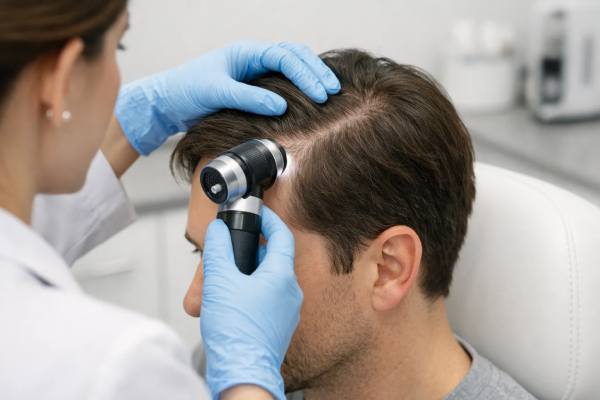
Hair loss treatment is entering a new phase where clinics no longer sell only minoxidil, finasteride, PRP, and surgery. Now the language is “regenerative,” “cell-free,” and “signal-based,” with exosomes and secretome therapy often positioned as the next big leap. The promise is appealing: instead of forcing the follicle, these treatments aim to nudge it with the same kinds of messages cells use during repair and growth.
That idea is not fantasy. Hair follicles do respond to molecular signals, and early studies suggest some secretome-based approaches may improve density or thickness in selected patients. But the gap between a plausible mechanism and a dependable treatment is still wide. Product names are inconsistent, protocols vary, and marketing often runs ahead of evidence.
If you are trying to separate a serious emerging therapy from a glossy sales pitch, the key is not whether secretome therapy sounds advanced. It is whether the product, diagnosis, protocol, and expectations are grounded in what human studies actually show.
Key Insights
- Secretome therapy is a broad category, and exosomes are only one part of it.
- Early studies suggest some improvement in hair density and thickness, especially in androgenetic alopecia, but the evidence is still small and uneven.
- The biggest limitation is not the biology alone but the lack of standardized products, dosing, and long-term follow-up.
- A practical way to use this field is as an adjunct for well-diagnosed pattern hair loss, not as a replacement for established first-line care.
- Before paying for treatment, ask exactly what is being injected or applied, how many sessions are planned, and how results will be measured at 3 to 6 months.
Table of Contents
- What Secretome Therapy Really Means
- How Exosomes and Growth Factors May Work
- What the Human Evidence Really Shows
- Safety, Regulation, and Marketing Red Flags
- Who May Benefit and Who Should Pass
- How It Compares with PRP, Minoxidil, and Transplant
What Secretome Therapy Really Means
“Secretome therapy” sounds precise, but in hair clinics it is often used as a catch-all label. In strict biological terms, the secretome is the full set of substances a cell releases into its environment. That can include growth factors, cytokines, chemokines, lipids, proteins, messenger molecules, and extracellular vesicles such as exosomes. So when a clinic says “secretome for hair growth,” that does not automatically tell you what the product is.
This matters because the source and contents shape the claim. Some products are marketed as purified exosomes. Some are conditioned media, meaning the fluid collected after cells were grown in culture. Some are growth-factor blends. Others are basically topical serums that use the word “exosome” for branding even when the biologic content, concentration, or viability is unclear. A patient may hear one term while receiving something quite different.
Exosomes themselves are tiny membrane-bound vesicles released by cells. They act like delivery packages, carrying proteins, lipids, and genetic signals such as microRNA. Growth factors are different. They are soluble signaling proteins, not vesicles, and include names like VEGF, IGF-1, FGF, HGF, and PDGF. A true secretome product may contain both vesicles and soluble factors. That is one reason the category is exciting, but it is also why standardization is hard.
Route matters too. Secretome-based hair treatments are currently offered in three broad ways:
- Injected into the scalp.
- Applied after procedures such as microneedling or radiofrequency microneedling.
- Sold as take-home topical products.
These should not be treated as equivalent. An injected biologic, a post-procedure topical, and an over-the-counter serum do not share the same delivery, depth, or regulatory concerns.
The cleanest way to think about secretome therapy is this: it is not a single treatment. It is a family of cell-free signaling products aimed at improving the follicle environment. That idea is real. The problem is that commercial language often flattens important differences in source, processing, potency, and evidence. When those details stay vague, the treatment becomes hard to judge and even harder to compare across clinics.
How Exosomes and Growth Factors May Work
Hair follicles are not passive structures. They cycle through growth, transition, and rest, and that rhythm depends on a crowded local environment: dermal papilla cells, stem cells in the bulge, blood supply, immune signals, hormones, and structural support around the follicle. Secretome therapy is attractive because it tries to improve that local environment rather than relying on one single drug target.
In theory, exosomes and growth factors may help in several ways. First, they may support dermal papilla cell activity. Those cells help direct follicle behavior, and when their signaling weakens, the follicle can miniaturize. Second, they may encourage angiogenesis, meaning better microvascular support around the follicle. Third, they may reduce inflammatory signaling that contributes to a hostile scalp environment. Fourth, they may help push follicles toward a longer anagen, or growth, phase.
The most discussed pathways include Wnt/β-catenin signaling, VEGF-driven vascular support, and a broader set of regenerative signals that may improve cell survival and reduce apoptosis. MicroRNAs inside exosomes may also influence gene expression in target cells. That is one reason exosomes attract so much attention: they are not just one molecule, but a package of biological instructions.
There is also a practical difference between exosomes and simpler growth-factor therapy. Exosomes may protect their cargo and help deliver it to target cells more efficiently than free proteins alone. Growth factors, on the other hand, may act quickly but can be more fragile and short-lived. This is why some clinicians describe exosomes as a more complex signaling platform, while PRP and other growth-factor concentrates act more like a concentrated burst of repair signals.
Still, the mechanism has limits. Secretome therapy does not appear to create brand-new follicles in the way marketing sometimes implies. It is better understood as an attempt to improve performance in follicles that are still alive but struggling. That makes it more plausible for early or moderate pattern hair loss than for shiny scarred scalp, long-standing follicle destruction, or severe autoimmune disease.
It also does not remove the main drivers of pattern hair loss. If dihydrotestosterone sensitivity continues unchecked, or if scalp inflammation remains active, signaling therapy may help only modestly or temporarily. That is why the most realistic view is not “this regrows everything,” but “this may improve the follicle environment enough to enhance growth in selected cases.” Real biology supports that idea. The current uncertainty is how reliably that biology translates into repeatable clinical results.
What the Human Evidence Really Shows
The clinical evidence is encouraging enough to take seriously, but not strong enough to treat as settled. Most published human studies focus on androgenetic alopecia, also called male or female pattern hair loss. Across those studies, investigators have reported gains in hair density, thickness, or patient satisfaction after exosome-based treatment. That is the good news.
The harder part is that the literature is highly uneven. Studies use different exosome sources, including adipose-derived, placental, hair-follicle-derived, umbilical-cord-derived, and other cell sources. They also vary in preparation method, particle count, injection depth, number of sessions, use of adjunct microneedling, and length of follow-up. In some papers, patients receive a single treatment. In others, they undergo a short series spaced about a month apart. Follow-up is often around 3 to 6 months, which is enough to see signal, but not enough to judge durability.
That makes simple claims like “exosomes work better than everything else” impossible to defend. What the evidence actually supports is narrower:
- Some studies show measurable short-term improvement in density or thickness.
- A few controlled studies are more persuasive than the rest.
- Most studies are still small.
- Long-term maintenance data are weak.
- Head-to-head comparisons remain limited.
This is the point where many readers benefit from stepping back and comparing secretome therapy with better-known options such as PRP, minoxidil, and finasteride. Those treatments have their own limitations, but they are easier to standardize and easier to counsel around. Exosome therapy still lacks that level of clinical clarity.
Another important reality is publication bias. Newer regenerative treatments often generate enthusiasm, high patient satisfaction, and attractive before-and-after photography. Those features do not automatically mean the effect is large or durable. Hair is especially vulnerable to misleading presentation because styling, lighting, hair length, scalp oil, and part-line positioning can change the visual impression a lot.
So what is real? The signal is real enough that exosome therapy should not be dismissed as pure hype. But it is still an early-stage therapy. The strongest honest summary is this: there may be a meaningful benefit for selected patients with pattern hair loss, yet the field still lacks the standardization, scale, and follow-up needed for confident predictions. It is an emerging option, not a mature one.
Safety, Regulation, and Marketing Red Flags
The biggest mistake in this space is assuming that “cell-free” means “low risk.” Removing whole cells does not remove every concern. In fact, secretome and exosome products raise a different set of questions: source integrity, contamination control, storage stability, characterization, and real potency.
A major issue is that exosome products are not all made or tested the same way. Two products can both be advertised as exosomes while differing in source tissue, purification method, particle count, protein contamination, sterility testing, and storage conditions. Some clinics quote huge numbers such as “billions of exosomes,” but without a standardized industry-wide potency measure, that number can sound more informative than it really is. Particle count alone does not prove biological effect.
Route of delivery also changes risk. A topical product used after microneedling does not carry the same concern profile as a scalp injection. Once a biologic is injected, questions about sterility, immunologic response, and manufacturing quality become much more important. That is one reason a patient should not treat “injection” and “cosmetic serum” as interchangeable categories. Many of the same caution points also apply to scalp mesotherapy risks, especially when products are mixed, repackaged, or poorly documented.
There is also the regulatory issue. In the United States, there are no FDA-approved exosome products for hair loss treatment. That does not mean all investigation is illegitimate. It does mean patients should be careful when clinics present the therapy as fully established, broadly approved, or routine standard of care.
Some marketing phrases deserve immediate skepticism:
- “Stem cells without the risk”
- “Guaranteed follicle regeneration”
- “One session replaces minoxidil”
- “Works for every type of alopecia”
- “No downtime, no risk, no need for diagnosis”
Those claims oversimplify a biologically complicated treatment. A serious clinic should be able to answer basic questions in plain language:
- What exactly is the product?
- What is the source?
- Is it injected or topical?
- How is it characterized and stored?
- What outcomes are measured, and when?
- What diagnosis is being treated?
If those answers stay vague, the marketing is stronger than the medicine. That is usually the clearest warning sign in this category.
Who May Benefit and Who Should Pass
The best candidate for secretome therapy is usually not the most desperate patient. It is the patient with a clear diagnosis, living follicles, realistic expectations, and a reason to use an adjunct rather than a miracle cure. In current practice, that often means early to moderate androgenetic alopecia in someone who wants a non-surgical office procedure and understands that improvement may be modest.
People who may fit that profile include:
- Men or women with pattern hair loss and visible miniaturization rather than shiny scarred scalp.
- Patients who want to support density while continuing established treatment.
- People who cannot tolerate some standard options but still want a monitored in-office approach.
- Patients who value incremental improvement more than dramatic regrowth promises.
The weaker candidates are just as important to identify. Secretome therapy is a poor shortcut when the diagnosis is unclear. Sudden diffuse shedding, patchy loss, scalp pain, marked redness, scale, pustules, or eyebrow involvement may point to a different problem entirely. In those settings, a careful exam and sometimes lab work or biopsy matter more than a regenerative package. That is why it helps to know when to see a dermatologist for hair loss before jumping into a procedure.
Patients who should be especially cautious include:
- Anyone with suspected scarring alopecia.
- People with active scalp infection or significant untreated inflammation.
- Patients with alopecia areata who assume exosomes can replace disease-specific treatment.
- Pregnant or breastfeeding patients, because safety data are limited.
- Anyone with very advanced loss and dormant expectations of full restoration.
- People who have not yet tried or discussed first-line evidence-based options.
Cost belongs in this decision too. Secretome treatments are often sold in multi-session packages, and the price can quickly exceed a long stretch of conventional therapy. That may be acceptable if you understand the uncertainty. It is not reasonable if the treatment is being presented as guaranteed or superior without proof.
A thoughtful patient uses secretome therapy the way good dermatology uses most emerging tools: after the diagnosis is secure, after reversible contributors are considered, and with photos, timelines, and realistic endpoints in place. That approach lowers disappointment and raises the chance that any improvement you see is both meaningful and honestly interpreted.
How It Compares with PRP, Minoxidil, and Transplant
The simplest comparison is this: secretome therapy is promising, PRP is moderately established but variable, medications remain the best-studied non-surgical options, and transplant remains the most direct way to restore density in the right candidate. Each serves a different purpose.
PRP is the nearest procedural cousin because it also works through signaling molecules rather than classic drug action. But PRP is autologous, meaning it comes from your own blood. That lowers some sourcing concerns. Its downside is variability: preparation methods differ, platelet concentration differs, and the evidence, while more mature than exosome evidence, is still heterogeneous. PRP may help, but results are not perfectly predictable.
Minoxidil and finasteride remain the anchor therapies for pattern hair loss because they are better studied, more standardized, and easier to maintain over time. They are not glamorous, but they set expectations more honestly. Minoxidil supports follicles and prolongs growth. Finasteride lowers the androgen pressure driving miniaturization in many male patients. In women, treatment plans may use topical therapy, oral minoxidil, hormonal strategies, or combinations depending on history and risk profile. None of these options are perfect, but they have a clearer evidence base.
Hair transplant belongs in a different lane. It does not “revive” weak follicles. It redistributes stronger donor follicles to areas of need. For stable pattern loss and adequate donor hair, it can provide the most visible structural improvement. For that reason, patients weighing procedures should also understand hair transplant candidacy and recovery rather than assuming every density problem needs a biologic injectable.
So where does secretome therapy fit today? Usually as an adjunct, not a foundation. A reasonable treatment ladder often looks like this:
- Confirm the diagnosis.
- Treat scalp inflammation or medical contributors.
- Start or review evidence-based therapy.
- Consider PRP, secretome therapy, or both if the goal is additional support.
- Consider surgery only when loss is stable and the donor area is suitable.
That order matters because secretome therapy does not reliably replace medical maintenance. Even when it helps, it may work best in a follicle environment already protected by other treatments.
The most realistic bottom line is not that secretome therapy is fake. It is that it is early. For the right patient, it may be a worthwhile add-on with real biologic logic and early clinical promise. For the wrong patient, it is an expensive detour from diagnosis, maintenance, or surgery that would do more.
References
- Exosomes and Hair Regeneration: A Systematic Review of Clinical Evidence Across Alopecia Types and Exosome Sources 2025 (Systematic Review)
- Systematic review of exosome treatment in hair restoration: Preliminary evidence, safety, and future directions 2023 (Systematic Review)
- Effectiveness of Exosome Treatment in Androgenetic Alopecia: Outcomes of a Prospective Study 2024 (Prospective Study)
- The role of platelet-rich plasma in androgenetic alopecia: A systematic review 2024 (Systematic Review)
- Consumer Alert on Regenerative Medicine Products Including Stem Cells and Exosomes 2020 (FDA Safety Guidance)
Disclaimer
This article is for educational purposes only and does not diagnose, treat, or replace medical care. Hair loss has many causes, and treatments that sound similar may differ greatly in source, safety profile, and evidence. Secretome and exosome therapies are still evolving, and suitability depends on the type of hair loss, scalp health, medical history, and the exact product being used. A dermatologist or qualified hair-loss specialist should confirm the diagnosis before any injectable or regenerative treatment is started.
If this article helped you, please consider sharing it on Facebook, X, or your preferred platform so others can make more informed decisions about hair loss treatment.