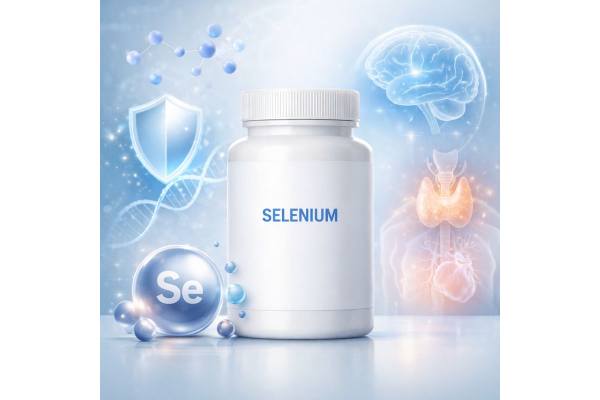
Selenium is a trace mineral that your body needs in very small amounts but relies on every day. It sits at the heart of selenoproteins, a family of enzymes that support antioxidant defenses, thyroid hormone activation, immune response, and normal fertility. Many people get enough selenium from food, yet interest in selenium supplements has grown because of its links to energy, metabolism, and healthy aging.
At the same time, selenium has a narrow safety window. Too little may impair immunity and thyroid function, but too much can damage hair, nails, and nerves. This makes it a nutrient where “more” is not always better.
This guide walks you through how selenium works, evidence-based benefits, practical dosage ranges, and how to choose between different supplement forms. You will also find clear safety guidance and a summary of what current research actually supports, so you can discuss selenium use confidently with your healthcare professional.
Key Insights about Selenium
- Selenium supports antioxidant protection, thyroid hormone activity, and normal immune function.
- Typical supplemental intakes are 50–100 mcg per day, with a usual total daily intake target around 55–150 mcg from all sources.
- Long-term intakes that approach or exceed 250–400 mcg per day may increase the risk of side effects such as brittle hair and nails.
- People with kidney disease, children, those already using high-dose multivitamins, and anyone with very high dietary selenium should avoid extra selenium unless advised by a clinician.
Table of Contents
- What is selenium and how does it work?
- Proven benefits of selenium for health
- How to use selenium supplements in practice
- Recommended selenium dosage and daily intake
- Side effects of selenium and who should avoid it
- Comparing selenium forms and choosing a product
- What science says about selenium and chronic disease
What is selenium and how does it work?
Selenium is an essential trace element, which means your body cannot make it and must obtain it from food or supplements. Unlike some nutrients that act alone, selenium is incorporated into special proteins called selenoproteins. These proteins contain the amino acid selenocysteine, sometimes called the “21st amino acid,” and it is this structure that gives selenoproteins their powerful biochemical roles.
More than two dozen selenoproteins have been identified in humans. Many of them are enzymes that help control oxidation–reduction reactions. For example, some selenoproteins assist in recycling antioxidants and neutralizing reactive oxygen species. Others participate in DNA synthesis and repair, which is one reason selenium is often discussed in the context of cellular protection.
Selenium is also central to thyroid function. Enzymes that convert the storage hormone thyroxine (T4) into the active hormone triiodothyronine (T3) depend on selenium. When selenium status is low, this conversion may be less efficient, which can affect metabolism, temperature regulation, and energy levels. Selenium also helps limit oxidative stress inside the thyroid gland, which produces large amounts of hydrogen peroxide during hormone synthesis.
In the immune system, adequate selenium status supports the function of T cells and natural killer cells and may influence how the body responds to viral infections. Selenium-rich enzymes help immune cells handle the oxidative stress that comes with fighting pathogens. Because of this, both deficiency and excess may disturb immune balance.
Dietary selenium occurs in several chemical forms. In plant foods such as grains and nuts, it is often found as selenomethionine, while animal foods may contain both selenomethionine and selenocysteine. In supplements, you may see selenium provided as selenomethionine, sodium selenite, sodium selenate, or selenium-enriched yeast. The body can use all of these, but they differ in how they are absorbed, stored, and cleared.
Proven benefits of selenium for health
The clearest benefits of selenium appear when someone who is deficient restores their status to a normal range. Much of the research on selenium’s advantages comes from populations with low dietary intake, where improving status can have visible effects on immunity, thyroid health, and certain deficiency-related syndromes.
One major role of selenium is in antioxidant defense. Selenoproteins such as glutathione peroxidases and thioredoxin reductases help detoxify harmful peroxides and maintain the balance between oxidation and reduction in cells. In practical terms, this means selenium supports the protection of cell membranes, proteins, and DNA from oxidative damage that can accumulate over time.
Selenium also influences thyroid health. In individuals with low selenium intake, supplementation that brings levels into the normal range can support more efficient conversion of T4 to T3. In some thyroid conditions, particularly autoimmune thyroiditis, adequate selenium status is associated with improvements in antibody levels and thyroid ultrasound findings in certain studies. These effects are not universal, but they underline the importance of avoiding deficiency in people with thyroid disease.
The immune system is another important target. Adequate selenium supports normal antibody production and helps immune cells mount a balanced response. Studies in low-selenium regions have shown that correcting deficiency can improve vaccine responses and reduce the severity or progression of some viral infections. This does not mean selenium is an antiviral drug, but rather that it helps the immune system function as designed.
In reproductive health, selenium plays a structural role in sperm formation and motility. Low selenium status has been linked with impaired sperm quality in men, and some trials suggest that normalizing selenium levels, often in combination with other antioxidants, can support aspects of male fertility. Again, benefits are most noticeable when correcting a true deficit rather than adding extra selenium to an already adequate diet.
Overall, the strongest evidence supports selenium as a required nutrient for antioxidant protection, thyroid hormone metabolism, immune competence, and normal reproductive function. Beyond these core roles, claims that selenium alone dramatically improves energy, skin appearance, or athletic performance are less consistent and often depend on correcting deficiency rather than providing high supplemental doses.
How to use selenium supplements in practice
Using selenium wisely starts with recognizing that it is a “goldilocks” nutrient: too little and the body cannot run key antioxidant and thyroid enzymes, too much and toxicity becomes a real risk. This means the first question is whether you actually need a supplement or can rely on food.
Many people meet their needs from diet alone. Foods naturally rich in selenium include certain nuts (particularly Brazil nuts), seafood, meats, eggs, and cereals grown in selenium-containing soils. In regions where soil selenium is low, daily intake can fall short, and in those situations supplements or selenium-enriched foods may be more justified.
If you and your healthcare professional decide supplementation makes sense, it is usually best to start at the lower end of the typical supplemental range. For most adults with average diets, this means choosing a product that provides around 50–100 micrograms (mcg) of selenium per day. This amount, combined with normal food intake, usually raises total intake into a safe and adequate window without approaching upper limits.
Selenium supplements are often taken once daily with food. Taking selenium with a meal may support comfortable digestion and, for some forms, may improve absorption. There is no strong evidence that a specific time of day (morning versus evening) dramatically changes its effect, so consistency is more important than timing.
For targeted uses, such as supporting thyroid or immune health under medical supervision, practitioners sometimes use short-term doses of 100–200 mcg per day. These higher amounts should still keep total daily intake (food plus supplements) below national upper limits and are not intended as indefinite lifelong dosages. After a few months, the dose is often reduced or stopped, depending on blood levels and clinical response.
You should also review your existing supplements. Many multivitamins already contain selenium, often between 25 and 100 mcg per serving. Adding a separate selenium product on top of a high-dose multivitamin can easily push total intake close to or above safe limits, especially if your diet already includes selenium-rich foods.
In practice, a cautious approach looks like this: know your dietary sources, check the labels of all supplements you use, choose a modest selenium dose if needed, and re-evaluate regularly with a healthcare professional rather than keeping a “set and forget” high dose for years.
Recommended selenium dosage and daily intake
Official recommendations for selenium aim to cover the amount needed to support normal selenoprotein activity in almost all healthy people. For most adults, the recommended dietary allowance (RDA) is around 55 mcg per day. Slightly higher values apply during pregnancy and breastfeeding to support fetal and infant development.
These recommendations are designed for total intake from all sources: food, water, and supplements combined. In many countries, average adult intakes fall in a range that naturally meets or slightly exceeds 55 mcg per day, especially where the soil is moderately rich in selenium and people consume seafood, meat, eggs, and grains.
Upper intake levels (ULs) define the highest daily intake unlikely to pose risks for most individuals. These differ slightly by authority. Some expert bodies set an adult UL of 400 mcg per day, whereas more recent evaluations propose a lower value around 255 mcg per day for adults, based on updated safety assessments. In practice, this means long-term intakes should stay comfortably below these ceilings.
For supplements, a practical target is to keep the combination of diet and pills within about 55–150 mcg per day for routine use. This allows a margin of safety, especially for people whose diets are variable. If your regular diet already contains high-selenium foods, such as Brazil nuts eaten frequently, even a 100 mcg supplement may be more than you need.
Some people may temporarily use higher supplemental amounts, such as 100–200 mcg per day, in a medical context, for example to correct low blood selenium or to address a specific deficiency-related problem. These higher intakes should always be monitored, and they should be time-limited rather than indefinite.
Children, adolescents, and older adults have different recommended intakes and upper limits. For example, young children have substantially lower ULs than adults. Because the margin between adequate and excessive intake is narrower for small bodies, it is important not to give adult-dose selenium supplements to children unless instructed by a pediatric professional.
Finally, remember that selenium is measured in micrograms, not milligrams. One milligram equals 1,000 micrograms. Toxic doses often occur when someone confuses these units or takes a product that contains far more selenium than its label indicates. Careful reading of labels and awareness of units are crucial for safe use.
Side effects of selenium and who should avoid it
Because selenium has a narrow safety range, side effects are a key consideration. At appropriate doses, most people tolerate selenium well. Problems arise mainly with long-term intake close to or above upper limits, or with accidental high doses.
Mild excess intake over time can lead to a condition called selenosis. Early signs often include a metallic or garlicky taste in the mouth, a noticeable odor on the breath, and gastrointestinal symptoms such as nausea or diarrhea. As exposure continues, people may develop brittle hair and nails, hair loss, and changes in nail appearance such as discoloration or ridging.
More severe toxicity, usually from very high doses, can cause neurological symptoms such as irritability, fatigue, numbness or tingling in the extremities, and in rare cases, difficulty walking or muscle weakness. Extremely large intakes can be life-threatening, but these situations are uncommon and usually linked to industrial accidents or misformulated products.
Some research suggests that taking high-dose selenium for long periods when baseline levels are already adequate may increase the risk of developing type 2 diabetes or disturb cholesterol patterns. The evidence is not completely consistent, but it reinforces the idea that individuals with normal selenium status should avoid chronic high-dose supplementation purely for “extra protection.”
Certain groups should be particularly cautious:
- People with chronic kidney disease may clear selenium more slowly, increasing the risk of accumulation.
- Children and adolescents are more sensitive to adult doses because of lower body weight and lower recommended limits.
- Individuals already using multiple fortified foods and multivitamins may easily exceed safe totals if they add a separate selenium supplement.
- Anyone with a history of selenium toxicity or known genetic issues affecting selenoprotein metabolism needs specialist advice.
Selenium can also interact with specific medications or health conditions. For example, high doses may influence how the body handles some chemotherapy drugs or thyroid medications. Combining multiple antioxidant supplements with certain treatments may or may not be advisable, depending on the therapy goals.
If you experience unexplained hair or nail changes, a persistent metallic taste, digestive upset that coincides with supplement use, or neurological symptoms, you should stop selenium supplements and seek medical evaluation. Blood tests and a detailed review of diet and products can help clarify whether selenium excess is involved.
Comparing selenium forms and choosing a product
Selenium supplements come in several forms, and labels can be confusing. Understanding the differences can help you choose a product that fits your needs without overpaying or over-supplementing.
Common forms include:
- Selenomethionine: An organic form where selenium replaces sulfur in the amino acid methionine. It is well absorbed and can be non-specifically incorporated into body proteins. This can raise overall selenium stores more effectively but also means excess may accumulate if you consistently take high doses.
- Sodium selenite and sodium selenate: Inorganic forms that are also absorbed and used by the body but are handled differently in metabolism. They are less likely to be stored in nonspecific proteins, and their levels may reflect current intake more closely.
- Selenium-enriched yeast: A natural yeast grown in a selenium-rich medium, then dried. It contains a mix of selenium species, mainly selenomethionine, within a whole-yeast matrix. Quality can vary between manufacturers.
From a health-outcome perspective, no form has consistently proven superior across all endpoints when used at equivalent selenium dosages. The main priorities are accurate labeling, appropriate dose, and reputable manufacturing. Some clinicians prefer selenomethionine because of its higher bioavailability, while others favor inorganic forms when they want less long-term accumulation.
When comparing products, consider the following:
- Dose per tablet or capsule: Look for 50–100 mcg per serving for routine use, unless your healthcare professional has specified another amount.
- Total selenium from all products: If your multivitamin already contains 100 mcg, an additional 200 mcg standalone supplement is usually unnecessary and may be risky.
- Third-party testing: Independent verification can reduce the risk of mislabeling, which is especially important given the serious consequences of extreme overdoses.
- Additives and fillers: Choose products with simple ingredient lists if you have allergies or sensitivities.
Liquid selenium drops and combination products (for example, selenium paired with zinc, vitamin E, or iodine) are also available. While convenient, they can make it harder to adjust each nutrient separately. If you are managing thyroid or immune conditions, individualized dosing is often preferable.
In many cases, a standard multivitamin with a moderate amount of selenium is sufficient. Dedicated high-dose selenium products should be reserved for specific, time-limited situations under supervision rather than casual, long-term use “just in case.”
What science says about selenium and chronic disease
Selenium attracted considerable attention when early studies suggested it might reduce risks of cancer and cardiovascular disease. Over the last two decades, a large body of research has clarified that the relationship is more nuanced than originally hoped.
For cancer, observational studies in low-selenium regions sometimes show that people with higher blood selenium levels have lower rates of certain cancers. However, large randomized trials in populations with adequate baseline selenium have not consistently confirmed a protective effect of high-dose supplementation. In some cases, extra selenium offered no benefit and raised concerns about potential harm, such as an increased risk of type 2 diabetes in subgroups.
Cardiovascular disease research has followed a similar pattern. In selenium-deficient populations, improving selenium status may help normalize markers of oxidative stress and inflammation, which could support heart and vascular health. In contrast, adding high-dose selenium on top of already sufficient intake does not reliably reduce heart attack or stroke risk and may negatively affect cholesterol profiles in some individuals.
Selenium and thyroid autoimmunity is an area of active study. In certain groups with autoimmune thyroiditis and low selenium status, supplementation has been associated with improvements in antibody levels and ultrasound findings, and occasionally with subjective symptom relief. Yet not all studies agree, and guidelines tend to emphasize that any therapy should be individualized, time-limited, and integrated with standard thyroid management rather than used as a stand-alone solution.
Emerging research also explores selenium’s role in infection severity, inflammatory diseases, and metabolic health. Low selenium status has been linked with poorer outcomes in some viral infections and chronic inflammatory conditions, but once again, most benefits appear when correcting deficiency rather than adding extra selenium to already adequate stores.
Taken together, the scientific picture supports a “U-shaped” curve: both deficiency and chronic excess are undesirable, while a moderate, adequate range is associated with the best outcomes. For most people, the goal should be to stay within that middle band through a balanced diet, using supplements only when there is a plausible need and clear plan for dose and duration.
References
- Selenium – Health Professional Fact Sheet 2025 (Guideline)
- Selenium and Selenoproteins in Health 2023 (Systematic Review)
- Selenoproteins in Health 2023 (Review)
- Effects and Impact of Selenium on Human Health, A Review 2024 (Systematic Review)
- Scientific opinion on the tolerable upper intake level for selenium 2023 (Guideline)
Disclaimer
The information in this article is for general educational purposes only and is not a substitute for personalized medical advice, diagnosis, or treatment. Selenium needs and risks vary with age, medical history, medications, and diet. Do not start, stop, or change any supplement or treatment based solely on this article. Always consult a qualified healthcare professional or registered dietitian before using selenium or any other supplement, especially if you are pregnant, breastfeeding, managing a chronic condition, or taking prescription medicines. Never exceed product directions or national intake recommendations unless your clinician has specifically advised it and is monitoring your status.
If you found this guide useful, you are warmly invited to share it with others on Facebook, X (formerly Twitter), or any platform you prefer, and to follow our work on social media. Your support in sharing helps our team continue creating carefully researched, balanced health content.