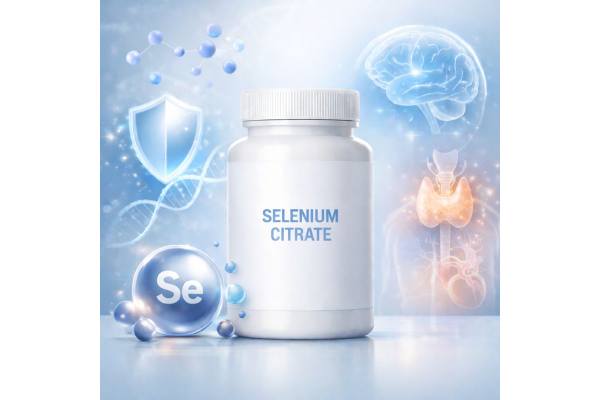
Selenium citrate is a less familiar form of a very well-known nutrient: selenium. Selenium is an essential trace mineral involved in antioxidant defense, thyroid hormone activation, immune function, and fertility. In supplements, it appears in several forms, such as selenomethionine, sodium selenite, and blended complexes like selenium citrate, where selenium is bound to citric acid to improve solubility and stability.
Because the margin between helpful and harmful intake is narrow, understanding how much selenium citrate to take, how it works in the body, and who should avoid it is crucial. This guide walks you through selenium citrate’s potential benefits, typical dosage ranges, how it compares with other forms, and the key safety concerns to keep in mind. You will also find practical advice on choosing a supplement, combining selenium with food and other nutrients, and spotting signs that your intake may be too high or too low.
Key Insights for Selenium Citrate
- Selenium citrate provides selenium that supports antioxidant enzymes, thyroid function, and immune defenses.
- Typical supplemental selenium intakes for adults are around 50–200 mcg per day from all forms combined.
- Total selenium intake should generally stay below 400 mcg per day in adults to reduce the risk of toxicity.
- People with kidney disease, high baseline selenium status, or those already taking multiple supplements should be especially cautious.
- Pregnant or breastfeeding women, children, and people on prescription medicines should only use selenium citrate under medical advice.
Table of Contents
- What is selenium citrate and how does it work?
- What are the main benefits of selenium citrate?
- How much selenium citrate per day?
- How to use selenium citrate safely in practice
- Side effects of selenium citrate and who should avoid it
- What the research says about selenium and citrate forms
What is selenium citrate and how does it work?
Selenium citrate is a supplemental form of selenium in which selenium is chemically bound to citrate (a salt of citric acid). Citrate acts as a small organic acid “carrier” that improves water solubility and helps keep minerals stable in solution. You will see similar chemistry in magnesium citrate, calcium citrate, and zinc citrate. In all of these, the mineral’s fundamental biological role is determined by the mineral itself, while the citrate mainly affects how it dissolves and is absorbed.
In the body, selenium from selenium citrate is ultimately converted into forms that can be incorporated into selenoproteins. These are specialized proteins that contain the amino acid selenocysteine. More than two dozen selenoproteins have been identified in humans. Many of them function as antioxidant enzymes that neutralize reactive oxygen species and protect cell membranes, DNA, and proteins from oxidative damage.
Key selenoproteins include glutathione peroxidases, which help detoxify peroxides, and iodothyronine deiodinases, which activate and deactivate thyroid hormones. Another, selenoprotein P, transports selenium in the blood and helps deliver it to tissues such as the brain and testes. None of these enzymes “know” whether selenium originally came from a food, a yeast-based supplement, or selenium citrate; once absorbed, selenium enters a common metabolic pool.
Compared with organic amino acid forms such as selenomethionine, citrate-bound selenium is usually categorized as an inorganic or mixed form. Its bioavailability is thought to be good, but it may not be as readily incorporated into long-term body protein stores as some organic forms. This can be an advantage if you want more predictable, shorter-term dosing rather than storage in tissues.
Overall, selenium citrate is best viewed as a delivery vehicle for selenium with reasonable absorption, good solubility, and neutral taste, used to help people meet—but not exceed—their daily selenium requirement.
What are the main benefits of selenium citrate?
Because selenium citrate delivers selenium into the same metabolic pathways as other forms, its potential benefits mirror those of selenium itself. The most established roles relate to antioxidant support, thyroid function, immune health, and fertility.
Selenium’s antioxidant function comes mainly through glutathione peroxidase and other selenoproteins. These enzymes help convert harmful peroxides into less reactive products, limiting oxidative stress. Adequate selenium status is associated with better protection of cell membranes, lipids, and DNA from oxidative damage. For people with low dietary selenium—common in regions with poor selenium soils—supplementation can improve blood selenium markers and enzyme activity.
Thyroid health is another major area. Selenium-dependent deiodinase enzymes convert the pro-hormone thyroxine (T4) into triiodothyronine (T3), the more active thyroid hormone. The thyroid gland also experiences intense oxidative stress because it uses hydrogen peroxide during hormone synthesis. Selenium-containing enzymes help control this oxidative burden. In people with low selenium intake, supplementation can improve certain thyroid markers, particularly when combined with adequate iodine, although it does not replace standard treatment for thyroid disease.
Immune function is closely tied to selenium status. Selenium supports both innate and adaptive immunity, influencing antibody production and the activity of natural killer cells and T-cells. In people with marginal selenium intake, supplementation has been shown in some contexts to enhance immune responses to infections and vaccinations. That said, evidence for selenium preventing common infections in well-nourished people is limited.
Reproductive health benefits are most often discussed in men. Sperm cells are rich in polyunsaturated fatty acids and prone to oxidative damage. Selenium-dependent enzymes help protect sperm membranes, and adequate selenium is associated with improved sperm motility and morphology in some small studies. However, selenium citrate or any selenium supplement should not be seen as a stand-alone fertility solution.
Finally, selenium’s possible roles in cardiovascular health, cognitive function, and cancer prevention remain areas of active research. Some observational studies link adequate selenium status with better outcomes, but large intervention trials with high-dose selenium supplements have produced mixed results. In some cases, high intakes have been linked to adverse effects rather than clear benefits, underscoring the need for moderation.
How much selenium citrate per day?
When thinking about dosing, it is important to remember that the body “sees” total selenium intake from all sources—food, multivitamins, single-ingredient selenium products, and fortified foods. Selenium citrate is just one contributor.
For most healthy adults, typical recommended daily intakes for selenium are around 55 mcg per day, with slightly higher targets in pregnancy and lactation. Many people achieve this through diet alone, especially if they regularly eat seafood, meat, eggs, dairy, and cereals. In such cases, if a supplement is used at all, a low dose (for example, 25–50 mcg) can be enough to cover potential gaps without pushing intake close to the upper limit.
In supplement practice, common selenium doses range from 50 to 200 mcg per day. For selenium citrate specifically, you may see products providing 50, 100, or 200 mcg of elemental selenium per capsule or tablet. For most adults who have an average diet and no documented deficiency, staying toward the lower end of this range—about 50–100 mcg per day from supplements—is more prudent than regularly using 200 mcg, especially over the long term.
The key safety concept is the tolerable upper intake level (UL). In many international guidelines, this is set at about 400 mcg per day for adults from all sources combined. Intakes above this, particularly day after day, increase the risk of selenosis (selenium toxicity). Because foods and multivitamins already contribute selenium, it is easy to get closer to this limit than people realize, especially if taking multiple supplements that each contain selenium.
A practical approach is:
- Review all supplements and fortified foods to find how much selenium you already get.
- Estimate your dietary intake: heavy consumers of seafood, organ meats, or Brazil nuts may easily reach or exceed their daily needs from food alone.
- Choose a selenium citrate dose that keeps your typical total intake comfortably below 400 mcg per day and, for most people, within roughly 100–200 mcg per day overall.
People with known low selenium status (often determined by lab testing) may need individualized dosing plans. In such cases, selenium citrate can be one option, but the exact dose and duration should be set by a clinician, with follow-up testing to avoid overshooting into toxic ranges.
How to use selenium citrate safely in practice
Using selenium citrate wisely involves more than just picking a dose. Timing, formulation, and overall supplement strategy all play a role in safety and effectiveness.
Selenium citrate is water-soluble and typically well absorbed when taken with or without food. However, taking it with a meal often improves tolerance and makes it easier to form a consistent routine. Many people take selenium in the morning with breakfast, especially if it is part of a broader multivitamin or mineral combination.
If you already use a multivitamin, check its selenium content before adding a separate selenium citrate supplement. Multivitamins commonly provide 50–200 mcg of selenium. In that situation, it may be unnecessary—and potentially risky—to add another 100–200 mcg from a stand-alone product. A cleaner approach is to adjust one of the products or choose a multivitamin without selenium if you prefer a separate selenium citrate supplement.
Selenium also interacts physiologically with other nutrients. Adequate iodine intake is important for thyroid-related benefits, since selenium-dependent enzymes help convert thyroid hormones. At the same time, very high doses of multiple antioxidants (for example, high-dose vitamin E plus high-dose selenium) have not consistently improved major health outcomes and sometimes increased risks in large trials. This is a reminder that more is not always better.
When selecting a selenium citrate product, consider:
- Clear labeling of “selenium (as selenium citrate)” and the amount of elemental selenium per serving.
- Third-party testing or quality certifications where available.
- Avoiding proprietary blends that obscure the actual selenium dose.
People who are making big changes to their diet or supplement regimen—for instance, adopting a highly restrictive diet or adding multiple new products at once—may benefit from baseline blood tests that include selenium or related markers. This is especially relevant if they live in areas with very low or very high selenium in soil and local food.
Finally, think in terms of time horizon. Selenium is not a quick “energy booster.” Most of its roles relate to long-term enzyme function and antioxidant status. A consistent, moderate intake over months and years is more sensible than cycling through extreme doses or using selenium citrate for short bursts without a clear rationale.
Side effects of selenium citrate and who should avoid it
The biggest safety issue with selenium, including selenium citrate, is the narrow range between adequate and excessive intake. Mild deficiency can impair antioxidant and thyroid enzyme function, but chronic excess leads to selenosis, which can be serious.
At modest supplemental doses (for example, 50–100 mcg per day in someone with average dietary intake), side effects are uncommon for most healthy adults. Occasional reports include mild digestive discomfort, metallic taste, or transient nausea, especially when taken on an empty stomach. These are typically dose-dependent and improve when the supplement is taken with food or at a lower dose.
Chronic intakes that significantly exceed the tolerable upper level (roughly 400 mcg per day for adults) carry higher risks. Classical signs of selenosis include brittle hair and nails, hair loss, skin rashes, a garlic-like odor on the breath, and neurological symptoms such as irritability or numbness in the extremities. Very high acute doses can cause severe gastrointestinal symptoms, breathing difficulties, and, in extreme cases, can be life-threatening.
Certain groups should use selenium citrate only with medical guidance or avoid it:
- Individuals with kidney disease: Reduced kidney function can alter selenium handling and increase the risk of accumulation and toxicity.
- People with high baseline selenium status: In some regions with selenium-rich soils or diets high in selenium-dense foods (like Brazil nuts), additional supplementation may be unnecessary and risky.
- Those already using multiple selenium-containing products: Combining a multivitamin, “immune support” formula, and separate selenium citrate can quickly add up to a high daily dose.
- Pregnant and breastfeeding women and children: While selenium is essential for growth and development, dosing needs are narrower and best managed by a healthcare professional.
Potential interactions with medicines are an additional consideration. Selenium can influence thyroid hormone metabolism and immune activity, so people using thyroid medication, immune-suppressing drugs, or undergoing chemotherapy should check for possible interactions before adding selenium citrate.
If you experience unexplained symptoms such as persistent fatigue, hair or nail changes, or a strong garlic-like breath while using selenium citrate, stop the supplement and discuss this with a clinician. Because symptoms of low and high selenium can overlap with many other conditions, professional evaluation is important rather than self-diagnosis.
Overall, when used in appropriate doses in people who need it, selenium citrate can be safe. Problems usually arise from long-term use of high doses, stacking multiple supplements, or taking selenium without considering diet and individual risk factors.
What the research says about selenium and citrate forms
Most of the scientific literature focuses on selenium itself, not specifically on selenium citrate. The key questions researchers ask—how selenium affects chronic disease risk, thyroid function, immune health, and reproduction—apply regardless of the exact supplement form, as long as the selenium is bioavailable.
Randomized controlled trials have shown that selenium supplements can increase blood selenium levels and the activity of selenium-dependent enzymes, especially in people starting with low dietary intake. Improvements in biomarkers of oxidative stress and certain immune measures have been documented. However, translating these biochemical improvements into hard clinical outcomes (like fewer heart attacks or cancers) has proven challenging.
Large, long-term trials in generally well-nourished populations have often found neutral or mixed results. For example, some studies looking at selenium for cancer prevention have not shown the expected reductions in incidence. In certain groups, high-dose selenium supplementation has even been linked with increased risks of type 2 diabetes or particular cancers. These findings emphasize that raising selenium intake above adequate levels is not automatically protective and may, in some contexts, be harmful.
Evidence on selenium and thyroid health is somewhat more encouraging, particularly for autoimmune thyroid conditions in populations with low or marginal selenium intake. Supplementation has been associated with changes in thyroid antibody levels and ultrasound findings in some studies, but results are not uniform, and selenium is considered an adjunct, not a replacement, for standard medical care.
Regarding different forms of selenium, research suggests that organic forms such as selenomethionine are highly bioavailable and more readily incorporated into body proteins, while inorganic forms like sodium selenite are cleared more quickly. Selenium citrate likely behaves closer to inorganic forms in terms of pharmacokinetics, providing good absorption and relatively predictable serum levels but less long-term storage.
Importantly, no compelling evidence shows that selenium citrate is either uniquely superior or inferior to other well-characterized forms when equivalent doses of elemental selenium are compared. Differences in outcomes across studies are more often driven by baseline selenium status, total intake, duration, and population characteristics than by citrate versus other carriers.
In practice, this means that if you and your healthcare provider decide a selenium supplement is appropriate, it is acceptable to choose selenium citrate as long as the dose is appropriate, the product is of good quality, and your total selenium intake is monitored. The current body of evidence supports the principle of aiming for sufficient but not excessive intake, regardless of the specific selenium form.
References
- Selenium – Health Professional Fact Sheet 2022 (Guideline)
- Effects and Impact of Selenium on Human Health, A Review 2024 (Systematic Review)
- Selenium and Selenoproteins in Health 2023 (Review)
- Selenium in human health and disease 2011 (Review)
- Effect of selenium and vitamin E on risk of prostate cancer and other cancers: the Selenium and Vitamin E Cancer Prevention Trial (SELECT) 2009 (RCT)
Disclaimer
The information in this article is for general educational purposes only and is not a substitute for personal medical advice, diagnosis, or treatment. Selenium citrate and other supplements can interact with medicines and health conditions, and safe dosage ranges vary by age, health status, diet, and other factors. Always consult a qualified healthcare professional before starting, changing, or stopping any supplement, especially if you are pregnant or breastfeeding, have a chronic illness, use prescription or over-the-counter medicines, or are considering higher-dose selenium products. Never ignore or delay seeking professional medical advice because of something you have read online.
If you found this guide helpful, please consider sharing it on Facebook, X (formerly Twitter), or any platform you prefer, and follow our work on social media. Your support by sharing our articles helps our team continue creating clear, evidence-based content for readers like you.