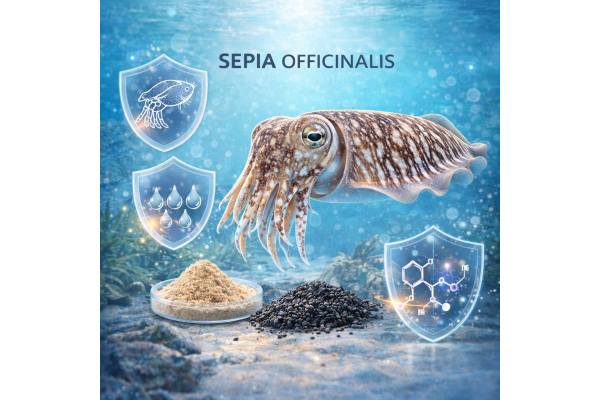
Sepia officinalis, best known as the common cuttlefish, has a long history in medicine not as seafood but as the source of a dark ink. This ink, rich in melanin and other biopolymers, is the starting material for the homeopathic remedy widely called “Sepia.” In homeopathy, Sepia officinalis is most often recommended for menstrual and menopausal complaints, mood changes, low energy, and certain skin or digestive symptoms. It is usually supplied as tiny sugar pellets containing extreme dilutions of the original ink, or as drops and tablets.
From an evidence based perspective, the situation is more complex. Laboratory studies on cuttlefish ink show antioxidant and redox activity, and at least one randomized clinical trial has explored homeopathic Sepia for menopausal symptoms. At the same time, large independent reviews of homeopathy overall have concluded that there is no reliable evidence it works for any specific condition. This guide explains what Sepia officinalis actually is, how the remedy is used, what is known (and not known) about benefits, safety questions, and how to have a realistic, informed conversation with your healthcare team about it.
Key insights for Sepia officinalis use
- Sepia officinalis in homeopathy is prepared from cuttlefish ink but usually diluted beyond the point where measurable molecules remain.
- It is most commonly used for menopausal symptoms, premenstrual complaints, and mood changes, yet high quality evidence for consistent benefit is limited and mixed.
- Typical over the counter regimens use potencies such as 6C, 12C, or 30C, at about 3–5 pellets (roughly 0.1–0.5 g) under the tongue up to 1–3 times per day for short periods.
- Serious side effects are uncommon with high potencies, but low dilutions or non-homeopathic extracts could, in theory, cause allergy or interact with medications.
- People with serious or unstable conditions (for example cancer, major depression, severe hormonal disorders) should not rely on Sepia officinalis as a replacement for proven treatments.
Table of Contents
- What is Sepia officinalis as a remedy?
- Claimed benefits and current evidence
- How Sepia officinalis is typically used
- Dosage patterns and potencies in practice
- Side effects, risks, and interactions
- Who should avoid Sepia officinalis and how to decide
What is Sepia officinalis as a remedy?
Sepia officinalis is a marine cephalopod, a relative of squid and octopus. The medicinal starting material comes from its ink sac, a small organ that produces a concentrated suspension of dark melanin granules in a viscous fluid. Chemically, this ink contains mainly eumelanin (a black brown pigment), along with minerals such as magnesium, calcium, sodium, and trace elements. Laboratory work has shown that sepia melanin has notable redox (oxidation reduction) activity and can act as a powerful absorber of light and reactive species.
In conventional pharmacology and food science, cuttlefish ink has been explored as a natural pigment, a model melanin, and a potential antioxidant ingredient. These uses involve measurable quantities of the ink and are quite distinct from homeopathic preparations.
In homeopathy, Sepia officinalis is prepared according to pharmacopeial methods. Typically, the dried ink or ink sac is extracted and then repeatedly diluted and shaken (a process called succussion). For example, a “6C” preparation has, in principle, undergone six 1 to 100 dilutions; a “30C” preparation has undergone thirty such steps. At these higher potencies, it is mathematically unlikely that even one molecule of the original ink remains in a standard dose.
Because of this extreme dilution, homeopathic Sepia is not treated like a conventional supplement with a measurable dose of active compound. Instead, it is chosen based on symptom patterns and individual characteristics. In traditional homeopathic teaching, Sepia is considered a “constitutional” remedy often associated with hormonal fluctuations, emotional exhaustion, a desire for solitude, and a sense of heaviness or sagging in the pelvic area.
Modern regulatory bodies typically classify homeopathic Sepia as a low risk product when prepared at high potencies, but they also emphasize that claims should be based either on traditional use or on adequate scientific evidence. For Sepia specifically, the scientific evidence for clinical effectiveness remains limited, and interpretations differ sharply between proponents and skeptics.
Claimed benefits and current evidence
In homeopathic practice, Sepia officinalis is commonly recommended for a wide range of complaints, especially in people perceived as having a distinct “Sepia pattern.” These claimed benefits include:
- Menopausal symptoms such as hot flashes, irritability, low mood, and pelvic heaviness.
- Premenstrual syndrome (PMS) with mood swings, breast tenderness, and fatigue.
- Menstrual irregularities, including painful or heavy periods.
- Emotional symptoms such as apathy, indifference to family, and feeling “burned out.”
- Digestive complaints such as nausea, constipation, or bloating around hormonal changes.
- Certain skin conditions around hormonal shifts, including acne or pigmentation changes.
These indications come primarily from classical homeopathic texts and clinical tradition, not from large modern trials. A few lines of evidence are worth highlighting:
First, at least one multicenter randomized, double blind, placebo controlled trial has investigated homeopathic Sepia for menopausal symptoms. In that study, women in the menopausal transition received Sepia officinalis or placebo and were assessed for changes in symptom scores and quality of life. The authors reported improvements in both groups, with some advantages in favor of Sepia on selected measures. However, as with many homeopathic trials, issues such as modest sample size, risk of bias, and limited replication make it difficult to draw firm conclusions.
Second, independent evidence reviews of homeopathy as a whole have repeatedly concluded that there is no reliable, reproducible evidence that homeopathic remedies are more effective than placebo for any specific condition. These reviews, conducted by national health agencies and expert panels, have examined hundreds of randomized trials across many remedies and conditions. They generally find that when studies are large, well designed, and adequately controlled, the apparent effects of homeopathy shrink toward no significant difference.
Third, mechanistic plausibility is a challenge. For highly diluted potencies of Sepia, the absence of measurable molecules of the original ink makes it hard to explain any specific pharmacologic effect using current models of chemistry and biology. Proponents suggest concepts such as “water memory,” but these have not been demonstrated in a way that fits with established physical science.
The most cautious interpretation is that homeopathic Sepia may provide comfort, a sense of being cared for, and a structured ritual that some people find helpful during difficult hormonal transitions, but that any direct specific effect on diseases or hormone levels remains unproven. Placebo responses, regression to the mean, and the supportive consultation style used by many homeopaths likely account for much of the reported benefit.
For individuals considering Sepia officinalis, it is essential to distinguish between traditional claims and what has been demonstrated in rigorous research, and to avoid using it as a substitute for treatments with strong evidence of benefit.
How Sepia officinalis is typically used
In practice, people encounter Sepia officinalis in several different ways, mostly within the framework of homeopathy:
- Over the counter pellets or globules taken under the tongue.
- Combination homeopathic tablets or drops that include Sepia along with other remedies.
- Individualized prescriptions from a professional homeopath after a long, detailed consultation.
- Occasionally, non homeopathic cuttlefish ink extracts marketed for antioxidant or pigment purposes (these are different products and should not be confused with homeopathic Sepia).
For homeopathic use, the process often follows this pattern:
- Assessment and remedy choice A homeopath typically takes an extensive history covering physical symptoms, emotional state, sleep, digestion, past illnesses, family history, and stressors. Sepia officinalis may be chosen when the overall picture fits a traditional Sepia profile—often described as a person who feels worn down, irritable, detached from loved ones, and physically burdened, particularly in the pelvic or lower back area.
- Selecting potency Common potencies for self care products are 6C, 9C, 12C, or 30C. Professional prescribers may use much higher potencies (such as 200C or 1M) in selected cases, often as infrequent single doses with long intervals between them. The choice of potency depends on the practitioner’s training and philosophy rather than on conventional pharmacologic principles.
- Dosing frequency Over the counter directions often suggest placing 3–5 pellets under the tongue up to several times per day for acute, self limiting complaints, then tapering as symptoms improve. Professional regimens may involve taking one or a few doses and then waiting weeks to observe the response before repeating.
- Monitoring response Homeopaths often ask patients to keep track of symptom patterns, energy, mood, and sleep over time. They may interpret temporary symptom flare ups as “aggravations” and potential signs that the remedy is acting, and they may adjust potency or frequency accordingly.
- Duration of use For short term issues like mild PMS or situational stress, Sepia might be used for a few days around the time of symptoms. For chronic conditions, some practitioners prescribe Sepia intermittently over months, although this practice is based on tradition rather than on long term safety and efficacy trial data.
Outside homeopathy, crude cuttlefish ink extracts have been studied experimentally for antioxidant, antimicrobial, and material science applications. These involve very different formulations and dosages and are not interchangeable with the tiny, highly diluted homeopathic doses used in Sepia officinalis remedies.
Regardless of how Sepia is used, it is important not to discontinue established treatments for significant conditions (for example antidepressants, hormone replacement therapy, or thyroid medication) without professional guidance. If you choose to try Sepia, it should be integrated into an overall care plan rather than used as a stand alone solution.
Dosage patterns and potencies in practice
Unlike herbal extracts or vitamin supplements, homeopathic Sepia officinalis does not have a conventional dose measured in milligrams of an active molecule. Instead, the two main variables are potency (the degree of dilution and succussion) and frequency (how often the remedy is taken).
1. Common over the counter dosing
For self limiting conditions that do not require medical supervision, such as mild menstrual discomfort or transient mood swings, typical label instructions for Sepia officinalis pellets might be:
- Potency: 6C, 9C, 12C, or 30C.
- Single dose: 3–5 pellets (often around 0.1–0.5 g total weight of sugar pellets).
- Frequency: Once to three times per day, with instructions to reduce the frequency as soon as improvement is noticed.
- Duration: Usually limited to several days to a couple of weeks, depending on the severity and persistence of symptoms.
These products are designed for situations where symptoms are mild and clearly self resolving. If symptoms are intense, worsening, or persistent, professional evaluation is needed.
2. Practitioner directed regimens
When Sepia officinalis is prescribed as a “constitutional remedy,” potencies and schedules may differ:
- Moderate potencies (for example 30C or 200C) might be given as a single dose weekly or monthly, especially in chronic hormonal or mood related complaints.
- Higher potencies (such as 1M) are sometimes used less often, with long intervals between doses.
- Some practitioners may combine occasional higher potency doses with a daily low potency regimen.
These patterns are based on homeopathic theory and clinical tradition, not on dose response curves in the usual pharmacologic sense. Because patients are monitored over time, the remedy is often adjusted or stopped when perceived changes occur.
3. Low dilutions and non homeopathic preparations
A small number of products may use lower homeopathic potencies (such as 1X, 2X, or 3X) or contain undeclared amounts of original material. These could, in theory, provide measurable quantities of cuttlefish ink components, including melanin and associated minerals, and thus have toxicity or allergy risks more like those of a conventional biologic product. Regulations in many countries now require that higher risk homeopathic products with specific health claims provide more robust evidence of safety and include clear labeling when claims are based mainly on traditional references rather than on modern trials.
4. Practical advice for users
If you decide to use Sepia officinalis:
- Follow the instructions on your product label or from your practitioner exactly.
- Avoid taking repeated doses indefinitely “just in case”; homeopathic remedies are generally intended to be stopped or tapered once improvement is noticed.
- Do not combine multiple homeopathic products with overlapping indications without guidance, as this can make it harder to interpret responses.
- Report all supplements and remedies, including Sepia, to your doctors and pharmacists, especially before surgery, anesthesia, or starting new medications.
Because scientific evidence for specific dosing regimens of Sepia is limited, any use should be cautious, time limited, and integrated with appropriate medical care.
Side effects, risks, and interactions
At high homeopathic potencies (where little or none of the original Sepia officinalis material remains), the direct toxic risk from the substance itself is thought to be low. However, this does not mean that Sepia remedies are entirely free of side effects or risks.
Potential side effects
Reported side effects with homeopathic remedies in general, and Sepia in particular, include:
- Mild digestive upset (nausea, loose stools) in sensitive individuals.
- Temporary worsening of existing symptoms, sometimes interpreted in homeopathy as an “aggravation.”
- Rare allergic type reactions such as rash or itching, which may relate to excipients (for example lactose) or to low dilution products that still contain biological proteins.
For very low dilutions or non homeopathic extracts of cuttlefish ink, theoretical risks may include:
- Allergic reactions in people with known seafood or cephalopod allergy.
- Interactions with drugs or conditions affected by melanin binding or mineral content, though such interactions have not been well characterized.
System level risks and missed treatment
The larger concern with Sepia officinalis and other homeopathic products is indirect: the possibility that people may delay or avoid effective treatments while relying on remedies that have not been proven to work. For conditions such as major depression, severe menopausal vasomotor symptoms, thyroid disease, cancer, or autoimmune disorders, postponing evidence based care can lead to preventable suffering or complications.
Homeopathic products may also be marketed with claims that overstep the evidence, suggesting benefits for serious conditions where rigorous studies are lacking. Some jurisdictions now require that homeopathic labels clearly state when claims are based on traditional references rather than on modern scientific data.
Regulation and product quality
The regulatory approach to homeopathic medicines varies by country:
- Some authorities classify them as low risk products but still expect quality manufacturing and accurate labeling.
- Others, particularly when higher risk health claims are made, require evidence from clinical trials or demand prominent label statements that modern scientific evidence is lacking.
- Quality concerns occasionally arise when products are found to contain higher than expected levels of active substances, contaminants, or inconsistent potencies.
Buying Sepia officinalis from reputable manufacturers that follow recognized pharmacopeial standards reduces, but does not eliminate, these risks.
Drug interactions
At typical high potencies, direct pharmacologic interactions with medications are unlikely because no measurable substance is present. However:
- Products with low potencies or crude extracts could theoretically interact with other drugs.
- Any approach that encourages reduction or discontinuation of prescribed hormones, psychiatric medications, or other essential drugs without medical supervision introduces risk, even if the remedy itself is chemically inert.
If you are on prescription medication, always inform your healthcare provider before adding homeopathic Sepia to your regimen, and never stop prescribed treatments without a shared, documented plan.
Who should avoid Sepia officinalis and how to decide
Sepia officinalis may be relatively low risk at high homeopathic potencies, but it is not automatically appropriate for everyone or in every situation. Considering when to avoid or be cautious with Sepia is as important as understanding its claimed uses.
Groups who should be particularly cautious
- Pregnant individuals: Safety data for homeopathic Sepia in pregnancy are limited. Some traditional sources both within and outside homeopathy describe emmenagogue or uterine effects for cuttlefish derived products, so many clinicians advise avoiding Sepia or using it only under specialist supervision during pregnancy.
- Breastfeeding individuals: There is little information on excretion of cuttlefish derived components into breast milk from low potency or crude products. High potencies are unlikely to transfer measurable material, but evidence is lacking, so caution is advised.
- People with severe psychiatric or mood disorders: For major depression, bipolar disorder, psychosis, or severe anxiety, relying solely on homeopathic Sepia instead of proven psychiatric care can be harmful. If Sepia is used at all, it should be as a complement, not a replacement, and under the guidance of both a mental health professional and a physician.
- Individuals with seafood or cephalopod allergy: Low dilution products or non homeopathic cuttlefish ink extracts could provoke allergic reactions. Even if the risk from high potencies is very small, many allergists advise avoiding remedies derived from known allergens.
Situations where medical care should come first
You should not rely on Sepia officinalis, or any homeopathic remedy, as your primary response in the following situations:
- Sudden, severe pelvic or abdominal pain, heavy bleeding, or suspected miscarriage.
- New onset chest pain, shortness of breath, or neurological symptoms.
- Marked unintentional weight loss, night sweats, or persistent fever.
- Menopausal symptoms severe enough to impair sleep, work, or safety, especially when options like hormone therapy, non hormonal medications, or targeted psychological support are available.
- Thoughts of self harm, hopelessness, or major changes in behavior.
In these cases, prompt medical evaluation is critical. A homeopathic remedy, including Sepia, should only be considered—if at all—after urgent issues are addressed and in collaboration with the clinical team.
Making an informed decision
If you are considering Sepia officinalis:
- Clarify your goals: symptom relief, emotional support, or a broader sense of balance.
- Ask your practitioner (homeopath or otherwise) to explain how they expect Sepia to help, how long they propose using it, and how they will measure success or failure.
- Ensure that any serious diagnosis has been properly evaluated and that you understand evidence based options, including their risks and benefits.
- Agree in advance on safety boundaries: which symptoms or time frames would trigger a re evaluation or a change in plan if Sepia does not help.
Used thoughtfully, homeopathic Sepia officinalis may serve as one component of a broader self care or integrative plan for some individuals. However, it should not displace therapies with strong evidence of benefit when those are available and appropriate.
References
- Homeopathy: What You Need To Know 2024 (Overview of homeopathy, mechanisms, and evidence appraisal).
- Homeopathy 2024 (National guidance on effectiveness and safety of homeopathy).
- HOMEOPATHY FOR PREVENTING AND TREATING HEALTH CONDITIONS EVIDENCE EVALUATION REPORT 2024 (Systematic evidence evaluation of homeopathy for health conditions).
- Evidence for homeopathic medicines 2022 (Regulatory guidance on evidence requirements for homeopathic products).
- Homoeopathic medicine – Sepia for the management of menopausal symptoms: A multicentric, randomised, double-blind placebo-controlled clinical trial 2019 (Clinical trial exploring Sepia officinalis for menopausal symptoms).
Disclaimer
The information in this article is intended for general educational purposes only and does not replace individualized medical advice, diagnosis, or treatment. Sepia officinalis, particularly in its homeopathic form, is a controversial and incompletely studied remedy. While some people report benefits, large independent reviews have not found reliable evidence that homeopathy, including Sepia, is effective for any specific health condition. Do not start, stop, or change prescription medications or delay recommended tests, procedures, or therapies because of information about Sepia officinalis. Always discuss any complementary or alternative remedies with a qualified healthcare professional who knows your medical history, medications, and priorities, and seek urgent care when you have severe, rapidly worsening, or alarming symptoms.
If you found this guide helpful, you are warmly encouraged to share it on Facebook, X (formerly Twitter), or any platform you prefer, and to follow our work on social media. Thoughtful sharing helps our team continue to research, write, and update careful, evidence informed content on supplements and integrative health topics.