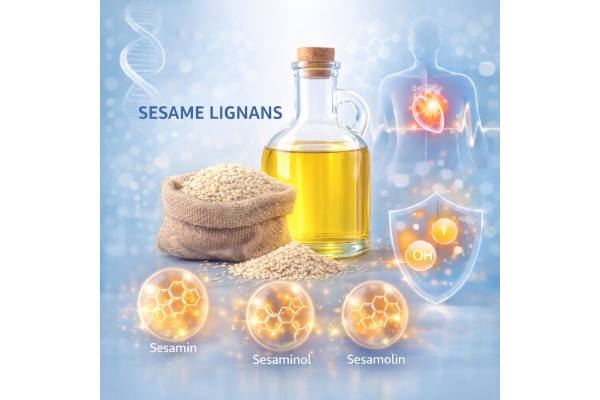
Sesame lignans are a group of natural compounds found in sesame seeds and sesame oil, best known for their potential antioxidant and cardiometabolic benefits. The most studied members are sesamin, sesamolin, sesamol, and sesaminol. Together, they help stabilize sesame oil, protect fats from oxidation, and may influence how the body handles lipids, blood pressure, and inflammation.
As supplements, sesame lignans are usually taken in standardized capsules or combined with vitamin E, omega-3 fatty acids, or other heart-health ingredients. Emerging human research suggests modest but meaningful effects on triglycerides, blood pressure, and some markers of oxidative stress, especially in people with elevated cardiovascular risk. At the same time, not every trial shows clear benefit, and the overall evidence is still developing.
This guide walks you through how sesame lignans work, what benefits they may offer, practical dosage ranges, who should be cautious, and how to use them safely alongside diet and lifestyle changes.
Key Insights on Sesame lignans
- Sesame lignans such as sesamin and sesamolin act as antioxidants and may modestly support lipid balance, blood pressure, and liver protection.
- Benefits appear strongest when sesame lignans are used alongside healthy diet changes and, in some cases, standard medication.
- Typical supplemental sesamin doses range from about 50–200 mg per day, while sesame seed or oil interventions often use 25–50 g seeds or 10–35 g oil daily.
- People with bleeding disorders, those on blood thinners, or with hormone-sensitive conditions should only use sesame lignans under medical supervision.
Table of Contents
- What are sesame lignans and how do they work?
- Sesame lignans health benefits in humans
- How to use sesame lignans in daily life
- Sesame lignans dosage ranges and forms
- Side effects, interactions, and who should avoid sesame lignans
- What does the science say about sesame lignans?
What are sesame lignans and how do they work?
Sesame lignans are a family of plant compounds that belong to the broader lignan group of polyphenols. They are concentrated in the seed coat of sesame (Sesamum indicum) and in cold-pressed or lightly refined sesame oil. The main lignans are sesamin, sesamolin, sesamol, and sesaminol, with sesamin and sesamolin often used as markers for standardization in supplements.
In the body, sesame lignans are absorbed in the intestine and then further transformed by liver enzymes and gut bacteria. Some of these metabolites have biological activity of their own, especially in antioxidant and fat-metabolism pathways. Like other lignans, they also contribute to the pool of so-called phytoestrogens, but sesame lignans are weaker in estrogen-like activity than classic soy isoflavones.
Several mechanisms are thought to explain their potential health effects:
- They can reduce lipid peroxidation, meaning they help protect fats (including LDL cholesterol) from oxidative damage.
- They may influence enzymes involved in cholesterol synthesis and breakdown, modestly shifting lipid profiles.
- They appear to support vitamin E recycling, helping maintain higher levels of tocopherols in blood and tissues.
- In experimental models, they modulate inflammatory signaling and may reduce the production of certain pro-inflammatory mediators.
Natural dietary exposure mainly comes from sesame seeds, tahini, sesame snacks, and sesame oil used for cooking or dressings. Supplements, by contrast, deliver isolated sesamin or mixed sesame lignans in a dose-controlled way, usually far higher than typical daily food intake. This is why it is important to distinguish between everyday culinary use (generally very safe) and pharmacological-style dosing in capsules, which requires more careful risk–benefit thinking.
Sesame lignans health benefits in humans
Most of what is known about sesame lignans comes from a mix of animal studies, small human trials, and systematic reviews that pool these trials. Overall, the most consistent findings relate to blood lipids, oxidative stress, and, to a lesser degree, blood pressure and metabolic health. It is important to keep in mind that effect sizes tend to be modest, and results are not uniform across all populations.
For blood lipids, sesame seeds, sesame oil, and sesamin-rich preparations have shown the clearest impact on triglycerides. Meta-analytic data from controlled trials suggest that sesame interventions can reduce fasting triglycerides, particularly when sesame oil is used in place of other cooking fats and when participants have elevated cardiovascular risk. Changes in total and LDL cholesterol are more variable: some studies report reductions, others show no significant difference versus control. High-density lipoprotein (HDL) cholesterol generally changes little.
Cardiometabolic outcomes go beyond lipids. In people with hypertension or type 2 diabetes, replacing usual cooking oil with sesame oil has in some trials been linked to small reductions in systolic and diastolic blood pressure and improvements in oxidative stress markers. When sesame oil is combined with standard drugs for blood pressure or blood sugar, some studies report additive benefits on these markers, though these designs make it hard to separate the lignan effect from that of unsaturated fatty acids and overall dietary change.
Sesamin supplements have also been studied in overweight or metabolically at-risk adults. In these trials, daily sesamin at moderate doses has sometimes led to small reductions in waist circumference, body weight, and certain inflammatory or oxidative stress markers. However, these changes are typically modest and should be viewed as supportive to, not a replacement for, nutrition and exercise.
Other potential benefits, supported mainly by preclinical or small pilot data, include liver protection against fat accumulation, kidney support in specific clinical contexts, and anti-inflammatory effects in joint conditions. These areas remain under investigation, and there is not yet enough high-quality evidence to recommend sesame lignans as a primary therapy.
In practice, sesame lignans are best thought of as a complementary option for individuals working on cholesterol, triglycerides, mild hypertension, or generalized oxidative stress, ideally under professional guidance and within a broader lifestyle program.
How to use sesame lignans in daily life
There are two main ways to increase sesame lignan intake: through food and through concentrated supplements. For many people, starting with food is the most balanced and sustainable approach, with supplements reserved for specific goals discussed with a clinician.
Dietary approaches usually involve:
- Adding 1–2 tablespoons (around 10–20 g) of whole or lightly toasted sesame seeds to meals such as salads, stir-fries, yogurt, or porridge.
- Using tahini (sesame seed paste) in dressings, spreads, or dips several times per week.
- Choosing sesame oil for dressings or low-to-moderate heat cooking, especially cold-pressed or unrefined types that retain more lignans.
In human dietary trials, sesame seed intakes typically range from about 25–50 g per day, and sesame oil from roughly 10–35 g per day, often replacing part of the usual cooking oil. These levels are higher than many people currently consume, but they can be reached by building sesame into daily meals rather than taking it occasionally.
Supplemental use generally involves standardized sesamin or mixed lignan capsules. Typical products provide somewhere between 50 and 200 mg of sesamin per day, often split into one or two doses. Some formulations combine sesame lignans with vitamin E or other antioxidants to leverage the lignans’ tocopherol-sparing effects.
A practical, stepwise way to incorporate sesame lignans might look like this:
- Increase sesame-rich foods steadily over a few weeks, observing how your digestion, energy, and appetite respond.
- If your clinician agrees there is a reason to aim for higher lignan intake (for example, supportive care for mild hypertriglyceridemia), you might then consider a standardized supplement within recommended ranges.
- Continue to monitor blood pressure, lipids, blood sugar, or other relevant markers as advised, since the evidence suggests benefits are often subtle and best evaluated over several weeks to months.
Because sesame is a common allergen in some regions, anyone with known sesame allergy must avoid both foods and lignan supplements derived from sesame. People with multiple food allergies, moderate to severe asthma, or a history of anaphylaxis should introduce sesame foods only under medical advice.
Sesame lignans dosage ranges and forms
Dosage guidance for sesame lignans depends on whether you are using whole foods, sesame oil, or purified sesamin-type supplements. It also depends on your health status and whether sesame lignans are intended as a general wellness aid or as part of a targeted cardiometabolic strategy.
From food, research trials often employ:
- Sesame seeds: roughly 25–50 g per day, usually as ground or whole seeds mixed into meals or snacks.
- Sesame oil: about 10–35 g per day (roughly 1–3 tablespoons), often used as a partial or full replacement for other cooking oils.
These amounts deliver both lignans and a substantial load of unsaturated fatty acids, vitamin E, and fiber, all of which can influence cardiovascular markers.
For supplements, a typical range based on current human trials is:
- Sesamin or mixed sesame lignans: about 50–200 mg per day, divided once or twice daily with meals.
Some products recommend higher doses; in those cases, it is wise to start at the lower end to assess tolerance and discuss the regimen with a clinician, especially if you take blood pressure medication, statins, antiplatelet drugs, or anticoagulants.
When choosing dosage, consider these points:
- Aim low and build gradually. Many responders achieve potential benefit in the mid-range of typical doses; more is not always better and may increase the chance of digestive upset or unknown long-term effects.
- Align the dose with your goals. Someone aiming for general antioxidant support may not need the same intensity as someone working on stubborn triglycerides under medical supervision.
- Time with meals. Taking lignan supplements with food may help absorption and reduce the risk of stomach discomfort.
Duration in studies commonly ranges from 4 to 12 weeks. If sesame lignans are used for a defined therapeutic goal, progress is often reassessed every 2–3 months using objective markers (lipid panel, blood pressure, inflammatory markers as indicated). Long-term, continuous supplementation beyond the time frames studied should be approached with caution and regular review.
Children, pregnant or breastfeeding women, and individuals with serious liver, kidney, or bleeding conditions should not use concentrated sesame lignan supplements unless specifically directed and monitored by a healthcare professional.
Side effects, interactions, and who should avoid sesame lignans
In clinical trials, sesame seeds, sesame oil, and sesamin-containing supplements are usually well tolerated, with few serious adverse events reported. Most side effects, when they occur, are mild and transient. Nonetheless, certain groups should approach sesame lignans very carefully or avoid them altogether.
Commonly reported mild effects include:
- Digestive symptoms such as bloating, loose stools, or mild nausea, especially when doses are increased quickly or when large amounts of oil are added to the diet.
- Rare reports of headache or dizziness, which may reflect individual sensitivity or changes in blood pressure.
- Increases in total fat intake when sesame oil is added on top of, rather than in place of, existing dietary fats.
Serious risks are uncommon but important to consider:
- Sesame allergy can trigger reactions ranging from hives to anaphylaxis. Any history of sesame allergy is a clear contraindication for both sesame foods and lignan concentrates derived from sesame.
- Because sesame lignans and sesame oil can modestly influence blood pressure and lipid metabolism, they may interact with antihypertensive drugs, statins, or blood sugar medications. Effects are generally small but can be clinically relevant when combined with other lifestyle changes.
- Animal and in vitro data suggest some phytoestrogen-like activity, although weaker than that of soy isoflavones. People with hormone-sensitive cancers or conditions should only use sesame lignan supplements under specialist advice, if at all.
Groups who should avoid or use sesame lignans only with close medical supervision include:
- Individuals with known sesame allergy or unexplained reactions to sesame foods.
- People on anticoagulant or antiplatelet therapies, or with bleeding disorders, until their clinician has weighed potential benefits and risks.
- Patients with advanced liver or kidney disease, because metabolism and clearance of lignans and their metabolites may be altered.
- Pregnant or breastfeeding women and children, due to limited safety data at supplemental doses, despite the long culinary history of sesame foods.
If you decide to use sesame lignans, monitor for new symptoms in the first few weeks, especially changes in blood pressure, unusual bruising, or digestive problems. Any sudden or severe symptoms, especially signs of allergic reaction (swelling, difficulty breathing, widespread rash), require urgent medical attention and immediate discontinuation.
What does the science say about sesame lignans?
The evidence base for sesame lignans sits at an intermediate stage: stronger than for many niche supplements, but not as mature as for established cardiometabolic therapies. It includes mechanistic experiments, animal models, small-to-moderate sized randomized trials, and several systematic reviews and meta-analyses.
Mechanistic and animal research has shown that sesamin and related lignans can:
- Reduce lipid peroxidation in blood and tissues.
- Enhance hepatic fatty acid oxidation and reduce fatty acid synthesis, particularly in high-fat diet models.
- Increase tissue levels of vitamin E and improve antioxidant enzyme activity.
- Modulate inflammatory pathways and, in some models, protect against hypertension-related organ damage.
Human trials build on these findings but provide more nuanced results. When sesame seeds, sesame oil, or sesamin capsules are compared with placebo or control oils:
- Triglycerides often decrease, sometimes by a clinically relevant margin, particularly when sesame oil replaces less healthy fats and when participants start with elevated triglycerides.
- Total and LDL cholesterol show mixed responses, with some studies recording reductions and others showing little difference.
- Blood pressure reductions are generally modest but more evident when sesame oil is used in people with hypertension, especially alongside standard treatments.
- Markers of oxidative stress and antioxidant status, such as lipid peroxidation indices and vitamin E levels, tend to improve in several trials.
Systematic reviews that pool these trials highlight meaningful reductions in triglycerides and some supportive changes in oxidative stress markers, while also noting substantial heterogeneity in study design, dose, duration, and quality. Some analyses conclude that the evidence is promising but not definitive, calling for larger, well-controlled trials with standardized lignan preparations.
In practice, this means sesame lignans should not be viewed as stand-alone treatments for high cholesterol, hypertension, diabetes, or inflammatory diseases. Instead, they may be considered as adjunctive tools within a comprehensive plan that prioritizes diet, physical activity, weight management, and appropriate medication.
Future research will clarify which patient groups benefit most, optimal dosing strategies, and long-term safety. Until then, a cautious, evidence-aware approach is warranted, with any supplemental use coordinated with your healthcare team.
References
- Determination and Daily Intake Estimation of Lignans in Foods in Japan 2020 (Research Article)
- Dietary Lignans: Definition, Description and Research Trends in Human Health 2018 (Review)
- Sesame Fractions and Lipid Profiles: A Systematic Review and Meta-Analysis of Controlled Trials 2016 (Systematic Review)
- Sesamin Supplementation Improves Anthropometric and Cardiometabolic Risk Markers in Overweight Adults: A Randomized Double-Blind Placebo-Controlled Trial 2022 (RCT)
- Sesamin: A Promising Therapeutic Agent for Ameliorating Symptoms of Diabetes 2015 (Review)
Disclaimer
The information in this article is for educational purposes only and is not a substitute for personalized medical advice, diagnosis, or treatment. Sesame lignans and related supplements should not be started, stopped, or used to replace prescribed medications without consulting a qualified healthcare professional who is familiar with your medical history, medications, and laboratory results. Always seek the advice of your physician or other licensed health provider with any questions you may have regarding a medical condition, and never disregard professional advice because of something you have read here.
If you found this guide helpful, you are warmly invited to share it on Facebook, X (formerly Twitter), or any platform you prefer, and to follow our work on social media. Your support in sharing our content helps our team continue creating clear, evidence-based health resources for readers worldwide.