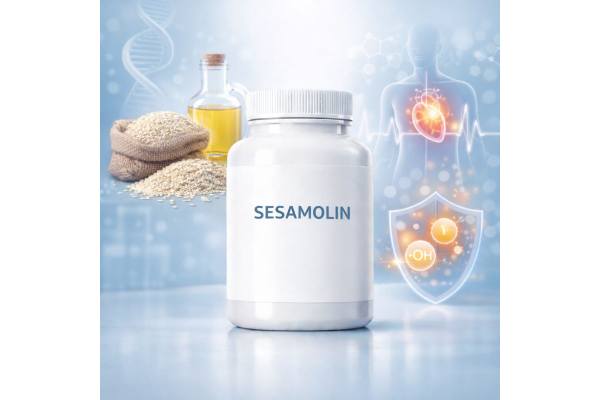
Sesamolin is one of the major lignans found in sesame seeds and sesame oil, often mentioned alongside sesamin as a key bioactive component of this traditional food. It helps protect sesame oil from going rancid and, in the body, appears to act as a potent antioxidant with emerging roles in liver health, metabolic balance, and brain protection in experimental research.
In recent years, scientists have begun to look more closely at sesamolin itself rather than only at whole sesame seed or oil. Animal and cell studies suggest that sesamolin can reduce fat accumulation in the liver, modulate gut microbiota, and protect tissues under oxidative stress. However, clinical trials in humans are still scarce, and sesamolin is not yet a mainstream stand-alone supplement.
This guide explains what sesamolin is, how it seems to work, potential health benefits, typical ways it is used, tentative dosage ranges, and the safety issues you should consider before adding it to your routine.
Key Insights on Sesamolin
- Sesamolin is a sesame lignan with strong antioxidant, anti-inflammatory, and potential neuroprotective and metabolic effects in experimental models.
- Preclinical studies show that sesamolin can lessen obesity-related fatty liver disease and improve metabolic markers, but well-designed human trials are still very limited.
- When used as a supplement, products commonly provide total sesame lignans in the approximate range of 50–200 mg per day, with sesamolin as part of that amount.
- People with sesame allergy, pregnancy, serious liver or kidney disease, or on complex medication regimens should avoid sesamolin supplements unless a clinician explicitly approves them.
Table of Contents
- What is sesamolin and how does it work?
- What are the main benefits of sesamolin?
- How to take sesamolin and typical dosages
- Who should consider or avoid sesamolin?
- Sesamolin side effects and interactions
- What does the research say about sesamolin?
What is sesamolin and how does it work?
Sesamolin is a furofuran-type lignan that occurs naturally in sesame (Sesamum indicum) seeds, usually alongside sesamin. Together, sesamolin and sesamin can account for more than one percent of the seed’s weight in some high-lignan varieties, making them major contributors to the health properties of sesame oil. Chemically, sesamolin is a benzodioxole-substituted lignan, meaning it has a characteristic ring structure that carries methylenedioxy groups and oxygen atoms capable of engaging in redox (reduction–oxidation) reactions.
In the plant, sesamolin accumulates mainly in the seed and is especially concentrated in the oil fraction. During thermal processing such as roasting or high-temperature refining, sesamolin can be converted into other compounds, including sesamol and sesaminol, which are also biologically active antioxidants. This conversion is one reason why roasted sesame oil often contains higher levels of certain antioxidant derivatives than unprocessed oil.
When humans consume sesame seeds, tahini, or sesame oil, sesamolin is absorbed in the intestine and then metabolized in the liver and other tissues. Experimental work shows that sesamolin can:
- Directly scavenge reactive oxygen species, reducing oxidative damage to lipids, proteins, and DNA.
- Modulate enzymes involved in lipid metabolism and oxidative stress, such as those in the cytochrome P450 and NADPH oxidase families.
- Influence cell signaling pathways linked to inflammation, including NF-κB and related cytokines, thereby reducing inflammatory responses in various tissues.
- Serve as a precursor to sesamol and sesaminol, which themselves activate cellular defense pathways such as the Nrf2 system that upregulates antioxidant enzymes.
In short, sesamolin appears to work both as a direct antioxidant and as part of a network of sesame-derived molecules that enhance the body’s resilience to oxidative and inflammatory stress. Most of this understanding comes from cell and animal models, but it provides a coherent mechanistic basis for its potential health benefits.
What are the main benefits of sesamolin?
The potential benefits of sesamolin cluster around antioxidant protection, liver and metabolic health, vascular and brain support, and general modulation of inflammation. These benefits are best described as emerging and mechanistically plausible rather than fully confirmed in humans.
One of the clearest roles for sesamolin is as an antioxidant. In vitro studies and animal experiments demonstrate that sesamolin helps limit lipid peroxidation in liver and kidney tissues and reduces markers of oxidative damage under stress conditions. Because oxidative stress underlies many chronic diseases, this broad protective effect is important, even if it is not tied to one specific diagnosis.
Liver and metabolic health are another central theme. In a notable mouse study, sesamolin supplementation in animals fed a high-fat, high-fructose diet reduced body weight gain, improved serum triglycerides and cholesterol, and significantly lowered fat accumulation and inflammatory cell infiltration in the liver. At the same time, sesamolin reshaped the composition of gut microbiota and altered serum metabolites connected with bile acids, lipids, and energy pathways. These findings suggest that sesamolin may support the gut–liver axis and help mitigate diet-induced non-alcoholic fatty liver disease and associated metabolic disturbances.
Sesamolin also appears to contribute to neuroprotective effects observed with sesame oil and sesame lignan mixtures. Experimental models show that sesamolin, alone or alongside sesamin, can reduce neuronal damage following ischemic events and decrease oxidative stress in brain tissue. While sesamin tends to be more widely studied, sesamolin is often present in the same preparations and likely shares responsibility for the observed benefits.
On the cardiovascular side, reviews of sesame lignans report that sesamolin has anti-inflammatory, anti-atherogenic, and anti-hypertensive properties in preclinical settings. It can improve lipid profiles, protect vascular endothelium from oxidative injury, and potentially influence blood pressure through improved nitric oxide bioavailability and decreased vascular inflammation.
Finally, sesamolin is being explored for anti-cancer and chemopreventive actions. Laboratory work suggests it can induce apoptosis in certain cancer cell lines and inhibit tumor-promoting pathways, though this is far from clinical application and should not be interpreted as proof that sesamolin can treat or prevent cancer in humans.
Taken together, these results support a broad view of sesamolin as a multi-target protective molecule with particular relevance for liver, metabolic, cardiovascular, and brain health, pending stronger human data.
How to take sesamolin and typical dosages
Unlike vitamins with established recommended intakes, sesamolin does not yet have an official daily allowance or clinically validated dose range. Practical guidance relies on three sources: the amounts naturally present in foods, the doses used in animal studies, and the levels found in commercial sesame lignan supplements.
From a dietary perspective, sesame seeds and sesame oil are the main contributors of sesamolin. The combined content of sesamin and sesamolin in sesame seeds can exceed 10 mg per gram in some varieties, though typical values vary widely by cultivar and processing. In everyday terms, a tablespoon of sesame seeds or a small serving of tahini may deliver several milligrams of total lignans, a portion of which is sesamolin. These food-level intakes are generally considered safe for most people and align with traditional dietary patterns in many cultures.
Animal experiments often use doses scaled to body weight that cannot be directly applied to humans. When those doses are converted to human-equivalent amounts using standard scaling methods, they typically fall into the low to mid tens of milligrams per day for an adult, though some studies explore higher exposures. However, safety margins and long-term effects at those levels in humans are not fully known.
In the supplement market, sesamolin usually appears as part of a sesame lignan complex rather than as an isolated ingredient. Labels may list total sesame lignans per serving (for example, 50–200 mg per day) or specify amounts of sesamin and sesamolin separately. Within such products, sesamolin might account for a quarter to half of the total lignan content, depending on the extraction process.
If you and your healthcare provider consider a sesamolin-containing supplement, a conservative approach could include:
- Choosing a product that clearly states the amount of sesamolin or total sesame lignans per dose.
- Starting at the lower end of any suggested range, often around 50–100 mg of total lignans per day, with sesamolin as part of that amount.
- Taking the supplement with a meal containing some fat, as sesamolin is fat-soluble and likely better absorbed in that context.
- Monitoring for any digestive or allergic symptoms and tracking relevant lab values such as lipids or liver enzymes if your clinician recommends it.
Because evidence is still limited, pushing doses far beyond typical supplemental ranges or combining multiple lignan-rich products is not advisable without expert supervision. Many people may prefer to focus first on incorporating sesame foods into a balanced diet, which provides sesamolin together with other beneficial nutrients in more moderate doses.
Who should consider or avoid sesamolin?
Sesamolin is not a universal supplement, and much of its appeal lies in specific contexts where oxidative stress, inflammation, and metabolic imbalance are central concerns. At the same time, there are clear groups for whom concentrated sesamolin is not appropriate.
People who may reasonably consider sesamolin, under professional guidance, include adults with diet-related cardiometabolic risk factors. For example, individuals with central obesity, borderline high triglycerides, or early non-alcoholic fatty liver disease who are already working on diet, physical activity, and medical management might explore a sesame lignan supplement as an adjunct. In such cases, the goal is incremental improvement in markers like liver fat, inflammatory cytokines, or lipid profiles, rather than dramatic change from sesamolin alone.
Another potential audience is adults interested in long-term liver and gut-liver axis support, especially when their lifestyle includes factors that challenge liver health, such as high-calorie diets or sedentary habits. The animal study showing that sesamolin altered gut microbiota and metabolites while alleviating fatty liver changes suggests a role in more targeted, supervised interventions for metabolic health.
Adults concerned about brain health or vascular aging may also be interested in sesamolin, given its neuroprotective and vasoprotective signals in preclinical research. However, here the emphasis should be on evidence-based strategies such as controlling blood pressure, keeping sleep-disordered breathing treated, and exercising regularly, with sesamolin only considered as a small, experimental addition.
On the other hand, some groups should avoid sesamolin supplements unless a specialist explicitly advises otherwise. These include:
- Individuals with diagnosed sesame allergy, who risk allergic reactions even to purified lignan products.
- Pregnant or breastfeeding women, due to lack of targeted safety data.
- Children and adolescents, for whom the long-term impact of concentrated lignan supplementation has not been defined.
- People with advanced liver or kidney disease, where altered metabolism and clearance may change risk–benefit balance.
- Those with bleeding disorders or who are taking multiple medications that affect blood clotting or blood pressure.
For many people, a practical compromise is to rely primarily on sesame seeds, tahini, and sesame oil in sensible amounts, and to reserve higher-dose sesamolin or sesame lignan supplements for cases where careful monitoring and medical oversight are in place.
Sesamolin side effects and interactions
Sesamolin has been consumed for centuries as part of sesame-containing foods, yet data on side effects from isolated sesamolin supplementation remain limited. Most of what is known comes from traditional use of sesame, animal toxicology studies, and broader research on sesame lignans as a group.
At dietary levels, sesamolin is generally well tolerated by people who are not allergic to sesame. Sesame seeds and oil are widely used in cuisines around the world without specific reports of sesamolin-related toxicity. Problems at these intakes usually arise from the calories and fats themselves, or from allergic reactions in susceptible individuals, rather than from sesamolin as a single molecule.
When sesamolin is concentrated in supplements, there is more potential for side effects, even though human data are still sparse. Possible issues, based on experience with polyphenol-rich extracts and sesame lignans more broadly, include:
- Digestive discomfort such as nausea, bloating, or loose stools, especially when starting at higher doses.
- Headache or a sense of fatigue in some users.
- Allergic symptoms ranging from itching and mild rash to, in rare cases, more serious reactions in people with underlying sesame allergy.
Interactions with medications are mostly theoretical but deserve attention. Sesamolin’s antioxidant and anti-inflammatory actions could potentially influence:
- Blood pressure, in combination with antihypertensive drugs, by modestly enhancing vasodilatory and endothelial protective effects.
- Lipid profiles, alongside statins or other lipid-lowering agents, which might change the interpretation of lab tests or allow for dose adjustments that should only be made by a clinician.
- Oxidative-stress-related drug effects, particularly in people undergoing chemotherapy or radiotherapy, where antioxidant supplements may or may not be desirable depending on the protocol.
Because sesamolin is metabolized in the liver, there is also a possibility that high doses could affect hepatic enzyme systems that handle medications, although detailed human data on such interactions are lacking.
Practical safety steps if you are considering sesamolin include:
- Consulting your doctor or pharmacist if you take any prescription drug, especially blood thinners, blood pressure medications, lipid-lowering agents, or drugs with narrow therapeutic windows.
- Starting with low doses and stopping immediately if you notice allergic signs such as hives, swelling, or breathing difficulty.
- Avoiding sesamolin supplements in the weeks before surgery unless your surgical team explicitly approves them.
Until more robust human safety studies are available, the safest strategy is to stay within modest supplemental ranges, avoid combining multiple high-dose lignan products, and use whole-food sesame sources as your primary exposure where possible.
What does the research say about sesamolin?
The scientific literature on sesamolin has expanded significantly in the last decade, moving from basic chemistry and food science into pharmacology, toxicology, and disease models. Several themes stand out when you look across this work.
First, chemistry and food research clearly establish sesamolin as one of the principal lignans in sesame seeds and oil. Comprehensive reviews describe its structure, solubility, stability, and transformation into sesamol and sesaminol during roasting and refining. These transformations help explain why processed sesame products can differ in antioxidant composition and how manufacturers can recover high-purity sesamolin for research and potential supplementation.
Second, general reviews of sesame lignans show that sesamolin shares many of the pharmacological properties attributed to the sesame lignan family: antioxidative, anti-inflammatory, anti-proliferative, and potentially anticancer activities. These effects have been demonstrated in multiple cell types and animal models, supporting the idea that sesamolin contributes meaningfully to the health-promoting profile of sesame foods.
Third, focused work on sesamolin’s pharmacology highlights its neuroprotective and organ-protective potential. In experimental models of brain injury and neurodegeneration, sesamolin appears to reduce oxidative damage, limit neuronal loss, and improve functional outcomes when given before or after harmful events such as ischemia. Studies that compare sesamin and sesamolin often find that both contribute to these benefits, sometimes with complementary strengths.
Fourth, a recent preclinical study in a high-fat, high-fructose diet model of non-alcoholic fatty liver disease showed that sesamolin supplementation improved obesity-related metabolic disturbances and markedly reduced liver steatosis and inflammation. Importantly, sesamolin also reshaped the gut microbiota and serum metabolite patterns, pointing to a multi-layered mechanism involving both local liver effects and systemic metabolic regulation.
Finally, high-level sesame lignan reviews that include sesamolin emphasize significant gaps. While animal and in vitro data are robust, there are few human studies where sesamolin is isolated and dosed in a controlled fashion. Most human evidence still comes from trials using sesame seeds, sesame oil, or mixed lignan preparations where sesamolin is only one component among several.
For now, the research message is that sesamolin is a biologically active, mechanistically interesting lignan that likely participates in the health benefits attributed to sesame-rich diets. Translating this potential into evidence-based clinical recommendations for sesamolin supplements will require carefully designed human trials that define safe and effective doses for specific conditions.
References
- An Insight into Sesamolin: Physicochemical Properties, Pharmacological Activities, and Future Research Prospects 2021 (Review)
- Lignans of Sesame (Sesamum indicum L.): A Comprehensive Review 2021 (Systematic Review)
- Antioxidant lignans sesamin and sesamolin in sesame (Sesamum indicicum L.): a comprehensive review and future prospects 2022 (Review)
- Sesamolin Alleviates Nonalcoholic Fatty Liver Disease through Modulating Gut Microbiota and Metabolites in High-Fat and High-Fructose Diet-Fed Mice 2022 (Preclinical Study)
Disclaimer
This article is intended for educational purposes only and does not provide medical advice, diagnosis, or treatment. Sesamolin is a bioactive compound mainly studied in cell and animal models, and there is limited evidence from human trials on its safety and effectiveness as a supplement. Do not start, stop, or change any medication or supplement based on this information without consulting a qualified healthcare professional who knows your medical history, current medications, and health goals. Sesame products and sesamolin supplements may not be appropriate for everyone, particularly individuals with sesame allergy, pregnant or breastfeeding women, children, and people with serious chronic illnesses or complex treatment regimens. If you think you may have a medical problem, contact your healthcare provider promptly.
If you found this guide helpful, you are kindly invited to share it with others on Facebook, X (formerly Twitter), or any platform you prefer, and to follow us on social media. Your thoughtful sharing helps support our work so we can continue to produce careful, research-informed content on nutrition and health topics.