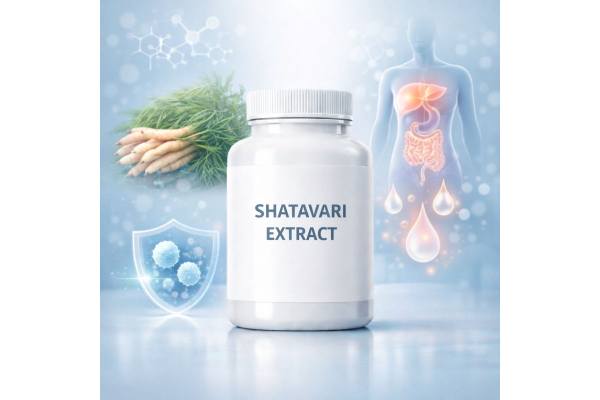
Shatavari extract, made from the roots of Asparagus racemosus, is one of the most respected rejuvenating herbs in Ayurveda, especially for women’s health. Traditionally, it is used to support fertility, ease menstrual and menopausal discomfort, promote lactation, calm the nervous system, and nourish digestive tissues. Modern research is beginning to catch up with this long history of use: recent clinical trials suggest benefits for hot flashes, night sweats, mood, sleep quality, and menstrual pain, as well as adaptogenic effects on stress and hormonal balance.
In supplement form, Shatavari extract usually comes as a standardized capsule or tablet, which concentrates key compounds such as shatavarins (steroidal saponins) and polyphenols. This makes dosing more predictable than crude root powders, but also raises reasonable questions about safety, long-term use, and who should avoid it. In this guide, you will find a balanced overview of what Shatavari extract is, what the evidence shows, how to use it thoughtfully, and what risks and open questions to discuss with your healthcare provider.
Quick Overview for Shatavari Extract
- Shatavari extract is a traditional Ayurvedic root extract used mainly for hormonal balance, menopausal comfort, menstrual health, and lactation support.
- Modern trials suggest it may help reduce hot flashes, night sweats, mood symptoms, and some types of menstrual discomfort, with emerging data on stress and sleep.
- Typical studied doses of standardized Shatavari root extract range from about 50–250 mg once or twice daily (total 50–500 mg/day), taken with food.
- People with hormone-sensitive cancers, unexplained vaginal bleeding, or on hormone therapies should avoid Shatavari unless their specialist explicitly approves it.
- Because it has phytoestrogenic and adaptogenic actions, Shatavari can interact with other conditions or medications, so medical guidance is important before starting.
Table of Contents
- What is Shatavari extract and how does it work?
- Evidence based benefits of Shatavari extract
- How to choose and use Shatavari extract
- Recommended Shatavari extract dosage and timing
- Side effects, interactions, and who should avoid Shatavari
- What the research really says about Shatavari
What is Shatavari extract and how does it work?
Shatavari (Asparagus racemosus) is a climbing plant native to India and parts of Asia. In Ayurveda it is classified as a rasayana herb, meaning a rejuvenator that builds resilience and tissue strength over time. The Sanskrit name “Shatavari” is often translated as “the woman with a hundred husbands,” reflecting its traditional association with female reproductive vitality, although it is used for people of all genders in modern practice.
The extract is usually made from the dried tuberous roots, which are rich in steroidal saponins known as shatavarins, along with alkaloids, polysaccharides, flavonoids, and other polyphenols. These compounds are thought to underlie Shatavari’s main actions: mild phytoestrogenic effects, antioxidant protection, anti-inflammatory activity, immune modulation, and adaptogenic support for the stress response.
Phytoestrogenic activity means that some components of Shatavari can weakly bind to estrogen receptors. In states of low estrogen (such as perimenopause and menopause), this may gently “fill in the gaps” and help smooth fluctuations in symptoms. At the same time, these plant compounds are usually much weaker than the body’s own estrogen, which may explain why trials so far have not shown strong estrogen-like side effects at typical doses.
Shatavari also appears to interact with the hypothalamic-pituitary-adrenal (HPA) axis and possibly the hypothalamic-pituitary-ovarian (HPO) axis. Animal and early human data suggest it can reduce markers of oxidative stress, modulate stress hormones, and influence reproductive hormones such as follicle-stimulating hormone (FSH), luteinizing hormone (LH), and estradiol. This adaptogenic profile is why it is sometimes described as a “nervous system tonic” as well as a reproductive herb.
Beyond hormones and stress, traditional texts and modern studies connect Shatavari with gastrointestinal support (including gastric mucosal protection), immune balance, and general nourishment of bodily fluids, including breast milk. Extracts differ in how strongly they emphasize each of these actions, depending on how they are standardized and what dose is used.
Because extracts can vary widely, two products labeled “Shatavari extract” may not be interchangeable. The exact percentage of shatavarins, the extraction solvent (usually water or alcohol), and the presence of other herbs all influence how it will behave in the body. This is why looking closely at the label and, when possible, choosing products tested in clinical trials is important.
Evidence based benefits of Shatavari extract
Traditional Ayurvedic texts credit Shatavari with a very broad range of uses, from digestive support to immune resilience. Modern evidence is more focused but still promising, particularly in women’s health and stress-related concerns.
For menopausal and perimenopausal symptoms, several recent randomized controlled trials have evaluated standardized Shatavari root extracts. These studies, typically lasting eight to sixteen weeks, report improvements in hot flashes, night sweats, vaginal dryness, mood, sleep quality, and overall menopausal symptom scores compared with placebo. In some trials, Shatavari supplementation also improved quality-of-life measures and modestly shifted reproductive hormone levels toward a more balanced profile, without serious adverse events reported.
In perimenopausal women with troublesome vasomotor symptoms and menstrual discomfort, standardized low-dose Shatavari extracts have been tested as daily supplements. Results from these trials show reductions in frequency and intensity of hot flashes, less menstrual cramping, and better scores on validated menopausal rating scales. Hormone measurements in some studies suggest Shatavari may gently modulate FSH, LH, and estradiol, which could partly explain these clinical effects.
Shatavari has a long and well-documented history as a galactagogue: a substance used to support breast milk production. Controlled studies in postpartum women indicate that Shatavari-containing preparations can increase markers such as milk volume, time to breast fullness, and serum prolactin in some settings. However, findings are mixed, especially when Shatavari is combined with other herbs, and not all trials show clear benefits. Importantly, leading breastfeeding guidelines emphasize that galactagogues should never replace hands-on assessment of latch, feeding frequency, and maternal health.
Beyond reproductive health, Shatavari’s adaptogenic and neuroprotective properties are gaining attention. Experimental work suggests that Shatavari extracts can reduce oxidative damage in the brain, influence neurotransmitters involved in mood regulation, and improve stress resilience in animal models. A recent review highlights its potential to modulate the neuro-gut axis, which may be relevant for stress-related digestive complaints, although human data here are still early.
There is also limited evidence for benefits in gastrointestinal health, such as supporting gastric mucosal integrity and helping with certain types of indigestion or ulcer risk, largely from older clinical and preclinical studies. In practice, many clinicians consider this a “secondary bonus” when using Shatavari primarily for hormonal or stress-related reasons.
Overall, the evidence base is growing but still modest. Shatavari extract looks most promising for mild to moderate menopausal and perimenopausal symptoms, certain menstrual complaints, and possibly for lactation support under supervision. It should not be viewed as a cure-all, but rather as one tool among many in a broader plan that includes nutrition, sleep, movement, and medical care where appropriate.
How to choose and use Shatavari extract
Choosing a Shatavari extract is not just about picking a bottle labeled “Shatavari.” Quality, standardization, and formulation make a big difference in both effectiveness and safety. A thoughtful selection process will help you get closer to the doses and types of extracts studied in trials.
First, consider the form. Most research has used standardized root extracts in capsules or tablets rather than raw powdered root alone. Standardized extracts typically state a percentage of key actives, often “shatavarins” or “total saponins,” commonly in the range of about 5–15%. This helps ensure each dose contains a predictable amount of active constituents. Plain powdered root may still be useful but usually requires larger doses by weight and tends to have more batch-to-batch variability.
Second, look for transparency and testing. Higher-quality products clearly list the part of the plant (root), extraction method (such as aqueous or hydroalcoholic), and standardization details. Independent third-party testing for contaminants (heavy metals, pesticides, microbial load) is particularly important for root herbs, which can accumulate substances from soil. Certifications such as GMP (Good Manufacturing Practice) or inclusion in pharmacopeial monographs are useful quality markers.
Third, pay attention to whether Shatavari is used alone or in combination. Many traditional formulas and modern supplements mix Shatavari with other herbs like ashwagandha, fenugreek, licorice, or evening primrose oil. Combinations may offer broader benefits but also increase the potential for interactions and make it harder to know which ingredient is working for you. If you are trying Shatavari for the first time, a single-herb product or a formula based on a studied combination can provide clearer feedback.
Fourth, match the product to your goal:
- For menopausal or perimenopausal symptoms, look for standardized Shatavari extracts that mirror the doses used in clinical trials, often in the low hundreds of milligrams per day.
- For menstrual discomfort or premenstrual symptoms, lower daily doses may be used, sometimes combined with other menstrual support herbs.
- For lactation support, traditional practice often relies on powders, granules, or combination formulas; here, medical supervision is especially important.
Finally, consider your baseline health and medications. Because Shatavari has phytoestrogenic and adaptogenic actions, it may not be suitable for everyone. A clinician familiar with both your medical history and herbal medicine can help you navigate product choice, dose, and duration, particularly if you have complex hormonal conditions, take prescription drugs, or are postpartum.
Once you have chosen a product, introduce it gradually, monitor your response over several weeks, and keep a simple symptom diary (for example, tracking hot flashes per day, sleep quality, pain scores, or mood). This structured approach makes it easier to decide whether Shatavari is genuinely helping you.
Recommended Shatavari extract dosage and timing
Because Shatavari is a plant, not a single synthetic drug, there is no one universally agreed “correct” dose. However, clinical studies and long-standing traditional practice provide useful ranges that can guide a cautious, individualized approach.
In modern randomized trials on menopausal symptom relief, standardized Shatavari root extracts have commonly been used in the range of about 250 mg twice daily (total around 500 mg/day) for eight weeks or longer. Other research in perimenopausal women has used lower doses of more concentrated extracts, such as 50–100 mg/day of a highly standardized proprietary root extract, still showing benefits for vasomotor and menstrual symptoms.
Traditional use of powdered Shatavari root often involves higher gram-level doses, for example several grams per day divided into two or three servings, usually taken with milk or another nourishing vehicle. These regimens are typically supervised by Ayurvedic practitioners and are not directly comparable to modern standardized extracts, which deliver more concentrated levels of specific constituents per milligram.
A practical, conservative framework for adults using standardized Shatavari extract might look like this, always subject to medical approval:
- For general hormonal support or mild menopausal symptoms:
- Start with 125–250 mg once daily with the main meal.
- If well tolerated after one to two weeks, consider increasing to 250 mg twice daily if additional support is needed and your clinician agrees.
- For perimenopausal vasomotor symptoms or menstrual discomfort:
- Some practitioners use 50–100 mg/day of a high-potency extract or 250–500 mg/day of a moderate-potency extract, often in divided doses.
- For lactation support:
- Clinical studies have used a range of preparations and doses, including small amounts of concentrated extract or larger amounts of powdered root, usually for limited periods.
- Because breastfeeding involves both mother and infant, dosing decisions should always be made with a clinician experienced in lactation and herbal medicine.
Timing with meals can reduce the chance of digestive upset. Many people take Shatavari with breakfast and/or dinner. For sleep and stress support, an evening dose may be preferred; for hot flashes, consistent daytime dosing is more typical.
Duration of use in trials has ranged from a few weeks to several months. For many goals, an initial trial of 8–12 weeks is reasonable, with periodic reassessment of benefits and side effects. Long-term continuous use beyond several months should be reviewed with a healthcare professional, particularly in people with complex medical histories.
Because extracts, health status, and co-medications vary, none of these ranges should be treated as a prescription. They are starting points to discuss with a clinician who can adapt them to your specific age, body weight, hormonal status, and treatment plan.
Side effects, interactions, and who should avoid Shatavari
Overall, Shatavari extract has been well tolerated in clinical studies, with most reported side effects being mild and transient. However, “well tolerated in small trials” does not mean universally safe for everyone. Understanding its potential risks and limitations is essential before adding it to your regimen.
The most commonly noted side effects are digestive: mild nausea, soft stools, or bloating, especially at higher doses or when taken on an empty stomach. These usually improve by lowering the dose or taking the extract with food. Rarely, people may experience headache, fatigue, or subtle changes in menstrual flow as hormones begin to shift.
Because Shatavari is rich in steroidal saponins with phytoestrogenic activity, there are important theoretical and practical concerns in hormone-sensitive situations. Anyone with a personal history of estrogen-dependent cancers (such as certain breast, uterine, or ovarian cancers), endometrial hyperplasia, unexplained uterine bleeding, or active use of estrogen or selective estrogen receptor modulators should only consider Shatavari under the explicit guidance of their oncologist or specialist, if at all.
Allergic reactions are another consideration. People with a known allergy to edible asparagus (Asparagus officinalis) or other members of the Asparagus genus may have an increased risk of reacting to Shatavari. Symptoms could include skin rash, itching, respiratory discomfort, or, very rarely, anaphylaxis. Anyone with a strong allergy history should consult an allergist before trying this herb.
Potential interactions with medications are not fully mapped but deserve caution. Theoretical concerns include:
- Additive effects with hormonal therapies (hormone replacement, fertility treatments, contraceptives).
- Possible influence on blood sugar when combined with antidiabetic drugs.
- Mild diuretic effects that could interact with diuretic medications.
- Overlap with other herbs or supplements that affect prolactin or estrogen levels.
Pregnancy is another special case. While Shatavari is traditionally used in some Ayurvedic protocols before and after pregnancy, modern safety data in pregnant humans are limited. Using Shatavari extract during pregnancy should only be done under specialist supervision, if at all. Postpartum use while breastfeeding also requires careful evaluation of risks and benefits with a knowledgeable clinician, since maternal use potentially affects the infant.
In summary, people in the following groups should avoid Shatavari extract unless specifically cleared and monitored by their healthcare team:
- Individuals with current or past hormone-sensitive cancers.
- Those with unexplained vaginal bleeding or endometrial abnormalities.
- People on complex hormonal medications or fertility treatments.
- Anyone with a documented asparagus allergy.
- Pregnant individuals, unless under close specialist supervision.
If you start Shatavari and notice new symptoms—such as breast tenderness, cycle changes, mood shifts, jaundice, or signs of clotting or bleeding—stop the supplement and seek medical advice promptly.
What the research really says about Shatavari
Shatavari sits at an interesting crossroads between long-standing traditional use and a modern evidence base that is growing but still incomplete. Understanding what the research does and does not show can help you set realistic expectations and avoid overpromising marketing claims.
On the positive side, Shatavari is one of the better-studied Ayurvedic herbs for women’s health. Recent randomized, double-blind, placebo-controlled trials in postmenopausal and perimenopausal women have reported statistically significant improvements in menopausal symptoms, including hot flashes, night sweats, mood, sleep, and vaginal dryness. These benefits often appear within a few weeks and continue over two to four months of supplementation, with favorable safety profiles at the doses tested.
Some of these trials also measured hormonal and vascular markers, showing shifts in estradiol and progesterone toward more balanced ranges and improvements in certain measures of vascular function and bone turnover. While these findings are encouraging, they are not yet large or long-term enough to prove that Shatavari prevents osteoporosis, cardiovascular disease, or other chronic complications of menopause.
In the area of lactation, multiple studies have explored Shatavari as part of postpartum care. Results are mixed: some trials report increased milk volume, quicker breast fullness, and higher prolactin levels, while others show no major differences compared with placebo. Quality of study design varies, and many interventions use Shatavari alongside other herbs, making it hard to isolate its specific contribution. Current expert guidance therefore positions Shatavari as a possible adjunct—not a substitute—for skilled lactation support and basic breastfeeding management.
Adaptogenic and neuroprotective effects are supported mainly by preclinical and review data. Laboratory and animal studies suggest that Shatavari can reduce oxidative stress, modulate inflammatory pathways, and influence neurotransmitters and stress hormones. A recent scientific review concludes that Shatavari has meaningful adaptogenic potential and may be relevant to neuro-gut axis modulation, but emphasizes that rigorous human trials are still needed to define its role in mood, cognition, and stress-related gut disorders.
Phytochemical and pharmacological reviews provide important context. They confirm the presence of multiple bioactive constituents with antioxidant, anti-inflammatory, immunomodulatory, and antiulcer properties, and they summarize decades of experimental work. However, most of these data come from cell and animal models or small human studies, so translating them directly into clinical practice requires caution.
Taken together, the research supports a cautiously optimistic view:
- Shatavari extract can be a useful option for managing mild to moderate menopausal and perimenopausal symptoms in some women.
- It may offer additional support for menstrual comfort and, in certain cases, lactation, when used in conjunction with standard care.
- It likely acts through a combination of mild phytoestrogenic, adaptogenic, antioxidant, and anti-inflammatory mechanisms.
- Evidence is still insufficient to claim disease prevention, long-term safety in high-risk populations, or broad benefits across all hormonal conditions.
For now, the most responsible way to use Shatavari is as a complementary tool, not a replacement for medical evaluation, necessary medications, or lifestyle foundations such as nutrition, movement, sleep, and stress management.
References
- Efficacy and Safety of Shatavari Root Extract for the Management of Menopausal Symptoms: A Double-Blind, Multicenter, Randomized Controlled Trial 2024 (Randomized Controlled Trial)
- A Standardized Asparagus Racemosus Root Extract Improves Hormonal Balance and Menstrual Health and Reduces Vasomotor Symptoms in Perimenopausal Women: A Randomized, Double-Blind, Placebo-Controlled Study 2025 (Randomized Controlled Trial)
- Wild Asparagus – Drugs and Lactation Database (LactMed®) – NCBI Bookshelf 2025 (Clinical Monograph)
- Adaptogenic Property of Asparagus Racemosus: Future Trends and Prospects 2023 (Review)
- Plant Profile, Phytochemistry and Pharmacology of Asparagus Racemosus (Shatavari): A Review 2013 (Pharmacological Review)
Disclaimer
The information in this article is for general educational purposes only and is not a substitute for personal medical advice, diagnosis, or treatment. Shatavari extract can affect hormones, stress pathways, and other body systems, and its suitability depends on your individual health history, medications, and life stage. Always consult a qualified healthcare professional before starting, stopping, or changing any supplement, especially if you are pregnant, breastfeeding, planning pregnancy, have a chronic medical condition, or take prescription or over-the-counter medications. Never delay or disregard professional medical advice because of something you have read online.
If you found this guide helpful, you are warmly invited to share it with others on Facebook, X (formerly Twitter), or any platform you prefer, and to follow our work on social media. Your support through thoughtful sharing helps us continue creating careful, evidence-informed content for readers like you.