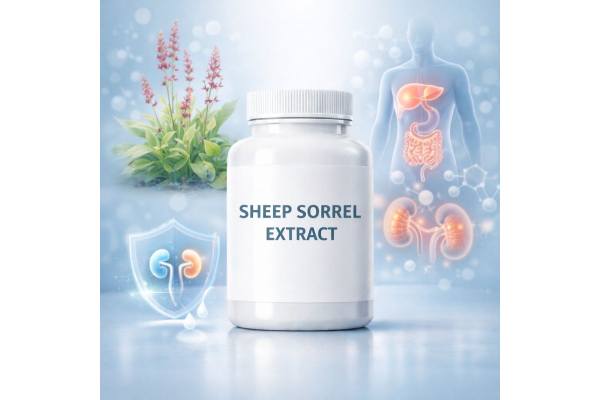
Sheep sorrel extract comes from Rumex acetosella, a sour, lemony herb that grows as a common weed in many temperate regions. Herbalists have used it for generations in digestive tonics, “blood cleansing” formulas, and skin preparations. It is also one of the best-known ingredients in Essiac and similar herbal blends that are heavily promoted online for detoxification and cancer, often without context or a clear understanding of the evidence behind these claims.
Today, sheep sorrel extract is sold as capsules, tinctures, loose herb, and as part of mixed teas marketed for immune support, antioxidant protection, and general wellness. The plant is naturally rich in polyphenols, flavonoids, and organic acids, but it is also high in oxalic acid, which can stress the kidneys in large or prolonged doses. This guide walks you through what sheep sorrel extract is, what traditional and modern research suggest, how people typically use it, and—equally important—its safety limits, interactions, and who should avoid it.
Key Insights for Sheep Sorrel Extract
- Sheep sorrel extract is made from Rumex acetosella, a tangy wild herb used traditionally for digestion, fevers, skin issues, and general “blood cleansing.”
- Modern lab and animal studies suggest antioxidant, anti-inflammatory, and potential anticancer activity, but high-quality human trials are limited and do not support it as a proven cancer treatment.
- Many supplements provide around 200–800 mg per day of dried sheep sorrel extract, often divided with meals, while traditional teas may use several grams of herb in water.
- High oxalate content means long-term or high-dose use may increase kidney stone risk or strain kidney function, especially in susceptible people.
- Individuals with kidney disease, a history of kidney stones, gout, or during pregnancy and childhood should avoid sheep sorrel extract unless a specialist explicitly recommends and supervises its use.
Table of Contents
- What is sheep sorrel extract?
- Potential benefits and traditional uses of sheep sorrel
- How sheep sorrel extract is used today
- Sheep sorrel extract dosage and practical use
- Side effects, safety, and who should avoid sheep sorrel
- What the research says about sheep sorrel extract
What is sheep sorrel extract?
Sheep sorrel (Rumex acetosella) is a small, sour-tasting plant in the Polygonaceae family—the same group that includes dock and other sorrels. It thrives in poor, acidic soils and is common in pastures, meadows, and disturbed ground. The leaves are narrow and arrow-shaped, with a bright, lemony flavour due to organic acids like oxalic and tartaric acid.
Herbal preparations may use the aerial parts (leaves and stems), roots, or the whole plant. “Sheep sorrel extract” usually refers to a concentrated preparation made by soaking dried plant material in a solvent such as water, ethanol, or a mixture of both, and then concentrating or drying the resulting liquid. This can be supplied as:
- Liquid tinctures (alcohol or glycerin based)
- Standardized dry extracts in capsules or tablets
- Fluid extracts or concentrated teas
Chemically, sheep sorrel contains:
- Polyphenols and flavonoids (quercetin, kaempferol derivatives, and other antioxidant molecules commonly found in Rumex species)
- Anthraquinones and tannins, which contribute to laxative, astringent, and antimicrobial properties seen across the Rumex genus
- Organic acids, especially oxalic acid, responsible for its sharp taste and also many of its safety concerns
- Vitamins and minerals in smaller amounts, including vitamin C and trace minerals
Many sources loosely attribute a wide range of actions to sheep sorrel: antioxidant, anti-inflammatory, diuretic, mild laxative, antimicrobial, and possibly antitumor. These claims mostly stem from the broader Rumex research and from Essiac-related work, rather than robust human trials on sheep sorrel alone.
It is also important to distinguish sheep sorrel (R. acetosella) from common sorrel (R. acetosa). Both share similar chemistry and traditional uses, but they are not identical plants. Many scientific papers use common sorrel as a model species when discussing Rumex, and herbal marketing sometimes blurs their identity. For practical purposes in supplements, however, the term “sheep sorrel” should correspond specifically to Rumex acetosella on the label.
Understanding these botanical and chemical foundations makes it easier to interpret claims about sheep sorrel extract and to keep its potential benefits and risks in perspective.
Potential benefits and traditional uses of sheep sorrel
Sheep sorrel has a long history in folk medicine. Indigenous North American traditions and later European herbalists used it for a range of complaints, especially those related to digestion, fever, infections, and skin problems. It was considered a “cooling” herb, used to lower heat, soothe inflamed tissues, and support elimination through the kidneys and skin.
Traditional uses often cited for sheep sorrel or closely related sorrel species include:
- Digestive support: mild cases of indigestion, poor appetite, or sluggish digestion
- Fevers and infections: cooling teas for feverish states, sore throats, and mild respiratory infections
- Skin and wound care: washes for boils, sores, rashes, and chickenpox lesions
- “Blood cleansing” and spring tonics: short seasonal courses to stimulate natural detoxification
The herb is also strongly associated with Essiac and similar four- or eight-herb blends that include burdock root, slippery elm, rhubarb, and sheep sorrel. These mixtures became popular in the twentieth century as alternative therapies for cancer and chronic illness. Laboratory and animal experiments suggest that Essiac-type formulas have antioxidant and DNA-protective effects, but clinical evidence in humans has not confirmed them as effective cancer treatments. Regulatory and cancer agencies stress that these teas should not replace standard oncology care.
On a mechanistic level, the broader Rumex genus shows:
- Antioxidant activity: flavonoids and tannins can scavenge free radicals and protect cellular components from oxidative stress.
- Anti-inflammatory effects: plant compounds may downregulate inflammatory mediators in experimental models.
- Antimicrobial properties: some Rumex extracts inhibit bacteria and fungi in laboratory settings.
- Possible antitumor pathways: anthraquinones, tannins, and other constituents show cytotoxic effects on cancer cell lines in vitro.
However, these effects do not translate automatically into proven clinical benefits. Most of the research comes from cell cultures, animal studies, and work on other sorrel species, not from large human trials of sheep sorrel extract on specific diseases.
In everyday herbal practice, sheep sorrel is more realistically viewed as:
- A tangy wild food that can modestly contribute antioxidants and vitamin C to the diet
- A minor component in multi-herb formulas for digestion, urinary function, or general detox support
- Part of Essiac-like blends used alongside (not instead of) evidence-based treatments, with careful attention to safety
The most responsible approach is to recognize that sheep sorrel extract may support antioxidant and mild anti-inflammatory functions, particularly as part of a broader plant-rich diet and lifestyle, while being clear that evidence for disease treatment or cure—especially cancer—is not established.
How sheep sorrel extract is used today
Modern uses of sheep sorrel extract fall into several main categories: stand-alone supplements, part of multi-herb formulas, and as a culinary or wellness tea. Each comes with its own expectations, quality considerations, and risk profile.
As a single-herb supplement, sheep sorrel extract is typically marketed for:
- Antioxidant and immune support
- Digestive health and “liver detox”
- Joint and tissue comfort through anti-inflammatory effects
- General wellness tonics
These claims are often broad, and the supporting evidence ranges from traditional use to preclinical data. Consumers should read labels critically and view such supplements as complementary at best, not as primary treatments.
In combination formulas, sheep sorrel is most famous as a component of Essiac and Essiac-like blends. In these products, it appears alongside other herbs such as burdock, slippery elm, and rhubarb. The mixture is promoted for:
- “Detoxification” and elimination support
- Immune modulation
- Cancer and chronic disease support
Despite its popularity, clinical trials of Essiac-type formulas in humans have not shown clear anticancer benefits. Some lab and animal studies hint at antioxidant and immunomodulatory effects, but they also raise concerns that certain preparations may not be harmless at high concentrations. Because sheep sorrel is only one of several herbs in these blends, its specific contribution is difficult to isolate.
Outside of supplements, sheep sorrel appears in:
- Herbal teas: dried leaves and stems prepared as a sour infusion, often combined with other herbs.
- Culinary uses: added in small amounts to salads, soups, and sauces, mainly for flavour.
- Topical applications: washes or compresses for minor skin irritations, based on traditional practices.
Quality and consistency are major issues. Products may vary in:
- Plant part used (leaf vs whole plant vs root)
- Growing conditions and harvest timing
- Drying and storage methods, which affect active compound levels
- Extraction solvent and concentration
For safety and effectiveness, it is wise to:
- Choose suppliers that identify the plant as Rumex acetosella and indicate the plant part used.
- Prefer products tested for contaminants such as heavy metals, pesticides, and microbial load.
- Avoid preparations with unverified, very high concentrations of extract or vague instructions like “take freely.”
Finally, because sheep sorrel is rich in oxalates and other metabolites that affect mineral balance and kidney function, its place in a wellness plan should be modest and measured. Rather than relying on intense, long-term use, many practitioners prefer short courses or episodic use, combined with a nutrient-rich diet, sufficient hydration, and evidence-based medical care.
Sheep sorrel extract dosage and practical use
There is no universally accepted standard dose for sheep sorrel extract. Most guidance comes from traditional use, manufacturer recommendations, and a small number of experimental studies on Essiac-type formulas. Because of the plant’s oxalate content and potential kidney effects, dosing should remain conservative and always be individualized with professional input.
Typical patterns you may see on supplement labels include:
- Standardized dry extracts in capsules or tablets providing about 100–400 mg of sheep sorrel extract per serving, often taken once or twice daily (total 200–800 mg/day).
- Powdered whole herb in capsules in the range of 500–1,000 mg per capsule, sometimes combined with other herbs.
- Liquid extracts or tinctures recommending roughly 1–2 mL, one to three times daily, diluted in water or juice.
Herbal teas and Essiac-type blends are more variable. A common pattern might be:
- Dried herb or blend simmered in water to make a decoction, then taken in small amounts (for example, 30–60 mL of a concentrated tea once or twice daily).
However, many recipes circulating online are not standardized and may produce very different strengths of extract. For someone with no underlying kidney issues who is otherwise healthy, an occasional weak tea made with small amounts of sheep sorrel leaf used as a flavouring is likely to be less risky than long-term intake of strong concentrates.
Practical, cautious guidelines to discuss with a healthcare professional might include:
- Start low: If you and your clinician decide to trial sheep sorrel extract, begin with the lowest dose suggested on a reputable product (for example, around 100–200 mg/day of a dry extract with food).
- Short trial period: Use it for a limited time, such as 2–4 weeks, while monitoring for changes in symptoms and any side effects such as digestive upset, urinary changes, or flank pain.
- Avoid stacking: Do not combine high-dose sheep sorrel extract with other high-oxalate supplements or heavy dietary oxalate intake (large amounts of spinach, beet greens, rhubarb) without guidance.
- Stay hydrated: Adequate water intake is especially important when using high-oxalate herbs to help protect kidney function.
Children, pregnant or breastfeeding individuals, and people with kidney, liver, or significant metabolic disease should not use sheep sorrel extract without specialist supervision, and in many cases it will be contraindicated altogether.
Because products, extraction strengths, and individual health profiles differ, any numerical range should be treated as a rough orientation, not a prescription. The safest approach is to see sheep sorrel extract as a short-term, supportive addition—if appropriate at all—rather than a high-dose, long-term solution.
Side effects, safety, and who should avoid sheep sorrel
Sheep sorrel extract is often marketed as a gentle “natural” remedy, but its chemistry and case reports from related sorrel species show that it can cause significant problems in the wrong context or dose. Respecting its risks is just as important as understanding its potential benefits.
The main safety concern is oxalic acid. Sorrel plants, including sheep sorrel, are high in oxalates. In small culinary amounts this is usually tolerated by healthy people. In larger or concentrated doses, oxalates can:
- Bind minerals such as calcium and magnesium, potentially lowering their availability
- Contribute to the formation of calcium oxalate kidney stones in susceptible individuals
- Irritate the kidneys and, in extreme cases, cause acute kidney injury
Serious poisoning from sorrel is rare but has been documented, particularly when very large amounts of sorrel leaves are consumed (for example, strong sorrel soups or juices). Case reports describe metabolic acidosis, low blood calcium, kidney injury, and in some instances life-threatening outcomes after high-dose exposure to oxalate-rich plants. While these cases often involve common sorrel or other Oxalidaceae species rather than sheep sorrel extract specifically, they highlight the general risk of overusing oxalate-heavy herbs.
Other possible side effects include:
- Gastrointestinal upset: nausea, vomiting, abdominal cramping, or diarrhea, especially at higher doses or on an empty stomach
- Increased urination due to mild diuretic effects
- Headache, fatigue, or a general “detox” feeling when starting use, which may reflect both herb effects and expectation
Allergic reactions can occur, though they appear uncommon. They might involve skin rashes, itching, or in rare cases more serious reactions in individuals sensitive to Rumex species or related plants.
People in the following groups should avoid sheep sorrel extract unless a specialist explicitly recommends and supervises it:
- Those with a history of kidney stones, chronic kidney disease, or unexplained changes in kidney function
- Individuals with gout or disorders of mineral metabolism
- Children and adolescents, whose kidneys and mineral needs are still developing
- Pregnant or breastfeeding individuals, because safety data are inadequate and oxalate load is a concern
- People on medications that affect kidney function or mineral handling (for example, certain diuretics, high-dose vitamin D, or calcium supplements)
Anyone who does use sheep sorrel extract should stop it and seek medical evaluation promptly if they notice:
- Flank pain or pain near the kidneys
- Blood in the urine, dramatic changes in urine volume, or difficulty urinating
- Severe or persistent nausea, vomiting, or diarrhea
- Muscle cramps, tingling around the mouth or extremities, or signs of low calcium
Finally, sheep sorrel and Essiac-type blends should not be used as a replacement for evidence-based cancer treatments or other conventional therapies. If they are used at all, they should be part of an open, supervised plan discussed with the oncology or primary care team.
What the research says about sheep sorrel extract
Compared with some better-known botanicals, sheep sorrel extract has a relatively modest and indirect research base. Much of what we know comes from three overlapping areas: studies of the Rumex genus as a whole, work on common sorrel as a model plant, and investigations of Essiac-type blends where sheep sorrel is only one component.
Large modern reviews of the Rumex genus describe wide-ranging traditional uses and identify dozens of compounds with biological activity, including anthraquinones, flavonoids, tannins, and other polyphenols. Extracts from various Rumex species have shown antibacterial, anti-inflammatory, antitumor, antioxidant, and cardiovascular effects in laboratory and animal experiments. These findings support the idea that sorrel plants are pharmacologically active, but they do not single out sheep sorrel as clinically proven for any specific condition.
A focused botanical and pharmacological review of common sorrel (Rumex acetosa) reaches similar conclusions: the plant is rich in antioxidants, its roots and aerial parts have been used traditionally for skin diseases, fever, and digestive issues, and modern studies report both promising bioactivities and toxicity related to oxalates and anthraquinones. Because of the close relationship between R. acetosa and R. acetosella, many practitioners extrapolate cautiously from this data when considering sheep sorrel.
Essiac-related research provides the most direct look at mixtures containing sheep sorrel. Laboratory studies on Essiac tea have shown:
- Strong antioxidant and free-radical-scavenging activity in vitro
- Protective effects against certain forms of DNA damage in cell systems
- Complex, sometimes conflicting effects on cancer cell lines, with some experiments showing growth inhibition and others suggesting possible stimulation at certain concentrations
Despite these intriguing preclinical findings, clinical evidence in humans remains weak. Comprehensive reviews and government summaries note that:
- There is no clear evidence from well-designed clinical trials that Essiac or similar blends improve cancer outcomes or quality of life.
- Reported benefits in individual case reports cannot be confidently attributed to the tea, because of the many other variables involved.
- Some side effects, such as nausea, vomiting, and changes in bowel or urinary habits, are documented, and the potential for interactions with medications is real.
Direct human studies on sheep sorrel extract alone—separate from Essiac—are scarce. Where it appears, it is usually as a minor component of a broader herbal formula, making it hard to isolate its effects.
In summary, the current research landscape suggests that:
- Sheep sorrel and related Rumex species contain biologically active compounds with antioxidant, anti-inflammatory, antimicrobial, and possibly antitumor properties in experimental models.
- These properties may contribute to modest supportive benefits, especially when the herb is used as a small part of a diverse, plant-rich diet or a carefully chosen herbal protocol.
- There is no strong clinical evidence that sheep sorrel extract or Essiac-type blends can treat or cure cancer or other major diseases.
- Toxicity from oxalates and other components is a real risk at high doses, in susceptible individuals, or with prolonged unsupervised use.
For consumers and practitioners, the most balanced approach is to treat sheep sorrel as a potentially useful but limited herb, with promising lab science, a rich traditional history, and clearly defined safety boundaries—but not as a stand-alone solution for serious illness.
References
- The genus Rumex (Polygonaceae): an ethnobotanical, phytochemical and pharmacological review 2022 (Systematic Review)
- Sorrel (Rumex acetosa L.): Not Only a Weed but a Promising Vegetable and Medicinal Plant 2020 (Review)
- Essiac Tea: Scavenging of Reactive Oxygen Species and Effects on DNA Damage 2006 (Experimental Study)
- Essiac/Flor Essence (PDQ®)–Patient Version 2024 (Clinical and Regulatory Summary)
Disclaimer
This article is intended for general information and education only. It does not provide medical advice, diagnosis, or treatment, and it should not be used to make decisions about your health without guidance from a qualified healthcare professional. Sheep sorrel extract can affect kidney function, mineral balance, and other aspects of physiology, and its safety depends on your individual medical history, medications, and overall health status. Always consult your doctor, pharmacist, or a licensed practitioner trained in herbal medicine before starting, stopping, or combining any supplement, especially if you have kidney or metabolic disease, are pregnant or breastfeeding, live with cancer, or take prescription drugs. Never delay or replace conventional medical care with sheep sorrel extract or Essiac-type products.
If this guide has been helpful, you are warmly invited to share it with others on Facebook, X (formerly Twitter), or any platform you prefer, and to follow our work on social media. Thoughtful sharing and feedback help us continue creating careful, evidence-informed content for people looking to use herbal supplements more safely and effectively.