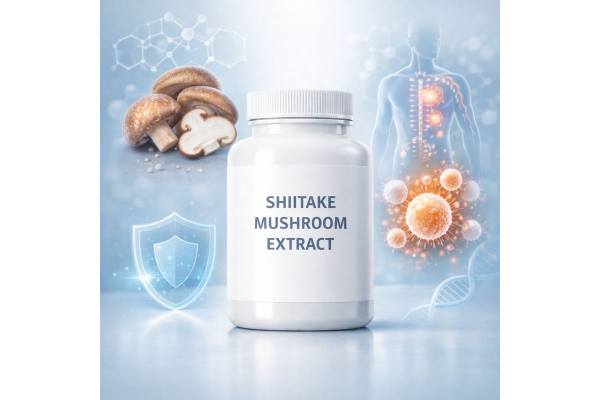
Shiitake mushrooms have moved far beyond gourmet cooking and into the world of functional nutrition. Their concentrated form, shiitake mushroom extract, is now used in supplements for immune support, cholesterol management, gut health, and as a complementary aid in oncology care under medical supervision. This extract is typically standardised for beta glucans and other unique compounds such as lentinan and eritadenine, which have been studied for their effects on immunity, inflammation, and metabolic health.
In this guide, you will learn what shiitake extract actually is, how it differs from eating the whole mushroom, and where the current evidence is strongest. You will also find practical advice on dosage ranges, how to choose a high-quality product, how to use it alongside food and other supplements, and when to avoid it. The goal is to help you make informed, realistic decisions about whether shiitake mushroom extract fits your health plan.
Key Insights for Shiitake Mushroom Extract
- Shiitake mushroom extract provides concentrated beta glucans and other compounds that may support immune balance and metabolic health.
- Human studies suggest possible benefits for cholesterol, inflammation, and quality of life when used appropriately alongside medical care.
- Common supplement doses range from about 250–1,000 mg of standardised extract per day with food, unless your clinician advises otherwise.
- Side effects are usually mild but can include digestive upset and rare rashes; people with mushroom allergy or autoimmune conditions should be especially cautious.
- Shiitake extract is not a replacement for cancer treatment or other prescribed therapies and should be used under professional guidance in serious illness.
Table of Contents
- What is shiitake mushroom extract?
- Shiitake extract benefits and how it works
- How to use shiitake mushroom extract day to day
- Shiitake extract dosage and supplement forms
- Side effects, interactions, and who should avoid it
- What the research says about shiitake extract
What is shiitake mushroom extract?
Shiitake mushroom extract is a concentrated preparation made from the edible mushroom Lentinula edodes. While the culinary mushroom is typically eaten whole and cooked, the extract isolates and concentrates key bioactive constituents, especially polysaccharides like beta glucans, along with polyphenols, sterols, and unique compounds such as lentinan and eritadenine.
To make most supplements, manufacturers usually:
- Grow shiitake mushrooms under controlled conditions.
- Use hot water extraction (sometimes combined with ethanol extraction) on the fruiting body, mycelium, or both.
- Filter, concentrate, and dry the extract into a powder.
- Standardise the powder to a declared percentage of polysaccharides or beta glucans.
The result is a product that may deliver the equivalent of several grams of dried mushroom in a smaller capsule or scoop of powder. This does not necessarily make it “better” than eating whole mushrooms, but it allows for more consistent dosing and easier use in research and clinical settings.
Key distinctions you will see on labels include:
- Fruiting body vs mycelium: Fruiting body extracts are closer to what you eat as food. Mycelium-based products are grown on grain and can have different beta glucan and starch profiles.
- Standardisation claims: Look for numbers such as “30% polysaccharides” or “20% beta glucans.” Beta glucan content is often more meaningful than total polysaccharides.
- Single extract vs blends: Some formulas contain only shiitake, while others combine it with reishi, maitake, turkey tail, or vitamin C.
In traditional East Asian medicine, shiitake has long been used as a tonic for vitality and resilience. Modern extracts build on that history, but they are more concentrated and should be treated as active supplements rather than simple foods.
Shiitake extract benefits and how it works
The potential benefits of shiitake mushroom extract come from several classes of compounds, each acting through different mechanisms in the body.
Some of the best-studied potential effects include:
- Immune modulation:
Beta glucans such as lentinan can bind to receptors on immune cells (including macrophages, dendritic cells, and certain lymphocytes). This appears to help “train” or modulate the immune response, supporting more efficient surveillance against microbes and abnormal cells while reducing excessive inflammation in some contexts. Rather than simply “boosting” immunity, shiitake extract tends to have a balancing effect. - Anti-inflammatory and antioxidant activity:
Shiitake contains antioxidants such as ergothioneine, phenolic compounds, and specific polysaccharides. These may help reduce oxidative stress and down-regulate inflammatory signaling molecules. In human studies, shiitake preparations have been associated with changes in inflammatory markers after physical stress or illness. - Metabolic and cardiovascular support:
Components such as eritadenine and certain sterols have been associated with improved cholesterol handling in experimental and early human work. Possible effects include reduced total and LDL cholesterol, modest triglyceride changes, and support for healthier blood vessel function, particularly when combined with a generally heart-healthy lifestyle. - Gut microbiota and barrier support:
Shiitake beta glucans and other fibers can act as prebiotic substrates for beneficial gut bacteria. This may help increase short-chain fatty acids such as butyrate, which are important for colon health and immune tolerance. High-quality extracts may therefore support gut barrier integrity and overall digestive resilience. - Adjunctive support in oncology care (under medical supervision):
In some countries, lentinan derived from shiitake is used as an approved injectable drug alongside chemotherapy for certain cancers. Oral extracts used as supplements are less studied but may offer supportive benefits for immune function, quality of life, and treatment tolerance when integrated carefully into medical plans.
It is important to keep expectations realistic. Many of the more impressive findings come from cell or animal models, or from specialised intravenous preparations, not from over-the-counter capsules. However, the overall pattern of research suggests that shiitake extract is a promising tool for long-term support of immune and metabolic health when combined with evidence-based medical care, not as a replacement for it.
How to use shiitake mushroom extract day to day
Using shiitake mushroom extract effectively means paying attention to consistency, timing, and how it fits into your broader routine rather than relying on a single large dose.
Common practical uses include:
- General immune support through the year
Many people take shiitake extract during colder months or periods of high stress. A typical approach is daily use for several weeks to months, combined with adequate sleep, nutrition, and movement. - Metabolic and cardiovascular support
When the focus is cholesterol or blood sugar balance, shiitake extract is usually paired with dietary measures such as increased fiber and reduced ultra-processed foods. It is not a substitute for lipid-lowering or diabetes medication but may be layered on top of lifestyle changes. - Exercise recovery and resilience
Some fitness-minded users take shiitake extract around periods of intensive training, aiming to support the antioxidant and inflammatory response to heavy exercise. In this setting, it is often stacked with vitamin C, magnesium, or other recovery-focused nutrients. - Complementary support during medical treatment
Any use alongside chemotherapy, radiotherapy, biologics, or immunosuppressive drugs must be coordinated with an oncology or specialist team. In this context, shiitake extract may be used to support immune markers or quality of life, but there is also potential for interactions.
Practical tips for day-to-day use:
- Take with food: Shiitake extract is usually best tolerated with meals, which can reduce the chance of nausea or stomach upset.
- Start low and go slow: Begin at the lower end of the suggested dose range, monitor how you feel for one to two weeks, and only then consider gradual increases.
- Build a routine: Take it at the same time each day so it is easier to remember and easier to link with how you feel.
- Consider cycles: After 8–12 weeks of continuous use, some people take a short break (for example, 1–2 weeks) before starting another cycle, especially at higher doses.
Shiitake extract can be used alone or as part of a broader “mushroom stack.” If you combine multiple mushroom supplements, pay attention to the total beta glucan content and overall dose so that the combined amount remains within a reasonable range.
Shiitake extract dosage and supplement forms
There is no single universally accepted dose of shiitake mushroom extract for every goal, but human research and traditional usage provide sensible working ranges.
Common supplemental forms
- Capsules or tablets: The most common format. Each capsule may contain 250–500 mg of extract, sometimes standardised to a percentage of polysaccharides or beta glucans.
- Bulk powder: Can be mixed into smoothies, protein shakes, or warm drinks. This format allows flexible dosing but has a more pronounced earthy taste.
- Liquid extracts or tinctures: These may use water, alcohol, or both as solvents. Strength can vary widely, so it is important to follow label instructions.
- Combination formulas: Shiitake combined with other mushrooms (reishi, maitake, turkey tail, cordyceps) or with vitamins and minerals.
Typical daily dosage ranges (oral supplements)
These ranges refer to healthy adults unless otherwise noted and assume a standardised extract of reasonable quality:
- General wellness and immune support:
Approximately 250–500 mg per day of shiitake extract, often providing around 20–40% polysaccharides or a clearly stated beta glucan content. - Metabolic and cardiovascular support:
Often 500–1,000 mg per day, sometimes taken in divided doses with meals, particularly when the goal is to influence cholesterol and related markers. - Short-term intensive use (for example, during a demanding season):
Some protocols use up to 1,000–1,500 mg per day for several weeks under professional guidance, particularly in combination products.
By contrast, injectable lentinan used in oncology clinics is typically given as 1–2 mg once or twice weekly by intravenous or intrathoracic routes. This is a prescription-only drug in certain countries and is not equivalent to oral supplements.
General dosage guidance:
- Follow the manufacturer’s instructions unless your healthcare provider suggests a different regimen.
- If you are smaller-framed, older, or sensitive to supplements, aim for the lower end of the range.
- For people with complex medical conditions or multiple medications, dosing should be personalised by a clinician familiar with both mushrooms and your health history.
Children, pregnant individuals, and breastfeeding individuals should not take shiitake extract without explicit medical oversight, as safety data in these groups are limited.
Side effects, interactions, and who should avoid it
Shiitake mushroom extract is generally well tolerated when used at typical supplemental doses, but it is not risk-free. Understanding possible reactions and interactions is essential for safe use.
Common, usually mild effects
These often improve when the dose is reduced or the supplement is taken with food:
- Digestive changes such as bloating, softer stools, or mild nausea.
- Transient headache or a sense of warmth or flushing.
- Changes in stool colour due to concentrated pigments and fibers.
Less common but more serious reactions
- Allergic or hypersensitivity reactions:
People with known mushroom allergies may react to shiitake with itching, swelling, breathing difficulty, or hives. Any signs of an allergic reaction require immediate medical attention. - Shiitake flagellate dermatitis:
A distinctive rash with linear, whip-like streaks can appear after consuming raw or undercooked shiitake, and in rare cases after exposure to extracts. It is thought to be linked to a compound called lentinan provoking a skin-specific immune response. The rash can be dramatic but is usually self-limited with appropriate care. - Liver or lung effects (rare):
There are isolated reports of liver enzyme elevations and unusual lung reactions in the context of shiitake use. These events are rare, but anyone with pre-existing liver or lung disease should use shiitake only under medical supervision.
Potential interactions
- Immunosuppressive medications:
Because shiitake extract can influence immune function, it may interfere with drugs that deliberately suppress immunity, such as those used after organ transplantation, some biologics, or corticosteroids. - Chemotherapy and targeted cancer therapies:
In some settings, oncologists use lentinan as a deliberate adjunct. In others, additional immune-active supplements are discouraged. Decisions here must always be individualised and made with the oncology team. - Anticoagulants and antiplatelet drugs:
Mushrooms contain various bioactive compounds that could, in theory, influence platelet function or clotting. While major interactions are not commonly reported, it is prudent to use caution if you take warfarin, direct oral anticoagulants, or high-dose aspirin.
Who should avoid or be very cautious with shiitake extract
- People with known allergy to shiitake or other mushrooms.
- Individuals with a history of unexplained rashes after eating mushrooms.
- Anyone on strong immunosuppressive therapy, unless their specialist explicitly approves use.
- People with active autoimmune disease considering high doses of immune-active extracts, unless managed by an experienced clinician.
- Pregnant or breastfeeding individuals and young children, due to limited targeted safety data.
If you start shiitake extract and develop persistent rash, breathing changes, chest symptoms, significant digestive distress, or yellowing of the eyes or skin, stop the supplement and seek medical care promptly.
What the research says about shiitake extract
Research on shiitake mushroom and its extracts spans laboratory experiments, animal studies, small-to-moderate-sized human trials, and, for injectable lentinan, meta-analyses of clinical outcomes in cancer care.
Key areas where evidence is emerging include:
1. Gut microbiota and immune-metabolic health
A human trial using a beta glucan-enriched shiitake extract reported measurable changes in the composition and activity of the intestinal microbiota after regular consumption. Participants showed shifts toward bacteria associated with healthier metabolic profiles and improved short-chain fatty acid production, supporting the idea that shiitake polysaccharides act as prebiotic fibers. Some inflammatory markers also moved in a favourable direction, although sample sizes were modest.
2. Exercise-induced oxidative stress and inflammation
In another human study, individuals were given shiitake extract around a demanding eccentric exercise protocol. The group receiving the extract demonstrated differences in oxidative stress and inflammatory markers compared with controls, suggesting that concentrated shiitake compounds may help the body respond to physical stress more efficiently. These findings support, but do not prove, practical uses in athletic recovery or physically demanding occupations.
3. Intestinal inflammation and colorectal health
Modern reviews of shiitake and its constituents describe multiple mechanisms that could be relevant to inflammatory bowel conditions and colorectal cancer risk. These include modulation of inflammatory pathways, antioxidant protection of the gut lining, support of beneficial bacteria, and potential direct effects on abnormal cells in experimental models. Human data in this area are still limited, so at present shiitake extract is better viewed as a supportive measure rather than a primary treatment.
4. Lentinan as an adjunct in oncology
Injectable lentinan, derived from shiitake, has been used for decades in parts of East Asia as an adjunct to chemotherapy. An umbrella review pooling multiple meta-analyses found that adding lentinan to standard regimens was associated with improvements in response rate, one-year survival, performance status, and treatment-related toxicity in several cancers, especially lung and gastrointestinal malignancies. These data apply to medically supervised injections, not self-administered oral supplements, but they highlight the biological relevance of shiitake polysaccharides.
5. Safety signals and rare adverse events
Case series describing shiitake flagellate dermatitis remind us that natural products can provoke striking immune reactions in susceptible people. Reports of unusual rashes, along with isolated liver and lung events, underpin modern recommendations to avoid undercooked shiitake, use extracts within reasonable doses, and monitor for unexpected symptoms.
Overall, the research picture suggests that shiitake mushroom extract is a promising tool for long-term support of immune and metabolic health, with particular interest as a professionally supervised adjunct in oncology. At the same time, dose, quality, and context matter greatly, and more large, well-controlled human trials are still needed before making strong claims.
References
- Lentinula edodes as a Source of Bioactive Compounds and Its Potential Role in Prevention and Treatment of Intestinal Inflammation and Colorectal Cancer 2025 (Systematic Review)
- Modulation of human intestinal microbiota in a clinical trial by consumption of a β-D-glucan-enriched extract obtained from Lentinula edodes 2021 (RCT)
- Effect of shiitake (Lentinus edodes) extract on antioxidant and inflammatory response to prolonged eccentric exercise 2013 (RCT)
- Lentinan for Integrative Cancer Treatment: An Umbrella Review 2021 (Umbrella Review)
- Shiitake flagellate dermatitis: a case series from Italy 2025 (Case Series)
Disclaimer
The information in this article is for general education only and is not a substitute for personalised medical advice, diagnosis, or treatment. Shiitake mushroom extract can have meaningful biological effects, may interact with medications, and is not appropriate for everyone. Always consult your doctor, pharmacist, or qualified healthcare professional before starting, stopping, or changing any supplement, especially if you have a medical condition, are pregnant or breastfeeding, are scheduled for surgery, or take prescription or over-the-counter medicines. Never delay or disregard professional medical advice because of something you have read here.
If you found this guide useful, please consider sharing it on Facebook, X (formerly Twitter), or any platform you prefer, and follow our work on social media. Your support by sharing our articles helps our team continue to research, write, and update high-quality, evidence-informed content.