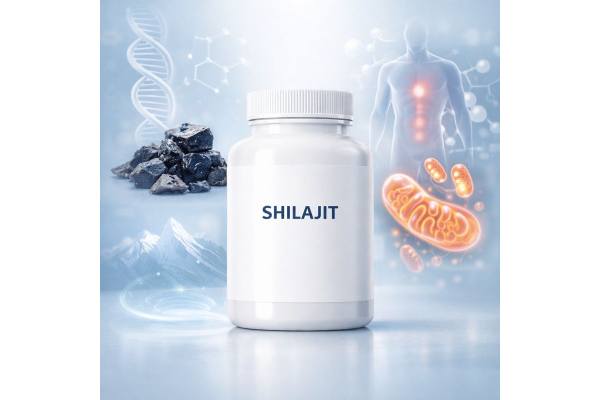
Shilajit has moved from obscure Ayurvedic remedy to a mainstream supplement promising more energy, sharper thinking, and better performance. It is a complex, tar-like substance that seeps from rocks in high mountain ranges, rich in minerals, fulvic acid, and other organic compounds. Early clinical and laboratory research suggests shilajit may support mitochondrial function, physical performance, testosterone levels in some men, and brain health. At the same time, quality, purity, and dosing are not yet standardized, and safety depends heavily on careful sourcing. This guide explains what shilajit is, how it may work in the body, where the evidence is strongest or weakest, how people typically use it, suggested dosage ranges from existing studies, and key side effects and risks so you can discuss it more confidently with a qualified health professional.
Key Insights on Shilajit
- Shilajit is a mineral-rich, fulvic acid–containing exudate that may support energy, stamina, and cognitive function by affecting mitochondrial activity.
- Early studies suggest possible benefits for physical performance and male reproductive hormones, but evidence remains limited and not definitive.
- Common supplemental doses range from about 200–500 mg per day of purified shilajit extract, with some studies using up to 1,000 mg under supervision.
- Because of contamination risks, people who are pregnant, breastfeeding, have kidney disease, heavy metal exposure, or hormone-sensitive cancers should avoid shilajit unless advised otherwise by a specialist.
Table of Contents
- What is shilajit and how it works
- Evidence based benefits of shilajit
- How to take shilajit daily
- How much shilajit per day
- Shilajit side effects and safety
- How to choose quality shilajit
What is shilajit and how it works
Shilajit is a sticky, tar-like material that oozes from rocks in high mountain regions such as the Himalayas, Altai, Caucasus, and Andes. Over centuries, plants and microorganisms break down and compact into a dense organic-mineral mass. Heat and pressure drive this material out through rock fissures, where it is collected and then purified for use as a supplement.
Traditional systems like Ayurveda classify shilajit as a “rasayana” — a rejuvenating substance believed to support vitality, resilience, and longevity. In modern terms, shilajit is a complex mixture of humic substances (especially fulvic acid), small organic acids, minerals, trace elements, and various bioactive compounds. Analyses show a high proportion of fulvic and humic acids, along with dibenzo-α-pyrones, amino acids, phenolic compounds, and numerous trace minerals such as zinc, copper, and iron.
Mechanistically, much of shilajit’s proposed effect centers on mitochondrial function. Mitochondria are the “power plants” of your cells, generating ATP, the main energy currency. Experimental studies suggest that components of shilajit may support mitochondrial respiration, preserve mitochondrial membrane potential, and reduce markers of oxidative stress in cells and animal models. This has led to interest in shilajit for fatigue, physical performance, and age-related decline.
Shilajit also appears to act as a mild adaptogen: a substance that may help the body respond to stress more efficiently. Some data show modulation of stress hormones, anti-inflammatory signaling, and antioxidant defenses. However, these effects vary depending on the specific preparation, origin, and purification process, which can change the chemical fingerprint of the final product.
Importantly, raw shilajit scraped directly from rocks is not considered safe. It can contain soil contaminants, fungi, and non-permissible levels of heavy metals. Modern supplements should undergo purification steps such as filtration, solvent extraction, and standardization to key components like fulvic acid while reducing contaminants to within regulatory limits.
Although the mechanistic data are intriguing, shilajit is still not fully understood. It is best viewed as a complex phytomineral mixture with potential effects on mitochondrial health, inflammation, and hormone regulation, rather than a single, precisely defined drug.
Evidence based benefits of shilajit
Most of shilajit’s reputation comes from centuries of traditional use and small modern studies rather than large, definitive clinical trials. That means the current evidence is promising but still preliminary, and effects are likely modest rather than dramatic.
One of the most discussed areas is physical performance and fatigue. In a controlled human trial, healthy adults who took purified shilajit over several weeks showed less decline in muscular strength after fatiguing exercise compared with placebo, suggesting better resilience to physical stress. This aligns with mitochondrial data, where shilajit appears to help maintain ATP production and reduce markers of muscle damage in experimental models.
Another key area is male reproductive health. A randomized, placebo-controlled study in middle-aged men found that 250 mg of purified shilajit taken twice daily for 90 days increased total and free testosterone and dehydroepiandrosterone sulfate (DHEAS) compared with placebo. Other clinical reports in men with low sperm count describe improvements in sperm concentration and motility after shilajit supplementation. These findings support possible benefits for some men with low-normal androgens or fertility issues, though studies are relatively small and sometimes industry-sponsored.
Brain health is another emerging focus. Laboratory work suggests shilajit and its fulvic acid fraction may protect neurons from amyloid beta–induced toxicity, reduce inflammatory signals, and modulate pathways involved in neurodegeneration. Animal and cell studies show reduced inflammatory cytokines and better cell survival in models of Alzheimer-type pathology. Human data are still limited but have prompted interest in shilajit as a potential adjunct for cognitive support and healthy aging.
Beyond these areas, reviews of clinical and preclinical research highlight potential benefits for:
- General energy and reduced subjective fatigue.
- Modest improvements in markers of metabolic health in some populations.
- Support for immune and antioxidant defenses through modulation of inflammatory and redox pathways.
However, many of these endpoints come from small studies, short follow-up periods, or populations that may not generalize to everyone. No high-quality evidence shows that shilajit alone cures any disease. It should be considered an optional adjunct to, not a replacement for, standard medical care and lifestyle measures like sleep, physical activity, and nutrition.
How to take shilajit daily
Shilajit is sold in several forms: resin, powder, capsules, and sometimes liquid drops. The “classic” form is a soft resin or tar-like mass that you dissolve in warm water, milk, or herbal tea. Capsules and tablets contain dried extracts or powders, which are easier to measure and swallow but feel less traditional.
If you choose a resin, most products suggest using a small pea-sized amount, which typically corresponds to 200–500 mg, depending on density. The resin is usually dissolved in a small amount of warm (not boiling) liquid until fully dispersed, then consumed once or twice daily. Many people prefer to take it on an empty stomach in the morning and, if using a second dose, in the late afternoon rather than right before bed.
Capsules or tablets provide the most convenient option if you dislike the resin’s strong taste and smell. Typical serving sizes range from 200–500 mg of purified shilajit extract per day, sometimes standardized to a specific fulvic acid content. Always check the label to confirm how much actual shilajit extract you are getting per capsule and whether the product is standardized or blended with other herbs.
In terms of timing, shilajit is often taken:
- In the morning for energy, mood, and cognitive support.
- About 30–60 minutes before exercise, if the goal is performance or stamina.
- With food if you experience stomach discomfort on an empty stomach.
Some people combine shilajit with other adaptogens, minerals, or nootropics. This can complicate side-effect tracking, because you no longer know which ingredient is responsible for a benefit or problem. For safety and clarity, it is usually better to introduce one new supplement at a time and wait a couple of weeks before adding more.
Because shilajit products vary widely in concentration and purity, you should follow the manufacturer’s instructions and any advice from your clinician rather than copying someone else’s regimen. Keep a simple log of dose, timing, and any symptoms (positive or negative), especially during the first month. This helps you and your healthcare provider decide whether shilajit is helpful or should be discontinued.
How much shilajit per day
There is no universally accepted “ideal” shilajit dose. Existing human studies and traditional use patterns, however, provide reasonable starting ranges for discussion with a healthcare professional.
In controlled trials on physical performance, daily doses of 250 mg and 500 mg purified shilajit extract have been used for about eight weeks, with the higher dose sometimes showing stronger effects on fatigue resistance and markers of tissue stress. In the testosterone study in middle-aged men, participants took 250 mg of purified shilajit twice daily (total 500 mg per day) for 90 days. Other clinical and observational work has used total daily doses in the 200–1,000 mg range, often divided into one or two servings.
Based on this, a commonly cited supplemental range for healthy adults is:
- Conservative: 150–250 mg per day of purified shilajit extract.
- Typical: 250–500 mg per day, often split into one or two doses.
- Upper end in research: up to 1,000 mg per day, usually under professional supervision.
Higher amounts are not necessarily better. Because shilajit is a complex mixture with both antioxidant and pro-oxidant potential at different doses, pushing the dose aggressively may increase the risk of oxidative stress or unwanted side effects such as gastrointestinal upset, skin reactions, or changes in blood pressure.
A few practical dosage tips:
- Start low. Begin at the lower end of the range (for example, 150–250 mg per day) for at least one to two weeks.
- Titrate slowly. If you tolerate it well and still wish to increase, raise the dose by small increments (for example, 100–150 mg) every one to two weeks, not daily.
- Set a maximum. Without close medical supervision, it is prudent not to exceed 500–600 mg of purified shilajit extract per day.
- Build in breaks. Many practitioners recommend cycling: for example, eight to twelve weeks of use followed by a two- to four-week break, especially if you are targeting performance or hormone-related effects.
Children and adolescents should not take shilajit unless under specialist guidance. Dosing for people with chronic conditions (especially kidney, liver, cardiovascular, or endocrine disorders) needs individual assessment and may differ substantially from general wellness dosing.
Shilajit side effects and safety
Safety is the most important part of any shilajit discussion. The substance itself has a long history of use, and modern reviews of clinical studies suggest that purified, properly dosed shilajit appears generally well tolerated for most healthy adults over short to moderate periods. However, several real concerns need to be taken seriously.
First, contamination is the major risk. Because shilajit forms within rocks and soil, it can concentrate heavy metals such as lead, arsenic, cadmium, and mercury, as well as other environmental toxins. Modern analyses show that while some purified products fall within regulatory limits for these metals, other samples exceed them. Reports from regulators and case discussions have linked contaminated Ayurvedic preparations (including shilajit-containing products) with heavy metal poisoning, leading to anemia, neurological symptoms, kidney injury, and other organ damage.
Second, individual adverse effects can occur even with seemingly clean products. Documented or plausible side effects include:
- Gastrointestinal symptoms: nausea, stomach cramps, diarrhea, or loss of appetite.
- Skin reactions: rash, itching, or facial flushing.
- Allergic responses: rare but serious reactions such as swelling or difficulty breathing have been reported.
- Changes in heart rate or blood pressure in animal research, with uncertain relevance to humans.
Third, shilajit may interact with underlying conditions or medications. Because it can influence hormone levels, inflammation, and antioxidant systems, it could theoretically worsen hormone-sensitive cancers, autoimmune conditions, or disorders where tight control of oxidative balance is needed. Its mineral content and effects on metal handling may be problematic for people with kidney disease, hemochromatosis, or other mineral-storage disorders.
People who should generally avoid shilajit unless a specialist explicitly recommends it include:
- Pregnant or breastfeeding women.
- Children and teenagers.
- Individuals with kidney disease, significant liver disease, or a history of heavy metal exposure or poisoning.
- People with hormone-sensitive cancers (such as certain prostate or breast cancers).
- Individuals with unexplained anemia, neuropathy, or neurological symptoms until a physician rules out heavy metal issues.
If you decide to try shilajit, stop it immediately and seek medical care if you experience severe headaches, confusion, rapid or irregular heartbeat, shortness of breath, jaundice, dark urine, or any signs of allergic reaction. Even with milder symptoms (persistent digestive upset, new rash, or unusual fatigue), pause the supplement and discuss the situation with your healthcare provider.
How to choose quality shilajit
Because shilajit supplements are not globally standardized, product choice is almost as important as dosage. A high-quality, tested preparation can reduce your exposure to heavy metals and other contaminants while improving the chances that the product actually contains what the label claims.
Start by looking for clear information on origin and processing. Reputable companies specify the geographic source of the raw shilajit (for example, Himalayan, Altai, or another region) and describe how it is purified. Processes might include filtration, solvent extraction, and removal of insoluble fractions. Vague descriptions such as “ancient mineral pitch” without concrete details are a red flag.
Independent laboratory testing is critical. Prefer products that:
- Provide recent certificates of analysis from third-party labs.
- Test for heavy metals (lead, arsenic, cadmium, mercury), microbial contamination, and common toxins.
- Report actual numerical values, not just “passed.”
Standardization is another quality marker. Some products are standardized to a minimum percentage of fulvic acid or to certain bioactive markers. This does not guarantee effectiveness, but it indicates at least some control over batch-to-batch variation. Avoid products that mix shilajit with many other herbs in tiny amounts while marketing it as the star ingredient; doses in these blends may be too low to resemble those used in clinical research.
Form also matters. Pure resin and standardized extracts typically offer better control over dose than powdered mixtures of unknown composition. However, resin is more vulnerable to adulteration if sourcing and testing are poor, so the brand’s transparency becomes even more important.
Price can be a helpful but imperfect signal. Extremely cheap shilajit is unlikely to cover the cost of careful sourcing and thorough lab testing. On the other hand, a very high price does not guarantee quality if there is no clear evidence of testing or standardization.
Finally, approach marketing claims critically. Be wary of promises that shilajit will “reverse aging,” “cure” chronic diseases, or instantly fix hormone problems. Solid evidence suggests potential support for energy, performance, and certain hormone and brain parameters, but not miracle-level transformations. A brand that acknowledges the limits of current science and encourages consultation with healthcare professionals is usually more trustworthy than one that oversells results.
References
- SYSTEMATIC REVIEW OF SHILAJIT: CLINICAL EFFICACY AND SAFETY 2024 (Systematic Review)
- Clinical studies and safety evidence for human consumption of Shilajit: a herbo-mineral compound with multifaceted health benefits 2025 (Review)
- Hazardous or Advantageous: Uncovering the Roles of Heavy Metals and Humic Substances in Shilajit (Phyto-mineral) with Emphasis on Heavy Metals Toxicity and Their Detoxification Mechanisms 2024 (Review)
- Clinical evaluation of purified Shilajit on testosterone levels in healthy volunteers 2016 (RCT)
- The effects of Shilajit supplementation on fatigue-induced decreases in muscular strength and serum hydroxyproline levels 2019 (RCT)
Disclaimer
The information in this article is for educational purposes only and is not a substitute for personalized medical advice, diagnosis, or treatment. Shilajit is a complex supplement with potential benefits and real risks, especially when sourcing or dosing is improper. Always consult a qualified healthcare professional before starting, stopping, or changing any supplement, particularly if you have existing medical conditions, take prescription medications, are pregnant or breastfeeding, or are considering shilajit for a specific health problem. Never delay or disregard professional medical advice because of something you have read online.
If you found this guide useful, please consider sharing it on Facebook, X (formerly Twitter), or any platform you prefer, and follow our work on social media. Your support in sharing helps our team continue to research, update, and publish careful, evidence-informed health content.