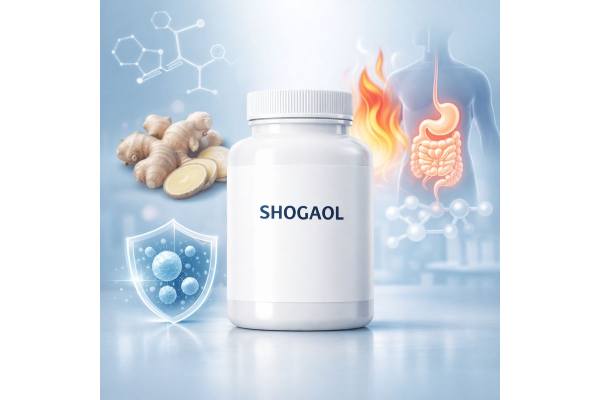
Shogaol is one of the key pungent compounds that gives dried ginger its sharp heat and many of its biological effects. When fresh ginger is dried, stored, or cooked, its major constituent 6-gingerol gradually converts into 6-shogaol, a closely related molecule that appears more potent in many experimental models. Researchers are exploring shogaol for its anti-inflammatory and antioxidant effects, as well as its possible roles in metabolic health, liver protection, neuroprotection, and cancer-related pathways. At the same time, most of the evidence comes from laboratory and animal studies, with fewer well-designed human trials. This guide explains what shogaol is, how it differs from gingerol, where the science looks strongest and weakest, how people obtain it from food and supplements, what is known (and unknown) about dosage, and the main side effects and safety considerations to review with a qualified healthcare professional before using concentrated shogaol products.
Key Insights for Shogaol Use
- Shogaol, particularly 6-shogaol, is a heat-formed ginger compound that often shows stronger anti-inflammatory and antioxidant activity than gingerol in experimental systems.
- Emerging research links shogaol to potential benefits in inflammation, metabolic health, liver disease, neuroprotection, and cancer-related mechanisms, but human data are still limited.
- Human studies with ginger extracts typically provide low milligram amounts of 6-shogaol within about 1,000–2,000 mg per day of standardized ginger extract.
- People with bleeding risks, gallstones, pregnancy, upcoming surgery, or complex medication regimens should avoid high-dose shogaol supplements unless specifically cleared by their clinician.
Table of Contents
- What is shogaol and how it differs from gingerol
- Shogaol benefits and what research suggests
- How to use shogaol in everyday life
- How much shogaol per day
- Shogaol side effects and interactions
- What the evidence on shogaol still cannot tell us
What is shogaol and how it differs from gingerol
Shogaols are a family of pungent phenolic compounds that arise mainly in dried and heat-processed ginger. The best known member, 6-shogaol, forms when 6-gingerol—the dominant pungent compound in fresh ginger—undergoes dehydration during drying, storage, or cooking. In chemical terms, shogaols retain the same aromatic ring as gingerols but possess an α,β-unsaturated carbonyl group, which makes them more electrophilic and often more reactive in biological systems.
In fresh ginger rhizome, gingerols predominate, while shogaols occur only in small amounts. As ginger is dehydrated or heated, 6-gingerol gradually converts into 6-shogaol and related compounds. This conversion helps explain why dried ginger generally tastes hotter and more “spicy” than fresh ginger, and why some biological effects differ between fresh and dried forms.
Among shogaols, 6-shogaol is the most extensively studied. Laboratory research shows that it can modulate several cellular pathways, including inflammatory signaling, antioxidant responses, cell death and survival mechanisms, and aspects of mitochondrial function. Structurally related shogaols such as 8-shogaol and 10-shogaol also occur, sometimes with overlapping or complementary actions, but the evidence base for them is smaller.
Shogaol is not usually sold as a stand-alone pharmaceutical drug. Instead, people encounter it through:
- Culinary use of dried or cooked ginger.
- Herbal teas and decoctions made from ginger powder or slices.
- Standardized ginger extracts in capsules or liquids, which contain defined amounts of gingerols and shogaols.
- A smaller number of specialized supplements enriched in 6-shogaol or “aged” ginger extracts.
Because shogaol is formed by heat, the exact content in any given food or supplement depends on ginger variety, processing, and storage conditions. Two ginger products with the same total “mg of ginger” on the label can have very different proportions of gingerols and shogaols. This variability is one reason why standardization and independent testing are so important for both research and consumer products.
Shogaol should be thought of as one contributor to ginger’s overall activity rather than a magic bullet. In real foods and extracts, it acts alongside many other compounds, including gingerols, essential oils, and minor phytochemicals, which may interact in ways that enhance or balance each other.
Shogaol benefits and what research suggests
Most of the evidence on shogaol’s benefits comes from cell culture and animal models, supported by human trials that use whole ginger or standardized extracts. These studies suggest several potential health roles, though they do not yet prove strong clinical effects in everyday use.
A prominent theme is anti-inflammatory action. In laboratory experiments, 6-shogaol has been shown to reduce the production of inflammatory cytokines, inhibit activation of the transcription factor NF-κB, and increase the activity of antioxidant and cytoprotective enzymes. By dampening inflammatory signaling and supporting the body’s own defense systems, shogaol may help reduce low-grade inflammation that contributes to chronic conditions.
Shogaol also functions as a potent antioxidant. It helps limit reactive oxygen species and supports enzymes that neutralize free radicals. In neuronal models, extracts enriched in 6-shogaol have shown protective effects against oxidative damage, preserving cell viability and shifting signaling pathways toward cell survival. This has led to interest in shogaol as a possible adjunct in strategies aimed at healthy brain aging and neurodegeneration, though human evidence is still at an early stage.
Metabolic and liver benefits are another area of investigation. In diabetic animal models, 6-shogaol has been associated with lower blood glucose levels, better weight patterns, and reduced tissue damage in organs such as the liver and kidney. In models of non-alcoholic steatohepatitis (a progressive form of fatty liver disease), 6-shogaol has reduced liver inflammation and fibrosis, partly by dampening oxidative stress, cell death, and endoplasmic reticulum stress. These findings suggest that shogaol may one day play a role in comprehensive approaches to metabolic and liver health.
Cancer-related pathways are a further focus. In cell studies, 6-shogaol can inhibit proliferation and stimulate various forms of programmed cell death in breast, liver, colon, and head and neck cancer lines, often with less toxicity to normal cells. Proposed mechanisms include modulation of microtubule dynamics, interference with AKT/mTOR signaling, and targeting of cancer stem-like cells. These data are promising but should not be interpreted as proof that shogaol prevents or treats cancer in humans.
Finally, shogaol probably contributes to more traditional uses of ginger for nausea, pain, and digestive complaints. Clinical trials for conditions such as motion sickness, pregnancy-related nausea, or osteoarthritis pain generally use whole ginger or standardized extracts, where 6-shogaol is one of several active constituents. Improvements seen in those studies likely represent the combined effects of gingerols, shogaols, and other compounds rather than shogaol alone.
How to use shogaol in everyday life
For most people, shogaol is not something they seek out by name; they simply consume ginger in various forms. Understanding how processing affects shogaol content can help you choose options that align with your preferences and health goals.
If you favor food-based approaches, dried ginger powder and simmered ginger teas or decoctions generally provide more shogaol than fresh ginger. As ginger is heated and dried, 6-gingerol converts into 6-shogaol. That means:
- Ginger teas made by simmering dried ginger slices or powder for several minutes will usually contain more shogaol than teas made from fresh ginger briefly steeped in hot water.
- Baked goods, curries, and stir-fries that use dried ginger may deliver different proportions of gingerols and shogaols compared with dishes that use fresh ginger added near the end of cooking.
For most healthy adults, culinary use is considered low risk when total dried ginger intake stays within typical dietary ranges, even if this includes foods that are relatively high in shogaol.
Supplements can vary much more. You may encounter:
- Standardized ginger capsules that contain a fixed amount of extract (for example, 250–1,000 mg per capsule) with known percentages of gingerols and shogaols.
- “Aged ginger” or “high shogaol” extracts marketed for more intense anti-inflammatory or antiemetic effects.
- Multi-herb formulas that combine ginger extract with other botanicals aimed at digestive comfort, joint support, or general wellness.
When evaluating a product, it is useful to ask:
- Does the label specify the content of total pungent compounds (often listed as gingerols and shogaols) or, ideally, the amount of 6-shogaol per serving?
- Does the manufacturer provide a recent, independent certificate of analysis confirming purity and the absence of heavy metals, microbes, and adulterants?
- Is the product backed by research in which a similar extract, dose, and standardization were used?
In practice, many people using ginger for nausea, digestion, or joint health are already ingesting small amounts of shogaol without realizing it. From a safety standpoint, introducing a well-characterized ginger extract at a modest dose, taken with food, and tracking your response over several weeks is usually more sensible than jumping straight to a highly concentrated shogaol product.
As with any supplement, it is wise to introduce only one new ginger or shogaol-containing product at a time. If you add several at once, it becomes difficult to tell which ingredient is responsible for any change—good or bad. Keeping a simple log of dose, timing, and symptoms can help you and your clinician make informed adjustments.
How much shogaol per day
There is no official daily requirement or universally accepted “optimal” dose for shogaol. Most of what we know about human exposure comes from studies using ginger extracts, where 6-shogaol is present as one component of a larger mixture.
In a dose-escalation study with healthy volunteers, single oral doses of ginger extract ranging from 100 mg to 2,000 mg were administered and monitored. Participants tolerated these doses well overall, with only mild gastrointestinal complaints and no serious safety signals. The researchers measured levels of 6-gingerol, 8-gingerol, 10-gingerol, and 6-shogaol and found that 6-shogaol appeared in the blood mainly as conjugated metabolites, especially at higher extract doses. This indicates that, at least over the short term, the body can handle low milligram amounts of shogaol within a ginger extract.
Because supplement labels usually state the amount of ginger extract rather than shogaol directly, practical dosage discussion often focuses on extract amounts. Common ranges in human studies and clinical practice include:
- Around 500–1,000 mg per day of standardized ginger extract in divided doses for nausea, dyspepsia, or joint discomfort.
- Up to about 2,000 mg per day of standardized extract in some short-term trials, generally under medical supervision.
Within these extract doses, the implied daily intake of 6-shogaol is usually in the low milligram range, because shogaol is just one of several pungent compounds. Specialized high-shogaol preparations may provide more, but high-quality human safety data for those higher exposures are sparse.
If you are using a product that clearly lists 6-shogaol content, a cautious approach is warranted:
- Favor modest doses that mirror those seen in ginger-extract research rather than untested high amounts. A total of a few milligrams of 6-shogaol per day is more consistent with current knowledge than large, concentrated doses.
- Start with the lowest suggested serving size taken with food, and maintain that dose for at least one to two weeks before considering any change.
- Avoid stacking multiple shogaol-rich products. Combining a high-shogaol capsule with strong ginger teas and several ginger-containing formulas can lead to unexpectedly high total exposure.
- Work with a healthcare professional, particularly if you have chronic health conditions, take prescription medications, are pregnant or breastfeeding, or are considering shogaol for a specific medical problem.
For children, adolescents, older adults with frailty, and people with significant liver, kidney, or cardiovascular disease, concentrated shogaol supplements should generally be avoided unless they are part of a controlled clinical trial. In these groups, culinary ginger and low-dose ginger preparations are usually safer starting points.
Shogaol side effects and interactions
Shogaol’s safety profile is closely linked to that of ginger, since almost all human exposure has occurred through ginger foods and extracts rather than isolated shogaol. Clinical studies using ginger preparations that contain 6-shogaol have generally reported good overall tolerability, with most side effects being mild and related to the digestive system.
Possible side effects include:
- Stomach discomfort, heartburn, or upper abdominal burning.
- Increased gas, bloating, or loose stools.
- Mouth or throat irritation when consuming very spicy ginger preparations.
- Occasional headache, dizziness, or a sense of warmth or flushing, particularly at higher doses.
Because 6-shogaol is more pungent and chemically reactive than 6-gingerol, concentrated shogaol products may cause stronger sensations of heat or burning in the mouth, esophagus, or stomach. Taking capsules with meals, avoiding very large single doses, and starting low can reduce these issues.
Shogaol can also influence physiological processes that matter for certain medical conditions:
- Platelet function and coagulation: Ginger constituents, including shogaols, can affect platelet aggregation in experimental settings. In combination with blood thinners such as warfarin, direct oral anticoagulants, aspirin, or clopidogrel, this may modestly increase bleeding risk.
- Blood pressure and heart rate: Animal studies suggest potential effects on blood vessel tone and cardiac function, though human data are mixed. People prone to low blood pressure or taking antihypertensive medication should be cautious with high doses.
- Bile flow and gallbladder: Ginger stimulates bile secretion. For individuals with gallstones or bile duct obstruction, strong ginger or shogaol preparations could provoke discomfort or complications.
- Glucose control: In diabetic models, shogaol has improved glycemic markers. While this might be beneficial, it suggests a theoretical risk of low blood sugar when combined with insulin or oral hypoglycemic agents.
Drug interactions have not been fully mapped. Extra caution is advised if you take:
- Anticoagulants, antiplatelet agents, or nonsteroidal anti-inflammatory drugs.
- Blood pressure medications, especially if your blood pressure runs low.
- Diabetes medications, including insulin and sulfonylureas.
- Drugs metabolized by liver enzymes that might be influenced by ginger constituents.
Serious adverse reactions are rare but possible. Seek immediate medical attention and stop the product if you experience symptoms such as difficulty breathing, swelling of the lips or tongue, severe rash or hives, chest tightness, sudden severe abdominal pain, or signs of internal bleeding (such as black stools or vomiting blood).
Given the limited long-term data on high-dose shogaol, it is sensible to use concentrated supplements for defined periods only, such as several weeks to a few months, with breaks in between. For ongoing, long-term use, lower-dose ginger preparations and a strong focus on diet and lifestyle usually provide a better studied and safer foundation.
What the evidence on shogaol still cannot tell us
Despite growing interest and a steady stream of research, shogaol remains a compound with many unanswered questions. Recognizing these evidence gaps can help you interpret claims more realistically and make safer decisions.
First, most mechanistic data come from cell cultures and animal models. These experiments have shown that shogaol can alter inflammatory pathways, antioxidant defenses, mitochondrial function, and cell survival mechanisms. However, they often use concentrations far higher than what is achievable in human tissues with typical dietary or supplemental doses. Laboratory results provide valuable clues but do not automatically translate into real-world clinical benefits.
Second, clinical trials rarely focus on shogaol alone. Instead, they use ginger rhizome, ginger powders, or standardized extracts containing a mixture of gingerols, shogaols, and other compounds. When improvements are seen—for example, in nausea, joint pain, or certain metabolic markers—it is difficult to determine how much of the effect is due to shogaol versus other constituents or their interactions.
Third, pharmacokinetic research in humans suggests that after oral intake of ginger extract, 6-shogaol appears in the bloodstream mainly as conjugated metabolites. Free 6-shogaol is present in much lower amounts and for a relatively short time. This raises important questions about which forms of shogaol are active in the body, whether they reach target tissues at meaningful levels, and how factors such as age, genetics, gut health, and concurrent medications influence absorption and metabolism.
Fourth, critical clinical questions remain open:
- Does adding shogaol-rich extracts to standard medical care meaningfully change outcomes in chronic inflammatory or metabolic diseases?
- Are there specific patient groups that benefit more than others from higher shogaol intake?
- What are the long-term safety and efficacy profiles of high-shogaol supplements when used beyond a few months?
Finally, supplement quality and labeling vary widely. There is no universal standard defining how much shogaol a “high shogaol” product should contain, and independent testing sometimes finds discrepancies between labeled and actual content. Without consistent regulation and transparent testing, consumers may unknowingly take much more or much less shogaol than they think.
Taken together, current evidence supports a balanced view. Shogaol is a promising bioactive component of ginger with interesting effects on inflammation, oxidative stress, metabolism, and cancer-related pathways in experimental systems. Ginger and ginger extracts that contain shogaol can be useful adjuncts in certain conditions and are generally well tolerated at typical doses. However, shogaol is not a cure-all, and the science does not justify extreme claims or unconstrained high-dose use. For now, it fits best as one tool among many in a comprehensive approach that also emphasizes nutrition, physical activity, sleep, and appropriate medical care.
References
- An overview of 6-shogaol: new insights into its pharmacological properties and potential therapeutic activities 2024 (Systematic Review)
- Benefits of Ginger and Its Constituent 6-Shogaol in Inhibiting Inflammatory Processes 2021 (Review)
- Ginger Constituent 6-Shogaol Inhibits Inflammation- and Angiogenesis-Related Cell Functions in Primary Human Endothelial Cells 2022 (Experimental Study)
- 6-Shogaol Ameliorates Liver Inflammation and Fibrosis in Mice on a Methionine- and Choline-Deficient Diet by Inhibiting Oxidative Stress, Cell Death, and Endoplasmic Reticulum Stress 2024 (Animal Study)
- Pharmacokinetics of 6-, 8-, 10-Gingerols and 6-Shogaol and Conjugate Metabolites in Healthy Human Subjects 2008 (Clinical Trial)
Disclaimer
This article is intended for informational and educational purposes only and does not provide medical advice, diagnosis, or treatment. Shogaol is a bioactive compound with promising but still evolving evidence, and most data come from preclinical research or ginger-based clinical trials rather than from isolated shogaol in humans. Always consult a qualified healthcare professional before starting, stopping, or changing any medication or supplement, including ginger or shogaol-containing products, especially if you are pregnant or breastfeeding, plan to undergo surgery, have gallstones or bleeding disorders, live with chronic liver, kidney, cardiovascular, or metabolic disease, or take prescription medications. Never disregard or delay seeking professional medical advice because of information you have read online.
If you found this guide helpful, please consider sharing it on Facebook, X (formerly Twitter), or any platform you prefer, and follow us on social media. Your support in sharing our work helps us continue to research, update, and publish careful, evidence-informed health content for readers who value trustworthy information.